The commute into a UAE office starts early. Between a 7am school run, a 45-minute drive from Sharjah or Mussafah and an 8am start, a large share of people arrive at their desk having eaten nothing, and the first thing they do is queue for coffee. By 10:30 the pantry biscuits are gone and the mid-morning slump is on schedule.
Breakfast is the cheapest meal an employer can provide. A catered morning spread — pastries, fruit platters, the corporate breakfast configurations that make sense for a client meeting — runs to a per-head cost that no office can carry every day. A self-serve station of oats, granola, cereal, milk and toppings costs a fraction of that per serve, needs no lead time, and is there on the Tuesday morning when nobody is hosting anyone.
It is also one of the pantry lines most often set up carelessly: a box of the sweetest cereal on the supermarket shelf, a bag of granola that turns out to be a third sugar, oats bought once and never replenished, open packs going soft in the humidity, and no plan for the milk. This guide is the specification that avoids that.
What a breakfast station is, and is not
A self-serve breakfast station is a shelf and a fridge, not a catering service. It holds a small set of dry goods that a person can turn into a bowl in under two minutes, the milk to pour on them, a few toppings, and the bowls, spoons and a way to wash them. It sits next to the coffee machine, because that is where the traffic already is.
It is not a replacement for meeting catering, and it does not need to compete with it. The station is for staff, every day; catering is for guests and events. Offices that try to make the station look like a hotel buffet end up with a large bill and a lot of waste; offices that treat it as a standing pantry line, sized and replenished like the nuts and seeds, get a breakfast programme that costs less than the biscuits it replaces.
The core list
A workable station is six to eight lines. More than that and the shelf becomes a supermarket aisle that nobody manages.
Oats. The anchor. Rolled oats work for porridge, overnight oats and as a base for a granola-and-fruit bowl; instant or quick oats cook faster in a microwave and suit an office where the kettle is the only heat source. Buy one type, in a large pack, and replenish on a fixed cadence. Oats are cheap, filling, nearly sugar-free and shelf-stable, which is why they carry the station.
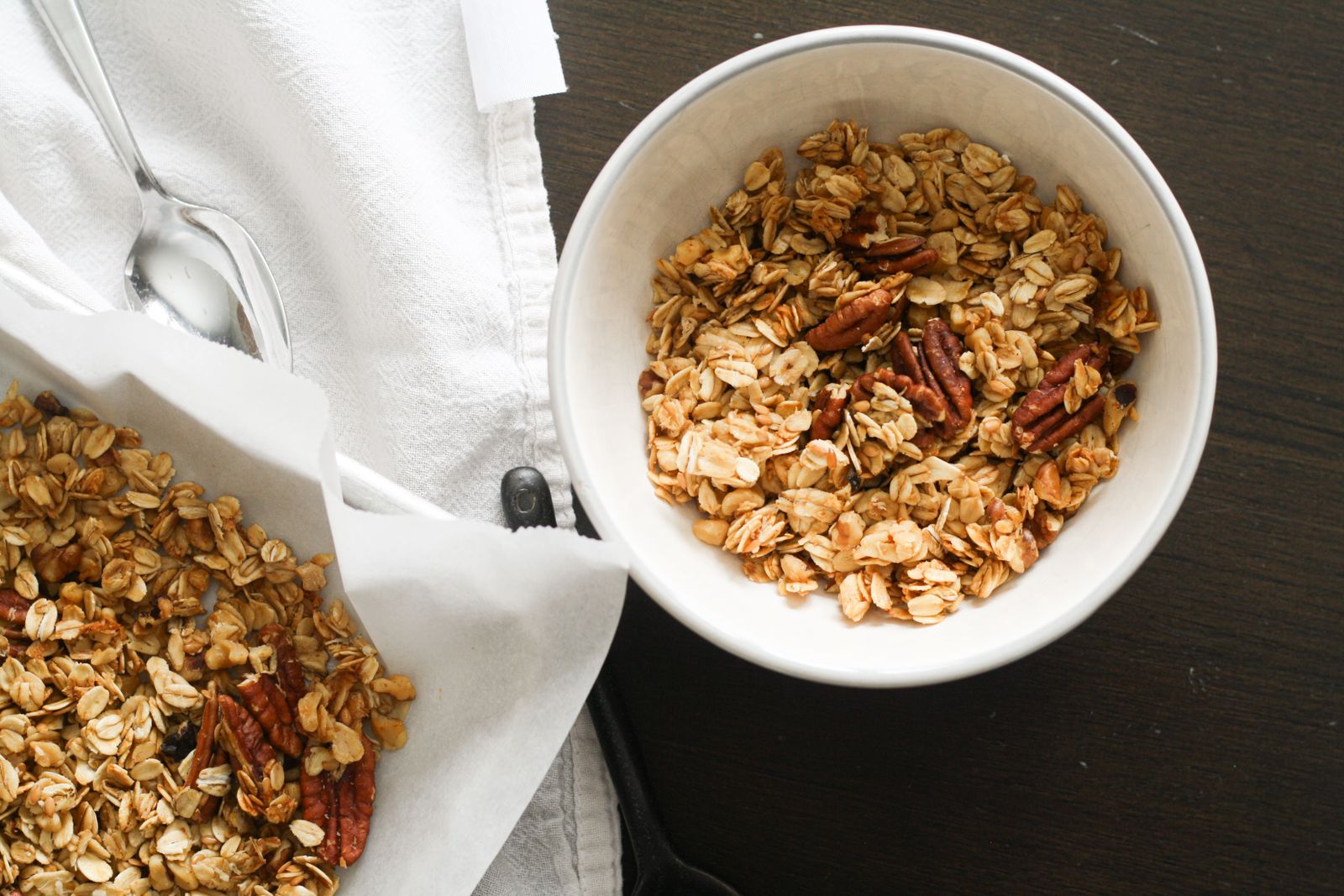
Granola or muesli. The line people actually reach for. Muesli is raw, lower in sugar and lower in fat; granola is baked with oil and a sweetener and tastes better for it. The choice is a sugar question first: read the per-100 g line and set a ceiling, because granola ranges from under 10 g of sugar per 100 g to over 30 g, and the packaging will not tell you which end you are at.
One cereal. A single mainstream cereal for the people who want one, chosen by the same sugar rule. Wholegrain flakes or a plain bran-based cereal sit at the low end; anything frosted, honey-coated or chocolate does not, and belongs in the same category as the sweets the low-sugar pantry guide argues for removing rather than rationing.
Milk and a plant alternative. Fresh milk in the fridge and at least one plant milk — oat is the safest single choice for cereal, and it is already on most offices' coffee list. The office milk and dairy guide covers the cold-chain and rotation side; the plant-based milk comparison covers which alternative suits which use.
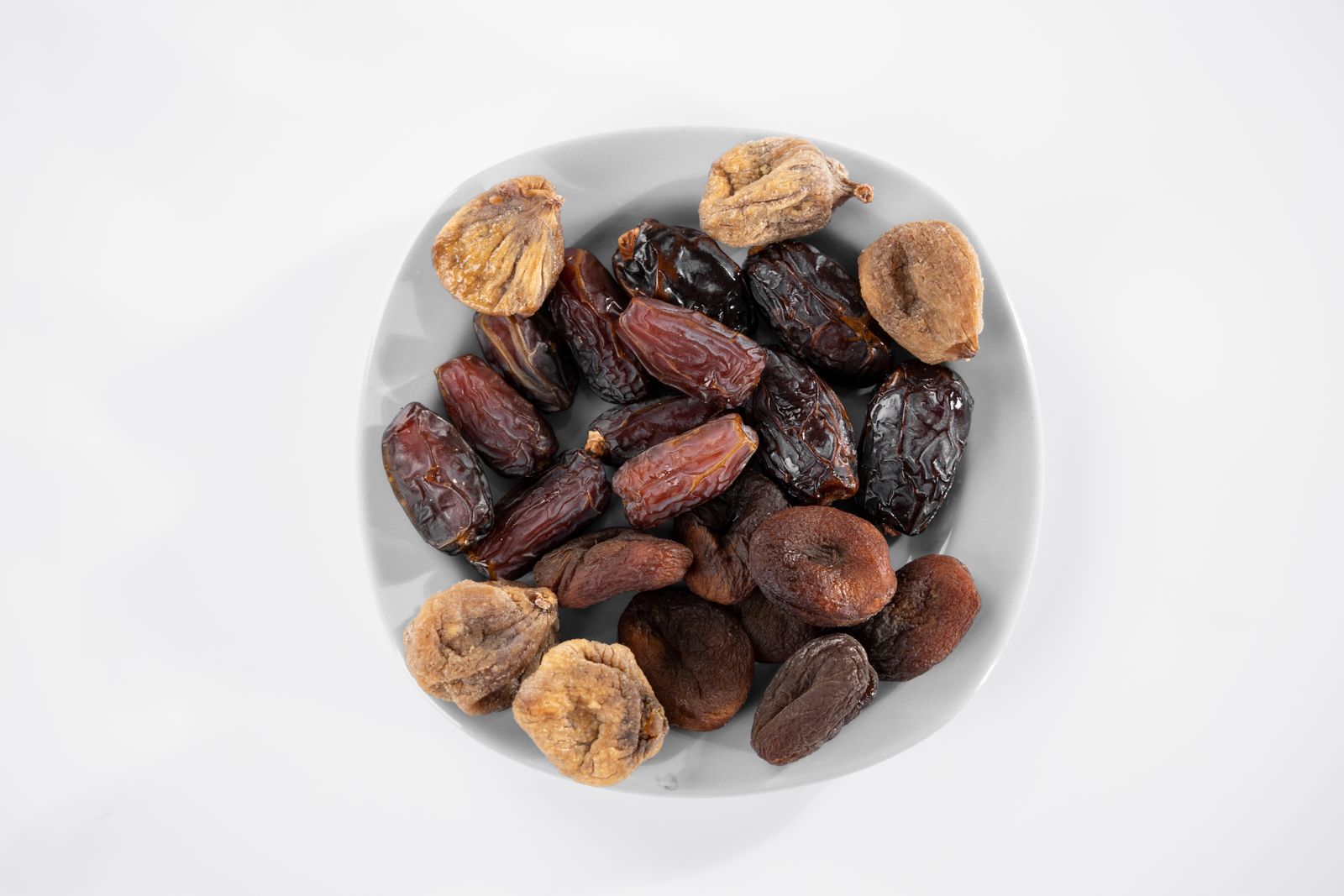
Toppings. Two or three, not ten. A nut and seed mix, a dried fruit — chopped dates, raisins or apricots — and honey or a nut butter. These are already pantry lines in most offices; the station simply gives them a second job.
Yoghurt. Plain, in a large tub or in single-serve pots, for the people who eat granola with yoghurt rather than milk. Single-serve pots are more hygienic in a shared fridge; a large tub is cheaper and generates less packaging. The office's pantry etiquette rules decide which one survives.
Fresh fruit. Bananas above all — they are the breakfast fruit, they need no cutting and they cost very little. The office fruit delivery guide covers sizing a fruit order; a station roughly doubles the banana line and touches nothing else.
Reading the sugar line
The reason a breakfast station can undermine a wellness programme is that cereals and granolas are among the most sugar-dense products in the pantry, and they wear the healthiest packaging.
Set one rule and apply it to every dry line on the station: a ceiling on sugar per 100 g. A defensible ceiling for a cereal or granola is in the region of 10 to 15 g per 100 g; muesli and plain oats sit well under it, most granolas sit above it, and almost every branded children's cereal sits far above it. Some of the sugar in a fruit-and-nut muesli is from the dried fruit rather than added, which is a fairer profile, but the total is still the number a diabetic colleague cares about.
The trap is the "high in protein", "source of fibre" or "made with whole grains" front label. All three can be true of a product that is a quarter sugar by weight. The nutrition panel is the only line that matters, and a procurement team that has already learned to read it for snack bars and nutritionist-approved snacks should apply the same discipline here.
Honey and nut butters are the exception: they are sweet, they are meant to be, and they are dosed by the person eating rather than baked into the product. Keep them, but keep them as a topping, not as the default.
Allergens: the station is where they concentrate
A breakfast station gathers, in one square metre, the four allergens an office pantry most needs to declare: nuts, gluten, milk and sesame. It also decants — granola into a dispenser, nuts into a jar, milk into a jug — and every decanting loses the pack's allergen statement with it.
The allergen and dietary labelling guide sets out the labelling discipline; the station-specific points are these. Oats are naturally gluten-free but are routinely processed alongside wheat, so "oats" does not mean "gluten-free" unless the pack says so, and the one colleague who is coeliac will need a certified line kept separately. Granola almost always contains nuts, and a nut-free granola or muesli is worth stocking if the office has anyone who needs it. Plant milks include almond, which is a nut milk, and soy, which is its own declarable allergen; oat milk is the least problematic single choice. A small laminated card on the shelf that lists each line and its allergens takes ten minutes to make and resolves most of this.
Halal is rarely an issue with plain oats and cereals, but some cereals and cereal bars use gelatine, and some granolas use alcohol-based flavourings; the halal compliance guide covers what to check.
Storage and dispensing in the humidity
The enemy of a breakfast station in the UAE is not spoilage; oats and cereal barely spoil. It is softening. An open pack of granola in a pantry at 24°C and 60 per cent humidity is noticeably soft within days and unpleasant within two weeks, and cereal goes the same way faster. A pantry that leaves packs open has a station that tastes stale most of the time.
Two approaches work. The first is gravity dispensers — the clear, wall-mounted or counter-top hoppers with a lever — which seal the product, portion it, look tidy and let people see what is left. They are the right answer for the two or three highest-turnover lines. They also need cleaning, which means somebody has to empty, wash and dry them on a schedule, because a dispenser refilled on top of old stock for six months is a hygiene problem waiting for an audit.
The second is sealed containers with a scoop for the slower lines, and buying in pack sizes that get finished within a fortnight of opening rather than the largest bulk bag the supplier offers. The inventory management guide covers par levels; for breakfast lines the par should be set by open-pack life, not by price per kilo.
Keep everything off the warmest shelf, away from the coffee machine's heat, and in a cupboard rather than on an open counter if the pantry gets afternoon sun. And keep the toppings — nuts especially — sealed, because the oils in nuts go rancid in warmth long before oats do.
Milk is the logistics problem
Everything on the dry shelf is forgiving; the milk is not. A station roughly doubles an office's fresh milk consumption in the first two hours of the day, and if the fridge is not stocked by 7:30 the station does not work.
The practical answer is to fold breakfast milk into the existing milk order rather than run it separately: the milk and dairy guide covers sizing by coffee consumption, and breakfast adds a morning peak on top of it. Ordering more frequently in smaller quantities beats a weekly bulk drop that half-fills the fridge and then runs out on Wednesday. Plant milks are long-life until opened, which makes them the easier line to hold in reserve.
Fridge space is the constraint that decides how much station an office can run. A pantry layout that puts a second, smaller fridge next to the station — milk, yoghurt and cut fruit only — is usually cheaper than trying to squeeze breakfast into the drinks fridge.
Sizing and cost per serve
Sizing starts with participation, and participation is higher than most offices expect once the station is visibly stocked. A reasonable planning assumption is 30 to 50 per cent of staff on a given morning, higher in offices with early starts or long commutes, and higher still in the first month.
Per serve, plan on 40 to 50 g of oats or 40 to 60 g of granola or cereal, 150 to 200 ml of milk, and a small topping. For a 100-person office at 40 per cent participation, that is roughly 2 kg of dry goods and 7 to 8 litres of milk a day, plus fruit. At UAE wholesale prices the dry goods and milk together land at a cost per serve that is a small fraction of a catered pastry, and well below the per-head figure of even a modest pantry budget.
The cost-per-employee benchmarks put it in context: a breakfast station is usually a single-digit percentage addition to the pantry budget, and in offices where it displaces catered morning food or the biscuit line, it is close to cost-neutral. Where it earns its place beyond the budget is the mid-morning slump it removes, which the productivity ROI work is about.
Where it fits
A breakfast station works anywhere people arrive early and hungry, and is most valuable where that is structural rather than occasional.
Schools and universities start before almost any other workplace, and a staffroom station at a campus in Dubai Knowledge Park or Masdar City is often the only breakfast a teacher gets. Healthcare sites and the clinics of Dubai Healthcare City run shift handovers at 7am, and the 24/7 shift-work pantry guide covers why the night shift's "breakfast" is at the end of its day rather than the start. Manufacturing and aviation sites around Dubai South have the same shift shape and more physical work behind it. Laboratory and pharmaceutical offices in Dubai Science Park are early-start environments where the pantry is often the only food within walking distance. And the tech companies and startups of Dubai Silicon Oasis have historically used breakfast as a low-cost, high-visibility perk that shows up in retention rather than in the budget.
For a small professional office the same list applies at a smaller scale, and the new office setup checklist is the right place to add it.
What good looks like
A station that works has a short list of six to eight lines, chosen against a written sugar ceiling; a laminated allergen card on the shelf; the two busiest dry lines in gravity dispensers that get emptied and washed on a schedule, and the rest in sealed containers bought in packs that finish within a fortnight; breakfast milk folded into the coffee milk order with a morning-stock guarantee; bananas doubled; a second small fridge if the drinks fridge is full; and a par level set by open-pack life. It costs a small fraction of catered breakfast and is there every morning.
A station that does not work has the sweetest cereal on the shelf, a soft bag of granola with a clip on it, no oats because nobody reordered them, no milk by 8am, and a nut allergy nobody wrote down.
The short version
Breakfast is the cheapest meal an office can provide and one of the most used, because a large share of UAE staff arrive without having eaten. A self-serve station of oats, granola or muesli, one cereal, milk and a plant alternative, two or three toppings, yoghurt and bananas covers it at a small fraction of catered cost. Choose every dry line against a sugar-per-100 g ceiling and ignore the front label; treat the station as the place allergens concentrate and decanting hides them, and put a card on the shelf; fight humidity with sealed dispensers and pack sizes that finish in a fortnight; fold breakfast milk into the existing milk order with a morning guarantee; and size on 30 to 50 per cent participation at 40 to 60 g of dry goods and 150 to 200 ml of milk per serve.
My Healthy Office supplies breakfast and corporate event lines — oats, granola, muesli and cereals chosen against a sugar ceiling — alongside milk and plant-based milk, nuts and seeds, dried fruits and dates, low-sugar treats and fresh fruit, on one scheduled delivery sized to your headcount and your fridge. To have a breakfast station specified, priced per serve and stocked before the first coffee, contact us.
Frequently asked questions
How much does a self-serve office breakfast station cost per person? Far less than catered breakfast. Per serve, plan on 40 to 60 g of oats, granola or cereal, 150 to 200 ml of milk and a small topping; at UAE wholesale prices the dry goods and milk together cost a small fraction of a single pastry from a caterer. For most offices the station is a single-digit percentage addition to the pantry budget, and where it displaces a biscuit line or occasional catered morning food it is close to cost-neutral.
What is a reasonable sugar limit for office cereal and granola? A ceiling in the region of 10 to 15 g of sugar per 100 g is defensible and easy to apply. Plain oats and most mueslis sit well under it; the majority of granolas and almost all frosted, honey-coated or chocolate cereals sit above it. Read the nutrition panel rather than the front label, because claims like "high in fibre" or "made with whole grains" are routinely true of products that are a quarter sugar by weight.
Are oats gluten-free? Naturally, yes, but commercially, not reliably. Oats are usually processed alongside wheat, so an ordinary pack of oats can carry enough gluten to matter to a coeliac colleague. Only oats explicitly labelled and certified gluten-free should be treated as such, and if the office has anyone who needs them, keep that line sealed and separate rather than decanting it into a shared dispenser.
How do we stop cereal and granola going soft in a UAE office? Seal it and finish it. An open pack in a pantry at typical UAE indoor humidity softens within days, so the highest-turnover lines belong in gravity dispensers or airtight containers, and the rest should be bought in pack sizes that get finished within about a fortnight of opening rather than in the largest bulk bag available. Keep everything away from the coffee machine's heat and out of afternoon sun, and set the reorder level by open-pack life rather than by price per kilo.
How much milk does a breakfast station add to the office order? Roughly 150 to 200 ml per serve, concentrated into the first two hours of the day. For a 100-person office at 40 per cent participation that is about 7 to 8 litres a morning on top of the coffee milk, and it has to be in the fridge by 7:30 or the station does not function. Fold it into the existing milk order with more frequent, smaller deliveries rather than a weekly bulk drop, and hold plant milks in reserve because they are long-life until opened.
Do gravity dispensers need cleaning? Yes, on a schedule, and this is the step most offices skip. A dispenser topped up on top of old stock for months is a hygiene problem, particularly with granola and nut mixes whose oils go rancid in warmth. Empty, wash and dry each dispenser fully before refilling — every fortnight for busy lines is a reasonable cadence — and use them only for the two or three lines that turn over fast enough to justify the effort.