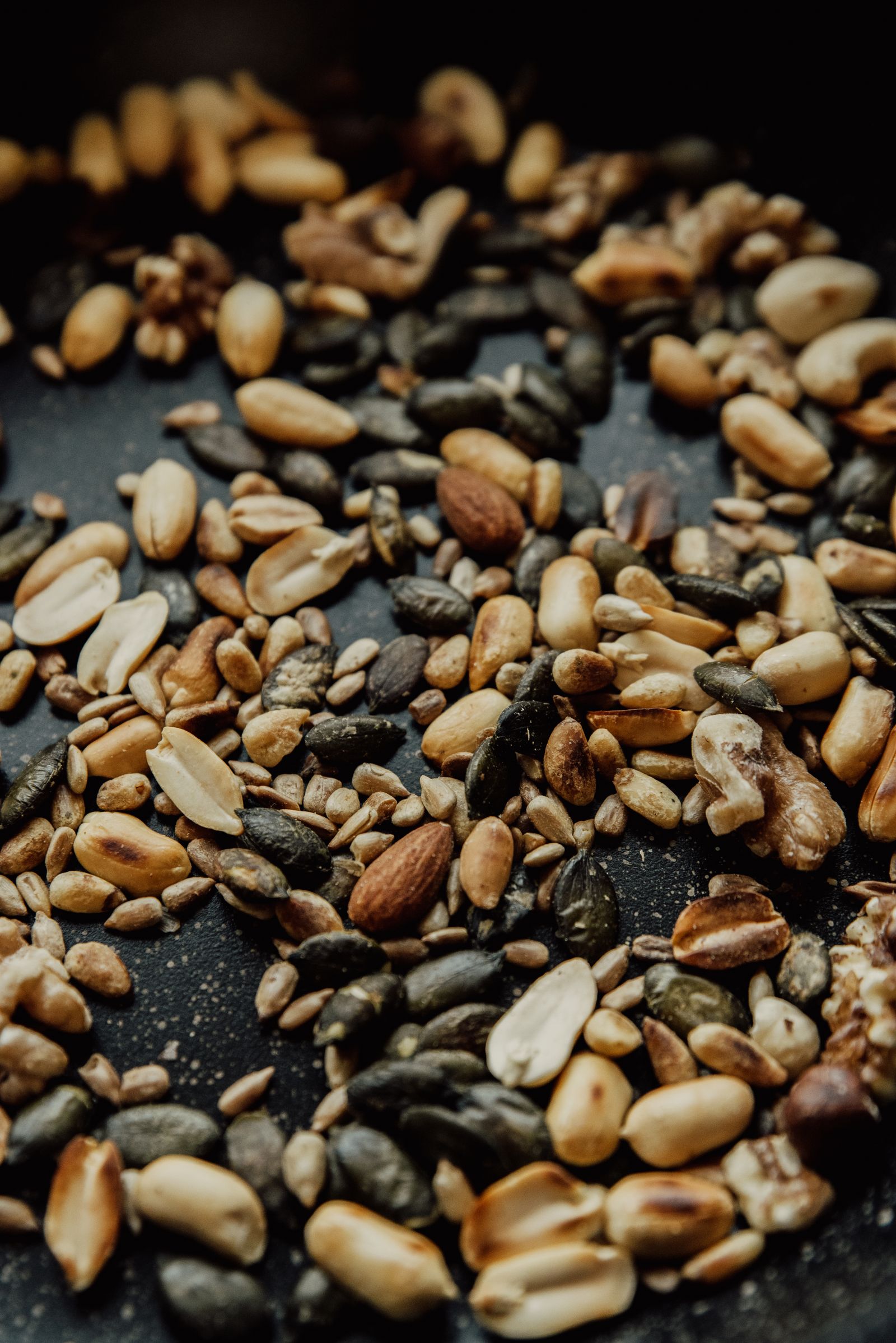
Nuts and seeds occupy an unusual position in an office pantry. They are the item most likely to be requested by staff, the item most likely to be recommended by whoever wrote the wellness policy, and the item most likely to be bought badly.
They are also, per kilogram, the most expensive thing on the shelf — several times the cost of biscuits or crisps for the same weight — while being the one category where a poor buying decision is genuinely invisible until someone tastes it. Stale nuts do not look stale.
And they carry the sharpest compliance edge in the pantry. Tree nuts, peanuts and sesame are among the most serious allergens an office can put on an open shelf, and the way most offices present them — a bowl, a dispenser, an unlabelled mixed jar — is precisely the presentation that makes an allergen impossible to manage.
None of this is a reason to avoid the category. It is a reason to buy it deliberately.
Why the category is worth the money
The commercial argument for nuts and seeds in an office pantry is straightforward, and it is worth stating before the caveats, because the cost per kilo tends to cause a flinch in budget conversations.
Nuts deliver protein and fat rather than sugar and refined starch, which means they hold satiety through the flat part of the afternoon instead of producing the spike-and-crash pattern of a biscuit or a chocolate bar. In an office where people are working long days — and in the UAE, where a good share of staff are commuting significant distances at both ends — the practical effect is fewer people going out for something at 3pm and coming back forty minutes later.
They also do something for the pantry's credibility. An office that says it cares about wellbeing and stocks only sweet biscuits is making a claim the shelf contradicts. Nuts, seeds and dried fruit are the visible evidence, which is why they appear on almost every nutritionist-approved office snack list.
The right way to read the price is per serve rather than per kilo. A 30 g serve of mixed nuts is a genuinely filling snack; 30 g of crisps is not. Costed per satisfied person rather than per kilogram of shelf stock, the gap narrows considerably.
Sizing: how much a UAE office actually consumes
Nuts are consumed differently from other snacks, and sizing them like biscuits is the most common ordering error.
The pattern in most offices is that consumption is concentrated, not spread. A minority of staff eat nuts regularly and eat them daily; the majority take them occasionally. That means total volume tracks the size of the committed group far more than headcount, and it means an office of 100 does not consume twice what an office of 50 does — it consumes whatever its own regulars consume.
Practical approach: start at roughly 25 to 30 g per employee per week for a general mixed office, treat that as a deliberately conservative opening position, and correct after a month. If the jar empties in three days, you have a larger committed group than average and the number should go up substantially. If it lasts three weeks, the number should come down and the money should move to something else on the shelf.
Two UAE-specific adjustments:
Ramadan changes the shape of the whole category. Daytime consumption falls to near zero for fasting staff, and nuts and dried fruit become an iftar and post-iftar item instead. Offices that keep the standing order unchanged through Ramadan generate significant waste. Our Ramadan workplace guide covers how the wider pantry order should shift.
Nuts and dates are hospitality items as well as pantry items in the Gulf, and the two demands should be ordered separately. The mixed jar on the staff shelf and the presentation dish for a client meeting are not the same product, should not be the same grade, and should not come out of the same stock — because they will, and the staff jar will be the one that is empty when the guest arrives.
Bulk versus pre-portioned: an honest comparison
This is the central buying decision, and the answer is genuinely situational rather than one option being better.
Bulk (1 kg and larger). Substantially cheaper per kilo — often dramatically so. Less packaging waste, which matters if you have a sustainability commitment on the pantry. The trade-offs are real: once opened, a bulk pack is exposed to air and heat continuously and will go rancid faster than the printed date implies; portioning is uncontrolled, so consumption is higher and less predictable; and an open bulk container in a shared pantry is an allergen management problem that most offices do not solve.
Pre-portioned single-serve packs. More expensive per kilo, more packaging. But each pack is sealed until the moment it is eaten, which means freshness is preserved to the last unit; portion size is fixed, which makes consumption predictable and stops a small group consuming the whole budget; and each pack carries its own ingredient and allergen declaration, which resolves the labelling problem entirely rather than requiring the office to manage it.
The pattern that works in most UAE offices is a split by use: portioned packs for the open staff shelf where allergen control and freshness matter most, bulk for the coffee point or hospitality presentation where the product is decanted into a dish for a specific occasion and consumed quickly.
Offices that go all-bulk to save money usually find that the saving is partly consumed by waste and rancidity, and entirely consumed by the first serious allergen conversation.
Rancidity: the failure mode nobody checks
This is where a Gulf climate changes the answer from the general advice you will find written elsewhere.
Nuts and seeds are high in unsaturated fat, and unsaturated fat oxidises. Heat, light and air all accelerate it. A pack of walnuts stored in a warm dry store in Dubai in August is deteriorating meaningfully faster than the same pack in a temperate climate, and it will be noticeably stale well before its printed expiry date.
The failure is insidious because rancidity does not look like spoilage. The nuts do not change colour, grow anything, or become unsafe in any acute sense — they simply taste flat, then faintly of cardboard, then unpleasantly sharp. Most people do not identify what is wrong. They just stop eating them, and the office concludes that nobody wanted nuts.
The controls are simple and worth applying:
- Buy to turnover, not to the price break. A 5 kg bag that takes four months to finish will spend its last two months tasting poor. Two smaller deliveries at a worse unit price produce a better product on the shelf.
- Store cool, dark and sealed. Not next to the window, not on top of the fridge or a machine, not in an open bowl overnight. An airtight container in the coolest part of the dry store is the whole intervention.
- Walnuts, pecans and pine nuts are the most fragile. Their fat profile oxidises fastest. If you buy in bulk at all, buy these in the smallest quantity and treat them as short-turnover items. Almonds, cashews and peanuts are considerably more robust.
- Seeds are more fragile than they look. Sunflower, pumpkin and flax seeds all go rancid quickly once opened, and flax in particular is best bought in small quantities.
- Taste the stock occasionally. A thirty-second check on delivery and again mid-life catches the problem while it is still a supplier conversation rather than a shelf full of product nobody is eating.
Allergens: the part that is not optional
Peanuts, tree nuts and sesame are among the most significant food allergens in a workplace, and reactions to them can be severe. An office that puts them on an open shelf takes on a duty of care that a mixed unlabelled jar does not discharge.
The requirements are not onerous, but they are specific:
Declare, at the point of consumption. Not on the delivery note, not in an email that went round in March — on or immediately beside the product, where someone reaching for it will see it. Pre-portioned packs handle this on their own, which is one of the strongest arguments for them on an open shelf.
Do not decant into unlabelled containers. This is the single most common failure. The moment a labelled pack is emptied into an anonymous glass jar, the allergen information is gone and the office has created exactly the hazard the labelling exists to prevent. If you decant, the container carries the declaration.
Separate physically where you can. Nut-containing and nut-free items sharing a scoop, a bowl or a shelf position creates cross-contact. Separate storage, separate serving implements, and a clear physical gap between the nut shelf and the nut-free shelf.
Treat catered and hospitality food as the higher-risk case. Gulf and Levantine catering carries a great deal of nut and sesame content — in sweets, in dips, in pastries, in garnishes — and it is very often the least well labelled thing in the room. Per-dish labelling rather than a single sign for the table is the standard to hold caterers to.
Know your own people's requirements. If someone in the office has a diagnosed severe nut allergy, the conversation moves from labelling to whether open nut products belong in shared spaces at all. That is an HR and duty-of-care decision, not a procurement one, and it should be made deliberately rather than by default.
Our allergen and dietary labelling guide for UAE corporate pantries covers the labelling standards and the practical controls in full detail.
What to actually stock
A nut and seed range that works in a UAE office is smaller than most people expect. Breadth here adds cost and allergen surface without adding much satisfaction.
Almonds — the workhorse. Robust, widely liked, and the most forgiving of imperfect storage. Raw or dry-roasted rather than heavily salted.
Cashews — the second most popular by some distance in this region, and reliably the first thing to empty from a mixed dish.
Mixed nuts, portioned — for the open staff shelf, where the sealed pack solves freshness and labelling in one move.
Pumpkin and sunflower seeds — meaningfully cheaper per kilo than tree nuts, nut-free, and genuinely useful as the option that sits alongside the nut shelf rather than on it.
One roasted-and-salted line — because the entirely unsalted shelf is a wellness position rather than a popular one, and a single salted option prevents the whole category being ignored.
Dates and dried fruit alongside, not mixed in — they belong together on the shelf and in a hospitality dish, but as separate stock. Mixing them in a bulk container accelerates the nuts' deterioration, because the fruit carries moisture the nuts should not be exposed to. Our dried fruit range covers the hospitality side of this properly.
What to leave out: novelty flavoured coatings, which are usually sugar and cost; anything sold as a "trail mix" with chocolate in it, which is a confectionery product with nuts in it rather than a nut product; and the fourth and fifth tree-nut variety, which will sit.
For the wider snack shelf that this sits inside, our healthy office snacks guide and the protein snack guide for UAE professionals cover how the categories should balance against each other.
Nuts and seeds earn a second job as the topping line on a self-serve breakfast station, where they sit next to the allergens that most need declaring; the office breakfast supplies guide covers the station list, dispensers and the allergen card.
Dark-chocolate-coated almonds are the most useful bridge between the nut shelf and the sweet bowl; the office chocolate and sweets guide covers the portion formats, the halal and allergen checks specific to confectionery, and the summer delivery rules.
Nuts share the savoury shelf with crisps, popcorn, crackers and roasted pulses, and the savoury office snacks guide covers how the rest of that line should be specified, portioned and stored through the humid months.
Nut butters belong to the same allergen and rancidity problem as the nuts themselves but behave differently in a shared pantry; the condiments and spreads guide explains why sealed portion sachets are the right default for them and a shared jar is not.
For grab-and-go portions, nut bars are the packaged alternative; the office snack bars buying guide covers how to choose them, the allergen and halal checks, and how many to order.
Nuts are a staple of lower-sugar events, and the World Diabetes Day office guide shows how to build a full spread around them.
If a colleague has a nut allergy, the nut-free office pantry guide explains how to run a nut-aware pantry with sealed packs, separate shelves and clear labels.
The short version
Nuts and seeds are the most expensive category per kilo in the pantry, the fastest to deteriorate in Gulf heat, and the biggest allergen exposure on an open shelf — which makes them worth buying deliberately rather than by habit. Size them from your committed regulars rather than from headcount, start around 25 to 30 g per employee per week, and correct after a month; expect the whole category's shape to change during Ramadan, and order hospitality nuts separately from the staff shelf so the good stock is there when a guest is. Split bulk and portioned by use rather than choosing one: portioned packs on the open shelf, where the sealed unit solves freshness and allergen declaration at the same time, and bulk where the product is decanted and consumed quickly. Buy to turnover rather than to the price break, store cool, dark and sealed, and treat walnuts, pecans, pine nuts and seeds as short-turnover items because their fat oxidises fastest. Never decant into an unlabelled jar. And keep the range narrow — almonds, cashews, a portioned mix, seeds and one salted line will outperform a shelf of eight varieties.
My Healthy Office supplies nuts and seeds to offices across the UAE in both bulk and portioned formats, alongside dried fruits and the wider office snack range, with allergen documentation on file for everything we deliver. To get the category costed and sized properly for your office, get in touch with our team.
Frequently asked questions
How many nuts should a UAE office order per week? Start at roughly 25 to 30 g per employee per week as a deliberately conservative opening position, then correct after a month against what actually empties. Nut consumption is concentrated rather than spread — a minority of staff eat them daily and most take them occasionally — so total volume tracks the size of that committed group far more than headcount. If the jar empties in three days your regulars are more numerous than average and the number should rise substantially; if it lasts three weeks, cut it and move the budget elsewhere on the shelf.
Is it cheaper to buy office nuts in bulk or in individual packs? Bulk is substantially cheaper per kilo and produces less packaging waste, but the saving is partly eroded by faster rancidity once opened, by uncontrolled portioning, and by the fact that an open bulk container carries no allergen declaration. Portioned packs cost more per kilo but preserve freshness to the last unit, make consumption predictable, and carry their own ingredient and allergen labelling. Most UAE offices are best served by a split: portioned on the open staff shelf, bulk where the product is decanted into a dish and consumed quickly.
Why do our office nuts taste stale before the expiry date? Rancidity, driven by heat, light and air rather than by time alone. Nuts and seeds are high in unsaturated fat, which oxidises, and a warm UAE dry store accelerates it considerably. It is easy to miss because rancid nuts do not look spoiled — they just taste flat, then of cardboard — so people stop eating them without identifying why. Buy to turnover instead of to the price break, store in airtight containers in the coolest, darkest part of the dry store, and keep walnuts, pecans, pine nuts and seeds in the smallest quantities because they oxidise fastest.
How should an office handle nut allergens on an open pantry shelf? Declare allergens at the point of consumption, on or immediately beside the product rather than in an email or on a delivery note — pre-portioned packs do this on their own, which is their strongest argument. Never decant a labelled pack into an unlabelled jar, which destroys the information the labelling exists to provide. Store nut-containing and nut-free items separately with their own serving implements to prevent cross-contact, and hold caterers to per-dish labelling rather than a single sign, because Gulf and Levantine catering carries a lot of nut and sesame content. If someone in the office has a diagnosed severe allergy, whether open nut products belong in shared spaces at all becomes a duty-of-care decision rather than a procurement one.
Which nuts and seeds should a UAE office actually stock? Keep the range narrow — breadth adds cost and allergen surface without adding satisfaction. Almonds as the workhorse, because they are robust, widely liked and forgiving of imperfect storage; cashews, which are reliably the first thing to empty in this region; a portioned mixed pack for the open shelf; pumpkin and sunflower seeds as the cheaper, nut-free option alongside; and one roasted-and-salted line, because an entirely unsalted shelf gets ignored. Skip flavoured coatings, chocolate-containing trail mixes and the fourth and fifth tree-nut variety.
Should nuts and dried fruit be stored together? On the shelf and in a hospitality dish, yes — they belong together and are usually eaten together. In bulk storage, no. Dried fruit carries moisture that nuts should not be exposed to, and storing them mixed in one container accelerates the nuts' deterioration. Hold them as separate stock and combine them at the point of serving.
Do nut orders need to change during Ramadan? Yes, substantially. Daytime consumption falls close to zero for fasting staff, and nuts and dried fruit shift to being an iftar and post-iftar item rather than a desk snack. An office that leaves its standing order unchanged through Ramadan will generate significant waste and then be short of the presentation-grade stock it actually needs for iftar hospitality. Reduce the staff-shelf line and order hospitality quantities separately.