Every office snack policy is written about the sweet line — the biscuits, the chocolate, the sugar — and every office pantry is actually emptied through the savoury one. The crisps go first. The popcorn goes second. The wholegrain crackers someone bought to be sensible are still there at the end of the month. That gap between what the policy talks about and what people eat is where the savoury line needs a specification of its own.
This guide is that specification. It covers the formats that work in a shared pantry, the nutrition ceilings worth buying against, the UAE-specific storage problem that most guides written elsewhere ignore, the compliance checks that apply to flavoured snacks in particular, and the arithmetic. It sits alongside the healthy office snacks guide and the nutritionist-approved snack list, which set the overall shape of a snack programme; this one goes deep on the salty half.
Why the savoury line needs a spec, not a ban
The instinct in a wellness-minded office is to remove crisps. It does not work, for the same reason removing chocolate does not work: the demand does not go away, it goes downstairs, and the office loses the ability to shape it. The office chocolate and sweets guide makes the case for stocking the sweet line to a specification rather than a whim; the argument is identical for savoury, and the savoury line is if anything easier to do well, because there are genuinely good products at every price point.
Three facts frame the spec. First, most of the damage in a savoury snack is fat, salt and portion size, not the food itself — potato, corn, chickpeas and rice are fine; the bag is the problem. Second, the format decides consumption more than the product: an open share bag is eaten until it is empty, a 25 g portion bag is eaten once. Third, the UAE climate is actively hostile to everything on this shelf, which is why the packaging question is not cosmetic.
The formats that work in an office
Portion-bag crisps and corn snacks (25–45 g). The default, and the one most offices should build around. A multipack or a bulk case of individual bags gives a fixed portion, no hands in a bowl, no soft crisps by lunchtime, and a clear per-unit cost. Choose within the range by the fat and salt ceilings below; within a brand's range the baked, lentil and popped variants usually sit well under the fried standard.
Ready-popped popcorn (20–30 g bags). The best product on the shelf by a distance for a shared pantry: whole grain, high volume for the weight, a 25 g bag comes in around 100–130 kcal, and it satisfies the crunch craving that drives most crisp consumption. Salted, sweet-and-salty and the lightly flavoured savoury versions all work; avoid the toffee and caramel ones for the always-on shelf, because they are confectionery in a popcorn costume. Ready-popped keeps for months sealed and goes soft within hours in a UAE office once open, which is why the bag format matters more here than anywhere.
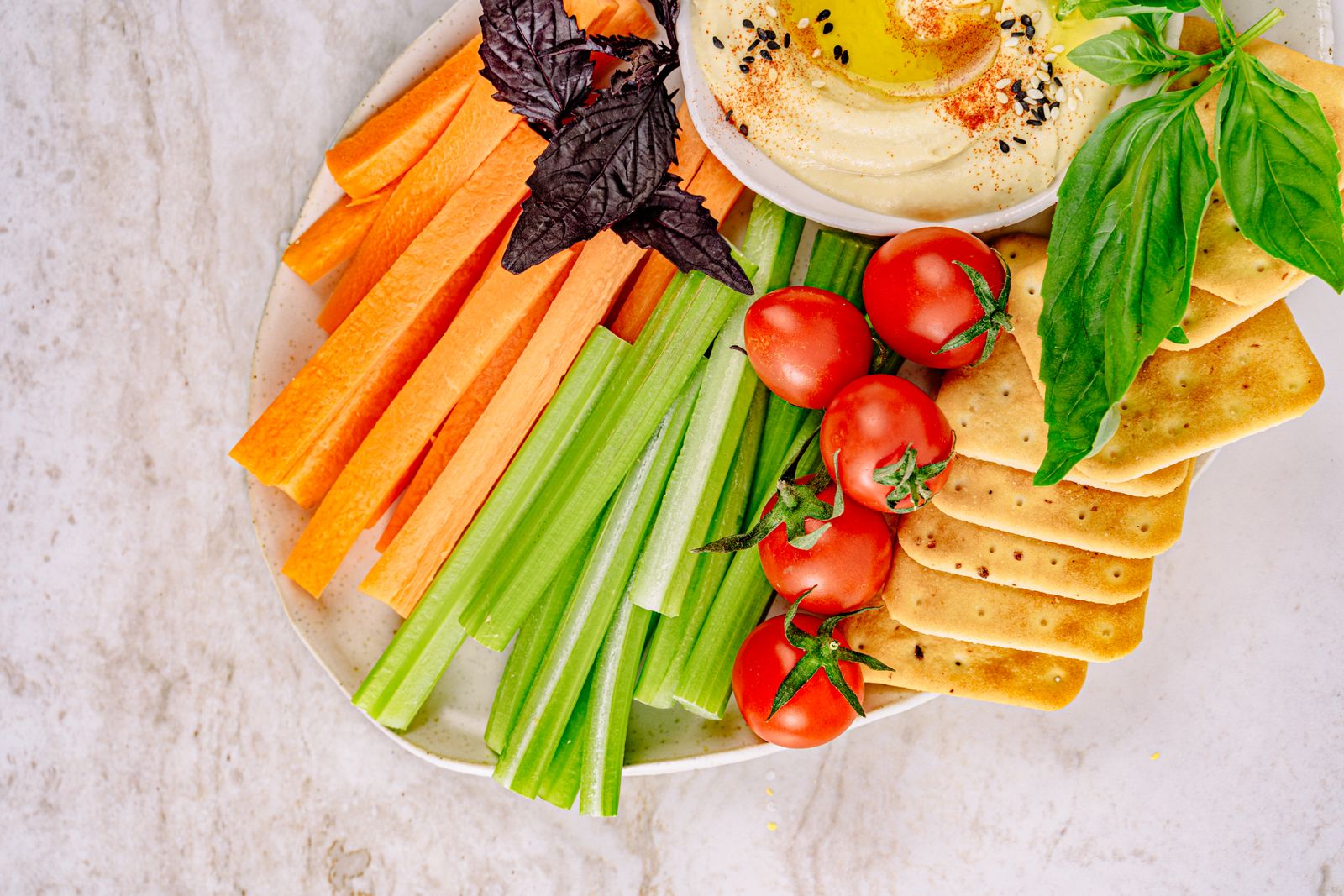
Crackers, rice cakes and corn cakes. The pairing tier. On their own they are the sensible product nobody eats; next to the hummus, the cheese and the cut vegetables from the chilled snack fridge they become the most-used savoury item in the pantry. Wholegrain and seeded crackers in a resealable box or, better, small sleeves of six to eight; rice and corn cakes in slim packs. Keep them near the fridge, not on the far shelf.
Pretzels and breadsticks. Low in fat, moderate in salt, cheap and popular. Portion bags or breadstick sleeves; the same humidity rule applies.
The roasted-pulse and vegetable tier. Roasted chickpeas, edamame, broad beans, lentil chips and seaweed thins are the products that let a savoury line credibly call itself healthy: real protein and fibre, and a genuine alternative to crisps rather than a slightly smaller crisp. They are also the most expensive line per bag and the most polarising, so stock one or two rather than the whole shelf and see what moves. The protein snacks guide covers the same territory from the protein side.
Nuts and seeds belong on this shelf in a portioned format, but they have their own supply logic — bulk versus portion packs, rancidity in the heat, the allergen boundary — and the office nuts and seeds guide covers them. Treat them as a separate line on the same invoice.
What does not belong on an always-on shelf: share bags of anything, unless there are bowls, tongs and someone whose job it is to refill and clean them; and family-size tubs of flavoured snacks, which are a portion-control failure by design.
The ceilings to buy against
A savoury line does not need a nutritionist; it needs three numbers on the buying sheet and the discipline to read the back of the pack. The traffic-light thresholds used on UK front-of-pack labelling are a convenient, widely printed reference for a per-100 g comparison:
| Per 100 g | Low (green) | High (red) |
|---|---|---|
| Total fat | ≤ 3 g | > 17.5 g |
| Saturated fat | ≤ 1.5 g | > 5 g |
| Salt | ≤ 0.3 g | > 1.5 g |
Where typical products land, per 100 g:
- Standard fried potato crisps: 30–35 g fat, 1.3–1.6 g salt, around 530 kcal. Red on fat, red or borderline on salt.
- Baked or popped potato and lentil snacks: 12–20 g fat, 1.0–1.5 g salt, around 400–450 kcal. Amber on fat.
- Ready-popped salted popcorn: 15–25 g fat depending on oil, 1.0–1.5 g salt, 400–480 kcal — but a 25 g bag is a quarter of that, and the volume per calorie is what makes it satisfying.
- Pretzels: 2–5 g fat, 1.5–2.5 g salt. Green on fat, red on salt — the one where salt is the thing to check.
- Plain rice and corn cakes: under 3 g fat, under 0.3 g salt. Green across the board, and taste like it.
- Roasted chickpeas and edamame: 5–15 g fat, 1.0–1.5 g salt, with 15–25 g of protein and real fibre.
A workable specification for the always-on shelf is: nothing over 20 g fat per 100 g, nothing over 1.5 g salt per 100 g, and a portion of 30 g or under. That still allows a good baked crisp, all the popcorn, the crackers and the pulse tier, and it removes the fried share bag without a fight. Keep one fried crisp for Fridays and events if the office wants it — the point is the default, not the exception, and the low-sugar pantry guide makes the same argument for the sweet line.
On salt specifically: adult guidance is under 5 g a day, and a 30 g portion of crisps at 1.5 g/100 g contributes about 0.45 g — not dramatic on its own, but a savoury shelf that gets visited three times an afternoon adds up. Salt is the number to hold the line on; fat mostly takes care of itself once the fried share bag is gone.
The UAE problem: humidity decides the packaging
This is the section missing from every snack guide written in a temperate country. From May to October, coastal UAE humidity sits between 60 and 90 per cent, and an office air-conditioning system does not remove all of it. Every dry, crisp product on this shelf is a moisture sponge.
What that means in practice:
- An opened share bag of crisps is soft by the afternoon. Popcorn is soft within two or three hours. Crackers in an opened box are stale within a couple of days. The "tip it into a bowl" model that works in a London office simply does not work here for most of the year, which is the single strongest argument for portion bags.
- Storage is indoors, below 25 °C, out of sunlight, sealed. A pantry cupboard is fine; a shelf by a window is not; a store room without air conditioning is not, because the temperature swing drives condensation inside the pack. The same rules the food safety guide sets for ambient goods apply, with more urgency.
- If the office insists on bowls, use lidded dispensers or airtight containers, fill them for a single sitting, and bin the remainder at the end of the day rather than topping up. Tongs, not hands. Someone owns the cleaning. This is more work than most offices will actually do, which is why it usually fails within a month.
- Order in quantities the office finishes within four to six weeks. Crisps typically carry a shelf life of four to six months from production and popcorn three to four, but the clock that matters is the one after the case is opened. A monthly delivery of what will be eaten beats a quarterly delivery of what might be.
- Receiving matters. Check the case for crushed bags and check the pack for softness on the first delivery from any new line — a bag that was left on a loading dock at 45 °C for an afternoon is technically within date and practically ruined. The supplier's van and warehouse should be air-conditioned; it is a fair question to ask.
Compliance checks that apply to flavoured snacks specifically
The savoury shelf is where halal and allergen questions hide in the flavouring rather than in the product, and where a buyer who reads only the front of the pack gets caught out.
Halal. Plain salted potato crisps, plain popcorn and plain crackers are rarely a concern. Flavoured products are where to look:
- Cheese flavourings may use cheese made with animal rennet; a halal-certified cheese powder or a microbial rennet resolves it.
- Some flavour systems use enzymes, emulsifiers or gelatine of animal origin; "bacon" and "ham" flavours are usually synthetic but are a poor idea on a shared shelf regardless.
- Flavour carriers can contain alcohol in trace amounts.
- Cracker and biscuit ranges may use animal fats in the shortening.
The practical rule from the halal compliance guide applies: product-level halal certification, on the pack or on the supplier's spec sheet, for every flavoured savoury item on the shelf. Most mainstream products sold in the UAE carry it; the check takes a minute per line and needs doing once.
Allergens. Savoury snacks touch more of the fourteen major allergens than any other pantry category: gluten in most crackers, pretzels and some coated snacks; milk in every cheese flavour and many "sour cream" and "salted caramel" popcorns; soy in flavourings and coatings; sesame on seeded crackers; peanuts and tree nuts in any mixed range; sulphites in some flavourings. Portion bags carry the full ingredient panel, which is another point in their favour; a bowl does not. The allergen labelling guide sets out how to run the shelf-label system; for the savoury line, the minimum is a printed card at the shelf listing which products contain gluten, milk, sesame and nuts.
Excise. Savoury snacks are not excise goods in the UAE. The sweetened-drink and tobacco regimes do not touch this shelf, and there is currently no sugar- or salt-based levy on food. VAT at 5 per cent applies.
Packaging and the 2026 plastic rules. Snack bags are multi-layer film and, at the time of writing, are not within the scope of the UAE's single-use plastic measures, which target bags, cutlery, cups, plates and similar items; the cups and cutlery guide covers what is. A well-run snack shelf still has a waste story to tell — a labelled bin for empty bags, and choosing portion sizes people actually finish — and some offices will prefer ready-popped popcorn in paper-based bags for that reason.
Portioning, placement and the dispensing question
The format is the portion control, so most of the work is done at purchase. Three further decisions decide whether the line is used well.
One shelf, arranged by intent. Popcorn and the pulse tier at eye level where the reflex reach lands; crackers and rice cakes beside the fridge next to the things they are eaten with; the fried Friday crisp lower down or in the cupboard. Placement moves consumption more than any policy memo.
Visible pairing. A cracker next to a tub of hummus, a rice cake next to the cut vegetables from the fruit and veg delivery, a portion of popcorn next to the water — the savoury shelf performs best as a partner to the chilled snacks rather than a rival to them. The five benefits of workplace snacking piece covers why a paired snack holds people through the afternoon in a way a bag alone does not.
Dispensers only if someone owns them. Gravity dispensers for popcorn, pretzels and roasted pulses look good, reduce packaging and work — provided they are filled for one day, emptied and washed daily, and kept away from the window. In a UAE summer with no named owner, they are a soft-snack machine. A bag of popcorn in a basket has no such failure mode. The same is true of the office popcorn maker: excellent for a town hall or a Friday, a cleaning and smell problem as a daily fixture.
Vending and unmanned sites. For a site without a pantry attendant, portion bags are the only format that survives, and the vending versus managed pantry comparison covers when a machine is the right answer. The shift-work pantry guide makes the same point for the night desk: sealed portions, a stocked basket, nothing that depends on a bowl.
Occasions: when the savoury line should scale up
The always-on shelf is small by design. There are four moments when it should grow, and they are worth planning as line items rather than a panic run to the supermarket.
- Town halls and all-hands. Popcorn in bulk-portion bags or a hired popcorn machine, pretzels, and a scaled-up cracker-and-dip table from the breakfast and events range. The breakfast meeting catering guide covers the morning version.
- Late-night deadline periods. Audit season, a product launch, a legal close: the savoury shelf gets emptied at 9 pm and the fried crisp earns its place. Order ahead and double the popcorn.
- Ramadan iftar in the office. Savoury items — dates first, then samosa-style pastries, crackers and cheese, roasted chickpeas — are how most offices break the fast together, and the Ramadan corporate gifting guide and the dried fruits and dates guide cover the sweet side of the same table.
- Friday. One fried, full-fat, properly flavoured crisp as a weekly event is a better wellness policy than a permanent ban, because it is the exception rather than the shelf.
Costing the savoury line
Indicative UAE trade prices in AED including VAT, ordered by the case rather than the multipack:
- Portion-bag crisps and corn snacks, 30–40 g: AED 1.50–3.50 per bag, the baked and lentil variants at the upper end.
- Ready-popped popcorn, 20–30 g: AED 2.00–4.00 per bag.
- Pretzel portion bags, 30–40 g: AED 1.50–3.00.
- Rice and corn cakes: AED 0.40–0.80 per cake in slim packs.
- Wholegrain and seeded crackers: AED 8–20 per box, AED 2–4 per sleeve.
- Roasted chickpeas, edamame and lentil chips, 25–40 g: AED 3.00–6.00 per bag.
- Seaweed thins: AED 3.00–5.00 per pack.
A savoury line built on the shelf above, at a consumption rate of roughly two to three portions per person per week, comes to AED 8–15 per head per month, with the range set almost entirely by the share of the pulse tier and how many Friday crisps are bought. That sits inside the AED 40–60 per head per month a full snack programme typically runs to, and the cost-per-employee guide and the budget template show where the savoury line fits against coffee, water, fruit and the sweet line. Two rules keep the number honest: buy portion bags by the case, because the multipack in a supermarket is the most expensive way to buy them; and put savoury on the same invoice and delivery as the rest of the pantry, because a separate cash-and-carry run for crisps is how the supplier consolidation guide says most snack budgets leak.
Who this matters most for
- Tech, media and coworking floors eat more savoury snacks per head than anyone and are the offices where a gravity dispenser of popcorn becomes part of the brand — the tech vertical, the media agencies vertical and the coworking vertical, across Dubai Internet City, Media City, Dubai Design District and JLT.
- Consultancies, law firms and banks with long hours — the consultancy, law firm and banking verticals in DIFC, ADGM and Business Bay — need the late-night savoury shelf and the discipline of portion bags so that it is not a fried share bag at 10 pm.
- Schools, universities and healthcare have the strictest allergen and halal requirements and benefit most from the product-level certification rule: the education vertical, the healthcare vertical and sites in Dubai Knowledge Park and Dubai Healthcare City.
- Manufacturing, logistics and construction sites with no pantry attendant and a hot store room are where the humidity and storage rules bite hardest — the manufacturing, logistics and construction verticals in Mussafah, Al Quoz and Dubai South.
The short version
Stock the savoury line to a specification: portion bags of 30 g or under, nothing over 20 g fat or 1.5 g salt per 100 g on the always-on shelf, with ready-popped popcorn as the anchor, crackers and rice cakes beside the fridge, one or two roasted-pulse products for the people who want protein, and the fried crisp kept for Fridays and events. Buy by the case, order what the office finishes in four to six weeks, store it sealed and indoors below 25 °C, and do not tip anything into a bowl between May and October unless somebody owns the bowl. Check product-level halal certification on every flavoured item and put an allergen card on the shelf listing gluten, milk, sesame and nuts. Budget AED 8–15 per head per month and keep it on the same invoice as the coffee, water and fruit.
MHO supplies UAE offices with portion-bag crisps, popcorn, crackers, rice cakes and the roasted-pulse tier as part of the office snack range, alongside nuts and seeds, low-sugar treats and the cut fruit and vegetables they pair with — delivered air-conditioned, on the same run as the coffee and water. Browse the full range by category, see every area we deliver to, or talk to us about a savoury shelf that survives a UAE summer and a wellness policy at the same time.
Frequently asked questions
Are crisps and popcorn acceptable in a healthy office snack programme? Yes, if the format and the spec are right. Ready-popped popcorn is whole grain and a 25 g bag comes in at roughly 100–130 kcal; baked, popped and lentil-based crisps sit around half the fat of a fried crisp; and a 30 g portion bag is eaten once, where an open share bag is eaten until it is empty. A workable always-on rule is nothing over 20 g fat or 1.5 g salt per 100 g and portions of 30 g or under, with the fried crisp kept for Fridays and events rather than banned.
Why do our crisps and popcorn go soft so quickly in the office? Humidity. From May to October, coastal UAE humidity runs at 60–90 per cent and office air conditioning does not remove all of it, so any dry, crisp product absorbs moisture within hours of being opened. Popcorn in an open bowl is soft in two to three hours, crisps by the afternoon, crackers in an open box within a couple of days. The fix is the format — sealed portion bags — plus storing cases indoors below 25 °C and out of sunlight, and ordering only what the office finishes within four to six weeks.
Do flavoured crisps and snacks need halal certification? It is the sensible rule for a shared UAE pantry. Plain salted crisps, plain popcorn and plain crackers are rarely a concern, but flavour systems are where animal-derived ingredients hide: cheese powders made with animal rennet, enzymes and emulsifiers of animal origin, alcohol in flavour carriers and animal fats in some cracker shortenings. Ask for product-level halal certification, on the pack or on the supplier's spec sheet, for every flavoured savoury item. Most mainstream products sold in the UAE carry it; the check takes a minute per line.
Should we use bowls or dispensers for office snacks? Only if someone owns them. Lidded gravity dispensers for popcorn, pretzels and roasted pulses work if they are filled for a single day, emptied and washed daily, and kept away from windows; in a UAE summer with no named owner they turn into soft-snack machines within a week. Open bowls also lose the ingredient panel and the portion control, and are eaten by hand. Portion bags in a basket have none of those failure modes, which is why they are the right default for most offices and the only workable option for sites without a pantry attendant.
How much should the savoury snack line cost per employee? Roughly AED 8–15 per head per month at two to three portions per person per week, with the range set by how much of the roasted-pulse tier and how many Friday fried crisps are bought. Indicative trade prices including VAT are AED 1.50–3.50 for a portion bag of crisps, AED 2–4 for a bag of popcorn, AED 0.40–0.80 per rice cake and AED 3–6 for roasted chickpeas or lentil chips. Buy by the case rather than the supermarket multipack, and keep it on the same invoice as the rest of the pantry.
Are savoury snacks subject to UAE excise tax or the single-use plastic ban? No on both counts at the time of writing. Excise applies to tobacco, energy drinks and sweetened drinks — not to crisps, popcorn or crackers — and there is no salt- or sugar-based levy on food; VAT at 5 per cent applies. The UAE's single-use plastic measures target bags, cutlery, cups, plates and similar items rather than multi-layer snack film, so portion bags remain compliant, though offices that want a lower-waste shelf tend to favour ready-popped popcorn in paper-based bags and a labelled bin for empties.