The pantry drawer in most UAE offices holds a legacy: a half-used sleeve of plastic cups by the cooler, a box of plastic forks for the Thursday lunch, a bag of stirrers by the coffee machine, a stack of polystyrene clamshells someone bought for an event and never finished. Since 1 January 2026 none of that can legally be imported, made or sold in the country. The drawer is not going to be raided, but it is not going to be refilled either, and the office that has not re-specified its disposables line will find out at the next order.
The federal rules on single-use products, phased in from 2024, reached their final stage this year; Dubai's own executive resolution runs on the same timetable, and Abu Dhabi's programme got there first. The details differ slightly by emirate but the practical effect for an office is the same everywhere: a specific list of conventional-plastic items is gone from the supply chain, the compliant replacements are a different set of products with different prices and storage needs, and reusables are now cheaper than any disposable over any horizon longer than a few months.
This guide treats the ban as what it is for a pantry buyer — a stock-list change — and works through it line by line.
What the ban actually removes
The final phase covers single-use items made from conventional plastic: cups and lids, cutlery (forks, knives, spoons, chopsticks), plates, straws, stirrers, and polystyrene food containers and boxes. Earlier phases had already removed plastic carrier bags, thin bags under 50 microns whatever their material, and, from 2025, polystyrene cups, plastic cotton swabs and plastic table covers.
Three points matter for the office rather than the retailer.
The ban is on import, manufacture and trade, not on possession or use. Using up the stock in the drawer is not an offence. The supply behind it has stopped.
The ban is on the material, not the format. A single-use cup is still permitted if it is paper; a single-use fork is permitted if it is wood, bamboo or a plant-based bioplastic; a takeaway box is permitted if it is moulded fibre or card. So the pantry does not have to abandon disposables entirely — it has to buy different ones.
The ban is national, but enforcement and detail sit with each emirate. An office with sites in more than one emirate should specify to the strictest reading and stop worrying about the differences; the multi-site pantry guide covers why one national spec beats seven local ones.
What to buy instead, line by line
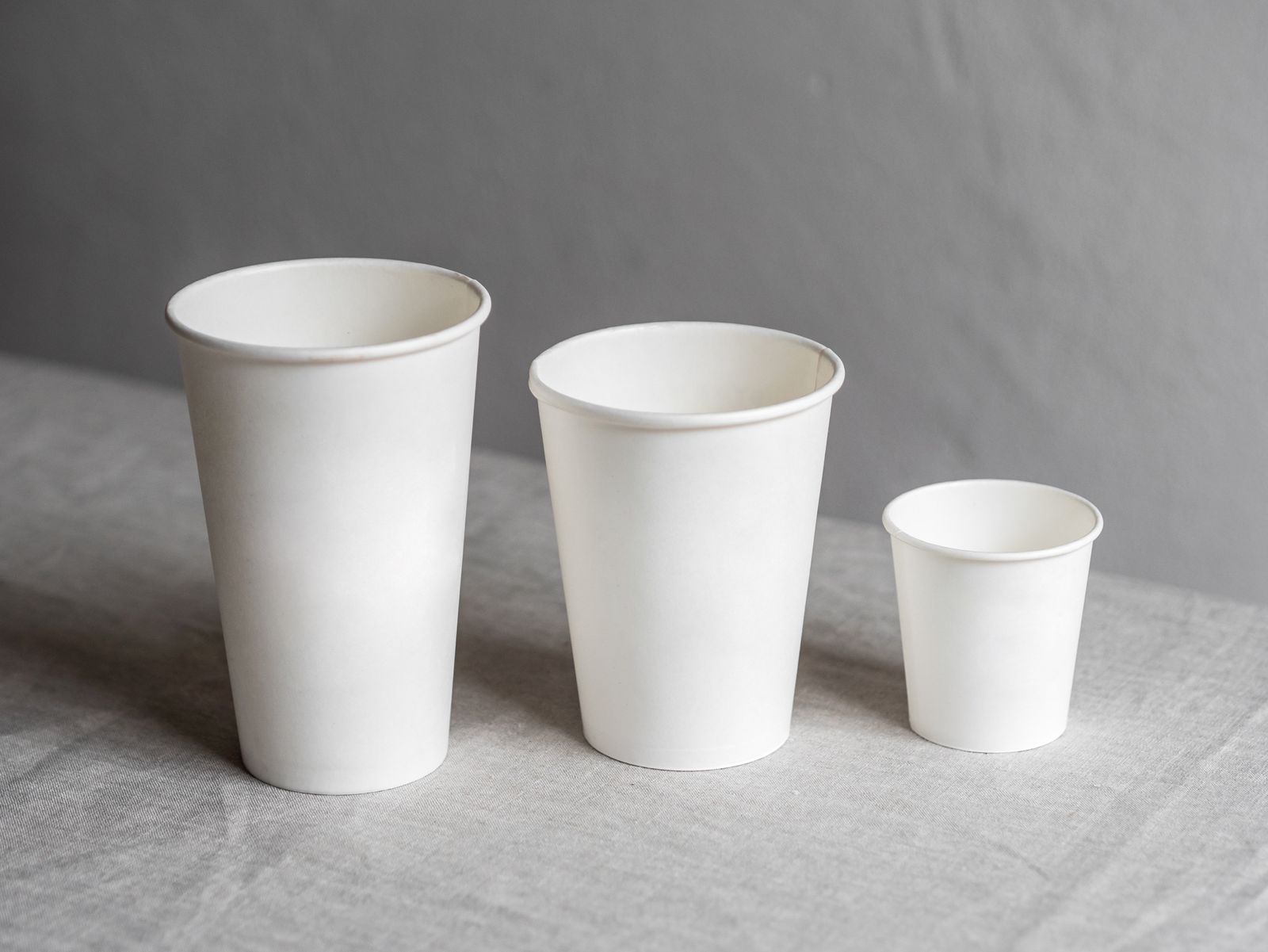
Cold cups. Plastic cooler cups are the item most offices notice first, because they are used daily and by everyone. The compliant replacement is a paper cold cup, either with a polyethylene lining (recyclable in principle, rarely recycled in practice) or an aqueous or plant-based lining that composts industrially. Paper cold cups cost more per unit than the plastic they replace, go soft if left half-full for an hour, and take more cupboard space per hundred. All three problems disappear if the cooler gets a shelf of reusable glasses and a dishwasher, which is the real answer below.
Hot cups and lids. Paper hot cups were already the norm and are unaffected, but the lids were mostly plastic and are now the gap. Fibre-moulded and paper lids exist, fit less snugly, and are noticeably dearer; sip-through paper lids are improving quickly. An office where most coffee is drunk at a desk fifteen metres away needs a lid; one where it is drunk standing at the machine does not, and can simply stop buying them. Card sleeves for double-wall hot cups are unchanged.
Cutlery. Wooden and bamboo cutlery is the cheap compliant option, works fine for most lunches, and is the wrong tool for anything that needs cutting. CPLA — crystallised plant-based bioplastic — looks and behaves like the plastic it replaces, handles heat, and costs two to three times as much. For a pantry that serves a catered lunch weekly, wooden for the salad days and CPLA for the days a knife is needed is a reasonable split. For a pantry that serves lunch daily, cutlery is the first thing to make reusable.
Plates and bowls. Bagasse — moulded sugarcane fibre — is the standard replacement: rigid, heat-tolerant, grease-resistant enough for most office food, and compostable. Plain card plates are cheaper and fine for pastries. Neither is happy under a wet curry for forty minutes, which is an argument for the ceramic set that every pantry should have anyway.
Straws and stirrers. Paper straws and wooden stirrers, both of which have been standard for a year already in most offices. The better answer for the coffee machine is no stirrer at all: a jar of reusable teaspoons and a small bowl for used ones removes the line entirely.
Takeaway containers. Polystyrene clamshells are gone. Bagasse clamshells and card boxes with a fibre lining replace them for the events and catering side; for daily use the pantry should not need them.
Bin liners and bags are outside the scope that concerns a pantry — refuse bags remain permitted — but the very thin bags used for wrapping bread and fruit are also exempt, which matters to a pantry that portions its own fruit.
The cleaning and washroom consumables guide covers the adjacent lines that the ban does not touch; the change is confined to the items above.
Where reusables win outright
The honest accounting on disposables has changed. Compliant paper and fibre products cost more per unit than the plastic they replace, and a pantry that was already using a thousand cups a week is now spending noticeably more for a worse cup. That shifts the crossover point at which reusables pay for themselves from "eventually" to "within the quarter".
Cooler and tap water. A shelf of plain glasses and a small under-counter dishwasher removes the largest disposables line an office has. A 100-person office uses in the region of 300 to 500 cold cups a day in summer; at compliant prices that is a monthly figure that pays for the dishwasher in a few months and the glasses in a few weeks. The water cooler versus bottled guide makes the same point from the other side: the dispenser is cheap, the cups are not.
Coffee. Ceramic mugs for anyone drinking at the machine or in a meeting room, paper cups only for the walk back to the desk, and a mug amnesty every Friday. Offices that have done this typically halve their hot-cup order. The coffee station accessories guide covers the practical side — mug storage, the dishwasher cycle, who runs it.
Lunch. A ceramic plate, bowl and metal cutlery set for the headcount plus twenty per cent, kept in the pantry and washed daily, removes cutlery and plates from the order except for events. This is the change that people notice most and object to least, because reusable cutlery is simply better to eat with.
The plastic-reduction guide ranks the switches by impact; the ban has done the office the favour of removing the cheap option that made the maths hard.
What reusables need in return is a dishwasher, somewhere to keep the crockery, and a cleaning schedule. A pantry that has neither is a fit-out question before it is a procurement one; the breakroom design guide covers where the dishwasher goes and how much cupboard a 100-person crockery set actually needs.
Events and catering are the exception
The day-to-day pantry can go almost entirely reusable. The Thursday lunch for eighty, the breakfast meeting for a client group, the National Day celebration, the Ramadan iftar — these still need disposables, and this is where the compliant range earns its place.
For events, specify bagasse plates and bowls, CPLA or wooden cutlery by dish, paper hot cups with fibre lids, paper cold cups, paper napkins, and bagasse or card takeaway boxes for what is left. Order by event, not by year, because the compliant products do not store as well as plastic did: paper cups absorb humidity in a UAE cupboard and go out of shape, and bagasse takes on the smell of whatever it is stored next to. The corporate breakfast catering guide has the per-head quantities.
A caterer that arrives with polystyrene clamshells and plastic forks in September 2026 is telling the office something about its supply chain, and the supplier due-diligence questions should now include how its disposables are specified.
Compostable is not the same as composted
The compliant range is sold on the word "compostable", and it is worth being clear about what it means in the UAE. PLA and CPLA bioplastics, aqueous-lined paper and bagasse all compost in an industrial facility at sustained high temperature. They do not compost in a landfill, and they do not break down in the ordinary general-waste stream that most UAE office buildings run. Unless the building or the facilities contractor has a separate organics collection that goes to an industrial composter, a compostable fork ends up in the same place a plastic one did — it is simply made from a plant rather than from oil.
That is not an argument against the compliant range; it is the only range there is. It is an argument for three things. Reusables first, wherever the pantry can run them. Paper and fibre over bioplastic where a disposable is unavoidable, because the paper stream is more likely to be recycled. And an honest line in the sustainability report: "switched to compliant compostable disposables" is a compliance statement, not a waste-reduction one, and the reduction number comes from the cup and cutlery volumes that reusables removed. The circular-economy blueprint sets out how to count it.
Offices in Masdar City, where the master developer runs its own waste streams, and in developments on Saadiyat and Yas Island with building-level organics collection, are among the few where "compostable" can actually mean composted; it is worth asking the building.
Sector notes
Healthcare and clinics. Clinic and hospital back offices sit next to clinical areas with their own single-use rules, and the pantry should not confuse the two: medical disposables are outside the ban and the pantry's cups are not. The staff pantry in a Dubai Healthcare City practice can go reusable like any other office; the clinical supply is a separate order.
Schools and universities. Campus staff rooms and canteens are among the highest-volume users of disposables in the country and usually have an institutional sustainability policy that predates the ban. Reusables plus a compliant events range is the standard answer, and a campus at Dubai Knowledge Park or a research group at Dubai Science Park typically already has the dishwashing capacity.
Government. Public-sector offices are expected to lead on the policy they administer, and several federal and emirate entities had removed single-use plastic from their premises before the ban required it. Reusable crockery in the pantry and a compliant events specification is the minimum; a visible plastic fork in a government majlis is a story.
Construction and site offices. A site canteen is where polystyrene clamshells and plastic cutlery persisted longest, because meals arrive from a central kitchen and the site has no dishwashing. Bagasse boxes and wooden cutlery are the compliant replacement and cost more per meal; the alternative is insulated reusable containers on a return loop from the kitchen, which several large contractors in Mussafah and Al Quoz have moved to for exactly this reason.
Real estate and property managers. A property company that runs building pantries or a leasing-centre café for tenants is a trader of the products in question, and its own disposables spec is the tenants' first impression of the building's sustainability claims.
Writing the order
Put the disposables line in the pantry policy and the SLA explicitly, so that the supplier is contractually responsible for compliance and the office does not have to check every delivery. Three lines are enough: no conventional single-use plastic in any pantry or event supply; disposables specified as paper, bagasse, wood or certified compostable bioplastic; reusable crockery and cutlery the default in every pantry with dishwashing.
Then cut the order. An office that goes reusable for water, coffee and daily lunch should see its disposables spend fall well below where it was before the ban even though the unit prices have gone up, and the supplier consolidation guide makes the case for buying the compliant events range from the same supplier as the pantry rather than from a packaging wholesaler, so that one order and one compliance conversation covers both.
The short version
The 2026 ban removed conventional-plastic cups, lids, cutlery, plates, straws, stirrers and polystyrene containers from the UAE supply chain; the drawer can be used up but not refilled. Replace cold cups with glasses and a dishwasher, hot-cup lids with none where possible and fibre where not, cutlery and plates with a ceramic-and-metal set for daily use, and keep a compliant paper, bagasse and wooden range for events, ordered by event rather than by year. Treat "compostable" as a compliance word rather than a waste claim unless the building actually composts, and write the specification into the supplier contract so it is checked once rather than every delivery.
MHO supplies UAE offices with compliant paper, bagasse and wooden disposables alongside hygiene and facility consumables, and can plan the reusable crockery and dishwashing side for a pantry that wants to stop buying cups. If your disposables line has not been re-specified since January, talk to us.
Frequently asked questions
Can an office still use the plastic cups and cutlery it already has? Yes. The ban applies to the import, manufacture and trade of the listed items, not to using stock that was bought before it took effect. Using up the drawer is lawful; what has changed is that the supply behind it has stopped, so the next order has to be a compliant product. Most offices use the changeover as the moment to move daily water, coffee and lunch to reusables and keep disposables for events only.
Which disposables are compliant with the UAE single-use plastic ban? Anything not made from conventional single-use plastic: paper cold and hot cups, fibre or paper lids, wooden, bamboo or certified compostable bioplastic (PLA/CPLA) cutlery, bagasse or card plates and bowls, paper straws, wooden stirrers, and bagasse or card takeaway boxes. The ban is on the material, not the format, so single-use is still permitted in these materials. Refuse bags and very thin food-wrapping bags are outside its scope.
Do compostable cups and cutlery actually get composted in the UAE? Only if they reach an industrial composting facility, which needs a separate organics collection from the building or facilities contractor. In the ordinary general-waste stream they go to landfill like the plastic they replaced. A few master-planned developments and campuses run organics streams; most office towers do not. So "compostable" is a compliance description of the product, and the real waste reduction comes from the cup and cutlery volumes that reusables remove.
Is it cheaper to switch to reusable cups and cutlery than to buy compliant disposables? For daily use, yes, and the ban made the gap wider because compliant paper and fibre products cost more per unit than plastic did. A 100-person office using several hundred cold cups a day in summer typically pays back a set of glasses within weeks and an under-counter dishwasher within a few months against the compliant-disposable cost. Events are the exception — a catered lunch for eighty still needs disposables, and that is where the compliant range belongs.