Almost every UAE office handles meeting catering the same way. Someone books a room, remembers the catering ninety minutes before it starts, calls whichever place delivered last time, orders roughly what they ordered before, and pays retail. The food arrives, it is fine, and nobody thinks about it again until the next time — when the whole sequence repeats, usually with a different person, a different supplier and a different result.
This is the most visible spend in the office. It is served to clients, to regulators, to candidates and to the board. And it is almost always the least planned line in the whole supply chain — bought reactively, never compared, rarely on a contract, and invisible in any budget because it is spread across expense claims and small ad-hoc invoices.
Fixing it does not mean building a catering function. It means doing one afternoon of work once: deciding what the office serves, in three or four standard configurations, at a known cost, from a supplier who is already delivering to the building.
The five things a UAE office actually caters
Almost every request that reaches an office manager is one of these. Naming them is what makes a standing menu possible, because a menu that tries to cover everything covers nothing.
Internal morning meetings. Coffee, tea, water, something to eat. Fifteen to thirty people, recurring, low ceremony. The highest-volume category by a distance and the one where standardising saves the most.
Client and external meetings. Smaller headcount, higher expectation, served in a room the client sees. Presentation matters more than volume, and this is the one category where being cheap is genuinely visible.
All-day workshops and training. The hardest to get right, because it is three services in one — arrival, mid-morning, lunch, and often an afternoon refresh — and because the failure mode is people leaving the building at lunch and not all coming back.
Team events and celebrations. Ramadan iftars, National Day, Eid, end-of-quarter, birthdays and new joiners. Predictable in the sense that they recur annually; unpredictable in the sense that nobody plans for them until the week before.
Interview and recruitment days. Low volume, high frequency in a hiring cycle, and the one people forget entirely — a candidate offered nothing but a bottle of water forms an impression, and it is not the one intended.
The point is not that each needs a different supplier. It is that each needs a different standard order, and once those exist the whole process collapses from a decision into a selection.
Build three standing configurations, not a catalogue
The single highest-return change in this whole category is replacing per-event improvisation with three or four pre-agreed configurations at known prices. It removes the decision, removes the price variance, and removes the ninety-minute panic.
A workable set for most offices:
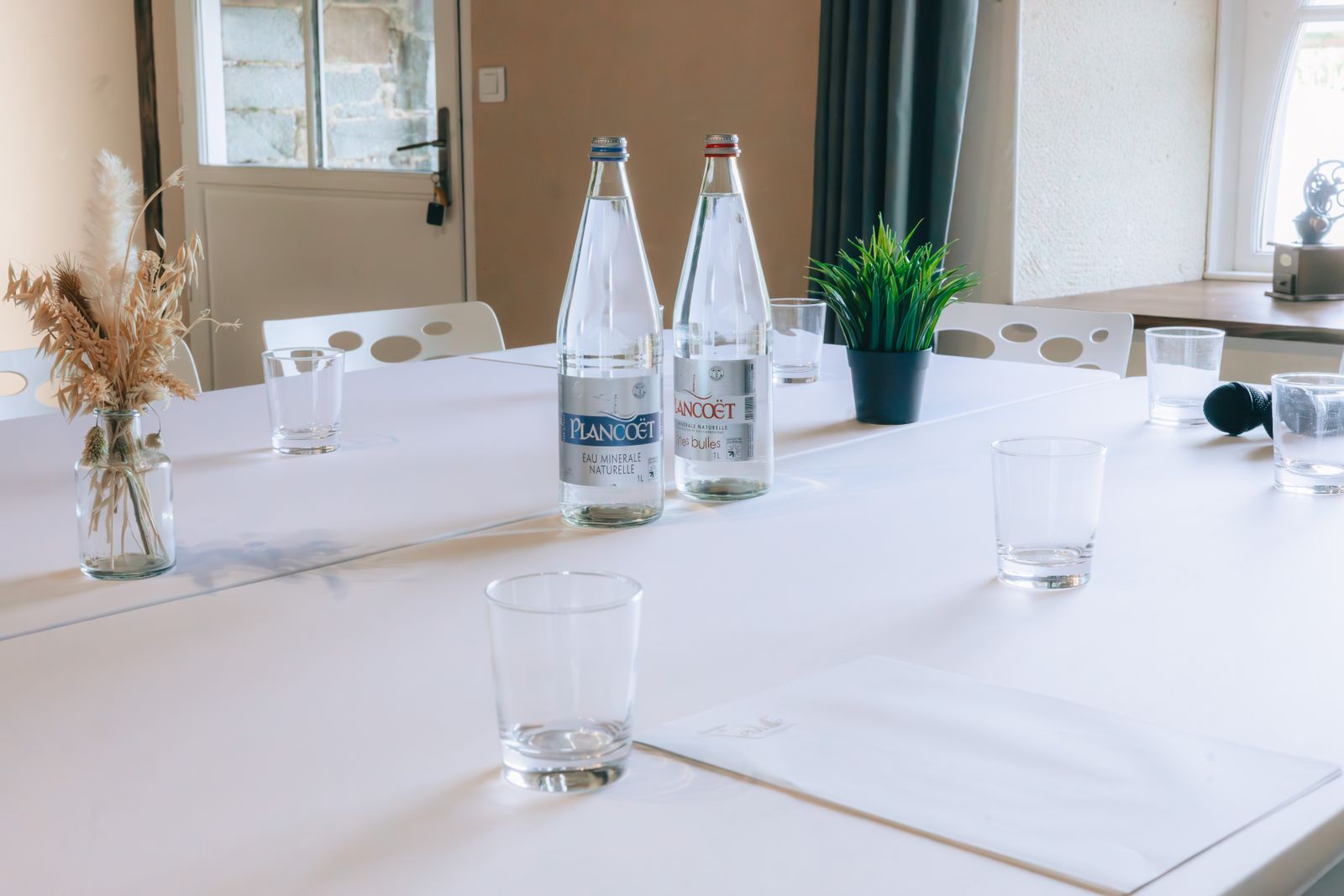
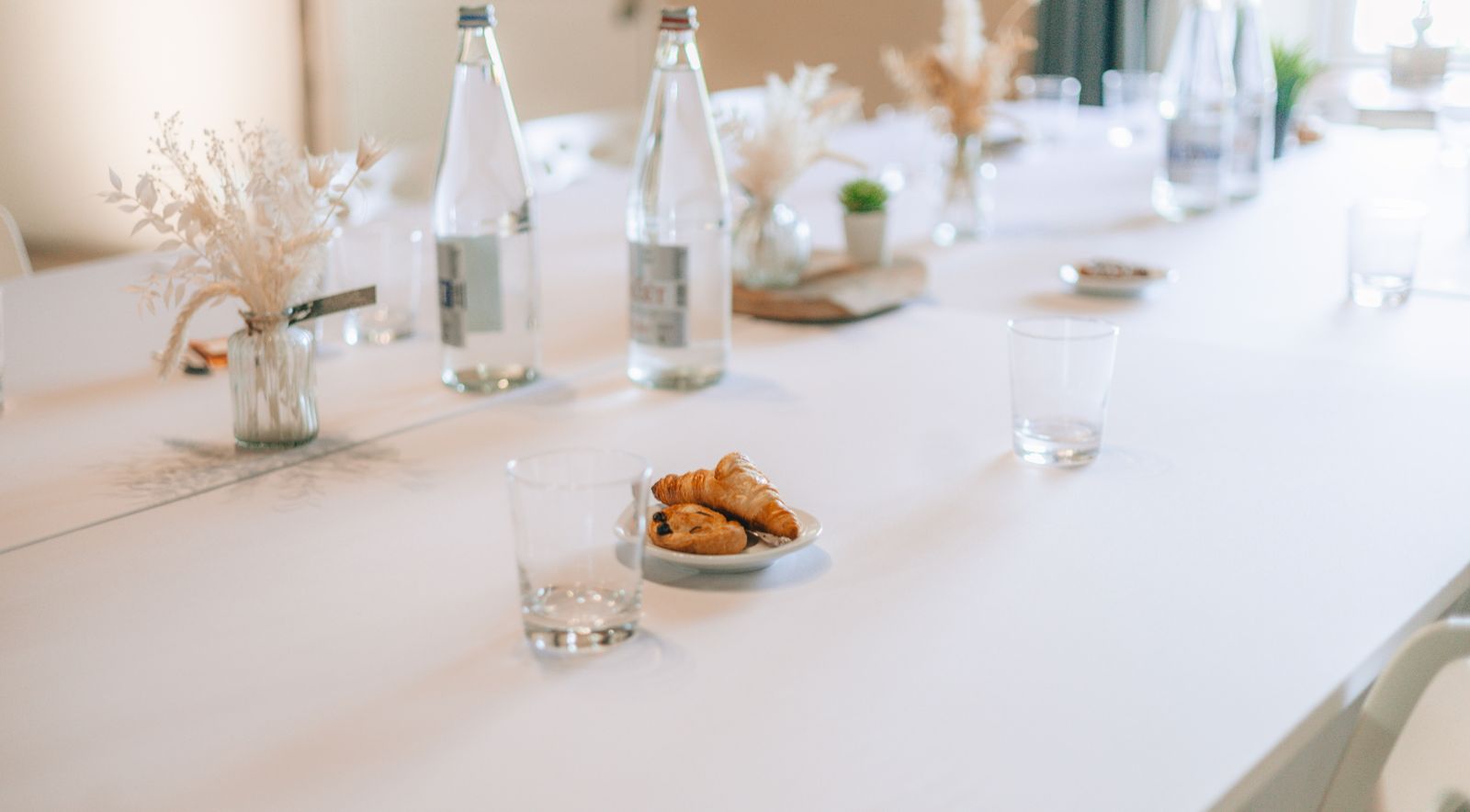
The standard morning. Coffee and tea service, chilled and still water, a fruit platter, and a modest baked selection — a mix of savoury and sweet, with at least one item that is neither pastry nor cake. Sized per head. This covers the majority of internal meetings and most client meetings before 11am.
The client configuration. The same, plus proper presentation: served on real plates rather than in delivery packaging, with Arabic coffee and dates alongside the Western service. That last point is not decoration. Offering gahwa and dates to a guest is the baseline courtesy of the region, it is what a UAE or wider GCC counterparty will notice the absence of, and it is inexpensive — the full etiquette is covered in the Arabic coffee and dates hospitality guide.
The all-day workshop. Arrival service, a mid-morning refresh that is mostly fruit and water rather than more pastry, a lunch, and an afternoon service weighted toward something with protein rather than sugar. The afternoon slump after a pastry-heavy morning is a real and avoidable problem, and the substitution logic in the low-sugar office pantry guide applies directly.
The light option. Water, coffee, fruit, and nothing else. Genuinely useful and almost never offered, because nobody wants to be the person who ordered "just fruit". Making it a named standard configuration is what makes it selectable.
Price each per head, write them down, and let anyone booking a room pick one. The gain is not primarily unit cost — it is that the office stops paying a different price every time for approximately the same thing.
Sizing: the two numbers that matter
Meeting catering is either over-ordered or embarrassingly short, rarely correct. Two rules get most of the way there.
Confirmed headcount plus a fixed margin, not a percentage. For a meeting of ten, order for twelve. For a meeting of forty, order for forty-four. Percentage margins over-provision large events badly, which is where most catering waste in an office actually occurs. The absolute-margin approach also survives the late addition, which is the realistic failure mode.
Duration determines items per head, not headcount. A ninety-minute meeting needs one service. A half-day needs two. A full day needs three plus lunch. Offices routinely order a full-day quantity for a ninety-minute meeting because the request said "catering for 20" without a duration, and the surplus goes in the bin at 2pm.
Over-ordering is the dominant waste stream in this category, and it is worse than pantry waste because it is concentrated, visible and often food that cannot be held. If the same platters keep coming back half full, the standing configuration is wrong and should be adjusted rather than absorbed. The general approach in the food waste reduction guide works here, with one addition: log what comes back for a month before changing anything, because memory systematically overestimates what was eaten.
Timing and delivery access, which is where it actually fails
The catering itself is rarely the problem. Getting it into the room on time is.
Order the day before, not the morning of. Same-day catering is available across Dubai and Abu Dhabi and it costs more, arrives in a narrower quality band and cannot absorb a single delay. A standing configuration ordered the previous afternoon removes almost all of this.
Aim for thirty minutes before the meeting, not five. Food needs to be laid out. A delivery that arrives at the start time is a delivery that interrupts the meeting.
Check the building before the first order, not during it. Grade-A towers in DIFC, ADGM and the wider free-zone estate typically require deliveries through a service entrance, on a booked service lift, with a registered pass. Buildings around the Dubai World Trade Centre add exhibition-period congestion on top, which can turn a fifteen-minute delivery into an hour without warning. A supplier who already delivers your pantry has solved all of this; a new caterer is solving it for the first time on the morning of your board meeting. The building-access dimension is covered more fully in the Dubai office pantry services guide.
Confirm who receives it. The most common failure in the whole process is catering sitting at a reception desk while the meeting runs upstairs.
Dietary requirements are a specification, not an accommodation
In a UAE office the realistic assumption is that any given meeting includes people who do not eat pork, do not drink alcohol, do not eat meat at all, avoid gluten or dairy, or are fasting. Handling this as a series of last-minute exceptions produces both awkwardness and risk.
Halal is the default, not an option. Everything served should be halal-certified as standard, and the certification should be verifiable from the supplier rather than assumed. This is straightforward when it is a standing requirement in the supply arrangement and awkward when it is asked per-order. The halal compliance guide for office pantry supplies covers what to ask for and what documentation looks like.
Label everything, every time. A small card per item stating what it is and the allergens it contains costs nothing and resolves the entire problem quietly, without anyone having to announce a dietary requirement in front of clients. Where food is decanted from its original packaging — which is most catering — the original declaration is lost, and re-labelling is the only thing that restores it. The obligations are set out in the allergen and dietary labelling guide.
Build the vegetarian option into the standard, not the exception. A configuration where a third of the items are vegetarian by default never needs a special order and never leaves anyone eating bread. The same logic extends to the wider plant-based provision covered in the plant-based office catering guide.
Plan the Ramadan version in advance. During Ramadan, daytime catering changes shape entirely and iftar catering becomes its own category with its own timing constraints. This is annual and predictable; it should be a known configuration rather than a scramble, and the working patterns behind it are covered in the Ramadan workplace guide.
The cost question nobody asks
Meeting catering is bought at retail almost universally, and because it arrives as many small invoices it never surfaces as a category anyone owns. Three things change that.
Consolidate it onto an existing supply relationship. The savings are partly unit price and mostly everything else — one supplier already cleared for building access, one invoice stream rather than dozens of expense claims, one negotiation on terms, and one point of accountability when something is wrong. This is the same argument as supplier consolidation applied to a category most offices leave out of the exercise.
Get it into the budget as its own line. Catering hidden inside general office expenses is not manageable. Once it is visible it is usually smaller than people feared and far more variable than they expected, and the variance is where the money is.
Understand the tax treatment before year end, not after. Refreshments provided to staff and hospitality provided to clients are treated differently for VAT recovery and for corporate tax deductibility, and the distinction depends on how the expense is characterised and documented. Neither is complicated, but both are much easier to get right on the invoice than to reconstruct in an audit. The detail is in the VAT guide for staff refreshments and the corporate tax guide.
Where the stakes are highest
Some offices can treat this as a convenience. Others cannot.
Client-facing professional firms — law firms, consultancies and banks and financial services — serve external counterparties in their own meeting rooms as a routine part of the work, often several times a week. For them the client configuration is not an occasional order but a standing operational requirement, and the difference between a considered spread and an improvised one is read as a signal about the firm. The sector-specific version of this is covered in the pantry guide for law firms and professional services.
The other high-stakes case is any office running frequent all-day sessions — training providers, agencies running client workshops, and teams in a hiring cycle. There the failure is not embarrassment but attrition: a badly catered full day loses the afternoon.
What good looks like
An office with this under control has:
- Three or four named configurations at known per-head prices, selectable rather than negotiable.
- Halal as standard, labelled items as standard, and a vegetarian share built into the default rather than requested.
- Orders placed the day before, arriving thirty minutes early, with a named receiver.
- Building access and service-lift booking already solved by a supplier who is in the building anyway.
- Absolute rather than percentage over-ordering margins, and a month of returned-platter observation before anyone changes the quantities.
- Catering visible as its own budget line, on one invoice stream, with the staff-versus-client characterisation recorded at the point of purchase.
- A pre-agreed Ramadan and National Day version, written down in a normal month rather than the week before.
That is an afternoon of setup. What it replaces is a recurring ninety-minute scramble, a variable price for the same thing, and the occasional visible miss in front of exactly the people you would rather not miss in front of.
Catered breakfast is for guests and events; the everyday version for staff is a self-serve station of oats, granola, milk and toppings at a fraction of the per-head cost, and the office breakfast supplies guide covers the list, the sugar ceiling and the milk logistics.
Events are where an office still legitimately needs disposables, and since January 2026 they have to be paper, bagasse, wood or certified compostable bioplastic; the office disposables guide covers the compliant events range and why it should be ordered per event rather than stored.
A client-facing counter needs jars and a serving utensil rather than a basket of sachets, and somebody to own it; the condiments and spreads guide covers that choice and the hygiene rules that make it work.
The gluten-free wrap placed in the middle of a mixed platter is the classic meeting failure; the gluten-free pantry guide covers ordering gluten-free items individually wrapped and labelled, and serving them first.
For an everyday breakfast in the staff pantry rather than a catered meeting, the eggs, cheese and labneh guide covers what to stock, how much to order and how to keep it safe.
For the other regular office celebration, the office birthday cakes guide covers monthly celebrations, ordering from licensed bakeries, allergens and how many kilos of cake to order.
When the meeting moves out of the office for a full day, the team offsite and workshop catering guide covers venue rules, break timing and keeping food safe in the heat.
For a Levantine-style spread, the olive oil, za'atar and olives guide covers what to order for 20 people and how to serve it without shared dipping bowls.
For coffee and snacks on a trade show stand, the exhibition stand hospitality guide explains exhibitor manual rules, sampling permits and quantities for staff and visitors.
For training sessions held over lunch, the lunch and learn catering guide covers boxed lunches, quantities and food that is easy to eat while listening.
The short version
Meeting catering is the most visible thing an office serves and the least planned thing it buys — improvised per event, bought at retail, spread across small invoices and owned by nobody. The fix is not a catering function; it is three or four standing configurations at known per-head prices: a standard morning, a client configuration that includes Arabic coffee and dates, an all-day workshop service weighted away from sugar in the afternoon, and a genuinely light option that people can select without feeling cheap. Size on confirmed headcount plus an absolute margin rather than a percentage, and let duration rather than headcount decide how many services to order — over-ordering is the dominant waste stream here and it is worse than pantry waste because it cannot be held. Order the day before, aim for thirty minutes early, name a receiver, and confirm the service-entrance and lift-booking rules before the first delivery rather than during it. Treat halal certification, per-item labelling and a default vegetarian share as specifications rather than accommodations, and write the Ramadan and National Day versions down in a quiet month. Then consolidate the whole thing onto a supplier already delivering to the building, put it in the budget as its own line, and record the staff-versus-client characterisation at the point of purchase so the VAT and corporate tax treatment is not reconstructed a year later.
My Healthy Office supplies breakfast and corporate event catering alongside fresh fruit and cut vegetables and dairy and plant-based milks on the same scheduled delivery as the pantry order, so meeting catering stops needing its own supplier, its own building pass and its own invoice. To have a set of standing configurations built and costed for your meeting rooms, get in touch with our team.
From November to March, many teams move breakfast outside; the outdoor office events guide covers quantities, drinks and food safety for terrace events.
For a recurring internal breakfast rather than a one-off meeting, see the weekly team breakfast guide: picking the day, quantities per person and keeping it going after the first month.
For full-day governance sessions, see the board meeting and AGM catering guide.
Frequently asked questions
How much food should we order for a corporate meeting? Use confirmed headcount plus an absolute margin rather than a percentage — for ten people order for twelve, for forty order for forty-four. Percentage margins over-provision large meetings badly, and that is where most office catering waste actually happens. Then let duration set the number of services: a ninety-minute meeting needs one, a half-day needs two, a full day needs three plus lunch. Most over-ordering comes from a request that specified a headcount but not a duration, and got a full-day quantity for a short meeting.
When should office meeting catering be ordered and delivered? Order the day before rather than the morning of. Same-day catering is widely available in Dubai and Abu Dhabi but costs more, varies more in quality and has no capacity to absorb a delay. Schedule delivery for about thirty minutes before the meeting starts so there is time to lay it out — food arriving at the start time interrupts the meeting it was meant to support. And name the person receiving it, because catering sitting at reception while the meeting runs upstairs is the single most common failure in the process.
Does office catering in the UAE need to be halal? Treat halal as the standing default rather than a per-order request. In practice a UAE meeting room will include people who do not eat pork and do not consume alcohol, and building it into the supply arrangement means it is never a conversation. Ask the supplier for verifiable certification rather than assuming it, and keep that documentation on file — it is straightforward to establish once at the start of a relationship and awkward to raise for the first time on the morning of a client meeting.
How do we handle allergies and dietary requirements at a business meeting? Label every item with what it is and the allergens it contains, on a small card. Catering is almost always decanted out of its original packaging, which destroys the manufacturer's allergen declaration, so re-labelling is the only thing that restores it. Labelling also resolves the problem quietly: nobody has to announce a dietary requirement in front of clients. Beyond that, make a third of the standard configuration vegetarian by default, so a vegetarian attendee is never a special order and never ends up eating bread.
Should meeting catering come from the same supplier as the office pantry? Usually yes. Some of the gain is unit price, but most of it is elsewhere — one supplier already cleared for building access and service-lift booking, one invoice stream instead of dozens of small expense claims, one negotiation on terms across combined volume, and one point of accountability when something is wrong. Building access in particular is worth more than it sounds: a supplier already delivering to your floor has solved the pass and lift problem, while a new caterer is solving it for the first time on the morning of your board meeting.
Can we recover VAT on office catering in the UAE? It depends on whether the spend is characterised as refreshments provided to staff or as hospitality provided to clients, and the two are treated differently for both VAT recovery and corporate tax deductibility. The practical point is that this is decided by how the expense is described and documented at the time of purchase, not at year end — reconstructing the split from a year of mixed invoices is far harder than recording it correctly as you go. Agree the characterisation with finance before the arrangement starts, and have the supplier invoice in a way that supports it.