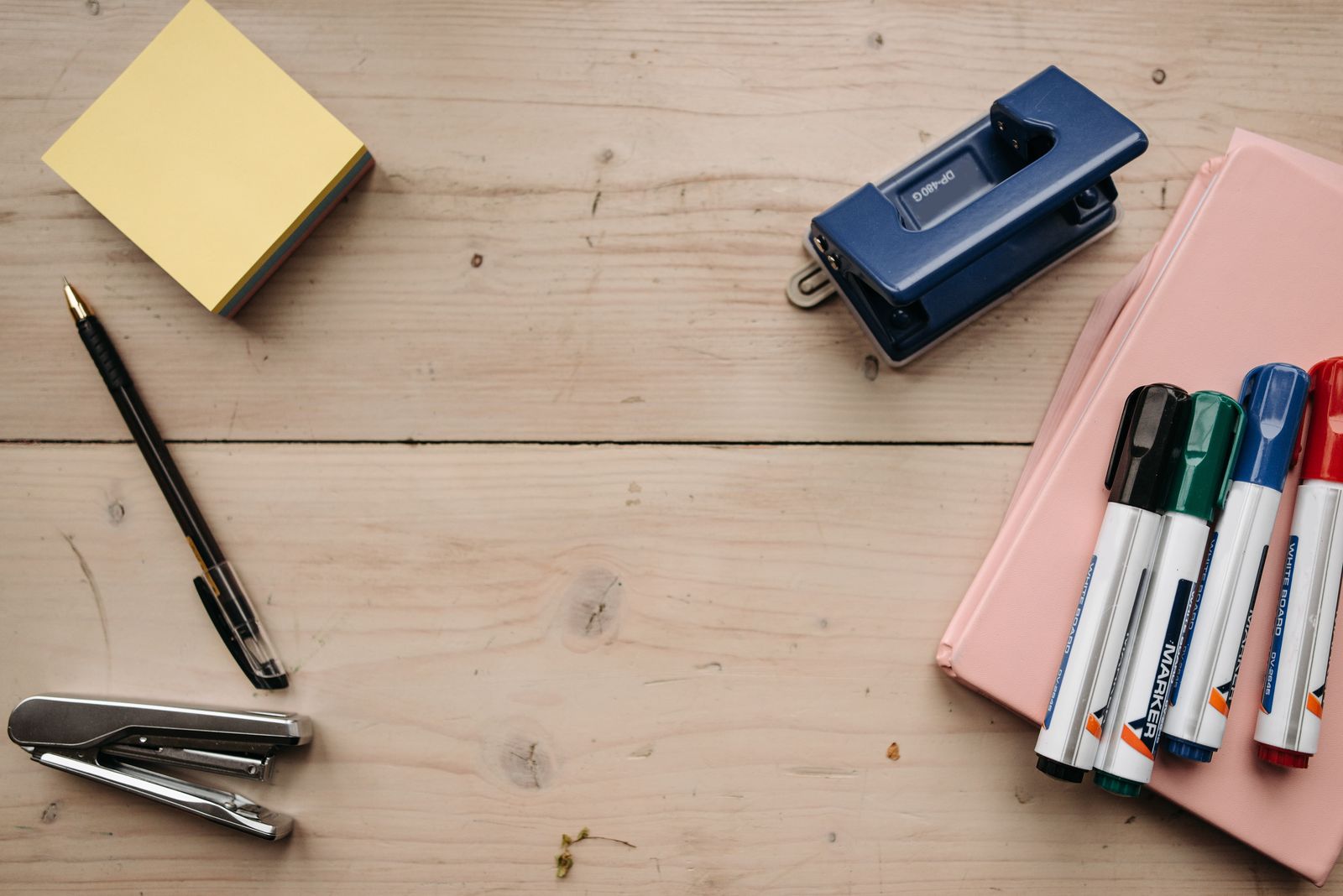
Almost every UAE office has a supply category that nobody owns.
It is too small to justify a tender. It is too frequent to be handled as a one-off purchase. It does not sit with facilities, because it is not maintenance, and it does not sit with IT, even though half of it is printer consumables. So it ends up being bought by whoever noticed the problem — usually an office manager, sometimes an executive assistant, occasionally an intern with a company card and a taxi to the nearest supplies shop.
That arrangement has a specific and predictable cost profile. The unit prices are retail. The buying is reactive, which means it happens at the worst moment. Nobody knows what the annual spend is, because it is spread across a dozen small transactions and several expense claims. And the time cost — a salaried person leaving the office to buy toner — never appears in the number at all.
Stationery is not a large category. But it is one of the easiest to fix, and the fix is mostly organisational rather than commercial.
What an office actually consumes
The first useful step is to separate the category into its parts, because they behave completely differently and lumping them together is what makes the spend invisible.
Print consumables. Paper, toner, ink. This is where the money actually is — in most offices, print consumables are the majority of total stationery spend, and toner alone frequently exceeds everything else combined. It is also the most predictable line, because it is driven by print volume, which is measurable.
Desk consumables. Pens, pencils, markers, highlighters, correction fluid, sticky notes, staples, tape, glue. Small unit cost, high transaction frequency, genuinely unpredictable at the individual level but very stable in aggregate. This is the part everyone pictures when they hear "stationery" and the part that matters least financially.
Filing and document handling. Folders, ring binders, lever-arch files, dividers, punched pockets, archive boxes, labels. Consumption here is lumpy rather than steady: near-zero for months, then a large requirement at year-end, audit season, or when a case or project closes. Sectors with statutory retention obligations — legal, accounting, healthcare, government — consume far more of this than a general office, and their peaks are predictable from the calendar.
Presentation and meeting-room supplies. Whiteboard markers, erasers, flip-chart pads, name cards, badge holders. Low volume, high visibility. Nothing makes a meeting room look neglected faster than four dead markers in the tray.
Desk accessories and small equipment. Staplers, hole punches, scissors, trays, organisers, desk mats. Durable rather than consumable, bought in batches when a new joiner arrives or a floor is reconfigured.
Sizing each of these separately is what turns "we spend a bit on stationery" into a number you can actually manage.
The print line is the whole game
If you only fix one thing in this category, fix print consumables.
Three things make it the highest-return target:
It is the largest line by a wide margin. Original-manufacturer toner cartridges are genuinely expensive, and a busy office running several devices consumes them faster than anyone expects.
It is the most predictable. Every business printer and copier reports a page count. Pull it, divide by cartridge yield, and you have a consumption forecast rather than a guess. Almost no office does this, and it is a ten-minute exercise.
It is the most expensive to get wrong. A printer out of toner on the morning of a board meeting produces an emergency purchase at retail price, plus somebody's hour, plus the meeting starting late. That emergency happens because the office holds no buffer, and it holds no buffer because nobody sized the requirement.
Practical fixes, in order of return:
- Hold one spare cartridge per device, per colour. This is the single highest-value change in the whole category. It converts an emergency into a routine reorder.
- Standardise the device fleet where you can. Five printers of three models means holding three sets of consumables. When devices are replaced, replacing them onto a common platform collapses the SKU count and the buffer stock together.
- Get the page counts once a quarter. Consumption forecasts from real data beat reorder-when-empty.
- Decide the third-party cartridge question deliberately. Compatible cartridges are meaningfully cheaper; they also carry a real risk of print-quality issues and, on some devices, warranty complications. That is a legitimate trade-off to make on internal-use printers while keeping originals on the device that produces client documents — but make it as a decision rather than discovering it after a bad batch.
- Look at what is actually being printed. In many offices the print volume itself is the thing worth reducing, and duplex-by-default plus a short conversation about what genuinely needs to be on paper will move the consumables line further than any unit-price negotiation.
Standardising the list is what stops the ad-hoc runs
The reason someone ends up in a taxi to a supplies shop is almost never that the office ran out of everything. It is that the office ran out of one specific thing that nobody had on a list.
A standard SKU list — the fifty or so items this office actually uses, in the specific variants it uses — solves that, and it does several other things at once. It makes the spend visible and comparable over time. It removes the endless small decisions about which of eleven similar pens to buy. It lets stock levels be set per item, so reordering becomes a check against a list rather than a response to a complaint. And it converts a scattered set of retail purchases into a single order line that can be priced properly.
Building it is a two-hour job, not a project:
- Write down what is currently in the cupboard, with the variants people actually use. Not what the catalogue offers — what is there.
- Cut the duplicates. Most offices are carrying three types of black pen and four sizes of sticky note for no reason anyone can name. Pick one of each.
- Set a minimum and a reorder quantity per item. Minimum is the level at which you reorder, not the level at which you run out.
- Name one owner. Not a committee — one person who checks the list on a fixed day.
- Review it twice a year, and delete anything that has not moved.
The same discipline that works for the pantry works here, and for the same reason: the problem is never the purchasing, it is the absence of a par level. Our pantry inventory management guide covers how to set and maintain those levels in practice.
Consolidation: the argument for putting it on an existing order
Here is the structural point that most UAE offices miss. Stationery is usually bought from a dedicated stationery supplier, or from a shop, precisely because it feels like its own category. But from a delivery and administration standpoint, it behaves almost identically to the pantry order: small items, high frequency, delivered to the same reception, consumed by the same people, replenished on the same rhythm.
Which means it can generally ride on an order that is already arriving.
The savings from that are mostly not unit-price savings, and it is worth being honest about that. They are:
Fewer supplier relationships to administer. Every additional supplier is an onboarding pack, a trade licence on file, a credit application, a separate invoice stream, a separate contact who leaves, and a separate delivery to receive.
Fewer invoices. For a finance team, twelve consolidated invoices a year is materially less work than sixty small ones across four suppliers, and it is the part of the saving nobody quantifies.
Fewer deliveries to receive. In a Cat-A building with booked service lifts and a security desk, each delivery has an access cost as well as a time cost.
One conversation about terms. Payment terms, credit limits and delivery SLAs negotiated once across a larger combined volume, rather than four times across four small ones.
Our guide to office pantry supplier consolidation sets out the full case and, importantly, where consolidation stops making sense — because it does, and pushing it too far creates a single point of failure you did not want.
Controls, approvals and the things that quietly leak
A few practical points that come up repeatedly in UAE offices:
Decide who can order, and make it few people. Open ordering across a whole office produces both duplication and creative interpretation of what counts as office supplies. One or two named approvers is enough.
Watch the branded and personalised lines. Printed letterhead, branded notebooks, business cards and personalised items are ordered infrequently, priced very differently from generic stock, and often ordered in minimum quantities that outlast the branding. Treat them as a separate marketing line rather than as stationery.
Do not put IT accessories on the stationery order by default. Cables, adapters, mice, keyboards and USB drives drift onto stationery lists because they are small. They belong with IT, both for asset control and because the security posture around removable storage is not a stationery decision.
Watch new-joiner and new-floor peaks. A hiring wave or an office move consumes desk accessories in a lump, and the ordering pattern that works for steady-state consumption will not cover it. Our new office setup checklist covers what a new floor needs from day one, and the wider procurement of desks, chairs and storage is covered in the office fit-out and furniture procurement guide.
Sustainability claims need to survive the cupboard. An organisation with a formal environmental commitment — and any office pursuing ISO 14001 or a green building rating — will eventually be asked what its paper is and what happens to its cartridges. Recycled-content paper, a cartridge return scheme and refillable rather than disposable pens are all straightforward to specify at the point you write the SKU list, and awkward to retrofit under audit. The same logic that applies to the pantry's sustainability programme applies here.
What good looks like
An office that has this category under control is not doing anything sophisticated. It has:
- A written SKU list of the items it actually uses, with a minimum and a reorder quantity against each.
- One named owner who checks it on a fixed day each week or fortnight.
- One spare toner cartridge per device per colour, held as buffer.
- Print consumables forecast from device page counts rather than reordered on empty.
- The whole thing riding on an existing scheduled delivery rather than generating its own supplier relationship and its own invoice stream.
- A twice-yearly review that deletes what has not moved.
That is perhaps three hours of setup and twenty minutes a fortnight to run. What it replaces is a recurring low-grade irritation, an unmeasured spend, and several emergency taxi journeys a year.
The short version
Stationery is the supply category nobody owns, which is why it is bought reactively at retail prices by whoever noticed the problem. Split it into its real parts — print consumables, desk consumables, filing, meeting-room supplies and desk accessories — because they behave differently and lumping them together is what keeps the spend invisible. Print consumables are the majority of the money and the most predictable line, so fix them first: hold one spare cartridge per device per colour, forecast from device page counts rather than reordering on empty, standardise the printer fleet when devices are replaced, and decide the compatible-cartridge question deliberately rather than after a bad batch. Write a standard SKU list of the fifty or so items the office actually uses, cut the duplicates, set a minimum and reorder quantity against each, and give it one named owner. Then put it on a delivery that is already arriving — the saving there is mostly in supplier administration, invoice volume and delivery access rather than unit price, but it is real and it is the part nobody counts. Watch the branded lines and the new-joiner peaks, keep IT accessories with IT, and specify recycled paper and cartridge returns at the point you write the list rather than under audit.
My Healthy Office supplies stationery and office furniture alongside pantry, cleaning and hygiene consumables on a single scheduled delivery, so the category stops needing its own supplier, its own invoice stream and its own emergency. To have your stationery list built and costed properly, get in touch with our team.
An office move is a good moment to reset the stationery list; the office move pantry and supplies checklist shows what to run down and what to stock for day one.
Frequently asked questions
What does a UAE office actually spend on stationery? Less than people fear in total, but distributed in a way that hides it. The category splits into print consumables, desk consumables, filing and document handling, meeting-room supplies and desk accessories — and in most offices print consumables are the majority of the spend, with toner alone frequently exceeding everything else combined. Because the buying is usually reactive and spread across small transactions and expense claims, few offices know their annual number at all. Sizing the five parts separately is what turns a vague sense of small spend into something manageable.
How do we stop running out of printer toner? Hold one spare cartridge per device per colour. That single change converts an emergency purchase at retail price into a routine reorder, and it is the highest-return intervention in the whole category. Then forecast properly rather than reordering on empty: every business printer reports a page count, so pull it quarterly and divide by cartridge yield to get a real consumption figure. Where devices are being replaced, moving the fleet onto a common platform collapses both the SKU count and the buffer stock you have to hold.
Are compatible printer cartridges worth it for an office? They are meaningfully cheaper, and they carry a real risk of print-quality problems and, on some devices, warranty complications. The sensible position is to make it a deliberate split rather than a blanket policy: compatibles on internal-use printers where a variable result costs nothing, originals on the device that produces client-facing documents. What you want to avoid is discovering the trade-off after a bad batch has gone out to a client.
Should office stationery come from the same supplier as pantry supplies? Usually yes, because from a delivery and administration standpoint the two categories behave almost identically: small items, high frequency, same reception, same replenishment rhythm. The savings are mostly not in unit price — they are in fewer supplier relationships to onboard and administer, fewer invoices for finance to process, fewer deliveries to receive in a building with booked service lifts, and one negotiation on terms across a larger combined volume. Consolidation does have a limit, though, and pushing it too far creates a single point of failure.
How do we build a standard stationery list? Write down what is actually in the cupboard, in the variants people actually use, rather than working from a catalogue. Cut the duplicates — most offices carry three types of black pen and four sizes of sticky note for no articulable reason. Set a minimum and a reorder quantity against each item, where the minimum is the level at which you reorder rather than the level at which you run out. Give it one named owner who checks it on a fixed day. Review it twice a year and delete whatever has not moved. It is a two-hour exercise, not a project.
Who should be allowed to order office supplies? One or two named people. Open ordering across a whole office produces duplication and a broad interpretation of what counts as office supplies, while a single approver with a standard list makes the spend both visible and comparable over time. Keep branded and personalised items — letterhead, business cards, branded notebooks — as a separate marketing line, because they are priced differently and often come in minimum quantities that outlast the branding. And keep IT accessories such as cables, adapters and USB drives with IT rather than on the stationery list, for asset control and security reasons.