Sustainable Office Pantry: Reducing Plastic Waste in the UAE
The average office pantry in Dubai or Abu Dhabi generates between 0.4 and 0.9 kg of plastic waste per employee per week — mostly from 200ml water bottles, individually wrapped snacks, single-serve coffee pods, and disposable cutlery. Across a 200-person office, that is roughly 4 to 9 tonnes of plastic per year, the vast majority of which ends up at the Al Qusais or Al Dhafra landfill rather than in Bee'ah or Tadweer recycling streams.
This is the most ignored, most fixable ESG line item in a UAE workplace. And under the UAE's single-use plastics ban (effective progressively from 2024 to 2026 under Cabinet Resolution No. 33 of 2022) and the UAE Net Zero 2050 strategic initiative, leaving it unaddressed is no longer a neutral choice — it is a measurable compliance risk.
This guide is a procurement-grade playbook for cutting pantry plastic by 60 to 85 percent without sacrificing service quality.
The Real Pantry Plastic Inventory
Before redesigning anything, audit. Most facilities managers underestimate pantry plastic by a factor of two because they only count what is visible at end-of-day. A serious audit covers seven categories:
| Category | Typical share of pantry plastic | Disposability |
|---|---|---|
| Single-use water bottles (200ml, 330ml, 500ml) | 35 to 50 percent | Recyclable PET, but rarely sorted |
| Coffee capsules (aluminium-plastic composite) | 10 to 18 percent | Hard to recycle without dedicated stream |
| Snack wrappers (multilayer film) | 12 to 20 percent | Non-recyclable in UAE municipal streams |
| Disposable cups, lids, stirrers | 8 to 15 percent | Mostly non-recyclable |
| Cutlery and plates | 5 to 10 percent | Banned for free distribution as of 2024 |
| Cling film, sandwich bags | 3 to 7 percent | Non-recyclable |
| Cleaning product bottles | 2 to 5 percent | Recyclable HDPE |
A 90-minute walk-through, a kitchen bin weigh-in over five working days, and a procurement-invoice scan are usually enough to baseline a building. Without this baseline, every later claim of "we reduced plastic by X percent" is fiction.
The Five Highest-Leverage Switches
1. Replace 200ml Bottles With Plumbed-In or 18.9L Refill Systems
Mineral water in 200ml PET is the largest single source of pantry plastic in the UAE. A 250-person office consuming two bottles per person per day generates roughly 130,000 bottles a year. Replacement options, ranked by environmental impact:
- Direct plumbed-in filtration with chilled/sparkling taps — lowest lifecycle impact, breaks even on cost in 14 to 22 months.
- 18.9L returnable polycarbonate gallons (Mai Dubai, Masafi, Oasis return programs) — 95 percent plastic reduction versus 200ml, near-zero capex.
- Aluminium-bottled water or glass-bottled meeting-room water — premium positioning, recyclable, suitable for client-facing zones.
Branded reusable bottles distributed once per employee close the loop. Cost per employee: AED 35 to 80, amortised over 18 to 36 months.
2. Move From Snack Wrappers to Bulk Dispensers
Multilayer snack film is the single hardest plastic category to recycle anywhere in the GCC. The fix is procurement-led, not facilities-led: shift the menu toward nuts, dried fruit, mixed seeds, granola, and energy mixes delivered in bulk to refillable dispensers or 1-litre glass jars. This is exactly the model our solutions team implements across corporate clients in JLT, DIFC, and ADGM.
Expect a 70 to 90 percent reduction in snack-wrapper waste, and — counterintuitively — a 12 to 25 percent reduction in cost per snack-portion served, because individual-portion packaging carries a steep markup.
3. Switch Coffee Capsules to Bean-to-Cup or Compostable Pods
Aluminium-plastic composite capsules are not recyclable in standard UAE municipal streams. A 150-person office burning through 500 capsules a day generates 130,000 non-recyclable capsules per year.
Three viable paths:
- Bean-to-cup machines with whole-bean delivery — 95 percent waste reduction, better quality, lower per-cup cost above ~80 cups/day.
- Compostable capsules (PLA-based, Cradle to Cradle certified where possible) paired with a back-of-house compost stream.
- Nespresso Professional / Lavazza recycling programs — accept used capsules for closed-loop recycling, but require diligent in-office collection.
4. Eliminate Disposable Cups, Cutlery, and Plates
Under the UAE single-use plastics regulation, free distribution of disposable cutlery, stirrers, and cups is already restricted in many emirates and will be progressively banned. Even where still legal, it is reputationally indefensible. The replacement bundle:
- 250 to 350 reusable ceramic mugs and glasses for the office (one-time capex ~AED 25–60 per employee).
- Stainless-steel cutlery sets stored per pantry station.
- A commercial-grade dishwasher with low-water cycles — typically pays back inside 18 months at offices above 100 people.
5. Reformulate Cleaning Chemicals as Concentrates
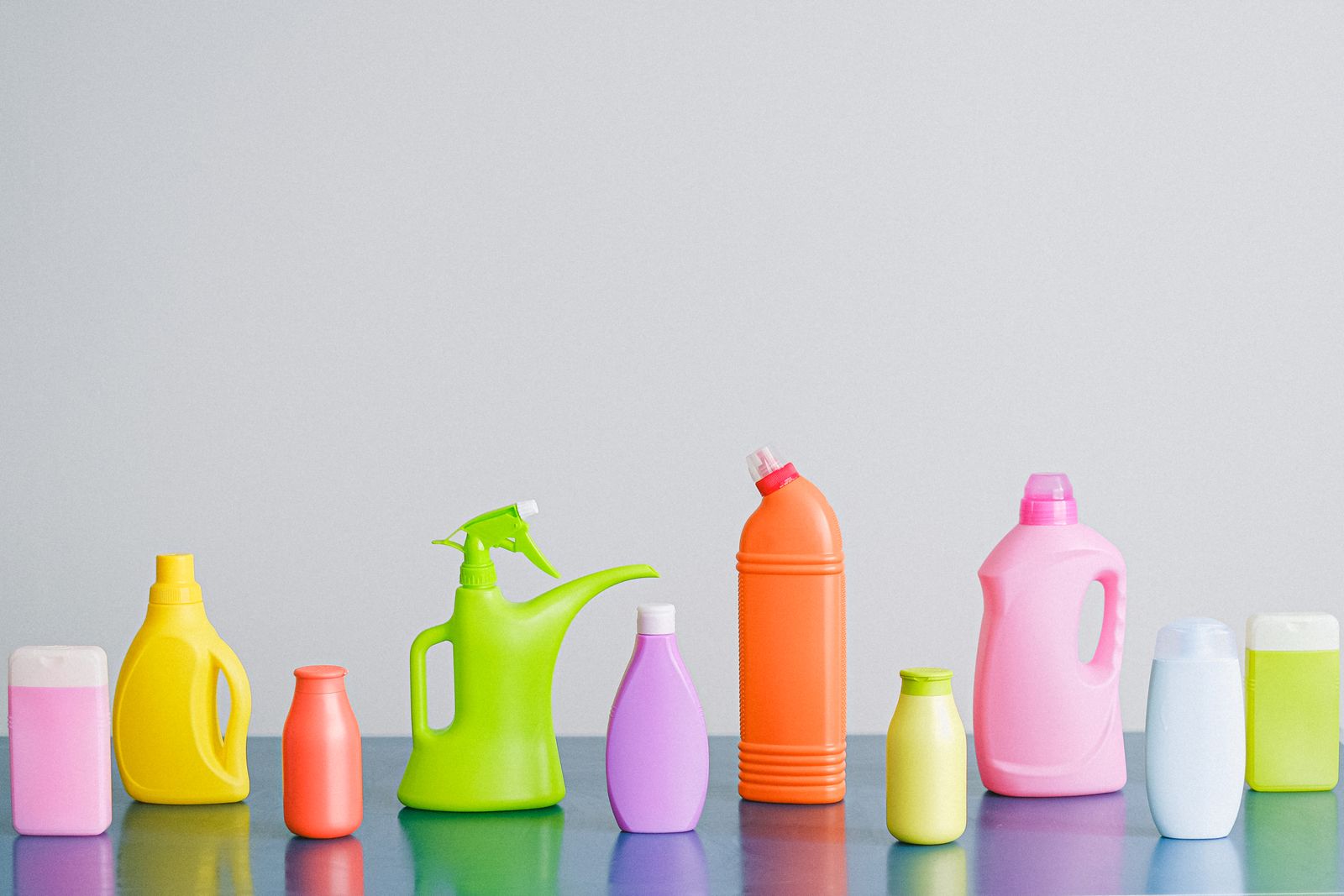
Single-use plastic cleaning bottles are an overlooked category. Concentrated cleaners diluted on-site into reusable trigger bottles reduce plastic packaging by 90 percent and freight emissions by 70 to 85 percent (because you ship cleaner, not water). Look for Cradle to Cradle or EU Ecolabel certified concentrates.
Procurement KPIs That Actually Move the Needle
A credible pantry-plastic program tracks four numbers monthly:
- kg of plastic waste per FTE per month (target: under 0.4 kg by month 12).
- Percent of pantry SKUs in refillable, returnable, or bulk format (target: above 60 percent).
- Percent of procurement spend with suppliers holding ISO 14001, B Corp, or Cradle to Cradle certification.
- Diversion rate — percent of pantry waste leaving site as recycling or compost rather than general waste, via Bee'ah or Tadweer contracts.
Without these metrics on a monthly dashboard, "sustainable pantry" becomes a slogan. With them, it becomes an audit-grade ESG disclosure that maps directly to the UAE Ministry of Climate Change and Environment targets and to GRI 306 (Waste) reporting.
The Common Pitfalls
Five recurring failure modes account for most stalled programs we have audited across Dubai and Abu Dhabi offices:
- Greenwashing the audit. Buying bamboo-handled cutlery while continuing to procure 130,000 PET bottles a year is a recognised audit-fail pattern. ESG reviewers look at tonnage, not aesthetics.
- No back-end contract. Switching to "recyclable" PET without a Bee'ah or Tadweer sorting contract simply diverts the same plastic to the same landfill via a bluer bin.
- Employee non-adoption. A refill program with no orientation session, no signage in Arabic and English, and no executive sponsorship typically loses 40 to 60 percent of its impact within six months.
- Single-supplier risk. Consolidating to one provider without contractual KPI clauses removes price discipline and program-quality leverage.
- No monthly weigh-in. Without the kitchen-bin tonnage log running every week, you have no defensible baseline for the next year's targets.
The fix is governance, not procurement. Appoint a named accountable owner (typically the office manager or facilities lead), give them a monthly KPI dashboard, and review it in the same management forum that reviews safety incidents and DEWA bills. The pantry stops drifting the moment it is on a recurring agenda.
Reporting and Disclosure
For UAE-listed entities, free-zone tenants in DIFC and ADGM, and any supplier responding to multinational ESG-tender requirements, the pantry plastic reduction maps cleanly to recognised reporting frameworks: GRI 306 (Waste), the SASB EM-CM-150a category, and the CDP Climate and Plastics disclosures. Each requires named baselines, named diversion partners, and tonnage manifests — exactly the documentation a properly run program produces as a byproduct of its monthly operations.
Why This Matters for UAE Offices
Three forces are converging:
- Regulation. The UAE single-use plastics ban tightens annually through 2026. Free disposable cutlery, stirrers, plates, and cups are progressively prohibited.
- Client procurement. Multinational tenants in DIFC, ADGM, Masdar City, and Dubai South increasingly require Scope 3 disclosures from landlords and service providers. Your pantry sits inside Scope 3.
- Talent. Gulf-based ESG-aware employees, particularly under 35, factor visible workplace sustainability into employer choice. The pantry is the most visible signal in the building.
Frequently asked questions
How much plastic does a UAE office pantry generate? Between 0.4 and 0.9 kg per employee per week, mostly from small water bottles, individually wrapped snacks, single-serve coffee pods and disposable cutlery. Across a 200-person office that is roughly 4 to 9 tonnes of plastic a year.
Which switches cut the most pantry plastic? Five capture 60 to 85 percent of the impact: replacing 200ml bottles with plumbed-in or 18.9L refill systems, moving from snack wrappers to bulk dispensers, switching coffee capsules to bean-to-cup, eliminating disposable cups and cutlery, and reformulating cleaning chemicals as concentrates.
Which KPIs should a pantry plastic programme track? Four, monthly: kg of plastic waste per FTE per month with a target under 0.4 by month 12, percent of pantry SKUs in refillable, returnable or bulk format above 60 percent, percent of procurement spend with certified suppliers, and diversion rate through a Bee'ah or Tadweer contract.
Why do plastic-reduction programmes stall? Five recurring failure modes: greenwashing the audit by buying bamboo cutlery while still procuring 130,000 PET bottles, switching to recyclable material with no back-end sorting contract, employee non-adoption where there is no orientation or bilingual signage, single-supplier risk without KPI clauses, and no monthly weigh-in to defend a baseline.
Since 1 January 2026 the cheapest option has been removed by law: conventional-plastic cups, lids, cutlery, plates, straws, stirrers and polystyrene containers can no longer be imported or sold in the UAE, and the office disposables guide covers what to buy instead line by line and where reusables now win outright.
Key Takeaways
- A 200-person UAE office typically generates 4 to 9 tonnes of pantry plastic a year. Most of it is fixable.
- Five switches — refill water, bulk snacks, bean-to-cup coffee, reusable serveware, concentrate cleaners — capture 60 to 85 percent of the impact.
- Audit before you act. Without a baseline weigh-in, claims are not defensible.
- Track four KPIs monthly. Map them to ISO 14001, UAE Net Zero 2050, and GRI 306.
MHO.ae designs and operates plastic-reduced pantries for corporate offices across Dubai and Abu Dhabi, with measured baselines, monthly KPI dashboards, and audit-ready procurement records. To scope a switch for your office, talk to our team or read more in our industry insights archive.