Most office sustainability and wellbeing programmes fail for the same reason: they ask people to change something every day. Meat-free Monday asks for one lunch a week, it costs nothing extra, and in a region whose everyday cuisine is already full of hummus, falafel, lentils, tabbouleh and grilled vegetables, it barely registers as a change at all. That is why it is the programme offices actually keep running.
This guide is for office managers, HR and wellbeing leads, sustainability and ESG officers and the facilities teams who order the food, at offices across the UAE that either provide a team lunch or run a pantry that people build their own lunch from. It builds on the plant-based office pantry guide and the meat alternatives guide, which cover the products; this guide covers the programme.
Why offices run it
Three reasons, and the honest order is this:
- Wellbeing. A lighter, vegetable-led lunch once a week is the simplest nutrition intervention an office can make, and the one that gets the least resistance.
- The ESG report. A sustainability policy with a food line in it needs something measurable, and one meat-free lunch a week for a hundred people is a figure that can be counted and reported. Offices in Masdar City and the Abu Dhabi energy sector have this written into their commitments; the Masdar City sustainability pantry guide covers the reporting side.
- Cost. A plant-based lunch is cheaper per head than a meat one, so the programme pays for itself from the first week.
What it is not is a statement about anyone's diet. The office that frames it as one loses the room by the second Monday.
The one rule that makes it work
Everyone eats the same menu, and it is good. No separate meat option "for those who want it", because the moment there are two queues the programme is dead and the vegetarian queue is a judgement. One menu, chosen because people will like it, served on a day when the whole team is in. If the office's in-office day is Tuesday, call it Meat-free Tuesday and move on.
The second half of the rule: it is a lunch, not a lecture. A line in the Monday email that the lunch is plant-based this week is enough. No poster about carbon, no ask to sign up, no survey.
A menu people actually eat
The Gulf and the Levant make this easy. A plant-based lunch here is not a substitute for a normal lunch; it is a normal lunch with the chicken left out.
A Levantine spread. Hummus, moutabal, falafel, fattoush, tabbouleh, vine leaves, grilled halloumi for the vegetarians, lentil soup in the cooler months, bread. Order it from the caterer or build it from the salads and crudités guide and the olive oil, zaatar and Levantine breakfast guide, which cover the components that keep.
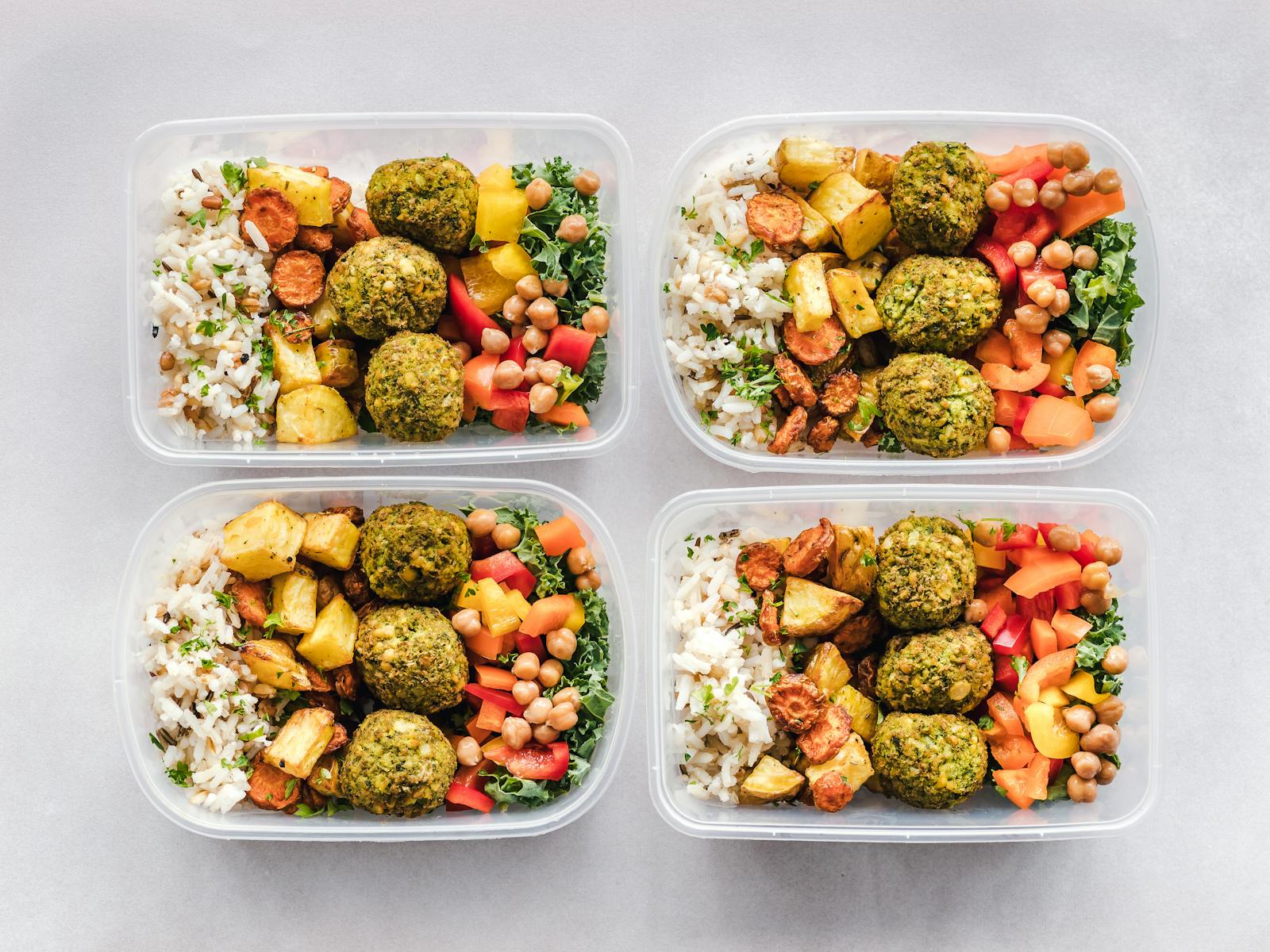
A bowl lunch. Rice or grain, roasted vegetables, chickpeas or lentils, a sauce, and a plant-based protein for the people who want something that eats like meat. The meat alternatives guide covers which products heat well in an office kitchen; the meat alternatives range is where to order them.
A wrap and salad day. Falafel wraps, grilled vegetable wraps, a large salad, fruit. The lightest version, and the one for an office that has a meeting-heavy Monday.
The dessert is fruit. Cut fruit from the fruit and cut veggies range, and dates. A plant-based lunch that ends in a cake has undone half of its own point.
Rotate three or four menus so the programme does not become "the hummus day" by week six. The World Vegan Day lunch plan is a fully plant-based version for the one day a year an office wants to go the whole way.
Halal, allergens and the checks plant-based food does not skip
Plant-based does not mean exempt from the checks an office lunch always needs.
- Halal. Plant-based meat alternatives are not automatically halal; the certification depends on the ingredients, the processing aids and the facility. Check the label and the certificate, as the halal compliance guide sets out.
- Allergens. A plant-based lunch concentrates the allergens a meat lunch spreads out: soy and wheat in most meat alternatives, sesame in hummus and tahini, nuts in many salads and sauces. Label every dish, following the allergen and dietary labelling guide, and keep a nut-free and a gluten-free dish on every menu.
- Dairy. Halloumi, labneh and yoghurt are vegetarian but not vegan or dairy-free. Mark them, and keep a dairy-free dressing and a plant milk for the coffee from the dairy and plant-based milk range; the lactose-free pantry guide covers the difference.
- Food safety. Hummus, salads and cooked grains are high-risk chilled foods and follow the same holding times as chicken. The food safety rules guide covers the limits.
The pantry-only version
Most UAE offices do not provide lunch. Meat-free Monday still works as a pantry programme: the Monday pantry is stocked so that a plant-based lunch is the easy choice for anyone building their own.
- A Monday delivery of hummus, labneh, cut vegetables and crudités, fruit and bread, so the fridge offers a full plant-based plate on the one day.
- Nuts, seeds and dried fruit from the nuts and seeds range and the dried fruits range on the counter.
- Plant milk in the coffee station and oat or soy as the default on Mondays; the plant milk guide covers which works in the machine.
- A soup or a grain pot for the people who want something hot, from the desk-lunch pantry guide.
The weekly team breakfast guide runs on the same logic for a different meal: one fixed day, one delivery, one habit.
What it costs
A plant-based team lunch in the UAE costs less per head than the equivalent with chicken or lamb, and the pantry-only version costs no more than a normal Monday restock with the proportions changed. The savings are modest but real, and they fund the one upgrade the programme benefits from: better bread and better fruit. The office pantry cost per employee guide gives the benchmarks to set the budget against, and the reducing food waste guide covers the quantities, because plant-based lunches are over-ordered more often than meat ones.
Counting it for the ESG report
The programme is only worth reporting if it is counted, and it is easy to count:
- Lunches served per Monday, from the order quantity.
- Mondays run per quarter, from the calendar.
- Waste, by weighing or by counting untouched portions, from the facilities team.
Those three figures give a quarterly line for the sustainability report without a spreadsheet nobody fills in. The ISO 14001 pantry guide covers where the line sits in an environmental management system, and the Masdar City guide covers the supplier and packaging side of the same report.
Who runs it
The programme suits any office with a fixed in-office day and a team that eats together: the cleantech and energy firms of Masdar City, the consultancies covered on the consultancies industry page, the tech companies on the tech companies and startups page, the agencies of Dubai Media City and Dubai Design District, and the schools and universities on the schools and universities page, where a Meat-free Monday in the staff room runs alongside the one in the canteen.
The short version
- One lunch a week, one menu for everyone, chosen because people will like it, on the day the whole team is in.
- A lunch, not a lecture: one line in the Monday email, no poster, no survey.
- Build the menu on Levantine dishes, bowls and wraps, rotate three or four, end with fruit.
- Check halal certificates, label allergens, mark dairy, hold chilled foods properly.
- No team lunch? Stock the Monday pantry so the plant-based plate is the easy choice.
- Count lunches, Mondays and waste for the ESG line.
Frequently Asked Questions
How do we start a Meat-free Monday at the office? Pick the day the whole team is in, serve one plant-based menu to everyone with no separate meat option, choose dishes people already like such as hummus, falafel, fattoush, lentil soup and grain bowls, and announce it with one line in the weekly email.
Should we offer a meat option for people who want it? No. Two queues end the programme within a few weeks and turn the vegetarian line into a judgement. One good menu for everyone, one day a week, is the whole idea.
Are plant-based meat alternatives halal? Not automatically. Halal certification depends on the ingredients, processing aids and facility, so check the label and the certificate before putting a product on the menu.
Does a Meat-free Monday cost more? Less per head than the same lunch with chicken or lamb, and the pantry-only version costs no more than a normal Monday restock. The saving is modest and funds better bread and fruit.
How do we report Meat-free Monday in a sustainability report? Count lunches served per Monday from the order, Mondays run per quarter from the calendar, and waste from untouched portions, and report the three figures as one quarterly line.
Can we run it if the office does not provide lunch? Yes. Stock the Monday pantry with hummus, labneh, cut vegetables, fruit, bread, nuts, a hot soup or grain pot and plant milk in the coffee station, so a plant-based plate is the easy choice for anyone building their own lunch.