Every office has a lunch problem somewhere. It might be the back-to-back meeting day when nobody has time to go out, the business park where the nearest food outlet is a drive away, the August week when nobody wants to cross a car park at 45 °C, or the night shift that starts after the café downstairs has closed. In every one of those cases the pantry becomes the canteen, and what is on the shelf decides whether people eat properly or eat biscuits.
That is what a desk-lunch line is for: a small, deliberate range of instant soups, noodles, porridge and ready meals that makes a real meal possible in ten minutes with a kettle and a microwave. This guide covers how to build one that is worth eating. It sits alongside the savoury snacks guide, which covers between-meal snacking, and the breakfast cereals, oats and granola guide, which covers the morning.
The formats, and what each is good for
Five formats cover almost every desk-lunch need.
Instant soup sachets. Powdered soups made up with boiling water in a mug. Cheap, light, long shelf life, and useful as a warm start to a lunch built from other things — bread, cheese, fruit. Not a meal on their own.
Cup and pot noodles. Dried noodles with a seasoning sachet, cooked in the pot with boiling water. The most popular format by a distance, the most filling of the instant options, and the one with the biggest salt problem (below).
Instant porridge, oat and grain pots. Porridge oats, congee or grain pots made with hot water or milk. They work as a lunch as well as a breakfast, and the plain versions are low in salt and easy to make healthier with fruit and nuts from the rest of the pantry.
Ambient ready meals. Shelf-stable pouches and trays — rice dishes, dals, curries, pasta, lentil and bean stews — heated in the microwave. Long shelf life, no fridge space, and a proper meal in two minutes.
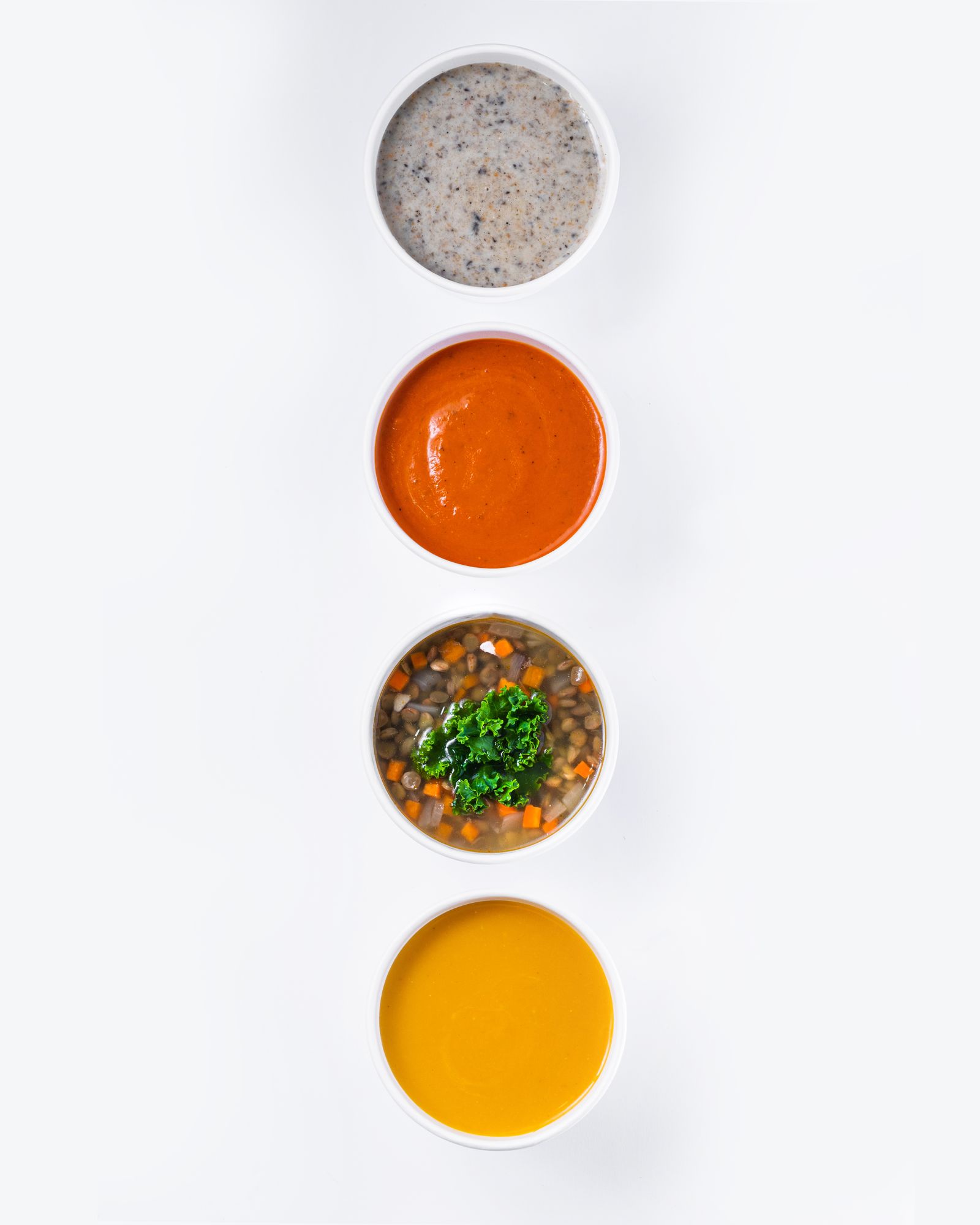
Chilled ready meals and soups. Fresh soups, salads, wraps and chilled meal trays delivered on a short cycle. The best food on this list and the most demanding: they need fridge space, a delivery cadence and discipline about dates.
A good desk-lunch line usually combines two or three of these: an ambient base that is always there (noodles, porridge, a few ready meals), and a chilled line if the fridge and delivery cadence allow it.
The salt problem, and how to spec around it
Salt is the defining nutritional issue with instant food, and it is worth understanding before a single case is ordered.
A typical cup noodle contains somewhere between 2 and 5 g of salt in the pot, most of it in the seasoning sachet — and the adult daily reference intake is 6 g, with the World Health Organization recommending under 5 g. One cup noodle can therefore account for most of a day's salt. Instant soups and some ready meals are high as well.
The traffic-light thresholds used on UK front-of-pack labels are a practical buying reference: more than 1.5 g of salt per 100 g is "high", and 0.3 g or less is "low". For a desk-lunch line, a workable spec is:
- Prefer products with a medium or low salt rating where the category offers them — reduced-salt noodle and soup ranges exist, and many ambient lentil and bean meals sit well below the "high" line.
- For noodles, publish the half-sachet trick. Using half the seasoning sachet removes a large share of the salt and most people do not notice. A line on the shelf label does more than a policy.
- Balance the line. If noodles are the most popular item, make sure a lower-salt option — porridge, a lentil meal, a chilled soup — sits beside them.
Offices building a low-sugar or diabetic-friendly pantry should apply the same logic to carbohydrate-heavy pots; the low-sugar and diabetic-friendly pantry guide covers how, and the nutritionist-approved snack list covers what to put next to them.
Halal and allergen checks
Instant and ready foods are where the pantry's halal and allergen controls are most likely to slip, because the ingredient list is long and much of it is flavouring.
Halal. Meat-based noodle flavours, stock powders and ready meals must carry a recognised halal certification; flavourings and meat extracts are exactly where non-halal ingredients hide. Imported noodle brands in particular should be checked product by product, not brand by brand — the same brand can have halal and non-halal flavours. Vegetable and seafood flavours are not automatically safe, since flavour carriers can still contain animal derivatives. The halal compliance guide covers how to check certificates.
Allergens. The common ones in this category are:
- Wheat and gluten — in almost all instant noodles, most soup thickeners and many ready-meal sauces. Rice noodles, rice-based pots and many lentil meals are the naturally gluten-free options, but check for a gluten-free claim; the gluten-free pantry guide covers the details.
- Soy — in most noodle seasonings and many sauces.
- Milk, egg, celery, mustard and sesame — in soup powders, egg noodles and seasoning blends.
- Fish and crustaceans — in seafood-flavoured noodles and some stock bases.
The allergen and dietary labelling guide sets out how to label the shelf so colleagues can choose without reading every panel.
Plant-based colleagues are well served by this category if you choose carefully: lentil dals, chickpea curries, bean stews and vegetable soups are often vegan, and plant-based ready meals built on meat alternatives add a protein-rich option — though some use wheat protein, which matters for the gluten-free shelf. The plant-based pantry guide covers the category.
Microwaves, kettles and hot water
A desk-lunch line only works if the equipment around it does.
- Hot water. Instant noodles and soups need water at or close to boiling to cook and rehydrate properly. A water dispenser's hot tap is often around 85–95 °C, which is fine for tea and marginal for noodles; a kettle or boiling-water tap gives a better result. The water cooler vs bottled water guide covers dispenser types.
- Microwaves. Plan roughly one microwave per 20–25 people who eat lunch in the office, and expect a queue between 12:30 and 13:30 whatever you do. Ready meals that heat in two minutes are kinder to the queue than ones that need five with a stir in the middle.
- Heat thoroughly. Ready meals should be heated until piping hot all the way through, following the pack instructions, and stirred where the pack says so. Chilled meals should never be reheated twice.
- Keep the microwave clean. A splattered microwave is the most common pantry complaint after the coffee machine. Microwave covers, a cleaning rota and a stock of surface wipes solve it — MHO's office hygiene range covers the consumables, and the pantry etiquette guide covers the rota.
- Cutlery and bowls. Pots come with their own container; pouch meals and soups need a bowl and a spoon. Reusable crockery or compliant disposables — the cups and cutlery guide covers what the 2026 single-use rules allow.
If the pantry is being designed or refitted, the microwave bay and the boiling-water tap are worth deciding at layout stage rather than squeezing in later; the pantry design and layout guide covers the zones, and MHO's stationery and office furniture range covers the tables and seating that turn a pantry corner into somewhere to actually eat.
Storage and shelf life
- Ambient lines — noodles, soup sachets, porridge pots, pouch meals — keep for months, but not in a hot storeroom. Store below 25 °C, off the floor, and rotate first in, first out. Summer storerooms in the UAE regularly exceed that.
- Chilled lines — fresh soups, meal trays, wraps — belong at 0–5 °C and have a life of days. Order to the number of people actually in the office on each day, not to headcount; hybrid attendance makes this the most common source of waste. The hybrid work pantry planning guide covers ordering to attendance, and the food waste guide covers what over-ordering costs.
- Once opened, treat it as a meal. A made-up noodle pot or a heated ready meal left on a desk for the afternoon is a food-safety risk; the food safety rules guide covers the two-hour rule.
Where a desk-lunch line matters most
- Business parks and island campuses where the nearest food outlet is not walkable — Masdar City, Yas Island, Saadiyat Island and parts of Al Reem Island — are where a stocked lunch shelf changes the working day. The Abu Dhabi delivery page covers the full emirate.
- Dense towers with lunch-hour lift queues, such as JLT, where going out for lunch can eat most of the break. The Dubai delivery page lists every district covered.
- Trading floors and deal teams in the fintech and banks and financial services verticals, where people eat at the desk because the market is open.
- Government and public-sector offices with fixed hours and large headcounts, where a subsidised lunch shelf is part of the staff-welfare offer; see the government and public-sector vertical.
- Real estate and property teams who spend the morning on site viewings and come back to the office for a late, quick lunch; see the real estate and property vertical.
- Shift and 24/7 operations, where the night shift has no other option — the shift work guide covers that pattern in detail.
What it costs
Instant food is cheap per serving, which is why it is so easy to over-order.
- Instant soup sachets: roughly AED 1–3 a serving.
- Cup and pot noodles: roughly AED 3–8 a pot, depending on brand and size.
- Porridge and grain pots: roughly AED 4–9 a pot.
- Ambient pouch or tray ready meals: roughly AED 8–18 a meal.
- Chilled soups and meal trays: roughly AED 15–35 a meal.
For planning, a desk-lunch line in which roughly one in five staff eats from the shelf on a given day costs around AED 25–60 per head per month for an ambient line, and more with a chilled line. Offices that subsidise lunch deliberately often choose a par-level ambient shelf plus chilled meals on the busiest two or three days. The cost-per-employee guide shows where that sits against the rest of the pantry, and the budget planning guide covers building it into next year's numbers.
The short version
Build the desk-lunch line from two or three formats: an ambient base that is always on the shelf (noodles, porridge, a few pouch meals) and a chilled line if fridge space and delivery cadence allow. Watch the salt — a single cup noodle can carry most of a day's 6 g reference intake, so prefer medium- or low-salt ranges, publish the half-sachet trick and put a lower-salt option beside the noodles. Check halal certification product by product, not brand by brand, and label wheat, soy, milk, egg, celery, mustard, sesame and seafood. Make the equipment work: boiling water for noodles, a microwave per 20–25 lunch-eaters, a cleaning rota. Store ambient stock below 25 °C and order chilled stock to real attendance. Budget roughly AED 25–60 per head per month for an ambient line.
MHO supplies desk-lunch staples alongside the rest of the pantry through the office snacks range, the breakfast and corporate events range, fresh fruit and cut vegetables and meat alternatives, with microwave-cleaning consumables in the office hygiene range. Browse the full range by category, check every area we deliver to, see the sectors we supply, or talk to us about a lunch shelf for your office.
Frequently asked questions
Are instant noodles a reasonable office lunch? They are filling and convenient, but a typical cup noodle contains 2 to 5 g of salt against an adult daily reference intake of 6 g, so they should not be the only lunch option on the shelf. Choose reduced-salt ranges where available, use half the seasoning sachet, and add fruit or vegetables from the rest of the pantry. Stock a lower-salt option such as porridge pots, lentil meals or chilled soup beside them.
How do I check if instant noodles and ready meals are halal? Check each product for a recognised halal certification rather than relying on the brand, because the same brand can sell halal and non-halal flavours. Meat-flavoured noodles, stock powders and ready meals are the highest risk, and flavour carriers in vegetable or seafood flavours can also contain animal derivatives. Ask the supplier for the certificate for every meat-containing or flavoured product.
Which allergens are common in instant soups and noodles? Wheat and gluten are in almost all instant noodles and many soup thickeners, and soy is in most noodle seasonings. Milk, egg, celery, mustard and sesame are common in soup powders, egg noodles and seasoning blends, and fish and crustaceans appear in seafood flavours and some stock bases. Rice noodles, rice-based pots and many lentil meals are naturally gluten-free, but check for a gluten-free claim.
How many microwaves does an office need? A practical guide is one microwave for every 20 to 25 people who eat lunch in the office, and a queue between about 12:30 and 13:30 is normal whatever you provide. Ready meals that heat in two minutes help, as do microwave covers and a cleaning rota. Instant noodles are better made with a kettle or boiling-water tap than with a water dispenser's hot tap, which is often below boiling.
How should ready meals be stored in an office? Ambient ready meals, noodles and soup sachets should be stored below 25 °C, off the floor and rotated first in, first out, which in the UAE summer means not in an unventilated storeroom. Chilled soups and meal trays must be kept at 0 to 5 °C and ordered to the number of people actually in the office each day. Once heated or made up, a meal should be eaten promptly and not left out for the afternoon.
How much does a desk-lunch pantry line cost? Instant soup sachets cost roughly AED 1 to 3 a serving, cup noodles AED 3 to 8, porridge pots AED 4 to 9, ambient ready meals AED 8 to 18 and chilled meals AED 15 to 35. An ambient line in which about one in five staff eats from the shelf on a given day costs around AED 25 to 60 per head per month, more if a chilled line is added.