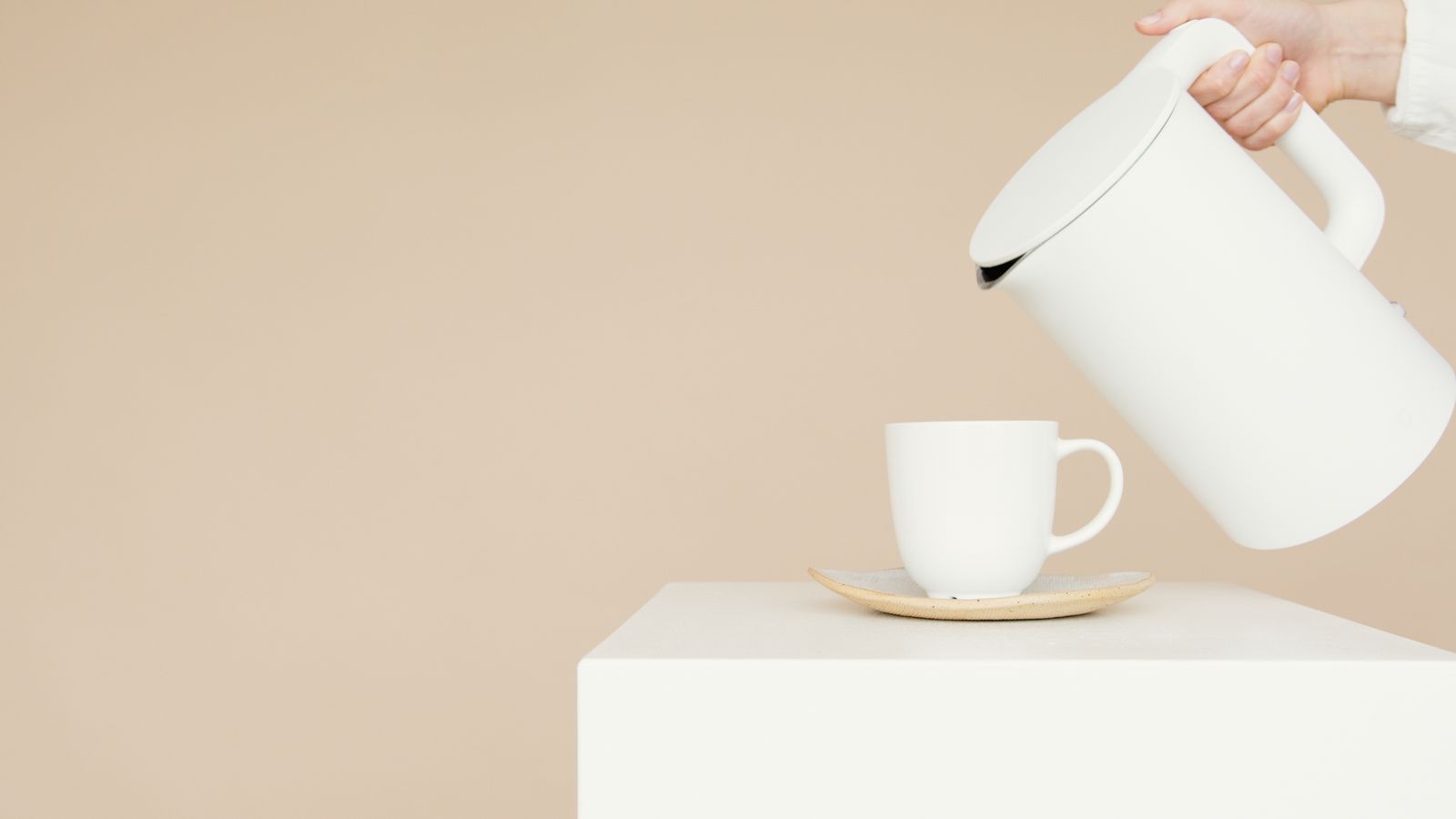
Almost everything in the office pantry that is not cold starts with hot water: tea, karak, herbal infusions, instant coffee, hot chocolate, cup noodles and soup. Yet hot water is usually the last thing anyone plans. A single kettle is put on the counter on moving day, and a year later there is a queue in front of it every morning at nine.
This guide compares the five ways to supply hot water in a UAE office, explains which temperature each drink needs, and covers sizing, safety, limescale, hygiene, energy and cost.
The five options
| Option | Typical capacity | Water temperature | Best for |
|---|---|---|---|
| Kettle | 1.5 to 1.7 L | Boiling | Up to about 10 to 15 people per kettle |
| Hot water urn (filled by hand) | 10 to 30 L | Close to boiling, held hot | Meetings, events, short-term peaks |
| Plumbed wall or countertop boiler | 5 to 20 L, refills itself | Close to boiling | Busy pantries, 30 people upwards |
| Under-counter boiling water tap | 2.5 to 7 L tank, refills itself | About 98 to 100 °C | Modern fit-outs, limited counter space |
| Water cooler or coffee machine hot tap | Small reservoir | Often 85 to 95 °C | Top-ups, not a main supply |
Many offices end up with a combination: a plumbed boiler or boiling water tap for daily use, plus a kettle or urn for meetings on another floor.
Which drinks need which temperature
Getting the temperature right matters for taste and, for some drinks, for safety.
- Black tea and karak need freshly boiled water to extract properly. The karak chai guide covers making it in quantity.
- Herbal and fruit infusions should be made with freshly boiled water and left to steep for at least five minutes. Herbs are not heat-treated in the way tea leaves are, and boiling water is part of making them safe. The herbal tea guide explains why, and the herbal teas range covers what to stock.
- Green tea and matcha taste bitter with boiling water and are best at about 70 to 80 °C. Boil, then let the water stand for a few minutes, or use a tap or kettle with a temperature setting. The matcha and green tea guide covers serving it.
- Instant coffee and hot chocolate are fine at 85 to 95 °C. The hot chocolate and winter drinks guide covers powders and machines.
- Cup noodles and instant soups need water as close to boiling as possible. A water cooler hot tap at 85 to 95 °C is marginal, which is one reason noodles from a cooler are often underdone. The instant soups and ready meals guide covers desk lunches.
If your offices serve a lot of herbal tea, karak or noodles, the main supply should deliver water at a true boil, not just "hot".
Sizing for the morning peak
Hot water demand is not spread through the day. It comes in two peaks: arrival, roughly 8:30 to 9:30 am, and after lunch. Size for the peak, not the daily total.
- A hot drink uses about 250 ml. A full 1.7 L kettle makes about six cups and takes three to four minutes to boil.
- A kettle serves about 10 to 15 people comfortably. Beyond that, people wait, and someone boils a half-empty kettle again.
- Urns and plumbed boilers are rated in litres per hour or cups per hour. Compare that figure with the number of people likely to arrive in the busiest half-hour.
- Boiling water taps have a small insulated tank, and the useful figure is how many cups can be drawn in a row before it needs to recover, and how long recovery takes. Ask the supplier for both numbers.
A practical rule is to plan for about one hot drink per person in the first hour of the day, and more in the cooler months from November to March, when hot drinks go up in every office, partly because of air conditioning set for August.
In hybrid offices, size for the busiest office day of the week, not the average.
Safety: scalds are the real risk
Water near boiling causes serious burns very quickly. Adult skin can suffer a full-thickness burn in about five seconds at 60 °C and in around one second at 70 °C, and boiling water is far hotter than either. Most pantry scalds come from knocked kettles, urn taps left dripping, and people carrying several cups at once.
- Choose boiling water taps with a safety handle, usually push-and-turn, and models with an insulated spout that stays cool on the outside.
- Put kettles at the back of the counter, with the cord out of reach, never at the edge or above a drawer people open.
- Put urns on a stable surface with the tap over a drip tray, not over the floor. A wet floor in front of hot water is a slip and a scald together.
- Provide trays or carriers so people are not carrying three full mugs back to their desks.
- Label the boiling water outlet clearly, especially on combination taps where the same spout also gives cold water.
- Brief cleaners and new starters. Cleaners in particular need to know how to isolate and drain an urn or boiler before cleaning it.
- First aid: cool a burn under cool running water for 20 minutes and get medical advice for anything larger than a small area. Keep the first aid kit near the pantry.
Offices with children on site, such as schools and universities and family-facing healthcare clinics and hospitals in Dubai Healthcare City, should keep hot water in staff-only areas.
Limescale and filters
Mains water in the UAE is mostly desalinated and then remineralised, and the water that reaches the pantry has usually passed through building storage tanks. It still contains enough minerals to leave scale in anything that heats water every day.
- Kettles: descale monthly, or as soon as a white crust is visible, with a citric acid descaler. Rinse thoroughly and boil and discard a full kettle afterwards.
- Urns and boilers: follow the manufacturer's descaling schedule. Scale on the element makes them slower and uses more electricity.
- Boiling water taps: most use a filter cartridge that reduces scale and improves taste. Replace it on the schedule the manufacturer gives, usually by months or litres, whichever comes first.
The water filtration guide explains filter types and why building tanks are the weak point, and the equipment maintenance guide has a schedule for pantry appliances.
Hygiene
Water that is boiled or held close to boiling is not where the hygiene risk lies. The risks are elsewhere:
- Water left standing in kettles. Empty kettles at the end of the day and refill with fresh cold water in the morning. Water that has sat for days tastes flat.
- Urns left half-full overnight, then switched back on. Empty, rinse and dry urns after each use.
- The cold and chilled side of combination taps. Taps that give chilled filtered or sparkling water as well as boiling water have a cold-water circuit, and that part needs the same filter changes and sanitising as a water cooler. Building water systems in Dubai are also subject to Legionella control requirements; facilities management should include pantry taps in that programme.
- Handles and buttons. The kettle handle and urn tap are touched by everyone. Include them in daily wipe-downs. The office hygiene range and cleaning supplies range cover surface wipes and sanitiser.
The food safety rules guide covers the wider pantry routine, and the facility hygiene range covers the supplies facilities teams use for it.
Energy: smaller than people think
Heating one litre of water from 25 °C to boiling takes about 0.09 kWh. At commercial electricity tariffs in the UAE that is a few fils. Even a kettle that is routinely overfilled by a litre, ten times a day, wastes only a few hundred kilowatt-hours a year.
So energy is rarely the deciding factor, but a few habits still help:
- Boil only what you need. Kettles with a cup-level window make this easy.
- Do not keep urns at a boil all day in an empty meeting room. Switch them on for the meeting and off afterwards.
- Use timers or sleep modes on plumbed boilers and boiling water taps so they are not holding water at 100 °C overnight and through weekends.
- Descale regularly. Scale insulates the element and slows heating.
For offices reporting against ISO 14001, timers on hot water equipment are an easy measure to document. The bigger environmental gain from combination taps is usually fewer bottles: if the same tap also gives chilled filtered and sparkling water, the office may need fewer bottled drinks. The sparkling water guide and the water cooler versus bottled water guide compare the options.
Installation
Kettles and urns need only a socket. Plumbed boilers and boiling water taps are a small fit-out job:
- A cold water supply with an isolation valve, and often a pressure-reducing valve.
- A dedicated electrical supply for the tank, usually under the counter.
- Space in the cabinet below the sink for the tank and filter, with access for servicing.
- Landlord or building approval where the work touches building plumbing.
This is easiest to do during a fit-out or pantry refurbishment. The office fit-outs and services range and the breakroom design guide cover planning the pantry layout, including where hot water should sit relative to the sink, the coffee machine and the queue. The new office pantry setup checklist includes hot water as one of the first decisions.
What it costs
Prices vary by brand and features, so treat these as broad ranges.
| Option | Approximate cost | Running costs |
|---|---|---|
| Kettle | AED 100 to 400 each | Descaler; replace every one to three years |
| Hot water urn | A few hundred to about AED 1,500 | Descaler; occasional element or tap replacement |
| Plumbed boiler | Several thousand dirhams installed | Filter changes, annual service |
| Boiling water tap | Several thousand dirhams installed; combination taps can exceed AED 10,000 | Filter changes every 6 to 12 months, annual service |
Plumbed equipment is sometimes available on a rental or service contract, the same way coffee machines are. The coffee machine rental versus buying guide explains how to compare the two, and the coffee and coffee machines range covers machines that include a hot water outlet.
Do not ignore the time cost. If 40 people each spend three minutes a day waiting for a kettle, that is two hours of staff time every day.
Which option suits which office
- Up to about 15 people: one or two good kettles, descaled monthly.
- 15 to 40 people: a plumbed boiler, or a boiling water tap, plus a kettle as backup.
- 40 people upwards, or several floors: a boiling water tap or boiler in each pantry, sized for the morning peak.
- Meeting rooms and events: an urn, switched on before the meeting and emptied after it.
- Round-the-clock operations: plumbed equipment, because nobody is refilling an urn at 3 am. The 24/7 shift-work guide covers night-shift pantries.
Where hot water needs extra thought
- Tech and media offices. Tech companies and startups in Dubai Internet City and Dubai Silicon Oasis, and media and creative agencies in Dubai Media City and d3, often have open-plan pantries where a boiling water tap saves counter space and ends the kettle queue.
- Coworking spaces. Coworking operators serve many companies from one kitchen, so plumbed hot water and clear safety labelling matter more than anywhere else.
- Site offices and industrial areas. Construction and engineering firms and manufacturers in JAFZA and similar zones often have hard-wearing urns in cabins; keep them on stable stands with a drip tray, and descale more often.
- Aviation. Aviation and airport services teams work around the clock, which makes plumbed hot water the practical choice.
- Tower offices. Teams in Business Bay, Downtown Dubai, JLT and Dubai Marina usually need building approval for plumbed taps, so build it into the fit-out rather than adding it later.
MHO delivers office pantries across Dubai and the rest of the UAE, and works with offices in many industries.
The short version
- Plan hot water for the morning peak: about one hot drink per person in the first hour.
- One kettle serves about 10 to 15 people; above that, use a plumbed boiler or a boiling water tap.
- Black tea, karak, herbal infusions and noodles need a true boil; green tea and matcha need 70 to 80 °C.
- Water cooler hot taps at 85 to 95 °C are fine for top-ups, not as the main supply.
- Scalds are the main risk: safety handles, kettles at the back of the counter, drip trays and trays for carrying cups.
- Descale kettles monthly and change tap filters on schedule.
- Empty kettles and urns at the end of the day, and service the cold side of combination taps like a water cooler.
- Energy cost is small; staff time in the kettle queue is not.
MHO supplies the tea, coffee, herbal infusions, hot chocolate and soups that the hot water is for. Talk to the team about planning a pantry around them.
Frequently asked questions
How many kettles does an office need? About one kettle for every 10 to 15 people. Beyond about 15 to 20 people, a plumbed boiler or boiling water tap usually works better than adding more kettles.
Is a boiling water tap worth it for an office? For pantries serving roughly 20 people or more, usually yes. It ends the kettle queue, frees counter space and delivers water at a true boil. It costs more upfront and needs filter changes and an annual service.
Is hot water from a water cooler hot enough for tea? For instant coffee and hot chocolate, yes. For black tea, karak, herbal infusions and cup noodles, water cooler hot taps at about 85 to 95 °C are not hot enough to get the best result. Use freshly boiled water for those.
What temperature should water be for green tea? About 70 to 80 °C. Boiling water makes green tea and matcha bitter. Let boiled water stand for a few minutes, or use a kettle or tap with a temperature setting.
How often should an office kettle be descaled? About once a month, or whenever a white crust is visible. Use a citric acid descaler, rinse well, and boil and discard one full kettle afterwards.
How do we prevent scalds in the office pantry? Use boiling water taps with safety handles, keep kettles at the back of the counter with cords out of reach, put urns over drip trays, provide trays for carrying cups, and label boiling water outlets clearly.
Do boiling water taps use a lot of electricity? No. The tank is insulated, and heating a litre of water costs only a few fils. Use the timer or sleep mode so the tap is not holding water at 100 °C overnight and at weekends.