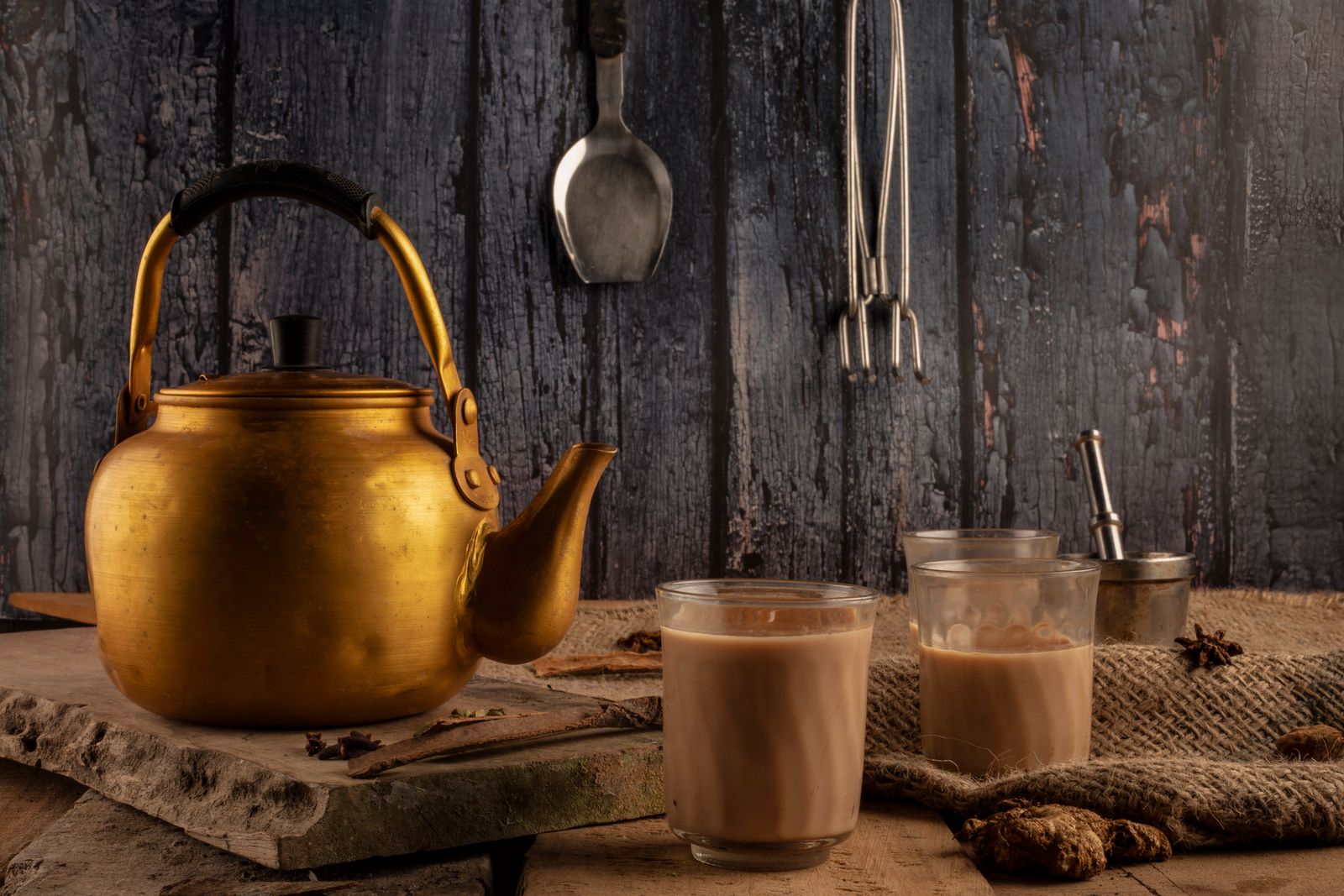
Ask what an office in the UAE drinks and the honest answer is not espresso. It is karak — strong black tea boiled with milk, sugar and cardamom, served small and hot, several times a day. It is the drink of the cafeteria window, the site canteen, the warehouse break, the late shift and the mid-morning round that a pantry attendant carries from desk to desk. And it is the drink most office pantry programmes have never actually planned for. The coffee machine gets a specification, a rental contract and a bean review. Karak gets a pot on a hob, a tin of evaporated milk and whoever is free at half past ten.
That works until it doesn't. The office grows, the attendant leaves, the site moves to a building without a gas hob, or someone in finance asks why the pantry is buying forty cans of evaporated milk a week. At that point karak becomes a procurement question like any other: which format, at what cost per cup, at what sugar level, held at what temperature, and delivered how. This guide answers those questions for a UAE office, from a six-person consultancy to a 24/7 logistics floor.
What karak actually is, and why it matters for the pantry
Karak (from the Hindi-Urdu word for "strong") is a Gulf adaptation of South Asian milk tea. The base is a robust black tea — usually a CTC or loose-leaf grade chosen for strength rather than finesse — boiled hard in water, then simmered with milk until it colours. The milk is traditionally evaporated milk from a can, which is what gives karak its particular body and slightly caramelised note; fresh milk makes a thinner, paler cup. Sugar goes in during the boil rather than at the table, and the classic spice is green cardamom, with saffron, ginger or cinnamon as regional and personal variations.
Three properties follow from that recipe, and each one has a pantry consequence:
- It is pre-sweetened. A cafeteria cup is made sweet by default, typically in the range of two to three teaspoons of sugar per small serve. Nobody adds sugar to karak; the choice was made in the pot. That makes karak the one drink in the office where a sugar policy has to be decided upstream, in the recipe or the premix specification, rather than left to the individual at the station.
- It is milk-based and served hot. That puts it in the same food-safety category as any hot milk drink: it cannot sit in a pot on low heat all afternoon. The food-safety rules for UAE office pantries apply to the karak urn exactly as they apply to a fridge.
- It is served small and often. A karak serve is 120–180 ml, not a 350 ml mug. People drink three or four a day. Consumption planning that works for coffee — one large cup per person per morning — undercounts karak by a factor of two or three.
Karak also carries a caffeine load that is easy to forget because it does not feel like coffee. Strongly brewed black tea sits around 40–70 mg of caffeine per 150 ml serve, so four cups across a day is roughly the caffeine of two espressos. That matters for how it fits alongside the office coffee programme rather than as a reason to restrict it.
The four ways to put karak in an office
There is no single right format. The choice depends on headcount, hours, whether the pantry has a hob and whether there is anyone to stand at it. Here are the four models UAE offices actually use, with what each one costs and where it breaks.
1. Made fresh by a pantry attendant
This is the traditional model and, for offices that have an attendant anyway, still the best-tasting one. Tea, water, evaporated milk, sugar and cardamom go into a pot; it is boiled, strained and poured into small cups on a tray; the tray goes round. Two rounds a day is the norm, one mid-morning and one mid-afternoon, with extra on request for visitors.
Ingredient cost is low. A kilogram of strong black tea at wholesale makes somewhere between 200 and 300 karak serves, so the tea itself is around 15–20 fils per cup. A 400 g can of evaporated milk stretches to roughly eight to ten serves, which is the largest single ingredient cost at around 50–70 fils per cup depending on the brand and how milky the recipe runs. Sugar and cardamom add a few fils. Call it AED 0.80–1.10 per cup in ingredients, which is cheaper than any other hot drink in the building except plain tea bags.
The real cost is labour and equipment. The model needs someone available at the right times, a hob or induction plate (many newer fit-outs in towers do not allow open-flame or high-draw appliances — check the building rules before assuming the pantry can boil a pot), a strainer, a pot that will be scrubbed daily, and a way of getting hot cups to forty desks without a spill. In an office that already employs an attendant for meeting-room service the marginal cost is close to zero. In an office that does not, hiring one to make tea is not a pantry decision.
Where it breaks: holiday cover, offices above roughly 60–80 people where two rounds a day cannot reach everyone while the tea is still hot, and any workplace that runs beyond the attendant's hours.
2. Premix sachets
A karak premix is a single-serve sachet of powder — tea extract, milk powder, sugar and spice — that makes a cup with hot water from the kettle or the boiling-water tap. It is the format that took over petrol-station forecourts and it works surprisingly well in an office for one reason: it removes the person from the equation. Anyone can make one, at any hour, with no pot and no hob.
Cost is higher per cup but fully variable. Retail single sachets run AED 1–2 each; in wholesale case quantities a good-quality premix lands at roughly AED 0.90–1.50 per cup, with no labour and nothing to hold hot. You pay for what is drunk and nothing goes down the sink at the end of the day.
The trade-offs are sugar and taste. Most premixes are formulated sweet, in the same range as the cafeteria cup, and the sugar cannot be dialled down because it is in the sachet. Unsweetened and reduced-sugar karak premixes exist and are worth specifying; the base recipe with a separate sugar sachet is the version that lets a sugar policy actually operate. Taste is acceptable rather than excellent — the milk-powder base does not give the body of evaporated milk, and the spice note is often flat. For a large office that is a fair trade for zero labour; for a boutique firm whose partners grew up on fresh karak it will not pass.
Check the tax line. Under UAE excise rules, concentrates, powders and extracts intended to be made into a sweetened drink can fall within the sweetened-beverage regime, and since 1 January 2026 that regime is the tiered, sugar-content-based model described in the office soft drinks guide. Whether a specific premix is treated as an excise product depends on its composition and how the importer has classified it — milk-based products have historically been treated differently from sugary soft-drink powders. Ask the supplier to state on the quotation whether any excise is embedded in the sachet price, so the comparison against fresh karak is like for like. VAT at 5 per cent applies either way.
3. A karak machine
A karak machine is a hot-holding and dispensing unit — a tank that brews or reconstitutes a batch, holds it at serving temperature and dispenses it at the press of a lever — sized anywhere from a 5-litre countertop urn to a 20-litre floor-standing unit. Most run on a premix (liquid concentrate or powder) rather than a from-scratch boil; a few semi-automatic units will accept fresh tea and milk and keep the result hot.
It suits volume and hours. A 10-litre tank is 60–70 serves, which covers a mid-size floor's morning round with no one standing at a pot. It runs through the night shift. It sits in the pantry next to the coffee machine and takes the same footprint as a large water boiler.
Cost depends on the model more than the machine. The units themselves range from a few hundred dirhams for a basic urn to several thousand for a plumbed, dual-tank dispenser; several suppliers place them on a rental-and-consumables basis in the same way coffee machines are placed, which is worth comparing with the rent-or-buy analysis for office coffee equipment. The consumable — the concentrate or powder — is where the money goes, at roughly AED 0.70–1.20 per cup at machine volumes.
The rule that matters is hot-holding. Karak in a tank is a milk-based drink held hot for hours, and it has to be treated that way. Hold it at 60 °C or above for the whole holding period, discard what is left rather than reheating it, and clean the tank and dispensing valve every day — milk residue in a warm tap is a genuine hygiene risk, not a cosmetic one. If the machine cannot demonstrate a holding temperature, or the cleaning routine depends on someone remembering, the format is not appropriate. The equipment maintenance guide covers how to write a daily clean into a supplier's service schedule rather than leaving it to goodwill.
4. Cafeteria delivery
The fourth model needs the least explanation to anyone who has worked in the UAE: someone phones the cafeteria downstairs, and fifteen minutes later a tray of karak in small paper cups arrives at reception. Cafeteria karak is a cultural institution, it is genuinely good, and per cup it is cheap — typically AED 1.50–3.00 delivered, depending on the emirate and how far the cafeteria is from a tower's ground floor.
It is a good fit for small offices and irregular demand. A team of ten with no pantry attendant and no appetite for a machine is well served by a standing order for two trays a day. It is also the right answer for visitors — a tray of fresh karak in a meeting room lands better than a machine cup.
It scales badly and audits worse. Above thirty or forty cups a day the delivery is slow, the cups arrive at uneven temperatures, and the cost is being paid in cash or on someone's personal card with no invoice. If the office cares about consolidating pantry spend onto invoiced suppliers with payment terms — the argument made in the supplier consolidation guide — cafeteria karak is exactly the kind of line that escapes it. Some cafeterias will set up a monthly account; most will not.
Choosing between them: a decision in three questions
Is there someone to make it? If the office employs a pantry attendant for other reasons, fresh karak is the cheapest and best option and the decision is made. If not, the answer is a machine (above ~40 people or in a shift environment) or sachets (below that, or as the out-of-hours fallback alongside any of the other models).
What are the hours? A 9-to-6 office can be served by two fresh rounds or two cafeteria trays. A 24/7 or shift workplace — a control room, a hospital admin floor, a logistics hub, a manufacturing plant — cannot, and karak is precisely the drink the night shift wants at 2 am. For those sites it is a machine with a documented cleaning routine, backed by sachets for the hours when the tank is empty and being cleaned.
Who is drinking it, and how sweet? An office where karak is the default drink of most of the staff should treat it as seriously as coffee, with a recipe or premix specification agreed and written down. An office where it is a minority preference is better served by a sachet box on the shelf next to the premium tea range than by a machine that runs half-empty.
Many offices end up with a hybrid: fresh karak for the two daily rounds and for visitors, and a box of unsweetened premix for anyone who wants a cup at four o'clock. It costs almost nothing extra and removes the most common complaint, which is not about quality but about availability.
The sugar question, decided upstream
Karak is the sweetest hot drink most people consume in a day, and because the sugar goes in during the boil there is no station-side control. That makes it the drink where a pantry's sugar position actually has to be a recipe decision.
The practical options, in rising order of ambition:
- Standardise the recipe. For fresh karak, agree the sugar per litre with whoever makes it and write it down. A common starting point is to cut the cafeteria-style recipe by a third; most people do not notice, and the ones who do can add a sachet. The low-sugar office pantry guide makes the case for why an unannounced reduction lands better than a sign.
- Specify unsweetened premix with sugar on the side. This is the only premix configuration that gives the individual any choice at all. It costs the same per cup and moves the decision back to the person drinking it, which is where every other beverage in the office already sits.
- Offer a plainly labelled sugar-free version alongside. Not instead of. Removing the sweet version outright is the fastest way to send everyone back to the cafeteria downstairs, which solves nothing.
Milk is the second choice worth making deliberately. Evaporated milk is traditional and gives the best cup, but it is also the most energy-dense option per serve. Fresh full-fat milk makes a lighter karak that many offices prefer for the afternoon round; long-life milk is the practical choice for a machine or a shift site because it does not depend on the fridge. Oat and other plant milks work in karak — better than in espresso, in fact, because the tea's tannins carry them — and belong on the shelf for the same reasons they belong beside the coffee machine; see the plant-based milk guide and the wider office milk and dairy supply guide for the ordering rhythm and shelf-life rules. Whatever the choice, it belongs in the same dairy and plant-based milk order as the coffee station's, not on a separate cash run.
Cups, lids and the rest of the kit
Karak is served in a small cup — 150–180 ml, usually paper, usually without a lid because it is drunk at once and not carried far. Two points for the procurement list.
First, the cup format matters to cost. A 350 ml coffee cup used for a 150 ml karak serve wastes both paper and heat; specify a 6-oz or 7-oz cup for the karak round and keep the larger sizes for the coffee machine. Since the 1 January 2026 extension of the UAE's single-use plastics rules, conventional plastic cups, stirrers and lids are off the list anyway; paper cups are compliant, and the guide to cups and cutlery after the plastic ban covers what "compliant" actually means for the lined cups and wooden stirrers a karak round uses.
Second, if karak is a daily fixture, a small glass or ceramic cup washed in the pantry beats paper on cost within a few weeks and is closer to how the drink is served everywhere else. Offices that already run a dishwasher for coffee cups should simply add a dozen 150 ml glasses to the cupboard.
For the fresh-made model the kit is a heavy-bottomed 3–5 litre pot, a fine strainer, an induction plate if the building bans gas, and a tray with a non-slip surface. For a machine, insist on a unit with a readable holding temperature and a tank that lifts out for cleaning. For sachets, the only equipment is a boiling-water tap or kettle that actually reaches the boil — lukewarm dispensers make bad karak and worse tea.
Where karak culture is strongest — and what that means for the site
Karak is drunk everywhere in the country, but the workplaces where it is the default hot drink rather than one option among several tend to share a profile: large headcounts, shift patterns, and a workforce for whom a small sweet tea is the day's punctuation. That describes most of the logistics and freight operations around JAFZA and Dubai South, the manufacturing and industrial units in Al Quoz and Mussafah, and the construction and engineering site offices that run from six in the morning. The vertical guides for logistics companies, manufacturers and construction firms each treat the tea round as a core service, not a nicety, because on those sites it is.
In the towers of DIFC and ADGM the picture is different: karak is a preference of a portion of the staff, the pantry is electric-only, and there is often no attendant. There, the sensible shape is a good sachet on the shelf next to the herbal and specialty teas — the same herbal tea range that already sits beside the espresso machine — plus a cafeteria order when a visiting client would appreciate it. The point is not that one model is superior; it is that the format should follow the building and the people rather than habit.
The one setting where karak is close to universal regardless of sector is Ramadan. Karak at iftar and again before suhoor is a fixture of the month, and an office that hosts a team iftar or runs late hours during Ramadan should plan the karak alongside the Arabic coffee and dates rather than as an afterthought — the Ramadan corporate gifting and hospitality guide covers the timing.
Costing it for the budget line
A rough sizing for the pantry budget, on the assumption that karak is a mainstream drink in the office rather than an occasional one:
- Consumption: count two to three serves per drinker per day, and assume 40–70 per cent of staff drink it depending on the workforce profile. A 100-person logistics office might run at 150–200 cups a day; a 100-person law firm at 40–60.
- Fresh, with an existing attendant: AED 0.80–1.10 per cup in ingredients. At 150 cups a day that is roughly AED 3,000–3,600 a month, all of it on invoiced tea, milk and sugar.
- Machine: AED 0.70–1.20 per cup in consumables plus AED 150–400 a month in rental and service for a mid-size unit. At 150 cups a day, AED 2,500–4,000 a month.
- Sachets: AED 0.90–1.50 per cup, no fixed cost. At 50 cups a day, roughly AED 1,000–1,700 a month.
- Cafeteria: AED 1.50–3.00 per cup, typically unrecorded. At 50 cups a day, AED 1,700–3,400 a month leaving the building in cash.
The comparison that surprises most finance teams is the last one: for a mid-size office, the cafeteria round it has been running informally for years is often the most expensive option on the list, and the only one that produces no invoice, no VAT recovery and no line in the cost-per-employee analysis. Moving karak onto the same supplier as the rest of the pantry is usually a saving, not a cost, before quality is even considered.
The short version
Karak is the country's default hot drink and deserves a place in the pantry plan next to coffee, not a pot on a hob nobody has thought about. Pick the format by whether there is someone to make it, what hours the site runs and how many people actually drink it: fresh if there is an attendant, a hot-holding machine for volume and shifts, unsweetened sachets with sugar on the side as the universal fallback, and cafeteria trays for small teams and visitors. Decide the sugar level in the recipe, because that is the only place it can be decided. Hold any batch at 60 °C or above, clean the tank daily, and use a small cup. Then put the tea, milk and sugar on the same invoice as the rest of the pantry and stop paying for it in cash.
MHO supplies UAE offices with the strong black teas, herbal and specialty teas, evaporated, fresh, long-life and plant-based milks and the small-format cups a karak round needs, on the same delivery as the coffee, water and snacks. Browse the full range by category, check every area we deliver to — from the towers to the industrial zones — or talk to us about setting up a karak service that fits the building rather than the habit.
Frequently asked questions
What is karak chai and how is it different from ordinary tea? Karak is strong black tea boiled with milk, sugar and spice — usually green cardamom, sometimes saffron or ginger — rather than brewed and then topped up. Traditionally the milk is evaporated milk from a can, which gives it a heavier body and a slightly caramelised taste, and the sugar goes in during the boil, so the cup arrives sweet by default. It is served small, typically 120–180 ml, and drunk several times a day. It is the most widely consumed hot drink in the UAE and the default tea in most cafeterias and site canteens.
What is the cheapest way to provide karak in an office? If the office already employs a pantry attendant, fresh karak is the cheapest, at roughly AED 0.80–1.10 per cup in ingredients. Without an attendant, a hot-holding karak machine on premix is usually the lowest cost per cup at volume (about AED 0.70–1.20 plus a modest rental), and single-serve sachets (about AED 0.90–1.50) are the cheapest option for small offices because they carry no fixed cost. Cafeteria delivery at AED 1.50–3.00 per cup is convenient for small teams but is generally the most expensive option per cup and the only one that usually produces no invoice.
Is karak premix subject to excise tax in the UAE? It can be. UAE excise rules cover concentrates, powders and extracts intended to be made into sweetened drinks, and from 1 January 2026 that regime is the tiered, sugar-content-based model rather than the old flat 50 per cent. Whether a particular karak premix is treated as an excise product depends on its composition and how the importer has classified it — milk-based products have historically been treated differently from soft-drink powders. Ask the supplier to state on the quotation whether any excise is embedded in the price so that fresh, machine and sachet karak can be compared like for like. VAT at 5 per cent applies in all cases.
How long can karak be kept hot in an urn or machine? Treat it like any other hot milk-based drink: hold it at 60 °C or above for the whole holding period, do not top up an old batch with a new one, discard what is left rather than reheating it, and clean the tank, tap and drip tray every day. A machine that cannot show its holding temperature, or whose cleaning depends on someone remembering, is not suitable for a workplace. In practice most offices run a fresh batch for each of the two main rounds and clean between them.
Can karak be made less sweet without people noticing? Yes, within limits. Because the sugar goes into the pot rather than the cup, the only place to reduce it is the recipe or the premix specification. Cutting a cafeteria-style recipe by roughly a third is rarely noticed; anyone who wants it sweeter can add a sachet. For sachets, specify an unsweetened premix with sugar provided separately — it costs the same and gives the individual the choice. Offering a sugar-free version alongside the standard one works better than removing the sweet version, which simply sends people back downstairs to the cafeteria.
Does karak work with oat or other plant-based milks? Better than most hot drinks, because strong black tea carries plant milks well and the spice covers any flavour difference. Oat milk gives the closest result to the traditional cup; almond and soy work but taste thinner. For a machine or a shift site, long-life dairy or long-life plant milk is the practical choice because it does not depend on the fridge. The milk for karak should be ordered on the same delivery as the coffee station's milk rather than bought separately.