Most office coffee advice is about the daily routine: one machine, a steady trickle of people, one cup at a time. Town halls, all-hands meetings, training days and quarterly reviews are different. Fifty, a hundred or two hundred people arrive at once and want a hot drink in the same 15 minutes.
An espresso or bean-to-cup machine cannot do that. Even a good machine makes one or two drinks a minute, so a queue of 80 people takes most of an hour. The answer is batch brew: coffee made in volume, held in thermal airpots, with tea from an urn or hot water dispenser alongside.
This guide covers how to do it well.
Why batch brew, not more machines
Batch brew is filter coffee made in a larger brewer, usually 2 to 4 litres at a time, straight into a thermal server or airpot. It has three advantages for large groups:
- Speed. Guests serve themselves from pump airpots. A line of four airpots can serve a large room in a few minutes.
- Consistency. Every cup from the same batch tastes the same.
- Cost. Filter coffee uses less coffee per cup than espresso-based drinks, and needs no milk steaming.
Good batch brew is not the stewed jug of coffee left on a hotplate all morning. Made with fresh beans, the right recipe and served within the holding time, it is a perfectly good cup. The office coffee programs guide covers the daily set-up that sits alongside it.
The recipe
The Specialty Coffee Association's brewing standard is around 55 grams of coffee per litre of water, with a tolerance of roughly 10 per cent either way. In practice:
- Coffee: about 55 to 60 g per litre. A 2-litre batch needs around 110 to 120 g.
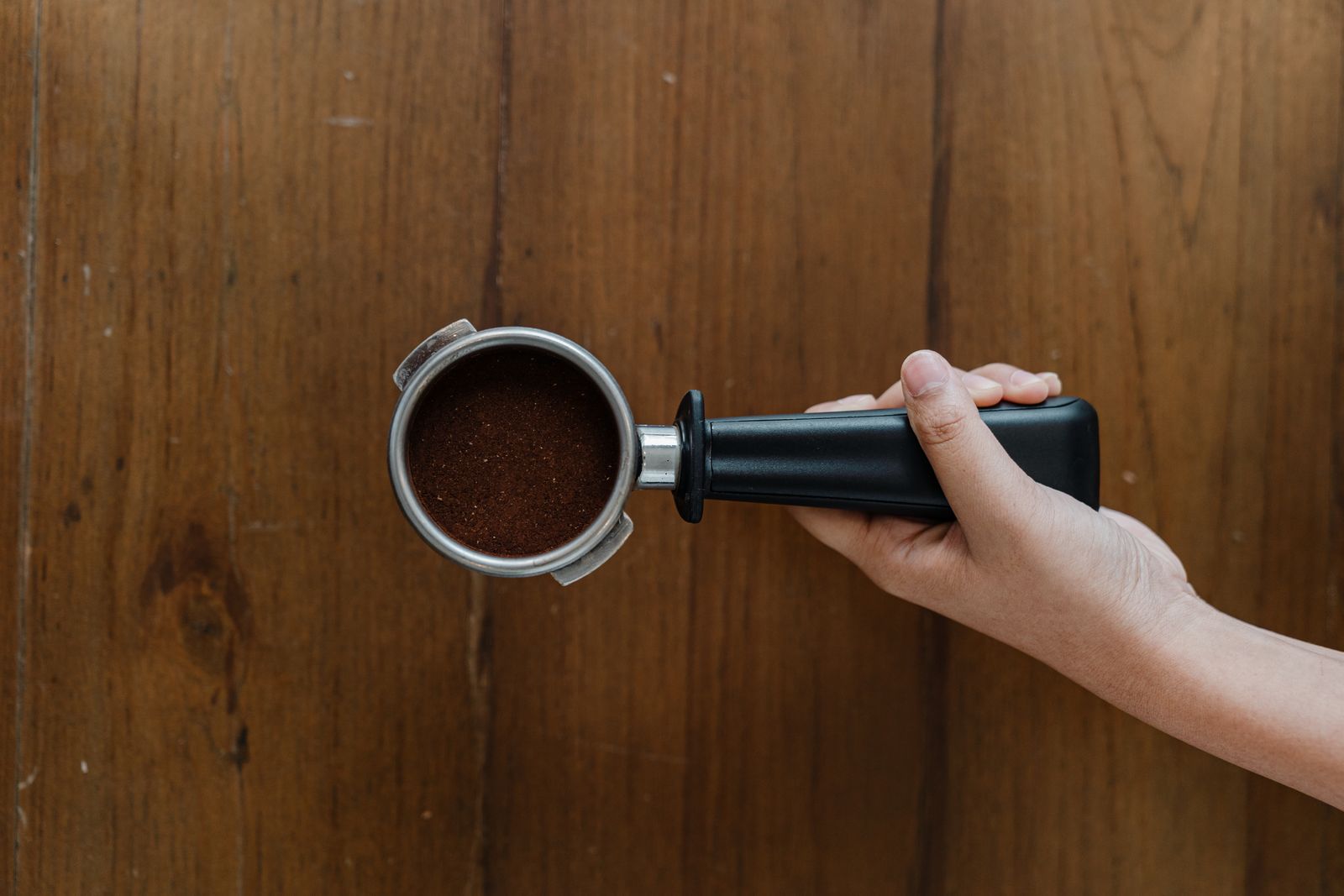
- Grind: medium, coarser than espresso. Pre-ground filter coffee is fine if it is fresh and used within a couple of weeks of opening.
- Water temperature: about 92 to 96 °C. Most commercial batch brewers handle this automatically.
- Brew time: usually 4 to 6 minutes for a full batch, depending on the brewer.
Weigh the coffee rather than using scoops. If the coffee tastes weak and sour, grind finer or add a little more coffee. If it tastes harsh and bitter, grind coarser. Change one thing at a time. The coffee bean freshness guide explains why the roast date matters, and the beans vs pods cost guide shows how cheap a cup of batch brew is in comparison.
Holding time: the step most offices get wrong
Brewed coffee starts to lose flavour as soon as it is made. Heat speeds this up, which is why coffee on a hotplate turns bitter and flat so quickly.
- On a hotplate: use within about 30 minutes.
- In a good thermal airpot: best within about an hour. It will still be hot after that, but the flavour fades.
So brew as close to the break as possible. For a 10 am break, start brewing about 15 to 20 minutes before. For a long event, brew in rounds rather than making everything at once, and label each airpot with the time it was made. Pour away coffee that is more than about an hour old.
Pre-heat airpots with hot water before filling. A cold airpot takes heat out of the coffee immediately.
How much to make
Not everyone takes a hot drink, and not everyone who does wants coffee. These are starting points to adjust after your first event:
- Around 60 to 70 per cent of attendees will take a hot drink at a morning break, fewer in the afternoon.
- Of those, roughly two-thirds will choose coffee and one-third tea or another hot drink.
- A meeting cup is usually 150 to 180 ml, not a full mug.
Worked example for 100 people at a morning break:
| Item | Estimate |
|---|---|
| Hot drinks | about 65 |
| Coffee | about 45 cups, around 7 to 8 litres |
| Tea and other hot drinks | about 20 cups |
| Airpots of coffee (2.2 L) | 4, including one decaf |
| Milk | about 1 litre (15 to 20 ml per milky cup) |
| Water | a bottle or glass for everyone |
A 2.2-litre airpot holds around 12 to 14 meeting cups, and a 3-litre airpot around 17 to 20. Always have one batch more than you think you need ready to brew, rather than brewed and waiting.
Decaf, tea and other options
Decaf. Have at least one airpot of decaffeinated coffee, clearly labelled, especially for afternoon sessions. The decaf and low-caffeine guide covers options.
Tea. A hot water urn or boiling water dispenser with a choice of tea bags is the simplest set-up. Black tea needs water at or near boiling; green tea is better a little cooler. The boiling water taps guide compares urns and dispensers, the herbal teas range covers caffeine-free options, and the karak chai guide explains how to make karak in volume if your team expects it.
Arabic coffee. For senior guests or official visits, a separate dallah of Arabic coffee with dates is a strong gesture. The Arabic coffee and dates guide covers how to serve it.
Milk and sweeteners
Milk is the main food safety risk on a coffee table.
- Keep milk in the fridge and put out small jugs, refilling as needed, rather than one large jug for the whole event.
- Opened milk at room temperature should be used within about 2 hours, and less in a warm room.
- Offer one plant milk alongside dairy in a separate, labelled jug. The plant milk guide explains which work best in hot coffee.
- Put out sugar, a sweetener and stirrers. The sugar, honey and sweeteners guide covers the options.
The dairy and plant-based milk range covers fresh milk and barista plant milks.
Lay out the table for flow
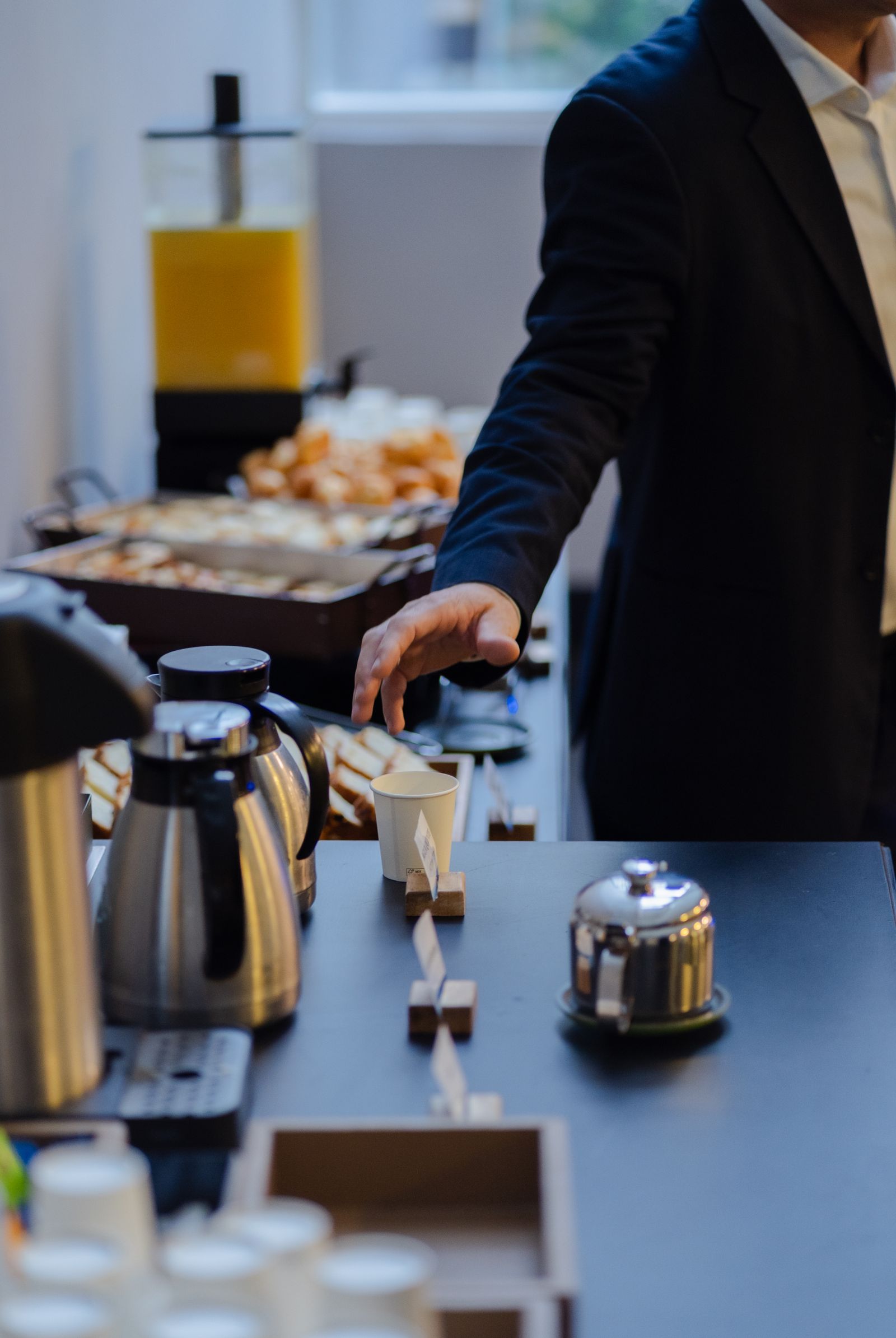
A coffee table for 100 people needs to be laid out like a short production line, so people move along it rather than crowd around it:
- Cups and saucers or paper cups at the start.
- Airpots of coffee, with decaf at the end and clearly labelled.
- Hot water and tea.
- Milk, sugar and stirrers.
- A bin for stirrers and tea bags at the end.
For more than about 60 people, set up two identical lines, or put the coffee at both ends of one long table. Put water and any food on a separate table so people collecting snacks do not block the coffee.
Keep urns and hot water dispensers away from the table edge, with cables taped down or behind the table. The breakroom design guide covers layout for permanent spaces.
Something to eat
A morning break usually needs a light snack. Individually wrapped items are easier to manage than open platters for a large group. Good options are dates, nuts and small pastries, and the dried fruits range and nuts and seeds range cover the first two. If the event runs over lunch, the meat alternatives range has plant-based protein for vegetarian guests, and the morning meetings bakery guide covers pastries.
Equipment and cleaning
If you run large meetings every month, it is worth owning the equipment:
- A commercial batch brewer that brews straight into airpots.
- Four to eight pump airpots, depending on the size of your largest event.
- A hot water urn or dispenser.
- Labels for regular, decaf and the brew time.
The coffee and coffee machines range covers filter coffee and machines, and the coffee station accessories guide covers airpots and smaller items.
Clean airpots after every use. Rinse with hot water, and once a week soak with a coffee equipment cleaner to remove the oils that build up inside and make the next batch taste stale. Leave lids open to dry. Descale the brewer and urn regularly, more often in areas with hard water. The equipment maintenance guide covers schedules, and the cleaning supplies range, office hygiene range and facility hygiene range cover cleaners, cloths and sanitiser.
Where to keep it
Batch brew equipment is bulky. A shelf or cupboard near the meeting space for airpots, urns and spare cups saves carrying everything from the main pantry. The stationery and office furniture range covers shelving and trolleys, and the office fit-outs and services range covers larger changes such as a dedicated servery next to a town hall space. The categories page shows the full range.
Large meetings in Abu Dhabi offices
Abu Dhabi companies often hold large internal meetings and client sessions in their own offices. Financial firms in ADGM and teams on Al Reem Island tend to host frequent client briefings, where a mix of batch brew and Arabic coffee works well. Cultural and education organisations on Saadiyat Island, and event and leisure companies on Yas Island, run regular all-staff sessions. Sustainability-focused employers in Masdar City often prefer reusable cups and airpots over single-serve coffee, and industrial companies in Mussafah need coffee and tea for shift briefings and safety meetings with large groups.
The team offsite and workshop catering guide covers events held outside the office.
The short version
- Use batch brew and airpots for large groups. An espresso machine cannot serve 100 people in one break.
- Brew around 55 to 60 g of coffee per litre of water, at 92 to 96 °C.
- Serve within about an hour in an airpot, or 30 minutes on a hotplate. Label each airpot with its brew time.
- For 100 people at a morning break, plan around 45 coffees, 20 teas and 1 litre of milk.
- Always include a labelled decaf airpot and a plant milk.
- Keep milk cold and in small jugs, and lay the table out in a line.
- Clean airpots after every use and soak them weekly.
Frequently asked questions
How much coffee do we need for 100 people? For a morning break, plan around 45 cups of coffee, which is roughly 7 to 8 litres, or four 2.2-litre airpots including one decaf. Add about 20 cups of tea and 1 litre of milk, and adjust after your first event.
How long does coffee stay good in an airpot? It stays hot for several hours, but the flavour is best within about an hour of brewing. Label each airpot with its brew time and pour away coffee that is older than that.
What is the right ratio for batch brew coffee? Around 55 to 60 g of medium-ground coffee per litre of water, brewed at 92 to 96 °C. Adjust the grind if the coffee tastes sour or bitter.
Is batch brew coffee cheaper than espresso? Usually yes. It needs less coffee per cup than espresso-based drinks and no milk steaming, and guests serve themselves, so no one is tied up at the machine.
How do we stop airpot coffee tasting stale? Pre-heat the airpot with hot water, brew as close to the break as possible, and clean it after every use. A weekly soak with a coffee equipment cleaner removes the oils that cause stale flavours.
Do we need decaf at a town hall? Yes. Keep at least one clearly labelled airpot of decaf, especially for afternoon sessions, along with herbal teas for people avoiding caffeine.