When the weather cools in October, UAE teams start leaving the office. Strategy days, year-end planning sessions, training workshops and team-building trips fill the calendar from autumn to spring, often on the same few weekdays before the December holidays.
The agenda gets most of the planning effort. The food and drink often get an email two days before. Yet catering is what people remember when it goes wrong: the coffee that arrived after the first session, the lunch that left everyone sleepy, the vegan colleague with nothing to eat, or the cool box of sandwiches that sat in a car boot for three hours. This guide covers how to plan the catering side of an offsite properly.
Start with the venue's rules
The venue decides more of the catering than the organiser does. Check these points before choosing a menu:
- Hotels and conference venues usually require you to use their own food and beverage service, often through a day-delegate rate per person. Many do not allow outside food at all, or charge a fee for it. Ask what the rate includes: number of coffee breaks, type of lunch, water in the room, and whether extra snacks cost more.
- Meeting rooms, coworking spaces and villas often allow outside catering. Check whether there is a fridge, a sink, a power supply for a coffee machine, and somewhere to throw away food waste.
- Desert camps, beaches and parks need everything brought in, including water, ice, shade and bins. Check whether the site allows food to be served, and whether a permit is needed for the event.
- Your own office is often the easiest "offsite". A different floor, a cleared meeting area or a coworking space day pass changes the feel without changing the logistics.
Whatever the venue, food should come from a licensed supplier. Home-made food brought in by staff is a nice gesture, but it should not be the main catering for a group event.
Build the day around the breaks
A full-day offsite usually follows this pattern:
| Time | What to serve | Why it matters |
|---|---|---|
| Arrival (30 minutes before start) | Coffee, tea, water, fruit, a light pastry or breakfast | People arrive from different places, many without breakfast |
| Mid-morning | Coffee, tea, water, fruit or a small snack | Keeps focus until lunch |
| Lunch | A balanced meal, not too heavy | The afternoon depends on it |
| Mid-afternoon | Water, cold drinks, fruit, nuts, something sweet | The hardest session of the day |
| Close | Water and a drink for the road | People leave in the heat |
Three things make a difference:
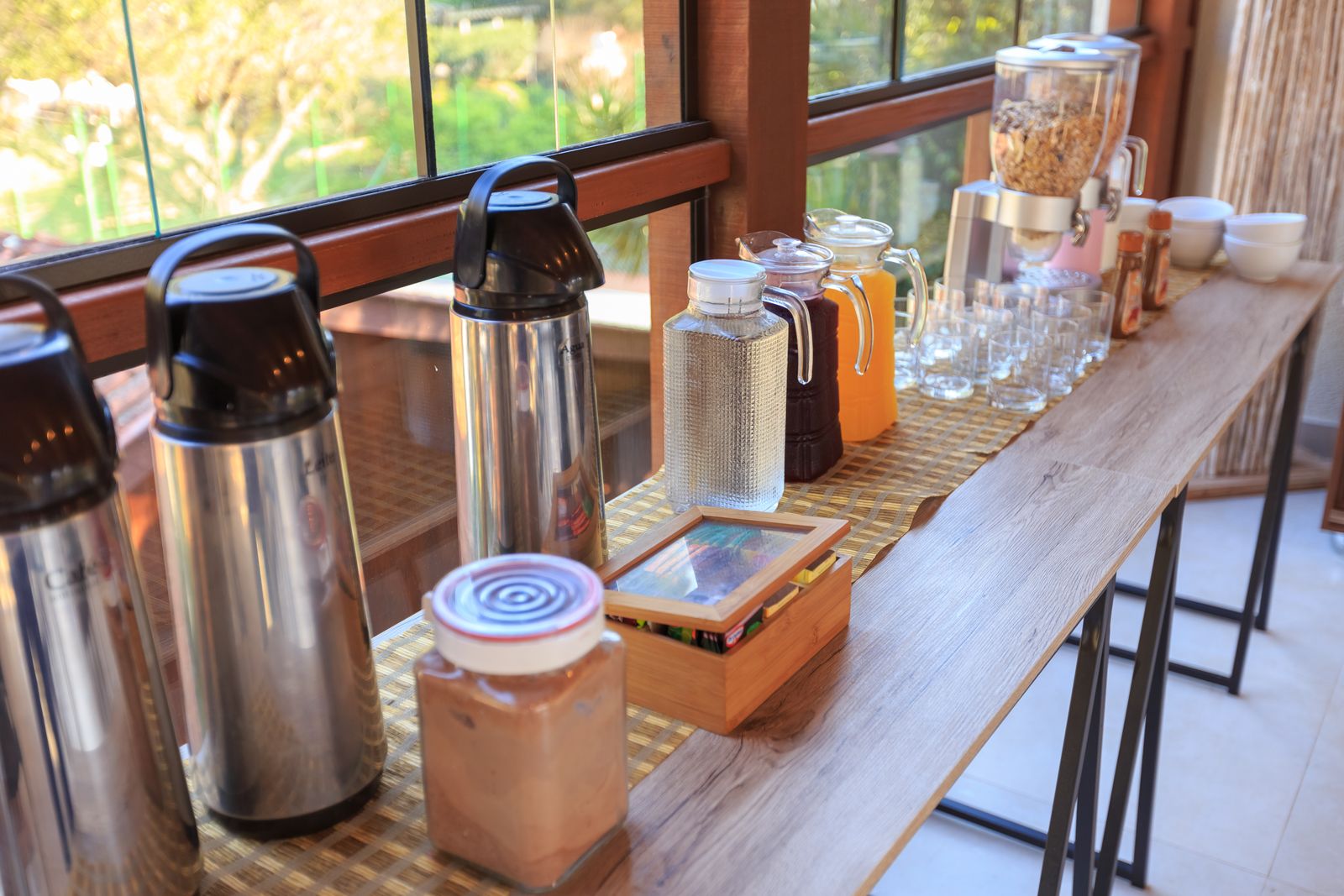
- Coffee must be ready before the first session, not during it. Confirm the arrival time with the supplier, and allow time for setting up. The office coffee programmes guide covers serving coffee for a group.
- Keep lunch lighter than a restaurant lunch. Many facilitators find that a large, heavy lunch leaves the room flat for the first afternoon session. Salads, grilled protein, grains and fruit work better than a rich buffet. The salads and crudités guide has ideas.
- The afternoon break needs the most effort. Cold drinks, fresh fruit, nuts and a few sweet options work better than another round of hot coffee alone.
How much to order
Exact numbers depend on the group, but these are useful starting points for a full day:
- Water: indoors, plan on at least 1 to 1.5 litres per person over a full day. Outdoors in warm months, plan on much more, and have extra in reserve. Running out of water outdoors is a safety problem, not a catering one.
- Coffee and tea: two to three hot drinks per person across the day, with more at the arrival break.
- Fruit and snacks: one or two portions per person for each break, with about 10% extra.
- Lunch: order for the confirmed headcount plus about 5%, and confirm final numbers two working days before.
Over-ordering by 30% "to be safe" is the most common cause of waste. A clear registration deadline and a final headcount reduce the need for a large buffer.
Keeping food safe in the heat
Offsite food often travels further and waits longer than office food. In the UAE, that is where it goes wrong.
- Keep chilled food at 5 °C or below from collection to serving. Use insulated cool boxes with enough ice packs, and keep them in shade, not in a car boot or on a sunny terrace.
- Use separate cool boxes for food and drinks. The drinks box is opened all day. The food box should stay closed until serving.
- Limit time out of the cool box. Perishable food should not be left out for more than 2 hours, or 1 hour when the temperature is above 32 °C. Outdoors in the UAE, that can mean most of the year.
- Serve smaller amounts and refill. Put out food in batches rather than all at once, and remove what has been out too long.
- Bring hand sanitiser and wipes for outdoor venues without washrooms nearby.
The food safety rules guide covers temperature control in more detail, and the ice machines and ice supply guide explains why ice for drinks should come from a licensed producer.
Heat and outdoor sessions
For outdoor team-building, the season matters as much as the menu.
- Plan outdoor activities for the cooler months, roughly November to March, and for the morning or late afternoon.
- UAE labour rules ban outdoor work in direct sun during the summer midday hours (generally 12:30 to 15:00 from mid-June to mid-September). An offsite is not the same as outdoor work, but the same hours are a sensible line for outdoor activities too.
- Provide shade, cool water and somewhere to sit for every outdoor activity, and make sure people drink before they feel thirsty.
- Add electrolytes for active sessions. For sports or long outdoor activities, the coconut water and electrolyte drinks guide explains what helps. The summer hydration playbook covers heat in more depth.
Dietary needs
Ask about dietary needs in the registration form, not on the day. A good form asks about:
- Allergies, with severity (for example, a nut allergy that needs an epinephrine pen).
- Vegetarian, vegan, gluten-free and dairy-free needs.
- Religious requirements, including whether anyone will be fasting.
- Any medical diet the person wants the organiser to know about.
Then:
- Label every dish with its main allergens, and keep allergen-free dishes separate on the table.
- Make the vegetarian option good enough for everyone. Plant-based dishes are often eaten by more people than registered for them. The plant-based pantry guide has ideas.
- Plan gluten-free options properly, not as an afterthought. The gluten-free pantry guide covers cross-contact.
- Avoid scheduling food-centred sessions during fasting hours in Ramadan. In 2027, Ramadan is expected to begin around early February, so year-start offsites should check the dates. An iftar can replace a lunch for teams that want to meet during the month.
The allergen and dietary labelling guide and the halal compliance guide cover labelling and sourcing.
Packaging, waste and leftovers
- Check the single-use plastic rules. UAE emirates have been phasing out single-use plastic bags, cups, cutlery and containers. Reusable or compliant disposable items avoid problems with venues. The cups and cutlery guide covers the current rules.
- Use refillable water dispensers where the venue allows, instead of cases of small bottles.
- Plan leftovers in advance. Sealed snacks and unopened drinks can go back to the office pantry. Food that has been out on the table should be thrown away once the time limits above have passed. Surplus that has stayed sealed and chilled can be offered to staff or to a food donation programme such as the UAE Food Bank, following its rules.
The food waste guide covers how to measure and reduce waste across the year.
A planning timeline
Three to four weeks before
- Confirm the venue and its catering rules.
- Agree the budget per person and what it covers.
- Open registration with dietary questions.
One to two weeks before
- Choose the menu for each break and lunch.
- Book coffee, water, snacks and fruit deliveries.
- Arrange cool boxes, ice, dispensers, cups and bins.
Two working days before
- Close registration and send final numbers to the venue and suppliers.
- Share the list of dietary needs with whoever is serving.
On the day
- Check that coffee and water are ready before the first session.
- Keep chilled food closed and in shade until serving.
- Remove food that has been out too long, and keep sealed leftovers for the office.
Offsites by industry
- Finance and professional services. Banks and financial services firms, fintech companies, family offices, law firms and consultancies often run year-end strategy days in hotels. The venue's day-delegate rate usually covers the catering, so the work is in checking what it includes and adding what it does not.
- Government. Government and public sector teams often have strict rules on hospitality spend and venues. Confirm what is allowed before booking.
- Tech, media and coworking. Tech companies and startups, media and creative agencies and coworking operators often hold offsites in villas or their own spaces and cater them directly.
- Property and construction. Real estate firms and construction and engineering companies often combine an offsite with a site or project visit. Pack water and cool boxes for the site part of the day.
- Energy, logistics and manufacturing. Oil, gas and energy companies, logistics and freight companies and manufacturing firms often run safety days and training sessions for large groups. Simple, well-labelled food served in batches works best.
- Aviation and healthcare. Aviation and airport services and healthcare providers work in shifts, so offsites may run twice for different teams. Order separately for each session.
- Education and life sciences. Schools and universities hold staff training days before term, and pharmaceutical and life sciences companies run regular training workshops. Both benefit from a standard break menu that can be repeated.
Offsites in Abu Dhabi
Teams in Abu Dhabi have plenty of choice. Offices in ADGM and on Al Reem Island often use hotel venues nearby. Saadiyat Island and Yas Island are popular for team days with outdoor activities, which need extra water and shade. Masdar City suits sustainability-themed workshops, where low-waste catering is part of the message. For teams in Mussafah, an onsite training day with good catering is often more practical than travelling.
MHO supplies offices across the UAE and works with teams in many industries.
What MHO can supply
For most offsites, the venue or a licensed caterer handles hot meals. MHO can supply the rest as part of a normal delivery: water, soft drinks, coffee and tea, fruit, snacks, nuts and breakfast and corporate events items. For offsites held in the office, the stationery and office furniture range covers notebooks and flipchart supplies, and the office fit-outs and services range covers rearranging a space for workshops.
The short version
- Check the venue's catering rules first. Many hotels do not allow outside food.
- Have coffee and water ready before the first session.
- Keep lunch light and put the most effort into the afternoon break.
- Plan at least 1 to 1.5 litres of water per person indoors, and much more outdoors.
- Keep chilled food at 5 °C or below, in shade, in separate food and drink cool boxes.
- Do not leave perishable food out for more than 2 hours, or 1 hour above 32 °C.
- Collect dietary needs at registration, label every dish, and check Ramadan dates.
- Plan packaging and leftovers before the day, not after it.
MHO supplies drinks, coffee, fruit and snacks to offices across the UAE, including for offsites and workshops. Talk to the team about your next team day.
Frequently asked questions
Can we bring outside catering to a hotel offsite in the UAE? Often not. Many hotels and conference venues require their own catering, usually through a day-delegate rate, and either do not allow outside food or charge a fee for it. Check the venue's policy before planning the menu.
How much water should we plan for a full-day offsite? Indoors, plan on at least 1 to 1.5 litres per person over a full day. Outdoors in warm weather, plan on much more and keep a reserve. Running out of water outdoors is a safety risk.
How long can food be left out at an outdoor event? Perishable food should not be left out for more than 2 hours, or 1 hour when the temperature is above 32 °C. In the UAE that applies outdoors for much of the year, so serve in small batches from a closed cool box.
What should we serve at an afternoon workshop break? Cold drinks, water, fresh fruit, nuts and a few sweet options work better than another round of hot coffee alone. The afternoon break is often the hardest part of the day to keep people focused.
When is the best time of year for outdoor team-building in the UAE? Roughly November to March, ideally in the morning or late afternoon. In summer, keep activities indoors, and avoid outdoor sessions in the midday hours.
How do we handle dietary requirements for an offsite? Ask about allergies, dietary choices, religious needs and fasting in the registration form. Share the list with the venue or caterer, label every dish with its allergens, and keep allergen-free dishes separate.
What should happen to leftovers after an offsite? Sealed snacks and unopened drinks can go back to the office pantry. Food that has been out on the table beyond the safe time should be discarded. Sealed, chilled surplus can be offered to staff or a food donation programme, following its rules.