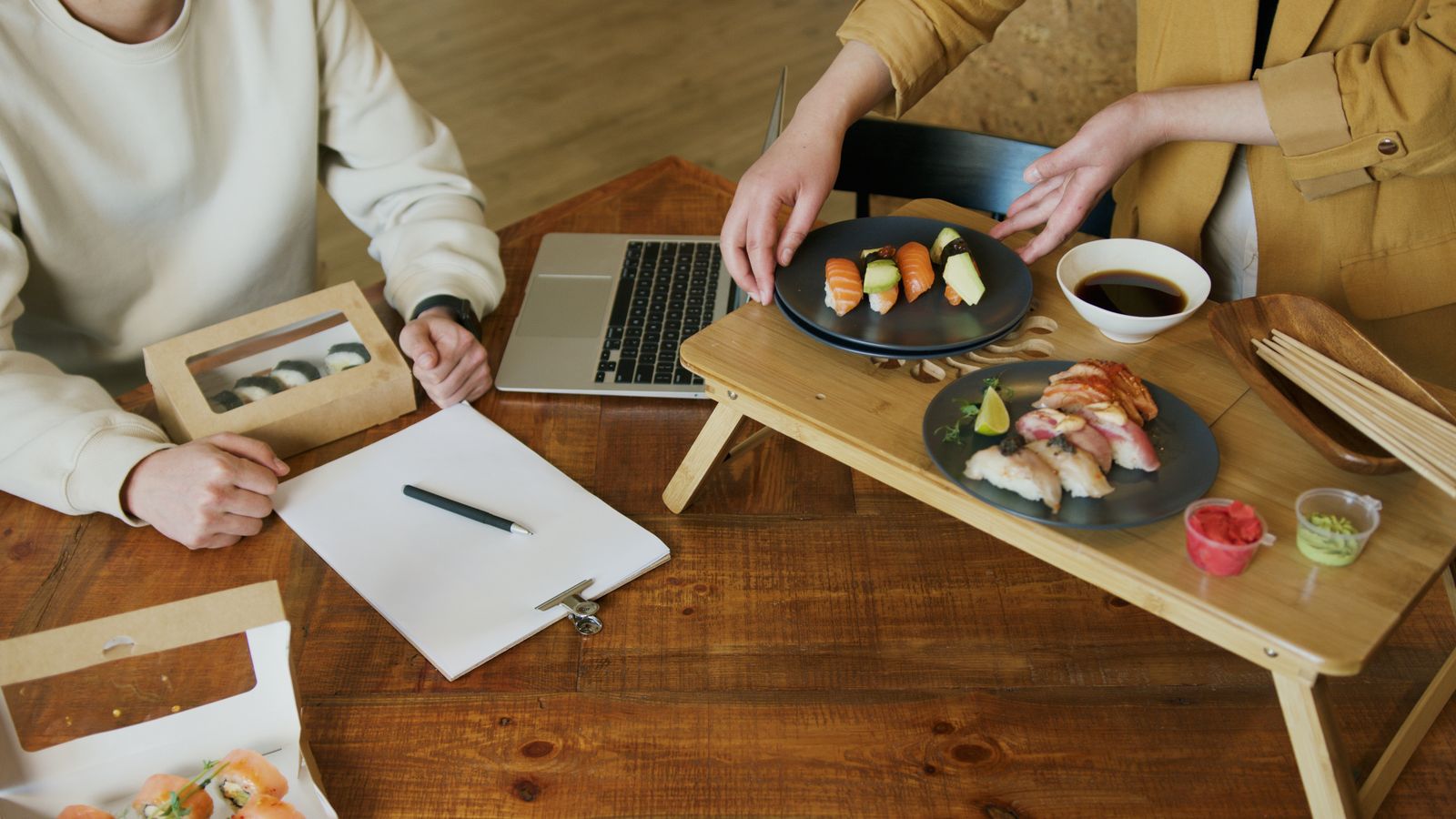
A lunch and learn is a short training or knowledge-sharing session held over lunch. A colleague, a supplier or an outside expert presents for 30 to 45 minutes while the audience eats. It is one of the cheapest ways to run internal training, and the food is the reason many people turn up.
It is also easy to get wrong. Food that arrives late eats into the session. Crunchy, messy or smelly food distracts from the speaker. A menu that ignores dietary needs leaves part of the room with nothing to eat. This guide covers how to plan the food so the session runs smoothly.
Pick the right format
There are three common formats, and the food plan follows from the choice.
| Format | How it works | Best for |
|---|---|---|
| Eat, then listen | 15 minutes to collect food and start eating, then the talk | Sessions of 45 to 60 minutes, larger groups |
| Eat while listening | Food is ready at the start and people eat during the talk | Short sessions, small groups, informal topics |
| Listen, then eat | Talk first, lunch afterwards as the networking part | Client or partner sessions, senior speakers |
For most internal sessions, "eat, then listen" works best. The speaker is not competing with the noise of people serving themselves, and everyone has finished the messiest part of the meal before the slides start.
Keep the whole session to 45 to 60 minutes. A lunch hour is a lunch hour, and people will stop coming if sessions regularly run over.
Boxed lunches or a buffet
Boxed or individually packed lunches are the better default for most lunch and learns:
- People collect a box and sit down within seconds, so there is no queue.
- Each box can be labelled with its dietary type, which makes allergens and preferences easier to manage.
- Food is covered until it is opened, which helps with food safety.
- Clearing up is quicker.
A buffet suits longer sessions, larger groups who will stand and mingle afterwards, or teams that dislike packaging. It needs more space, more time and someone to watch it.
If you are reducing packaging, choose compostable or recyclable boxes and check them against the single-use plastic rules. The cups, cutlery and single-use plastic ban guide explains what is still allowed.
Choose food that is quiet and tidy
The best lunch and learn food can be eaten with one hand or a fork, quietly, without dripping onto a laptop. Good choices:
- Wraps, sandwiches and flatbreads, cut in halves. The bread, wraps and sandwich supplies guide covers fillings and storage.
- Grain bowls and salads with the dressing on the side, so they do not go soggy. The salads and vegetable crudités guide has ideas.
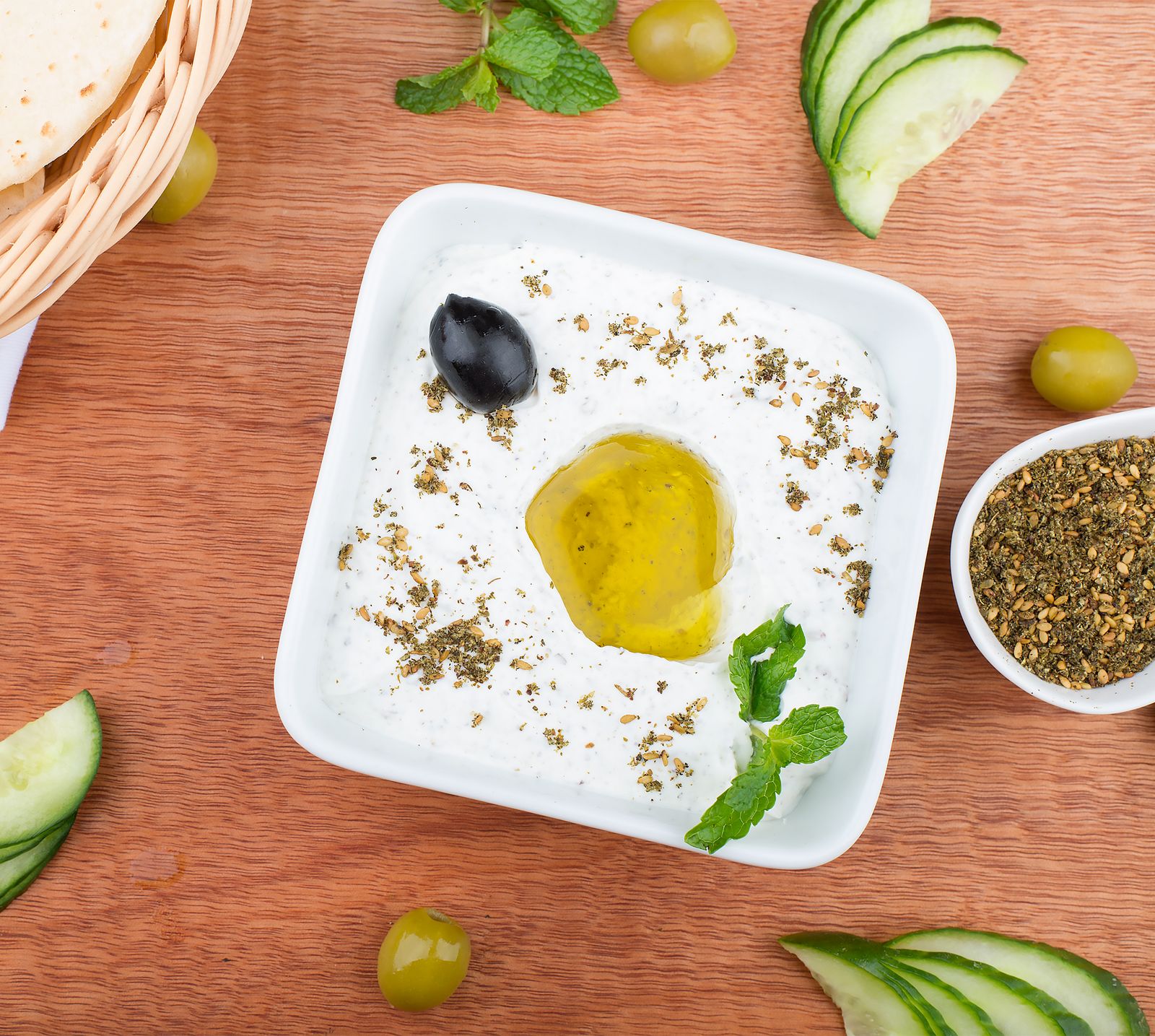
- Rice dishes and mezze in individual portions, such as hummus with vegetables, falafel, tabbouleh and grilled chicken.
- Cut fruit in small pots for dessert rather than whole fruit, which is noisy to eat and leaves cores and peel.
Food to avoid during the talk:
- Crunchy crisps and raw apples, which are loud in a quiet room.
- Strong-smelling dishes, such as fish curries, in a closed meeting room.
- Anything with a lot of sauce, bones or shells.
- Large burgers or anything that needs two hands and a pile of napkins.
The office fridge and chilled snacks guide covers hummus, yoghurt and other chilled options that work well in individual pots.
How much to order
Start with these numbers and adjust after the first two or three sessions:
- Mains: one per registered attendee, plus about 10 per cent for walk-ins and the speaker.
- Sides or salad: one small portion per person if the main is light.
- Dessert: one small item or fruit pot per person.
- Water: around 500 ml per person for a one-hour session, as small bottles or jugs and glasses.
- Hot drinks: around half the room will want coffee or tea after eating, more in an afternoon session.
Ask people to register, and remind them the day before. No-shows are the biggest cause of waste. If more than about 20 per cent of registered people regularly do not turn up, order against the average attendance instead of the registration list.
The reducing food waste guide covers what to do with leftovers, and the office pantry cost per employee guide helps set a realistic budget per head.
Dietary needs and allergens
Add one question to the registration form: "Do you have any dietary requirements or allergies?" Then plan for the answers.
- Vegetarian and vegan: at least one clearly labelled option, and more if your team asks for it. The plant-based office catering guide covers menus.
- Gluten-free: order these separately and keep them sealed and labelled. The gluten-free pantry guide explains cross-contact risks.
- Nut allergies: check every item, including sauces, pesto, desserts and za'atar blends, and label nut-free boxes clearly.
- Halal: in the UAE most catering is halal, but confirm it with the caterer rather than assuming. The halal compliance guide covers what to ask.
Label every box or dish with its name and main allergens. The allergen and dietary labelling guide has a simple label format.
Food safety and timing
The most common food safety problem at a lunch and learn is food sitting out too long.
- Delivery time: have food arrive 15 to 20 minutes before the start. Earlier than that and it sits at room temperature; later and the session starts late.
- Keep it cold or hot: chilled food should go straight into a fridge until serving. Hot food should be served hot and not left to cool slowly on the table.
- Time out: as a general rule, food left at room temperature should be eaten or thrown away within about 2 hours, and within about 1 hour if the room or terrace is above 32 °C.
- Licensed suppliers: use a caterer licensed by the local authority, such as Dubai Municipality in Dubai.
The food safety rules guide covers the rules for office kitchens in more detail.
Drinks
Keep drinks simple. Still water on every table, a choice of soft drinks or juice, and coffee and tea for afterwards. For larger sessions, batch brew coffee in airpots is quicker than a single-cup machine, and the town hall coffee guide explains how much to make. Zero-sugar options and sparkling water are good alternatives to regular soft drinks, as the soft drinks and zero-sugar sodas guide explains.
Supplier-sponsored sessions
Many lunch and learns are run by suppliers, such as software vendors, banks, insurers or medical sales representatives, who offer to pay for lunch.
That is common, but check two things first:
- Your company's gifts and hospitality policy. Many companies set limits or require approval for supplier-funded hospitality, especially during a tender.
- The supplier's rules. Some industries, particularly pharmaceutical companies and medical device makers, follow codes of practice that limit what hospitality they can provide to healthcare professionals. Government entities in the UAE also have their own rules on accepting gifts and hospitality.
If in doubt, pay for the lunch yourself and let the supplier present.
Hybrid and remote attendees
Most lunch and learns now have people joining online. Two simple steps help:
- Ask the speaker to repeat questions from the room, because remote attendees cannot hear them.
- Put the microphone away from the food table, where the noise of people serving themselves carries.
Some companies send remote attendees a meal voucher or delivery credit so they are not left out. If you do, keep it simple and set a fixed amount.
Scheduling around the UAE working week and Ramadan
- Fridays: many UAE organisations work shorter hours on Friday, and government offices finish around midday. Avoid Friday lunch sessions.
- Ramadan: Ramadan 2027 is expected to begin around 8 February 2027. During Ramadan, do not hold lunchtime food sessions. Move learning sessions to the morning without food, or hold them after iftar if your team prefers. The Ramadan fasting at work guide covers working hours and hospitality during the month.
- Summer: if any part of the session is outdoors, the midday break rules for outdoor work between June and September are a reminder that lunch belongs inside.
Lunch and learns by industry
Different sectors use lunch and learns for different topics, and the food plan changes slightly with each.
Professional and financial services. Law firms run regular sessions for continuing professional development, and consultancies use them to share project learning between teams. Banks and financial services firms, fintech companies and family offices often host compliance and regulatory updates, where tidy boxed lunches suit formal rooms.
Technology and creative. Tech companies and startups and coworking spaces run informal tech talks, often in the "eat while listening" format. Media and creative agencies use them for portfolio reviews and guest speakers.
Health and science. Healthcare clinics and hospitals and pharmaceutical and life sciences companies hold many supplier-sponsored sessions, so the hospitality rules above matter most here. Teaching staff at schools and universities often have short lunch windows, so food must be ready on time.
Public sector. Government and public sector teams have clear rules on hospitality and supplier funding, so check them before accepting a sponsored lunch.
Field and operations. Construction and engineering, oil, gas and energy, manufacturing and industrial, logistics and freight and aviation and airport services companies often use lunch and learns for safety briefings. Shift patterns mean some teams need a second session, so plan food for both. Real estate and property firms use them for market updates and sales training.
Lunch and learns across Dubai
Food delivery timing depends on where the office is, and some districts are busier at lunchtime than others.
In DIFC, Business Bay and Downtown Dubai, lunchtime traffic and building access can slow deliveries, so book for 20 minutes before the start. Offices in JLT and Dubai Marina often hold sessions for mixed tenants in shared meeting rooms, where labelled boxes avoid confusion. Tech and media teams in Dubai Internet City, Dubai Media City and Dubai Design District run frequent informal talks.
Training and education providers in Dubai Knowledge Park and research teams in Dubai Science Park and Dubai Healthcare City host regular knowledge-sharing sessions. Event and exhibition organisers near Dubai World Trade Centre often use lunch and learns to brief staff before major shows.
Industrial and logistics companies in JAFZA, Dubai South and Al Quoz, and tech manufacturers in Dubai Silicon Oasis, often hold safety sessions for warehouse and office staff together. The Dubai locations page and the full locations list show where MHO delivers.
A simple checklist
- Choose the format and confirm the speaker.
- Open registration with a dietary question.
- Order boxed lunches, plus about 10 per cent, two to three working days ahead.
- Remind attendees the day before.
- Have food arrive 15 to 20 minutes before the start.
- Label every box with its name and main allergens.
- Put water out on tables and coffee on a separate table.
- Clear food within 2 hours and record what was left for next time.
The corporate breakfast catering guide covers morning sessions, and the team offsite and workshop catering guide covers full-day events away from the office.
The short version
- Use the "eat, then listen" format for most sessions, and keep them to 45 to 60 minutes.
- Boxed lunches are easier than a buffet: no queue, clear labels, faster clean-up.
- Choose quiet, tidy food: wraps, bowls, mezze and fruit pots, not crisps or messy burgers.
- Order one main per registered attendee plus about 10 per cent, and 500 ml of water each.
- Ask about dietary needs at registration and label every box.
- Have food arrive 15 to 20 minutes early, and clear it within 2 hours.
- Check hospitality rules before accepting a supplier-paid lunch, and avoid lunch sessions during Ramadan.
Frequently asked questions
How much food should we order for a lunch and learn? Order one main per registered attendee plus about 10 per cent for walk-ins and the speaker, a small side or salad, a dessert or fruit pot, and around 500 ml of water per person. Adjust after the first few sessions based on actual attendance.
What food is best for a lunch and learn? Food that is quiet and easy to eat with one hand or a fork: wraps, sandwiches, grain bowls, mezze and cut fruit. Avoid crunchy, strong-smelling or messy food during the talk.
Should we choose boxed lunches or a buffet? Boxed lunches are usually better. People collect them quickly, each box can be labelled for dietary needs, and clearing up is faster. A buffet suits longer sessions where people will stand and mingle.
How early should the food arrive? About 15 to 20 minutes before the session starts. Earlier means food sits at room temperature for longer, and later means the session starts late.
Can a supplier pay for our lunch and learn? Often yes, but check your company's gifts and hospitality policy first. Some industries, such as pharmaceuticals, and UAE government entities have stricter rules on supplier-funded hospitality.
Should we hold lunch and learns during Ramadan? Not as lunchtime food sessions. Move them to the morning without food, or hold them after iftar if your team prefers. Ramadan 2027 is expected to begin around 8 February 2027.