Walk into most UAE office pantries and the dry shelf is well looked after: nuts, bars, biscuits, crisps, a bowl of fruit, all shelf-stable, all easy to reorder. Open the fridge and the picture changes. Half of it is personal lunches with no names on them. The office's own chilled snacks — if there are any — are a tub of hummus opened on a date nobody remembers, three yogurts from a mixed pack that were the flavours nobody wanted, and a bag of cut carrots turning soft in the drawer.
That gap matters more than it looks. When people are asked what they would actually like in the pantry, the chilled lines come up first: a yogurt at 11, cheese and crackers instead of a biscuit, hummus and vegetables at 4, something with real protein in it. The ambient shelf is what offices stock because it is easy to manage. The chilled shelf is what people want, and it is harder to manage for reasons that are entirely solvable once they are written down.
This guide is about running the office fridge as a product line rather than a shared storage space: what belongs in it, how long each item lasts, what the temperature rules are in a country where the car park is 45 degrees, how much to order for a hybrid week, and the routine that keeps it safe.
What belongs in the office fridge
The chilled snack range that works in a UAE office is narrower than the supermarket aisle suggests. Six lines cover almost every office.
Yogurt and labneh. Single-serve pots, 100 to 150 g, plain or lightly flavoured, plus a few labneh pots for the office that wants something more local. Greek-style and high-protein pots carry the most demand and the fewest complaints; the sugared kids' formats do not belong here. Mixed-flavour multipacks are a false economy because the office ends up with the flavours nobody chose — order single flavours in the quantity each one is actually drunk. The milk and dairy supply guide covers the same chilled-chain logic for the milk line, which is usually the fridge's largest single item.
Cheese portions. Individually wrapped portions — string cheese, cheddar and gouda mini-blocks, cream cheese portions, halloumi cubes for the office that toasts — rather than an open block. The wrapper is what makes the line work: it keeps the product safe once the pack is open, it labels the date, and it removes the shared-knife problem. Pair with crackers or oat cakes from the ambient shelf.
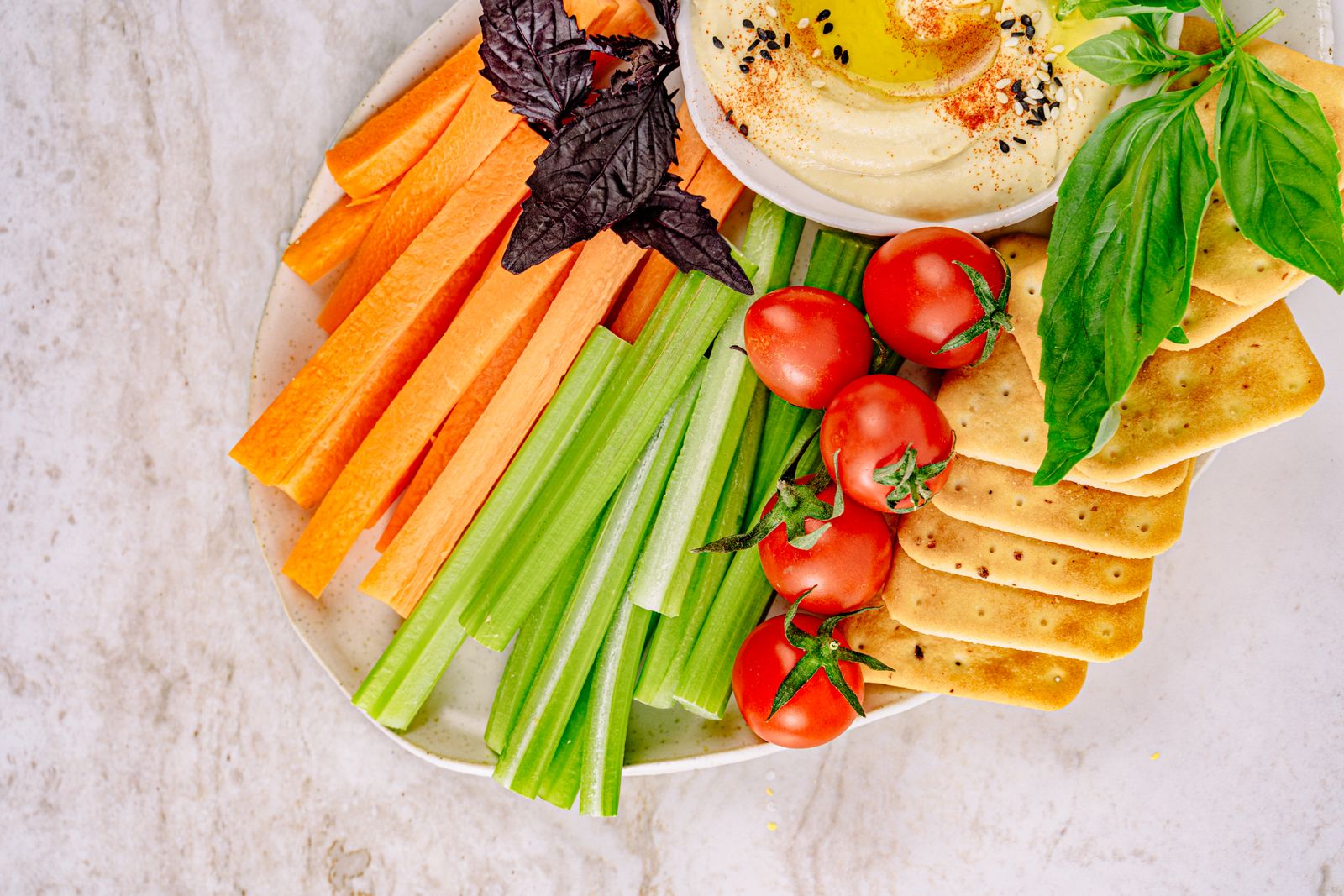
Hummus and dips. The most-wanted chilled line in almost every UAE office and the one most often mishandled. Buy in small tubs — 200 to 250 g — rather than the catering-size 1 kg tub, because an opened tub of hummus has two to three days of safe life at fridge temperature and a 1 kg tub in a 30-person office does not get finished in that time. Labneh dips, muhammara and tzatziki-style dips follow the same rule.
Cut fruit and vegetable pots. Carrot and cucumber batons, cherry tomatoes, melon and pineapple pots, apple slices. These are the lines that make the hummus useful and are the freshest-feeling item in the fridge. They are also the shortest-lived — three to four days from cutting for vegetables, less for cut melon and apple — so they are ordered on a twice-weekly rhythm rather than a weekly one. The office fruit delivery guide covers the whole-fruit line that complements them.
Plant-based protein pots and deli. Falafel pots, edamame, roasted-chickpea pots, plant-based deli slices and the small ready-to-eat plant-based meals that most UAE suppliers now carry. These do three jobs: they cover vegan and vegetarian staff without a separate arrangement, they give the fridge a real protein option that is not dairy, and they satisfy the halal-conscious portion of the office without any labelling question. The plant-based office pantry guide covers how to size the line, and our meat alternatives range is where most of these products sit.
Chilled drinks. Milk, plant milks, cold brew and sparkling water are fridge lines too and compete for the same shelf space. They are covered in the cold drinks guide; the point here is only that the snack shelf needs its own dedicated shelf, not the space left over after the drinks go in.
What does not belong: anything that needs cooking, anything with a use-by inside 48 hours of delivery, open packs of sliced deli meat, and anything the office is stocking because one person asked for it. The fridge is small and the lines above already fill it.
The temperature rules, and why the UAE makes them harder
Every chilled line above sits under the same rule that governs commercial kitchens: held at or below 5°C, and out of the band between roughly 5°C and 60°C — where bacteria multiply fastest — for as little time as possible. The food safety rules guide covers the framework as it applies to a pantry rather than a kitchen. For the fridge specifically, four things matter.
The fridge itself. A domestic fridge in an office is usually set to a number on a dial and never checked. Put a thermometer in it — a AED 15 fridge thermometer on the middle shelf — and read it once a week. A fridge that is opened forty times a day, stacked full, and sitting next to a window in an office where the air conditioning is cut over the weekend will drift above 5°C without anyone noticing, and at 8 to 10°C the shelf life of every item in it roughly halves. If the reading is consistently high, the equipment maintenance guide covers the usual causes: a blocked condenser, a worn door seal, or simply a unit that is too small for the load.
Delivery. This is the UAE-specific part. A chilled product that spends twenty minutes in an unrefrigerated van in July, or sits in a loading bay in a tower basement waiting for a service lift, arrives above 8°C and has lost days of life before it reaches the fridge. Insist that chilled lines arrive in a temperature-controlled vehicle or an insulated box with ice packs, and that the delivery goes straight into the fridge rather than onto the reception desk. If a delivery arrives warm to the touch, reject the chilled portion. A supplier that delivers chilled lines properly will say so on the invoice and will not object to a spot check.
Summer specifically. Between May and September the ambient temperature in a loading bay, a car park or a ground-floor lobby can exceed 40°C, and the safe window for a chilled product outside the fridge shrinks to minutes. Shorten the delivery window to a fixed morning slot, make sure someone is there to receive it, and do not let a chilled delivery wait for the person who ordered it to come back from a meeting. The summer hydration playbook covers the same logic for the water line.
The weekend. The UAE working week ends on Friday afternoon for most offices, and the fridge then sits unopened until Monday. That is fine for sealed products with a week or more of life. It is not fine for cut fruit and opened dips, which is why the fridge routine below clears those on Thursday or Friday rather than letting them cross the weekend.
Shelf life, line by line
The useful number for ordering is not the use-by on the pack but how long each line lasts once it is in an office fridge that is opened all day.
| Line | Unopened, at ≤5°C | Once opened | Practical order rhythm |
|---|---|---|---|
| Yogurt / labneh pots | 2–3 weeks | Single-serve, no open state | Weekly |
| Cheese portions, wrapped | 3–6 weeks | Single-serve, no open state | Fortnightly |
| Hummus and dips, small tub | 2–4 weeks | 2–3 days | Weekly, small tubs |
| Cut vegetables | 3–4 days from cutting | Same day ideally | Twice weekly |
| Cut fruit | 2–3 days from cutting | Same day | Twice weekly |
| Plant-based pots / deli | 1–3 weeks (check pack) | 2–3 days | Weekly |
| Falafel, ready pots | 5–7 days | 2 days | Weekly |
Two consequences follow. First, the fridge splits into a long-life shelf (yogurt, cheese, unopened dips, plant-based pots) that can be ordered on the same weekly rhythm as the rest of the pantry, and a short-life shelf (cut fruit and vegetables, opened dips) that turns over in days and needs a second delivery in the week. Trying to run both on one weekly order is the single most common reason chilled lines end up in the bin. Second, single-serve formats are worth their premium in almost every case. An opened 1 kg tub is a food-safety question by Wednesday; twenty 50 g portions are not.
How much to order for a hybrid week
The chilled shelf is the most sensitive line in the pantry to attendance, because over-ordering turns into waste in days rather than months. The hybrid work planning guide covers how to build a headcount-by-day picture; for the fridge, three rules do most of the work.
Plan to the peak days, not the average. If the office runs at 70 people on Tuesday to Thursday and 30 on Monday and Friday, the short-life shelf is sized for the peak and delivered ahead of it — a Monday delivery for the Tuesday to Thursday peak, a smaller Thursday top-up for the Friday tail.
Start at one chilled serve per two people per peak day. For a 70-person peak day that is around 35 chilled portions across yogurt, cheese, hummus and cut produce combined, then adjust from the count. Most offices land between one serve per two people and one serve per three; higher than that and the fridge is competing with a canteen.
Order fewer flavours, deeper. Four yogurts in three flavours is worse than twelve in one. The fridge that works looks repetitive on paper and full in practice.
Track it the same way as the ambient shelf — the inventory management guide covers the PAR-level method — but count the fridge more often, and count what went in the bin as carefully as what was eaten. The food waste reduction guide makes the wider case; for the fridge, a bin count is the fastest way to find out which line is over-ordered.
The fridge routine
None of the above works without a routine, and the routine is short.
Daily, whoever opens the pantry: check the door is closed properly, front-face the office's own lines, move anything opened yesterday to the front.
Twice weekly, on delivery days: receive chilled lines straight into the fridge, rotate old stock to the front and new to the back, discard any opened dip past its two-to-three-day window, bin cut produce that has gone soft.
Thursday or Friday: clear the short-life shelf entirely — nothing cut or opened crosses the weekend. Wipe the shelves. Read the thermometer and write the number down.
Monthly: empty and clean the whole fridge, check the door seal, and remove personal food that has been abandoned. This is also the point at which the office's own lines and personal lunches get separated, if they have not been already.
That last point deserves its own rule. An office fridge that is also the staff's lunch fridge fails as a pantry line every time, because the office's stock disappears behind lunch boxes and gets thrown out with them. The fix is a shelf, not a second fridge: one clearly labelled shelf for the pantry's chilled snacks, the rest for personal food, and the pantry etiquette rules covering the labelling of what goes on the personal shelves. An office over about 40 people usually does need the second fridge anyway, and it is the cheapest piece of equipment in the pantry.
Labelling, allergens and the halal question
Chilled snacks carry more labelling weight than the ambient shelf because they are the lines where dairy, nuts, sesame and gluten cluster. Hummus is sesame; most dips are dairy; many plant-based pots contain soy and some contain nuts. The allergen and dietary labelling guide covers how to present this without turning the fridge into a compliance exercise — in practice a small card on the fridge door listing the office's standing chilled lines and their main allergens covers it, and single-serve packaging carries its own label for everything else.
On halal: dairy, dips, produce and plant-based lines are straightforward, which is one reason the range above avoids sliced deli meat entirely. Where an office does want a chilled meat line, the halal compliance guide covers the certification questions; for most offices the simpler route is to keep the meat line out of the fridge and let the plant-based and dairy lines carry the protein.
Where the fridge is on show
In most offices the fridge is in a back room and the range above is enough. In some it is part of the space, and that changes the standard.
The studios in Dubai Design District and the media and creative agencies they belong to tend to run an open pantry where the fridge is a glass-fronted unit on the studio floor and client reviews happen next to it. There the range needs to look curated as well as be safe: consistent pots, one brand per line, no half-eaten tubs, and the short-life shelf cleared daily rather than twice weekly. The growth-stage floors in Dubai Marina sit somewhere in between — a visible fridge, a team that expects plant-based and lower-sugar options as standard, and a hybrid pattern that makes the peak-day ordering rule above the one that matters most.
The offices around the Dubai World Trade Centre have the opposite problem: for ten months the fridge runs on a standard PAR, and during exhibition weeks it becomes a guest-facing line — cut fruit, cheese and dips for visitors between meetings — at two or three times the volume. That uplift should be scheduled against the exhibition calendar as a separate chilled order rather than absorbed by the standing one, because the standing fridge is not big enough and the short-life lines do not tolerate being over-ordered in advance.
The short version
The chilled shelf is the part of the pantry people actually want and the part most offices run badly. Stock six lines — yogurt and labneh, wrapped cheese portions, small-tub hummus and dips, cut fruit and vegetables, plant-based protein pots, and the chilled drinks — in single-serve formats, hold them at or below 5°C with a thermometer that someone reads, and insist chilled deliveries arrive cold and go straight into the fridge. Split the fridge into a long-life shelf on the weekly order and a short-life shelf on a twice-weekly one, size it to the peak attendance day at roughly one serve per two people, clear anything cut or opened before the weekend, and give the office's own lines a labelled shelf that personal lunches cannot take over.
MHO delivers chilled office lines across Dubai and Abu Dhabi in temperature-controlled vehicles — dairy and plant-based milk, cut fruit and vegetables, plant-based and meat-alternative pots and the wider office snacks range — on the twice-weekly rhythm the short-life shelf needs. Browse the full range by category, check the areas we deliver to, or talk to us if you want the fridge planned rather than just filled.
Frequently asked questions
What temperature should an office fridge be kept at? At or below 5°C, which is the same standard commercial kitchens work to. Put a simple fridge thermometer on the middle shelf and read it weekly, because a fridge that is opened all day, stacked full and left through a weekend with the air conditioning cut will drift above that without anyone noticing. At 8 to 10°C the safe life of yogurt, dips and cut produce roughly halves. If the reading is consistently high, check the door seal and the condenser before assuming the unit is too small.
How long does hummus last once opened in an office fridge? Two to three days at or below 5°C, and less if it has been left out on a counter during a meeting. That is why the office format is a 200 to 250 g tub rather than a 1 kg catering tub: a small tub gets finished inside the window and a large one does not. Write the opening date on the lid, keep opened tubs at the front of the shelf, and clear any opened dip before the weekend rather than letting it cross into Monday.
How should chilled snacks be delivered to an office in the UAE? In a temperature-controlled vehicle or an insulated box with ice packs, straight into the fridge on arrival, in a fixed morning slot that someone is there to receive. In summer a chilled product left in a loading bay or on a reception desk for twenty minutes can pass 8°C and lose days of shelf life. Reject the chilled portion of any delivery that arrives warm to the touch, and choose a supplier who states the chilled chain on the invoice and does not object to a spot check.
How much chilled food should an office order per week? Start at one chilled serve per two people on the peak attendance day — for a 70-person peak that is around 35 portions across yogurt, cheese, dips and cut produce combined — and adjust from the count. Split the order in two: long-life lines such as yogurt, wrapped cheese and unopened dips on the weekly order, and short-life lines such as cut fruit and vegetables on a twice-weekly one timed ahead of the peak days. Order fewer flavours in greater depth, and count what goes in the bin as carefully as what is eaten.
Can the office fridge double as the staff lunch fridge? It can, but only with a labelled shelf reserved for the pantry's own chilled lines, because otherwise the office's stock disappears behind lunch boxes and gets thrown out with them at the monthly clean. Offices over about 40 people usually need a second fridge in any case, and it is the cheapest equipment in the pantry. Whatever the setup, the monthly routine should include removing abandoned personal food and re-separating the two, and the pantry etiquette rules should cover labelling what goes on the personal shelves.