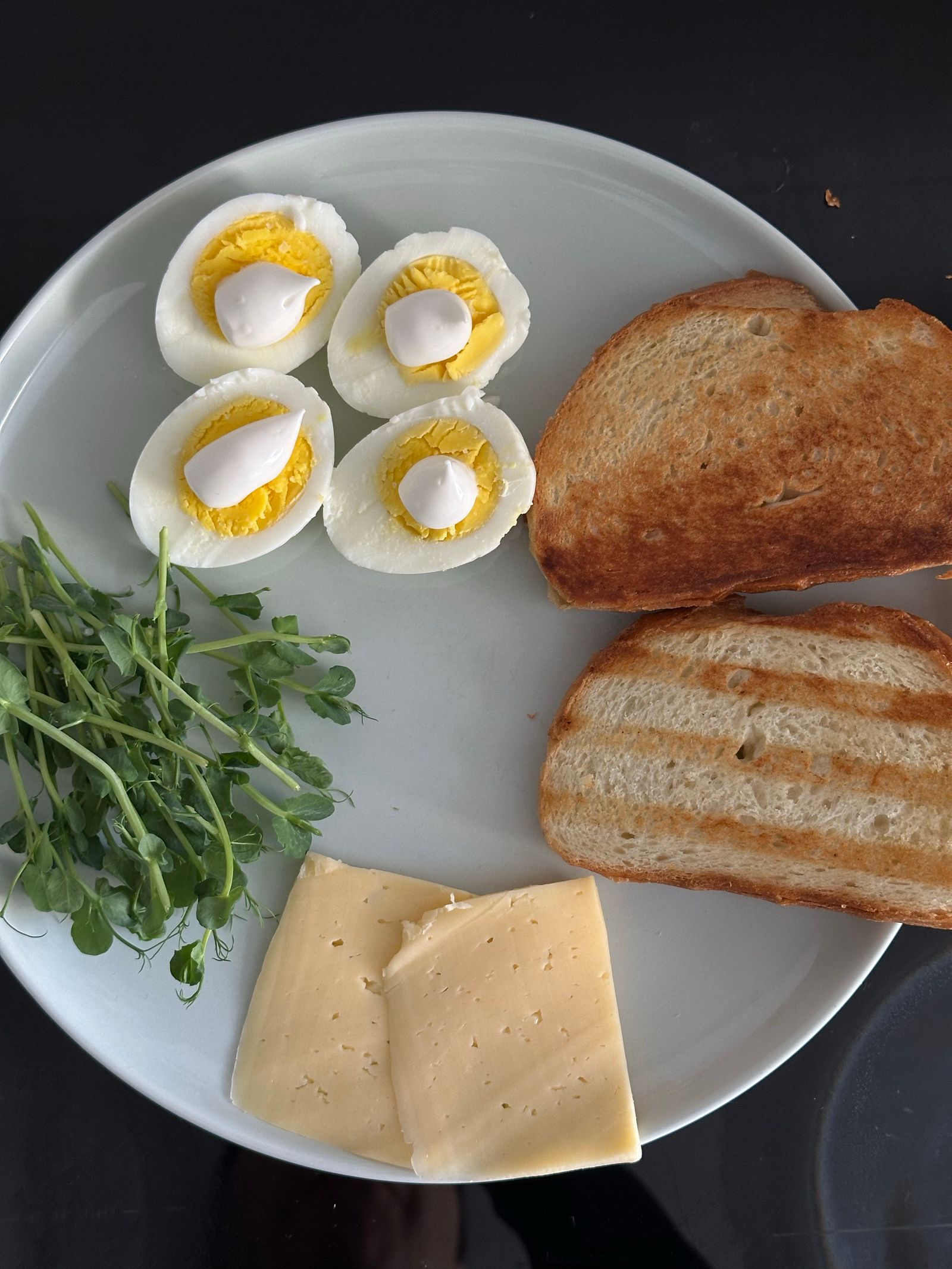
Most office pantries are built around carbohydrates: cereal, bread, biscuits and fruit. They are easy to store and easy to serve. What many people actually want at 9 am is something with protein that keeps them going until lunch, and in the UAE that often means eggs, a slice of white cheese or a spoon of labneh with bread.
These lines are worth adding. They are also the most demanding items a pantry can hold, because they are chilled, perishable and handled by many people. This guide covers what to stock, how to keep it safe in UAE heat, the halal and allergen questions, and how much to order.
What to stock
| Product | Format for an office | Keeps | Watch for |
|---|---|---|---|
| Hard-boiled eggs | Pre-cooked, peeled or in shell, in sealed packs | Days, chilled | Must stay cold; never reheat in shell in a microwave |
| Cheese portions | Individually wrapped triangles, slices, sticks | Weeks to months, chilled | Rennet for halal; salt |
| White cheeses | Akkawi, feta, halloumi in small packs | Weeks unopened, days once opened | High salt; brine handling |
| Labneh | Tubs, or labneh balls in oil | Days to weeks, chilled | Short life once opened |
| Cream cheese | Portion cups | Weeks, chilled | Mostly fat, little protein |
| Yoghurt and laban | Single-serve pots and bottles | Days to weeks, chilled | Sugar in flavoured versions |
For most offices, the simplest useful set is pre-cooked eggs in sealed packs, individually wrapped cheese portions, and a small tub of labneh with bread or crackers nearby. Yoghurt and laban are covered in the chilled snacks guide, and the bread and wraps to go with them in the bread, wraps and sandwich supplies guide.
Why these lines need stricter rules
Eggs and soft dairy products support the growth of bacteria such as Salmonella and Listeria when they are warm. In an office pantry the risk is rarely the product itself, which arrives safe from a registered supplier. It is what happens after delivery: a box left on the counter, a fridge door propped open, a half-eaten tub of labneh at a desk all afternoon.
The rules that matter:
- Keep them at 5 °C or below from delivery until they are eaten. Put them in the fridge as soon as they arrive, not after the rest of the order has been unpacked.
- The two-hour rule. Perishable food should not be out of the fridge for more than two hours in total. When the room is above about 32 °C, as it can be in a car, on a terrace or near a window in summer, the safe time drops to one hour.
- Once opened, date it. Write the opening date on labneh tubs and cheese packs. Opened labneh keeps a few days; follow the label.
- Separate raw from ready-to-eat. Office pantries should only stock ready-to-eat eggs. Raw eggs bring a cross-contamination risk that most shared kitchens are not set up to manage.
The food safety rules guide covers the fridge temperature log and how to set one up.
Eggs: the practical details
Buy them pre-cooked. Boiling eggs in an office kettle or microwave is slow, messy and inconsistent. Hard-boiled eggs from a food supplier arrive cooked, cooled and sealed, often already peeled, with a clear use-by date.
How long they keep. Hard-boiled eggs in shell, kept refrigerated, are generally good for about a week. Peeled eggs have a shorter life, so follow the use-by on the pack and finish opened packs the same day.
Never microwave an egg in its shell. Steam builds up inside and the egg can burst, sometimes after it comes out of the microwave, which can cause burns to the face and hands. A whole peeled boiled egg can do the same thing. Put a short notice next to the microwave: cut eggs in half before reheating, or eat them cold.
Egg allergy is common. Label the shelf clearly, and remember that eggs also appear in mayonnaise, some breads, cakes and egg-based sandwich fillings. The allergen labelling guide covers how to label the fridge.
Cheese: halal and salt
Rennet is the halal question. Most cheese is made with rennet, an enzyme that sets the milk. It can come from animal stomachs, from microbes, or from plants. Animal rennet from an animal that was not slaughtered according to halal rules makes the cheese unsuitable for many Muslim staff. Microbial and vegetable rennets avoid the question. Cheeses sold in the UAE generally carry halal information, but imported specialty cheeses may not, so buy from a supplier who can show a halal certificate for each product. The halal compliance guide explains which certificates to accept.
White cheeses are salty. Akkawi, feta and halloumi are stored in brine or salted heavily, and they are among the saltier foods in a pantry. Many exceed the 1.5 g of salt per 100 g that the UK traffic-light system rates as high. That does not rule them out, but offer a lower-salt option such as fresh cheese, cottage cheese or labneh alongside. Rinsing brined cheese briefly reduces the surface salt.
Portions beat blocks. A block of cheese on a shared board is cut by many people with the same knife and dries out in air-conditioning. Individually wrapped portions are more hygienic, last longer and make it easy to see how much is eaten.
Unpasteurised cheese is best avoided. Soft cheeses made from unpasteurised milk carry a higher risk of Listeria, which is a particular concern in pregnancy. Stock pasteurised cheeses only; the label will say.
Labneh
Labneh is strained yoghurt: thick, tangy and higher in protein than ordinary yoghurt. It is a natural part of breakfast in the region, eaten with bread, olive oil and za'atar.
- Tubs are the usual office format. Choose small tubs that will be finished within a few days of opening.
- Labneh balls in olive oil keep longer, because the oil protects them from air, but they must still be kept in the fridge and taken out with a clean spoon.
- Serve it with a clean spoon each time, not a knife that has been in someone's bread.
Olive oil, za'atar and other breakfast condiments are covered in the condiments and pantry staples guide.
How much protein this adds
| Item | Typical protein |
|---|---|
| 1 large boiled egg | About 6 g |
| 1 cheese portion (about 20 g) | About 2 to 4 g |
| 30 g of white cheese | About 5 to 7 g |
| 2 tablespoons of labneh (about 50 g) | About 3 to 5 g |
Two eggs, or an egg with a portion of cheese and some labneh, gives a breakfast with 10 to 15 g of protein. For people who want more, the protein snacks guide and the protein shakes guide cover other options.
Vegetarian staff who do not eat eggs, and vegan staff who avoid dairy altogether, need an alternative. Plant-based spreads, hummus and products from the meat alternatives range fill that gap; the plant-based pantry guide has more ideas.
How much to order
Chilled breakfast proteins are the lines most likely to be wasted. Order for the days people are actually in, and adjust after a few weeks.
| Office | Starting weekly order |
|---|---|
| 20 people, hybrid | 20 to 30 eggs, 30 cheese portions, 1 to 2 small tubs of labneh |
| 50 people, mostly in office | 60 to 100 eggs, 80 to 120 cheese portions, 3 to 4 tubs of labneh |
| Shift or site team of 50 | 100+ eggs, 120+ cheese portions, split across twice-weekly deliveries |
Twice-weekly delivery is better than one large delivery for anything with a short life. Track what is thrown away for a month; the food waste guide shows how. The breakfast cereals and oats guide covers the dry side of the same breakfast.
Equipment you need
- A fridge with enough space and a thermometer. Eggs and dairy should sit on a middle shelf, not in the door, where the temperature changes each time it opens.
- A microwave with a clear notice about eggs.
- Clean serving spoons and small plates so nobody eats from the tub.
- A small counter or shelf next to the fridge for bread, crackers and condiments. The fridge, shelving and pantry furniture can come from the stationery and office furniture range.
Drinks to go with it are simple: coffee and tea, and for people who avoid caffeine, the herbal teas range.
Where it makes the biggest difference
- Clinics, hospitals and labs. Staff in healthcare and pharmaceutical and life sciences often start early and miss breakfast. Sites in Dubai Healthcare City and Dubai Science Park are used to strict cold-chain rules and apply them to the staff fridge too.
- Early and shift starts. In aviation and airport services, crews around Dubai South work shifts that start before any café opens, and a fridge with eggs and cheese covers breakfast at any hour.
- Tech, fintech and startups. Tech companies and fintech firms in Dubai Internet City, Dubai Silicon Oasis and Masdar City often provide breakfast as a daily perk.
- Consultancies and agencies. Consultancies and media and creative agencies with early client calls and long days find a protein breakfast in the office keeps teams at their desks.
- Coworking spaces. In coworking spaces, individually wrapped portions work best, because many different members use the same fridge.
- Schools and universities. Staff rooms in schools and universities, including campuses in Dubai Knowledge Park, on Saadiyat Island and on Yas Island, see teachers arrive before 7 am.
The short version
- Eggs, cheese portions and labneh turn a pantry breakfast into a filling one.
- Keep them at 5 °C or below; no more than two hours out of the fridge, one hour when it is above 32 °C.
- Buy eggs pre-cooked and sealed, not raw. Never microwave an egg in its shell.
- Check halal status for cheese, because of rennet. Stock pasteurised cheeses only.
- White cheeses are salty; offer labneh or fresh cheese alongside.
- Prefer individually wrapped portions to shared blocks and tubs.
- Order twice a week, for the days people are in, and track waste.
MHO delivers chilled dairy, eggs and breakfast staples alongside the rest of the office pantry, with halal and allergen information for every product. Talk to the team about adding breakfast proteins to your pantry.
Frequently asked questions
Can an office pantry stock boiled eggs safely? Yes, if they are bought pre-cooked and sealed from a food supplier and kept at 5 °C or below. Hard-boiled eggs in shell are generally good for about a week refrigerated; peeled eggs have a shorter life, so follow the use-by date and finish opened packs the same day.
Why should eggs not be microwaved in the shell? Steam builds up inside the egg and it can burst, sometimes after it is taken out of the microwave, causing burns. Whole peeled boiled eggs can do the same. Cut eggs in half before reheating, or eat them cold.
Is cheese halal? It depends on the rennet used to make it. Cheese made with microbial or vegetable rennet, or with rennet from halal-slaughtered animals, is suitable. Buy from a supplier who can show a halal certificate for each cheese, especially imported specialty cheeses.
How long does labneh last once opened? Usually a few days in the fridge; follow the label. Labneh balls stored in olive oil keep longer but still need refrigeration and a clean spoon each time.
How long can eggs and cheese be left out of the fridge? No more than two hours in total, and only one hour when the temperature is above about 32 °C. After that, throw them away.
Are white cheeses like akkawi and halloumi high in salt? Yes. Brined white cheeses are among the saltier foods in a pantry and often exceed 1.5 g of salt per 100 g. Offer labneh, cottage cheese or a fresh cheese as a lower-salt option.
How many eggs should an office order per week? As a starting point, about one to two eggs per person per in-office week for a desk-based team, more for shift and site teams. Track what is eaten and thrown away for a month, then adjust, and order twice a week rather than once.