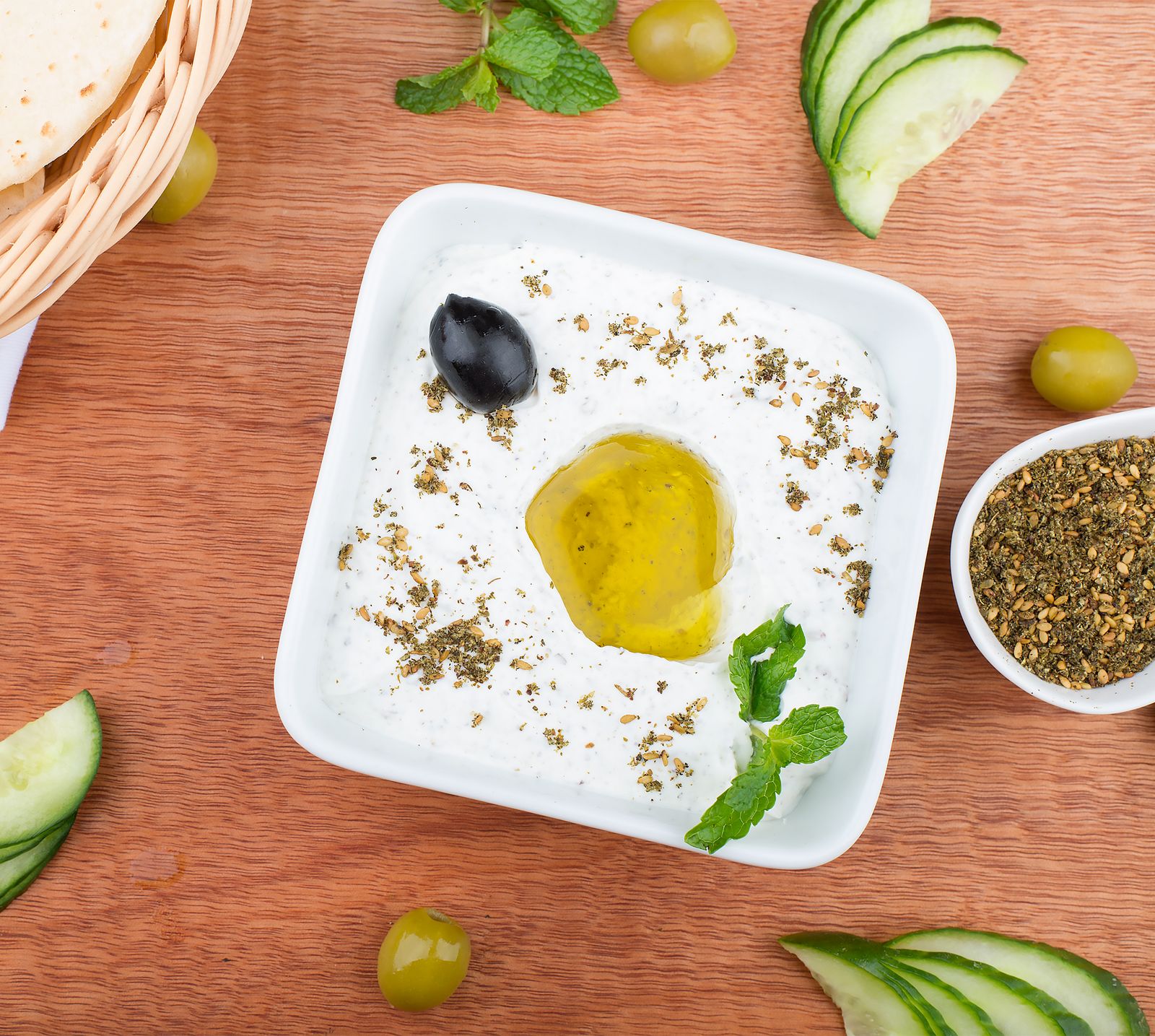
In many UAE offices, the most popular breakfast is not a pastry or a bowl of cereal. It is a plate of flatbread with olive oil and za'atar, a few olives, some labneh or white cheese, and fresh cucumber, tomato and mint. It is quick, mostly plant-based, familiar to colleagues from across the Levant and the wider region, and easy to set up in a pantry.
It is also easy to get wrong. Olive oil goes stale in a warm pantry, za'atar blends vary widely, olives are high in salt, and a shared bowl of oil with a dozen pieces of bread dipped into it is not a good idea. This guide covers how to buy, store and serve the main items.
Olive oil: know the grades
Olive oil is graded by how it is made and by quality tests such as free acidity. The International Olive Council (IOC) sets the main trade standards, and many countries base their labelling rules on them.
| Grade | What it means | Best use in the office |
|---|---|---|
| Extra virgin olive oil | Mechanically extracted, no refining, free acidity no more than 0.8%, no taste defects | Dipping with za'atar, drizzling on labneh and salads |
| Virgin olive oil | Mechanically extracted, free acidity no more than 2.0%, minor taste defects allowed | Acceptable, but less flavour for dipping |
| Olive oil (often "pure" or "classic") | A blend of refined olive oil and some virgin oil | Cooking, not dipping |
| "Light" olive oil | Refined, with a milder taste | Cooking. "Light" refers to flavour and colour, not fewer calories |
For a breakfast spread, buy extra virgin olive oil. It is the one that tastes of olives, and it is what people expect with za'atar.
Two things on the label help more than the price:
- Harvest date or best-before date. Olive oil is best within about 18 to 24 months of harvest. A fresher harvest tastes better.
- Origin. A single-country oil, such as Palestinian, Lebanese, Syrian, Jordanian, Tunisian, Spanish, Greek or Italian, is easier to judge than a blend from "various countries". Preference often depends on where your team is from.
Storing olive oil in the UAE heat
Light, heat and air are what spoil olive oil. A bottle left next to a coffee machine or by a sunny window can taste rancid within weeks.
- Buy in dark glass bottles or tins, not clear bottles.
- Store it in a closed cupboard, away from the coffee machine, kettle, oven and windows. A cool cupboard at normal office temperature is fine.
- Do not refrigerate it. Cold olive oil turns cloudy and thick. This is harmless, and it clears at room temperature, but it is inconvenient for daily use.
- Buy a size you will finish within about one to two months of opening. For most offices, a 500 ml or 750 ml bottle on the counter, refilled from a larger tin kept in the cupboard, works well.
- Keep pourers clean and capped. A pourer left open lets in air and dust. Wash it each time the bottle is refilled.
If the oil smells like crayons, putty or old nuts, it has gone rancid. It is not dangerous in small amounts, but it tastes bad. Replace it.
Za'atar: what is in the blend
Za'atar is the name of a herb (a wild thyme-like plant) and also of the spice blend made from it. A typical blend contains:
- Dried za'atar herb, thyme or oregano
- Sumac, which gives a sour, lemony taste and a dark red colour
- Toasted sesame seeds
- Salt
Recipes differ by country and family. Palestinian blends are often darker and more herby, Lebanese blends often have more sumac, and some commercial blends add other spices, oil or fillers.
What to check on the label:
- Sesame. Almost every za'atar blend contains sesame, which is a common allergen. Label the za'atar jar clearly, and keep a plain olive oil option for anyone who avoids sesame.
- Wheat or other fillers. Some cheaper blends add roasted flour or other fillers. Check the ingredients if you are stocking for coeliac or gluten-free colleagues. The gluten-free pantry guide covers what else to look for.
- Salt. Salt content varies a lot. Lower-salt blends are available.
- Colour. A bright green colour can come from fresh, well-stored herbs, but very bright green or unusually red blends can also contain added colourings. Buy from a supplier you trust.
Store za'atar in an airtight jar, away from heat and humidity. It keeps its flavour for a few months once opened.
Olives: good flavour, a lot of salt
Olives are cured in brine or salt, so they are high in salt. Many table olives contain around 2 g of salt or more per 100 g. Under the UK front-of-pack traffic light system, which many buyers use as a reference, anything above 1.5 g of salt per 100 g counts as high.
That does not mean leaving them out. It means:
- Serve small portions, a few olives per person rather than a large bowl.
- Offer them alongside lower-salt items, such as fresh vegetables and plain bread.
- Rinse very salty olives briefly before serving if your team prefers.
Storage rules for opened olives:
- Keep them in their brine or oil, fully covered.
- Refrigerate after opening, and follow the storage instructions on the label.
- Use a clean spoon or tongs, never fingers.
- Discard them if the brine looks cloudy in a way it did not before, smells off, or shows mould on the surface.
Pitted olives are easier in an office: no stones to put somewhere, and less risk of a broken tooth.
The rest of the plate
A Levantine-style breakfast usually includes:
- Bread. Flatbread, khubz, or fresh manakish from a licensed bakery. The bread, wraps and sandwich supplies guide covers storage in the UAE climate.
- Labneh and white cheese. Labneh, akkawi, halloumi or feta. Check that cheese uses halal-certified rennet and is pasteurised. The eggs, cheese and labneh guide explains both, and the dairy and plant-based milk range covers supply.
- Fresh vegetables. Cucumber, tomato, mint and sometimes radish. The fruit and cut vegetables range has them ready to serve, and the salads and crudités guide covers safe serving.
- Hummus and spreads. Hummus, muhammara and tahini-based dips. The chilled snacks guide covers fridge storage, and the condiments and spreads guide covers tahini, which is another sesame item.
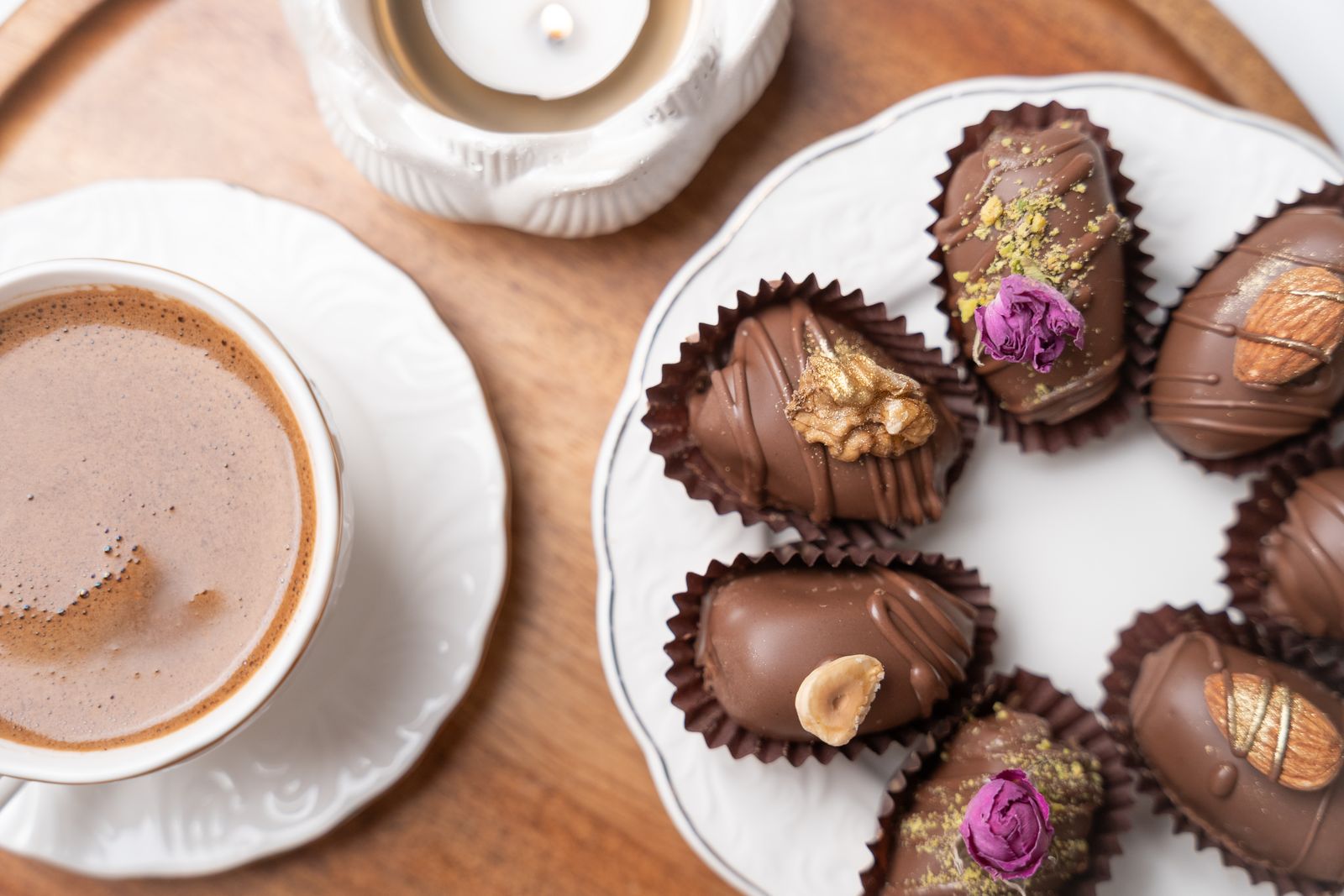
- Something sweet. Dates, halva or a little honey. The dried fruits range covers dates, and the nuts and seeds range covers pistachios and almonds for anyone who wants extra protein.
- Tea. Black tea with fresh mint or sage is a common pairing. The herbal teas range covers mint and other infusions, and the karak chai guide covers the other favourite morning drink.
Most of this plate is plant-based, which makes it a useful option for vegan and vegetarian colleagues. The plant-based pantry guide has more ideas, and the meat alternatives range covers falafel and other plant-based proteins for a heartier spread.
Serving it hygienically
The traditional way to eat za'atar is to dip bread in a shared bowl of olive oil and then in a shared bowl of za'atar. That works at home. In an office with 30 or 300 people, it does not.
Better options:
- Individual dipping pots, filled from the bottle, one per person.
- Pre-spread manakish or bread already brushed with oil and za'atar, delivered by a licensed bakery.
- A shaker or spoon for za'atar, so people sprinkle it on their own plate.
- Small portions of olives and cheese in individual containers, or a server who plates them.
- Tongs for bread and vegetables.
Follow the usual time rule for anything perishable. Labneh, cheese and cut vegetables should not sit out at room temperature for more than about 2 hours, or 1 hour above 32 °C. The food safety rules guide covers the details. Clean the counter, oil drips and za'atar crumbs after breakfast. Oil spills on the floor are a slip risk, and the cleaning supplies range and the office hygiene range cover what is needed to clean them up.
How much to order
For a breakfast spread for 20 people, a typical order is:
| Item | Amount for 20 people |
|---|---|
| Flatbread or manakish | 20 to 30 pieces |
| Extra virgin olive oil | About 200 to 300 ml for dipping |
| Za'atar | About 100 g |
| Olives | About 400 to 500 g |
| Labneh | About 500 g |
| White cheese | About 400 g |
| Cucumber, tomato, mint | 1.5 to 2 kg in total |
For a weekly pantry stock instead of an event, most offices keep one bottle of olive oil, one or two jars of za'atar, a jar of olives in the fridge, and order fresh bread, cheese and vegetables two or three times a week.
For a catered morning event, the breakfast and corporate events range and the corporate breakfast catering guide cover the full spread. Healthier snacks for the rest of the day are in the office snacks range and the low-sugar treats range.
Equipment and space
You do not need much: a clean counter, small bowls or pots, a bread basket, a toaster or a small oven if you warm bread, and a fridge shelf for cheese, labneh and olives. If you are planning a new pantry or a refit, the breakroom design guide covers counter space, and the office fit-outs and services range and the stationery and office furniture range cover the furniture side. Hand-washing and sanitiser near the breakfast counter are covered in the facility hygiene range. Coffee lovers can pair the spread with the coffee and coffee machines range, and the juices and waters range covers fresh juice and water.
Levantine breakfasts in Abu Dhabi offices
Offices across Abu Dhabi serve this breakfast often. Financial firms in ADGM and towers on Al Reem Island tend to order individual portions for meetings. Cultural and education offices on Saadiyat Island and teams on Yas Island use it for weekly team breakfasts. Sustainability-minded companies in Masdar City like that most of the plate is plant-based, and workshops and warehouses in Mussafah often set it up for early shifts. MHO delivers across Dubai and other emirates too; the locations page lists all areas, and the categories page shows the full range. Companies in every sector, listed on the industries page, use this breakfast for team mornings.
The short version
- A Levantine breakfast of bread, olive oil, za'atar, olives, labneh and vegetables is popular, quick and mostly plant-based.
- Buy extra virgin olive oil in dark bottles or tins, check the harvest date, and store it away from heat and light.
- Finish an opened bottle within about one to two months, and do not refrigerate it.
- Za'atar almost always contains sesame. Label it, and check cheaper blends for wheat fillers and high salt.
- Olives are high in salt. Serve small portions, keep opened jars covered in brine in the fridge, and use tongs.
- Replace shared dipping bowls with individual pots or pre-spread bread.
- Follow the 2-hour rule for labneh, cheese and cut vegetables.
MHO supplies breakfast items, fruit, vegetables, dairy, snacks and drinks to offices across the UAE. Talk to the team about adding a Levantine breakfast to your pantry.
Frequently asked questions
Which olive oil should an office buy for dipping with za'atar? Extra virgin olive oil. It is mechanically extracted without refining and has the flavour people expect with za'atar. Refined "olive oil" and "light" olive oil are better suited to cooking.
Does "light" olive oil have fewer calories? No. "Light" refers to a milder flavour and lighter colour, because the oil is refined. It has the same calories as other olive oils.
How should olive oil be stored in a UAE office? In a dark glass bottle or tin, in a closed cupboard away from the coffee machine, kettle, oven and windows. Do not refrigerate it, and aim to finish an opened bottle within about one to two months.
Is za'atar safe for people with allergies? Most za'atar blends contain sesame, which is a common allergen, and some cheaper blends contain wheat-based fillers. Label the jar clearly and check the ingredients, and offer plain olive oil for colleagues who avoid sesame.
Are olives healthy for an office breakfast? Olives add flavour and healthy fats, but they are high in salt, often around 2 g or more per 100 g. Serve small portions next to lower-salt items such as fresh vegetables and plain bread.
How long do opened olives last? Keep opened olives fully covered in their brine or oil, refrigerate them, and follow the storage instructions on the label. Discard them if the brine changes, they smell off, or mould appears.
Is it hygienic to share a bowl of olive oil and za'atar? Not in an office. Use individual dipping pots, pre-spread bread from a licensed bakery, or a shaker for za'atar so people serve themselves without dipping into a shared bowl.