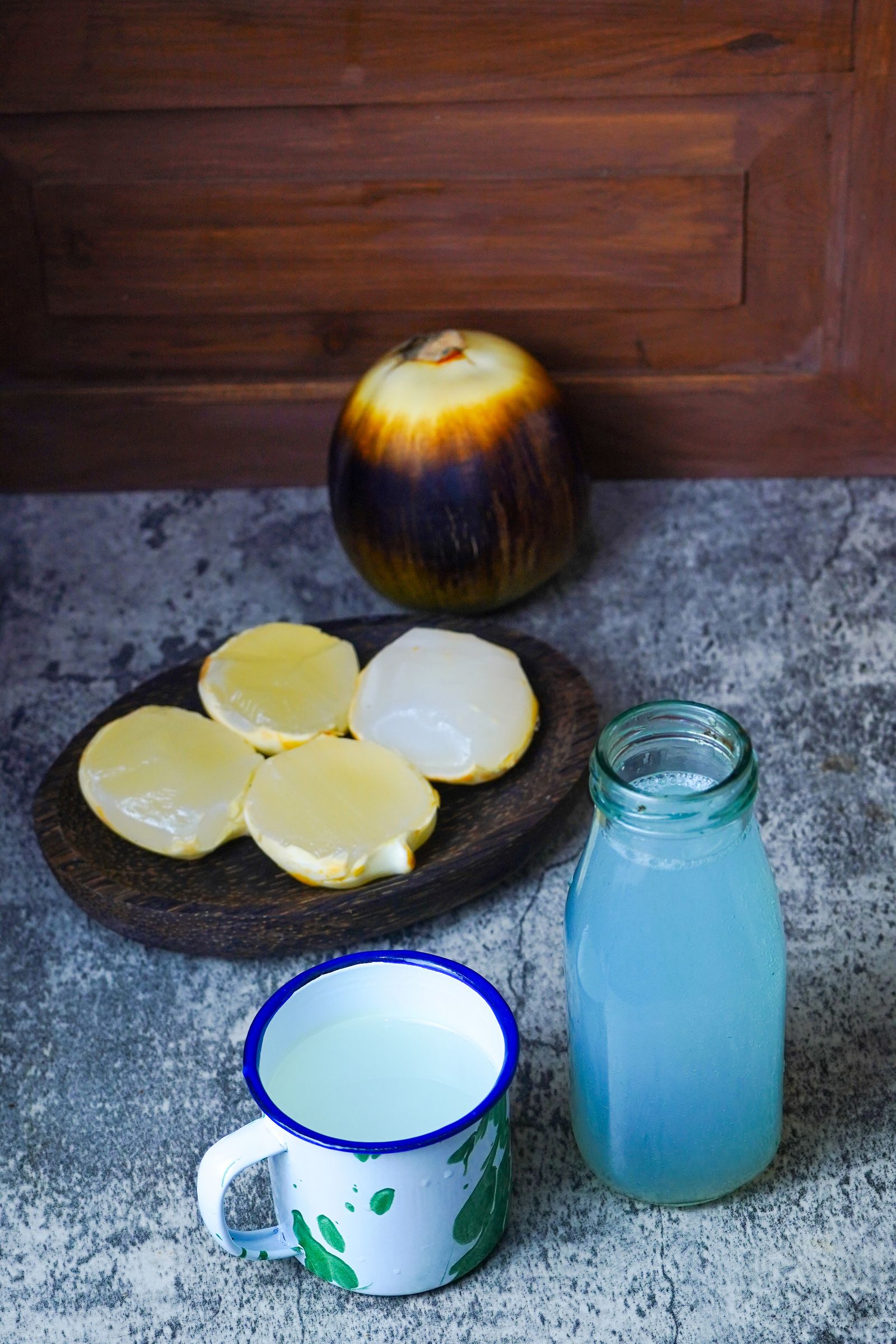
Coconut water is the drink every UAE office thinks it understands. It is natural, it is "full of electrolytes", it sits in the fridge next to the water and the juice, and somebody in every company has told somebody else that it is better than a sports drink. Most of that is half right, and the half that is wrong matters — because the people in a UAE business who genuinely need electrolyte replacement are usually not the people sitting in the air conditioning drinking the coconut water.
The useful fact is this: coconut water is high in potassium and low in sodium, and human sweat is the other way round. That single asymmetry decides almost everything about where each of these drinks belongs. This guide works through it: what is actually in each product, who each one is for, what the 2026 excise regime does to the price, what the midday break rules oblige an employer to provide, how to store the line in a UAE summer, and what it all costs. It sits alongside the summer hydration playbook and the corporate hydration policy guide, which cover the overall shape of a hydration programme; this one is about the specific shelf, and it assumes the premium hydration argument for why an office stocks anything beyond tap water at all.
Sweat is a sodium problem, not a potassium problem
When you sweat, you lose water and you lose salt. The salt you lose is mostly sodium chloride — on the order of a gram of sodium per litre of sweat, varying widely between individuals and with heat acclimatisation. Potassium losses in sweat are roughly a tenth of that. So replacing heavy sweat losses is, first and foremost, about replacing sodium and water together. Potassium matters, but it is not the binding constraint.
Now look at what is in the products.
Coconut water is, per 100 ml, roughly 2.5–5 g of naturally occurring sugars, around 200–250 mg of potassium, and only about 20–30 mg of sodium. A 330 ml carton therefore delivers something like 600–800 mg of potassium and perhaps 70–100 mg of sodium. It is one of the most potassium-dense drinks you can buy and one of the least sodium-dense.
An isotonic sports drink is formulated the other way: roughly 6–8 g of carbohydrate per 100 ml to match the osmolarity of blood, and sodium in the range of 20–50 mg per 100 ml — typically two to three times the sodium of coconut water, sometimes more, with the carbohydrate present specifically because sodium and glucose are absorbed together in the small intestine.
Oral rehydration salts (ORS), the sachets sold in every UAE pharmacy, are a different category again: a precisely specified glucose–electrolyte solution designed for clinical rehydration, with a much higher sodium concentration than any sports drink. This is the product designed for genuine fluid deficit.
Electrolyte tablets and low-sugar powders are the modern middle path: a tablet dropped into a bottle of water gives sodium, potassium, magnesium and usually a little chloride with very little or no sugar. They are the format that has grown fastest, and for good reason — they separate the electrolyte decision from the sugar decision.
Read those four in order and the conclusion is straightforward. Coconut water is a very good drink. It is not a rehydration product for someone who has spent three hours in the sun, and selling it internally as one is the mistake worth avoiding.
Who each product is actually for
Coconut water belongs on the office fridge shelf. For a desk-based employee in an air-conditioned building, sodium replacement is a non-issue — the ordinary UAE diet supplies far more sodium than anyone needs. What coconut water offers that shelf is a low-calorie, no-added-sugar alternative to juice and soft drinks with a genuinely useful potassium contribution, at around 45–60 kcal per 250 ml against roughly double that for a fruit juice and triple for a regular soft drink. It is the drink to stock next to the water for people who want something other than water — the same slot filled by sparkling water and by the functional juice line, and a materially better one than the soft drinks it displaces. That is a real and worthwhile role, and it is the role most UAE offices are actually buying it for even when they describe it differently.
Isotonic sports drinks belong in a site cooler, not an office fridge. They carry meaningful sugar — that is the point of the formulation — and in a sedentary office they are simply a soft drink with a sports label. On a site, in a warehouse, or in a vehicle in August, they do the job they were designed for.
Electrolyte tablets are the best value in the category for most UAE employers. A tube of tablets takes up no fridge space, does not spoil, costs a fraction of a carton per serving, travels in a glovebox or a toolbox, and lets someone make exactly as much as they need from the water that is already there. For any business with staff who work outdoors, drive, or move between buildings in the heat, a box of tablets in the first-aid area is the single highest-yield purchase on this list. The oil and gas pantry guide covers the wider provisioning question for site-heavy businesses.
ORS sachets belong in the first-aid kit, alongside the other heat-illness provisions, and should be used on the advice of whoever runs first aid — not handed out as a routine drink.
The midday break makes some of this a legal duty, not a perk
For any UAE employer with staff working outdoors, hydration provision is not discretionary. The Ministry of Human Resources and Emiratisation's midday break rule prohibits work in open areas under direct sun during the hottest part of the afternoon across the peak summer months — in recent years running from mid-June to mid-September, with the daily window generally set at 12:30 to 15:00. Announcements are made each year, so confirm the current dates rather than relying on last year's.
The obligation that matters for this article is the one attached to the break: employers are expected to provide shaded rest areas and cool drinking water, and to make rehydration provisions — commonly understood to include rehydration salts or an equivalent electrolyte supply — available to staff working in the heat. In practice, the compliant setup is water coolers within reach of the work area, shade, and a stock of ORS or electrolyte tablets held with the first-aid provision.
It is worth being clear that the break window is not the whole risk window. The period from mid-September to the end of October, after the formal break has ended, still routinely runs at 35–40 °C with high coastal humidity, and heat strain does not respect a calendar date. A sensible employer keeps the electrolyte provision in place through October rather than packing it away on the last day of the break. The UAE labour law and drinking water guide sets out the wider set of duties around providing drinking water at work, and the pantry policy template is the right place to write the resulting provision down so it survives a change of office manager.
This is the reason the hydration line is a genuinely cross-functional purchase: the office fridge is a wellness decision, and the site cooler is a compliance one. Businesses in the oil, gas and energy vertical, the construction and engineering vertical and the logistics and freight vertical typically need both, at different sites, on the same invoice.
Excise: the 2026 tiers treat these four products very differently
This is where a lot of pantry budgets have moved this year, and where the four products separate sharply.
Since 1 January 2026 the UAE has applied a tiered volumetric excise to sweetened drinks, replacing the old flat 50 per cent. The tiers are set by sugar content per 100 ml: nothing at all below 5 g per 100 ml — a band that also covers drinks sweetened only with artificial sweeteners — AED 0.79 per litre from 5 g up to but not including 8 g, and AED 1.09 per litre at 8 g and above. Energy drinks are a separate category and remain at 100 per cent.
Applying that to the shelf:
Pure coconut water with nothing added is the best-placed product on this list. The excise applies to sweetened beverages — drinks with added sugar or added sweetener — so a product that is simply packaged coconut water, with no added sugar and no added sweetener, sits outside the sweetened-beverage scope. And even reading it the other way, its naturally occurring sugars of roughly 2.5–5 g per 100 ml put it in the zero-rated band in any case. Either route arrives at no excise. VAT at 5 per cent still applies, as it does to everything else.
Flavoured coconut water is a different product and needs checking line by line. Coconut water "with mango", "with pineapple" or "with lychee" very often carries added sugar or concentrated juice, which can push both the sugar content and the classification. Read the nutrition panel — the sugar-per-100 ml figure tells you which tier applies — and ask the supplier to confirm the excise status in writing on anything that is not plain.
Isotonic sports drinks are squarely in scope. At the standard 6–8 g of carbohydrate per 100 ml they land in the AED 0.79 per litre tier, and anything at 8 g and above moves to AED 1.09 per litre. On a 500 ml bottle that is roughly 40 to 55 fils of excise — not ruinous, but it is a real line, and the zero-sugar versions of the same brands avoid it entirely.
Electrolyte tablets and powders are not beverages at the point of sale, so they fall outside the drinks excise; the beverage only exists once someone adds water. This is the straightforward reading, and it is one of the quiet economic arguments for the tablet format. As with anything classification-dependent, get it confirmed on your supplier's invoice rather than assuming.
And the point that catches people out: energy drinks are not electrolyte drinks. They remain at 100 per cent excise, they are caffeinated, and they should not be treated as interchangeable with a rehydration product — least of all for outdoor staff in the heat. The energy drinks guide covers that line and its policy questions in full, and the 2026 soft drinks and tiered excise guide works through the tier arithmetic for the rest of the fridge. Caffeine is a separate question again and is handled in the decaf and low-caffeine guide.
Reading a label without being sold to
The electrolyte category is heavily marketed, and most of the marketing is about words that have no regulatory meaning. Four checks cut through it.
Find the sodium figure per 100 ml. It is the number that determines whether the product does anything for sweat replacement, and it is the number least likely to be on the front of the pack. Under roughly 20 mg per 100 ml, you are drinking a flavoured beverage. The front-of-pack claim "with electrolytes" is satisfied by almost any measurable quantity.
Find the sugar figure per 100 ml. It sets both the calorie load and the excise tier, and it is the same number on both counts.
Ignore "natural". Coconut water is natural and low in sodium; ORS is formulated and is the correct product for real rehydration. Natural is a description of origin, not of function.
Check "not from concentrate" on coconut water if quality matters to you. Much of the ambient coconut water on the market is reconstituted from concentrate, which is entirely legitimate but tastes markedly different from the direct-packed product and often carries added sugar to compensate. If the office has opinions about taste — and in our experience it does — this is the line on the pack that predicts them — the same sensitivity to source and processing that drives the premium bottled water comparison.
Storing the line in a UAE summer
Coconut water is more fragile than its packaging suggests.
Ambient cartons are shelf-stable until opened and are the sensible default for stock. Store them below 25 °C and out of sunlight; a pantry cupboard is fine, a store room on a west-facing wall in August is not. Heat during storage degrades the flavour long before the date on the pack.
Once opened, coconut water is a fresh product. Refrigerate immediately and use within 24 to 48 hours. It is low in acid and it spoils faster than most people expect — noticeably so in a warm pantry. This is the strongest argument for buying the 250–330 ml single-serve format rather than the litre carton for office use: nobody finishes a litre, and a half-empty litre in a shared fridge is waste with extra steps.
Chilled fresh coconut water — the short-shelf-life products in the cold chain — is a genuinely better drink and needs genuinely better logistics. It has to arrive cold, stay cold, and be consumed within days. It works for offices on a regular chilled delivery run; it does not work for a monthly bulk order. The same cold-chain discipline as the office fridge and chilled snacks line and the cold drinks and iced coffee station.
Electrolyte tablets want a dry, sealed tube below 25 °C. UAE humidity will turn a tube left open into a single fused block — the same effervescent-tablet failure familiar to anyone who has left vitamin C in a car.
Rotate stock properly. First in, first out, and order what the office will finish in four to six weeks. A pallet of coconut water bought on a promotion in May is a flavour problem by September.
What the line should cost
Indicative trade pricing, including VAT, for a UAE office buying by the case:
- Coconut water, 250–330 ml ambient carton: roughly AED 4–8 per unit, with not-from-concentrate and premium brands at the top of that range and reconstituted products below it.
- Chilled fresh coconut water: roughly AED 8–15 per bottle, depending on size and format.
- Isotonic sports drink, 500 ml: roughly AED 4–7, including the 40–55 fils of excise where it applies.
- Electrolyte tablets: roughly AED 1.50–3.00 per tablet, each making 500 ml.
- ORS sachets: roughly AED 1.50–4.00 per sachet.
For a desk-based office stocking coconut water as a fridge option two or three times a week per person, budget AED 10–20 per head per month. For a business with outdoor or site-based staff, the electrolyte provision is far cheaper than that — a tube of tablets and a box of ORS held with the first-aid kit is a negligible monthly line, and it is the one that carries the compliance weight. That asymmetry is worth stating plainly in a budget conversation: the expensive part of this category is the nice-to-have, and the part that matters legally costs almost nothing.
Keep it on the same invoice and the same delivery run as the water, coffee and fruit — which for tenants in the free zones means checking the building's access rules first, as the free zone delivery guide sets out. A separate supplier for one shelf of the fridge is how pantry programmes acquire five invoices and no visibility — the point made at length in the pantry cost reduction guide and the supplier consolidation guide. Fold the figures into the pantry budget template rather than tracking this shelf separately.
A workable specification
For most UAE businesses, the whole category resolves into five decisions:
- Stock plain, unsweetened coconut water in 250–330 ml single-serve packs on the office fridge shelf, next to the water. Zero excise, no added sugar, a real potassium contribution, and a genuine alternative for people who do not want plain water.
- Do not stock isotonic sports drinks in the office fridge. In an air-conditioned building they are a soft drink. Put them where sweating happens, if anywhere.
- Keep electrolyte tablets and ORS with the first-aid provision, not on the drinks shelf, and make sure whoever runs first aid knows they are there.
- Treat energy drinks as an entirely separate policy question. Different product, different excise, different risk profile, and not a rehydration tool.
- Never let the coconut water displace the water. The base of any UAE hydration programme is cold drinking water within easy reach of every desk and every work area. Everything in this article is a layer on top of that, not a substitute for it — see the water cooler versus bottled water comparison for the base layer.
How this lands in different UAE workplaces
- Offices with outdoor, site or field staff carry both halves of this category and the compliance duty that comes with the second. That is the oil, gas and energy vertical, the manufacturing and industrial vertical and the real estate and property vertical — the last of which is easy to overlook, because leasing agents and site managers spend summer afternoons walking properties in the heat with no site cooler anywhere near them. Sites in Mussafah, Al Quoz and Dubai South are where this is most visible.
- Public sector and municipal employers run mixed estates — office floors plus inspectors, field teams and facilities staff — and are held to the midday break provisions closely. The government and public sector vertical covers that shape of organisation.
- Master-planned island and waterfront developments combine corporate floors with a great deal of outdoor operational work in full sun and high humidity: Yas Island, Saadiyat Island, Al Reem Island and the sustainability-focused estate at Masdar City, where the low-waste argument for tablets over single-serve cartons usually lands first — the same reasoning as the plastic waste reduction guide.
- Research, laboratory and technology campuses tend to adopt the tablet format earliest, because staff already think in concentrations and are unimpressed by front-of-pack claims: Dubai Science Park, Dubai Silicon Oasis and the pharmaceutical and life sciences vertical.
- Trading-floor and long-hours professional environments — the fintech vertical, the banking vertical and the consultancy vertical in DIFC and Business Bay — buy this shelf as an alternative to the soft drinks fridge, which is the right reason to buy it.
The short version
Coconut water is high in potassium and low in sodium. That makes it an excellent everyday fridge drink for desk-based staff and a poor recovery drink for anyone who has been sweating, because sweat loss is dominated by sodium. Stock plain unsweetened coconut water in single-serve packs for the office — it is zero-rated under the 2026 tiered excise, unlike the isotonic sports drinks that share the shelf in most people's minds. Keep electrolyte tablets and ORS sachets with the first-aid provision for outdoor and site staff, where the midday break rules make cool water, shade and rehydration provision an employer duty rather than a perk, and keep them in place through October rather than stopping on the last day of the break. Store cartons below 25 °C, refrigerate after opening and use within 48 hours, and buy in 250–330 ml packs so nothing is left half-finished in a shared fridge. Budget AED 10–20 per head per month for the office shelf; the compliance half of the category costs a fraction of that.
MHO supplies UAE offices with coconut water, low-sugar and functional drinks as part of the juices and waters range, alongside herbal teas, cut fruit and vegetables and low-sugar treats — delivered chilled where the product needs it, on the same run as the coffee and water. Browse the full range by category, see every area we deliver to, or talk to us about a hydration shelf that covers both the office floor and the people working outside it.
Frequently asked questions
Is coconut water better than a sports drink for rehydration? Not for replacing sweat losses, no. Coconut water is high in potassium — roughly 200–250 mg per 100 ml — but low in sodium, at around 20–30 mg per 100 ml. Sweat loss is dominated by sodium, on the order of a gram per litre of sweat, so coconut water under-replaces the electrolyte that actually matters after heavy sweating. An isotonic sports drink typically carries two to three times the sodium, and oral rehydration salts far more again. Where coconut water wins is as an everyday drink for desk-based staff: low calorie, no added sugar, and a genuine potassium contribution compared with juice or a soft drink.
Is coconut water subject to UAE excise tax? Plain, unsweetened coconut water is not. The excise applies to sweetened beverages — those with added sugar or added sweetener — so packaged coconut water with nothing added sits outside that scope, and its naturally occurring sugars of roughly 2.5–5 g per 100 ml would fall in the zero-rated band under the tiered model in any case. VAT at 5 per cent still applies. Flavoured coconut water is a different matter: "with mango" or "with lychee" versions often carry added sugar or juice concentrate, so check the sugar figure per 100 ml on the panel and ask your supplier to confirm the excise status in writing for anything that is not plain.
What must a UAE employer provide for staff working outdoors in summer? Under the midday break rules, work in open areas under direct sun is prohibited during the hottest part of the afternoon across the peak summer months — in recent years mid-June to mid-September, with the daily window generally 12:30 to 15:00, announced each year. Alongside the break itself, employers are expected to provide shaded rest areas, cool drinking water within reach of the work area, and rehydration provisions such as rehydration salts or electrolyte supplies, held with the first-aid kit. Confirm the current year's dates, and note that September and October still run at 35–40 °C after the formal break ends, so it is sensible to keep the provision in place rather than withdraw it on the closing date.
How long does coconut water last once opened? Refrigerate it immediately and use it within 24 to 48 hours. Coconut water is low in acid and spoils faster than most people expect, particularly in a warm pantry. Unopened ambient cartons are shelf-stable until the printed date but should still be stored below 25 °C and out of direct sunlight, because heat degrades the flavour well before the date. This is the main practical argument for buying 250–330 ml single-serve packs rather than litre cartons for office use — a part-finished litre in a shared fridge is simply waste.
Are energy drinks the same as electrolyte drinks? No, and conflating them is the most consequential mistake in this category. Energy drinks are a distinct excise category taxed at 100 per cent, they are caffeinated, and they are formulated for stimulation rather than fluid and electrolyte replacement. An electrolyte tablet or an oral rehydration sachet contains sodium, potassium and magnesium with little or no caffeine and little or no sugar. For anyone working in the heat, the electrolyte product is the correct one and the energy drink is not a substitute for it.
What does a coconut water and electrolyte line cost per employee? For a desk-based office stocking coconut water as a fridge option two or three times per person per week, budget roughly AED 10–20 per head per month. Indicative trade prices including VAT are AED 4–8 for a 250–330 ml ambient carton, AED 8–15 for chilled fresh, AED 4–7 for a 500 ml isotonic sports drink and AED 1.50–3.00 per electrolyte tablet. The compliance half of the category is far cheaper: a tube of tablets and a box of ORS sachets held with the first-aid provision costs very little per month, which is worth pointing out in any budget conversation — the expensive part of this shelf is the nice-to-have, not the part that carries a legal duty.