Coffee is the busiest part of most office pantries, and it creates more waste than people expect. Every cup leaves something behind: a used capsule, a puck of wet grounds, a paper cup, a milk carton or a tea bag. In an office of 50 people, that adds up to several kilos of coffee waste every day.
Most of it goes into general waste because nobody has set up anything else. This guide explains what each type of coffee waste is, what can realistically be recycled or reused in the UAE, and how to set up a simple system that the cleaning team and the coffee drinkers will actually follow.
How much waste an office coffee machine makes
Rough figures help when planning bins and collection:
- Spent grounds: a double espresso uses about 18 g of ground coffee and leaves roughly 30 to 40 g of wet grounds, because the puck holds water.
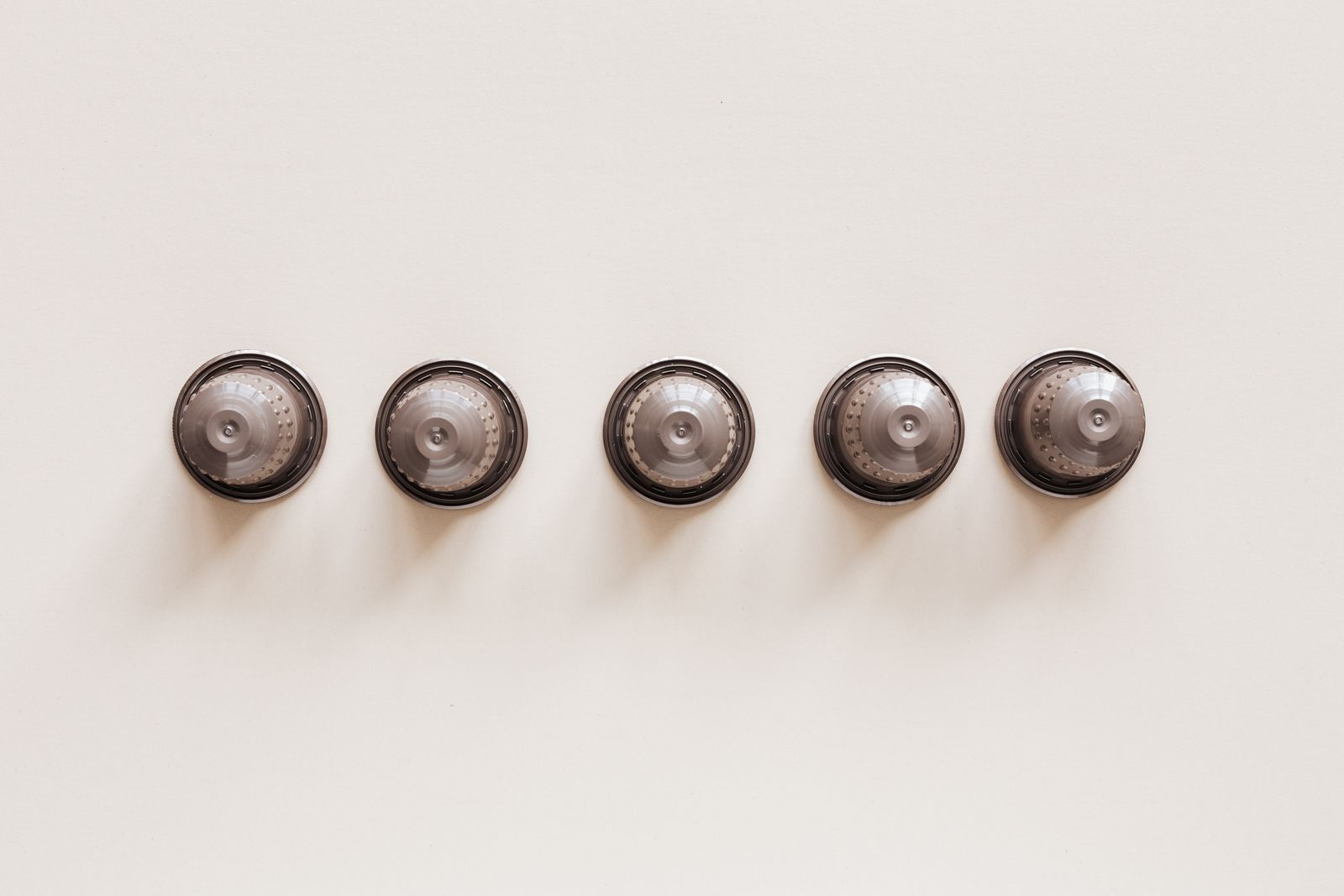
- Capsules: one capsule per drink, so one capsule for every cup made on a pod machine.
- Milk cartons: about one 1-litre carton for every 6 to 8 milky coffees.
- Bean bags: one 1 kg bag makes roughly 50 to 60 espresso-based drinks.
So an office of 50 people drinking two coffees a day on a bean-to-cup machine produces around 3 to 4 kg of wet grounds a day. On a capsule machine, the same office uses around 100 capsules a day, or roughly 2,000 a month.
The beans vs pods cost per cup guide compares the two systems on price. This guide looks at what happens after the cup is finished.
Capsules: aluminium, plastic and "compostable"
Not all capsules are the same, and the material decides what you can do with them.
| Capsule type | Recyclable? | What to do |
|---|---|---|
| Aluminium | Yes in principle, but too small for most sorting lines | Use a brand or supplier take-back scheme |
| Plastic (often multi-layer) | Rarely | Usually general waste; reduce use |
| "Compostable" or "biodegradable" | Only in industrial composting | Check a facility will accept them; otherwise general waste |
Aluminium capsules are made of a material that can be recycled many times. The problem is size. Capsules are small and full of wet coffee, so they often fall through or get rejected at sorting facilities. That is why several capsule brands run their own take-back schemes, where used capsules are collected, the coffee is separated and the aluminium is recycled. Ask your capsule supplier whether a scheme operates in the UAE for business customers, how collection works and whether they report the weight collected.
Plastic capsules are usually made of several layers of plastic, sometimes with an aluminium lid. They are difficult to recycle and generally end up in general waste.
Compostable capsules sound like the best option, but they need industrial composting conditions to break down, and those facilities are limited. Without one, they go to general waste like any other capsule. Ask the supplier where they will actually be processed before paying extra for them.
If capsule waste is a priority, the most effective step is often to switch to a bean-to-cup machine, which produces no capsules at all. The office coffee machine guide and the rental vs buying guide explain the options.
Spent coffee grounds
Spent grounds are food waste. They are wet, heavy and go mouldy quickly in a warm office. Handled well, they are also one of the most reusable materials in the pantry.
Daily handling:
- Empty the grounds drawer or knock box every day. Grounds left overnight start to smell and grow mould. This is also part of normal machine hygiene, covered in the equipment maintenance guide.
- Use a lidded caddy lined with a compostable bag, and empty it at least daily.
- Never wash grounds down the sink. They do not dissolve and can build up in pipes and grease traps, along with milk fat from the coffee station.
What grounds can be used for:
- Composting. Spent grounds are a good addition to compost, as part of a mix with dry material such as shredded paper or leaves.
- Building landscaping. Some building management and landscaping teams will take grounds for compost. Ask your facilities manager.
- Food waste collection. Where your building or waste contractor offers separate food waste collection, grounds go in that stream.
Avoid simply spreading thick layers of grounds on planters around the office. They can form a dense crust and are better composted first.
Coffee bags, milk cartons and cups
Bean bags. Most coffee bean bags are made of layered foil and plastic with a one-way valve, which keeps the coffee fresh but makes the bag hard to recycle. Buying 1 kg bags instead of 250 g bags means fewer bags per cup. Some roasters take back their own bags or deliver in reusable containers, so it is worth asking. The coffee bean freshness and storage guide explains how to buy larger bags without the coffee going stale.
Milk cartons. Cartons are made of paperboard with plastic and sometimes aluminium layers. Some UAE recycling services accept them; others do not. Rinse them, flatten them and check with your waste contractor. Larger cartons or bulk milk mean fewer cartons per cup. The office milk and dairy supply guide covers formats.
Cups, lids and stirrers. Switching to washable mugs and glasses removes the biggest visible source of coffee waste. Dubai and Abu Dhabi have introduced rules on single-use plastics, and the cups, cutlery and single-use plastic ban guide explains what is still allowed.
Tea bags. Many tea bags contain a small amount of plastic used to seal them. Plastic-free bags and loose-leaf tea with a reusable infuser avoid this. The premium tea programmes guide covers options.
Setting up a coffee waste station
A simple, clearly labelled station next to the coffee machine works better than asking people to carry waste to another room.
- Grounds and food waste: a lidded caddy, emptied daily.
- Capsules: a separate container for the take-back scheme, if you have one.
- Recycling: rinsed cartons, bottles and cans.
- General waste: everything else.
Use pictures as well as words on the labels, since your team may read different languages. Put the station where people already stand, next to the machine and the sink, not in a corner. Brief the cleaning team, because they are the ones who make it work every day.
The office pantry breakroom design guide covers where to place bins in a new or refitted pantry.
Measuring coffee waste
Many companies now report waste as part of their sustainability or ESG reporting. Coffee waste is one of the easiest streams to measure:
- Weigh the grounds caddy for one typical week, or ask your waste contractor for the weight collected.
- Count capsules from your order records: capsules ordered roughly equals capsules thrown away.
- Ask take-back schemes for reports on the weight they collect.
- Track the trend each quarter, not a single number.
These figures fit into an ISO 14001 environmental management system or a WELL or similar building certification. The ISO 14001 pantry sustainability guide and the food waste guide explain how to use them.
Coffee waste by industry
How much attention coffee waste gets depends a lot on the sector.
Financial and professional services. Banks and financial services firms, fintech companies and family offices increasingly report waste in their sustainability disclosures, so a measured coffee waste stream is an easy number to add. Law firms and consultancies often run capsule machines in client floors and bean-to-cup machines in staff pantries, so they need two waste plans.
Technology, media and shared space. Tech companies and startups and media and creative agencies tend to drink a lot of coffee and like visible sustainability steps. Coworking spaces serve many companies from one machine, which makes a clear waste station essential.
Public sector and education. Government and public sector entities often have their own sustainability targets that cover offices. Schools and universities can use spent grounds in campus gardens and science projects.
Health and science. Healthcare clinics and hospitals and pharmaceutical and life sciences companies have strict waste segregation rules for clinical areas, so keep pantry waste clearly separate and labelled.
Energy, industry and property. Oil, gas and energy companies, manufacturing and industrial sites and construction and engineering firms often already run formal waste segregation on site, so coffee waste can join an existing system. Logistics and freight and aviation and airport services teams working shifts produce coffee waste around the clock, so caddies need emptying more than once a day. Real estate and property companies can set the standard for their own buildings' waste rooms.
Coffee waste across Dubai
Waste collection depends on the building, and that differs across the city.
In DIFC, Downtown Dubai and Business Bay, most offices sit in large towers where the building manager controls the waste room, so ask what recycling and food waste streams are already in place before buying bins. Towers in JLT and Dubai Marina vary a lot from building to building. Offices near Dubai World Trade Centre often handle large volumes of event-day coffee waste.
Media and tech offices in Dubai Media City, Dubai Internet City and Dubai Design District often have high coffee consumption and teams keen on visible recycling. Research and education tenants in Dubai Science Park, Dubai Knowledge Park, Dubai Healthcare City and Dubai Silicon Oasis can sometimes use grounds in campus landscaping.
Warehouse and industrial offices in JAFZA, Dubai South and Al Quoz usually manage their own waste contracts, which makes it easier to add a separate food waste or capsule collection. The Dubai locations page and the full locations list show where MHO delivers.
A simple checklist
- Estimate how much coffee waste you produce: grounds, capsules, cartons and bags.
- Ask your capsule supplier about take-back for business customers.
- Ask your building or waste contractor which recycling and food waste streams exist.
- Set up a labelled four-way station next to the coffee machine.
- Empty grounds daily and never put them down the sink.
- Switch to washable mugs and larger bean bags or milk formats.
- Brief the cleaning team and coffee champions.
- Weigh or count the waste for one week each quarter and report the trend.
The sustainable office pantry guide and the circular economy pantry blueprint cover the wider pantry, and the office coffee champion guide explains how to give a few people ownership of the coffee station.
The short version
- An office of 50 people can produce 3 to 4 kg of wet coffee grounds or around 100 capsules a day.
- Aluminium capsules are recyclable in principle but usually need a brand or supplier take-back scheme.
- Plastic capsules rarely get recycled; "compostable" ones need an industrial composting facility.
- Empty grounds daily into a lidded caddy, and never wash them down the sink.
- Buy larger bean bags and milk formats, and switch to washable mugs.
- Put a labelled waste station next to the machine and brief the cleaning team.
- Measure the waste each quarter and add it to your sustainability reporting.
Frequently asked questions
Can coffee capsules be recycled in the UAE? Aluminium capsules can be recycled in principle, but they are usually too small and wet for general sorting lines. The most reliable route is a take-back scheme run by the capsule brand or your supplier. Plastic capsules are rarely recycled and usually go to general waste.
Are compostable coffee pods better? Only if they reach an industrial composting facility, which is what they are designed for. If they go into general waste, they offer little benefit over other capsules. Ask your supplier where used pods will actually be processed.
What should we do with spent coffee grounds? Empty them daily into a lidded caddy. They can be composted, collected as food waste where your building offers it, or given to landscaping teams. Do not wash them down the sink, as they can block pipes and grease traps.
How much coffee waste does an office produce? As a rough guide, each espresso-based drink leaves about 30 to 40 g of wet grounds or one capsule. An office of 50 people drinking two coffees a day produces around 3 to 4 kg of wet grounds, or about 100 capsules, every working day.
Are coffee bean bags recyclable? Most are made of layered foil and plastic and are hard to recycle. Buying larger bags reduces the number per cup, and some roasters take back their bags or deliver in reusable containers.
Is a bean-to-cup machine better for waste than a capsule machine? Usually yes. A bean-to-cup machine produces no capsules, and its grounds are food waste that can be composted. It also tends to cost less per cup.