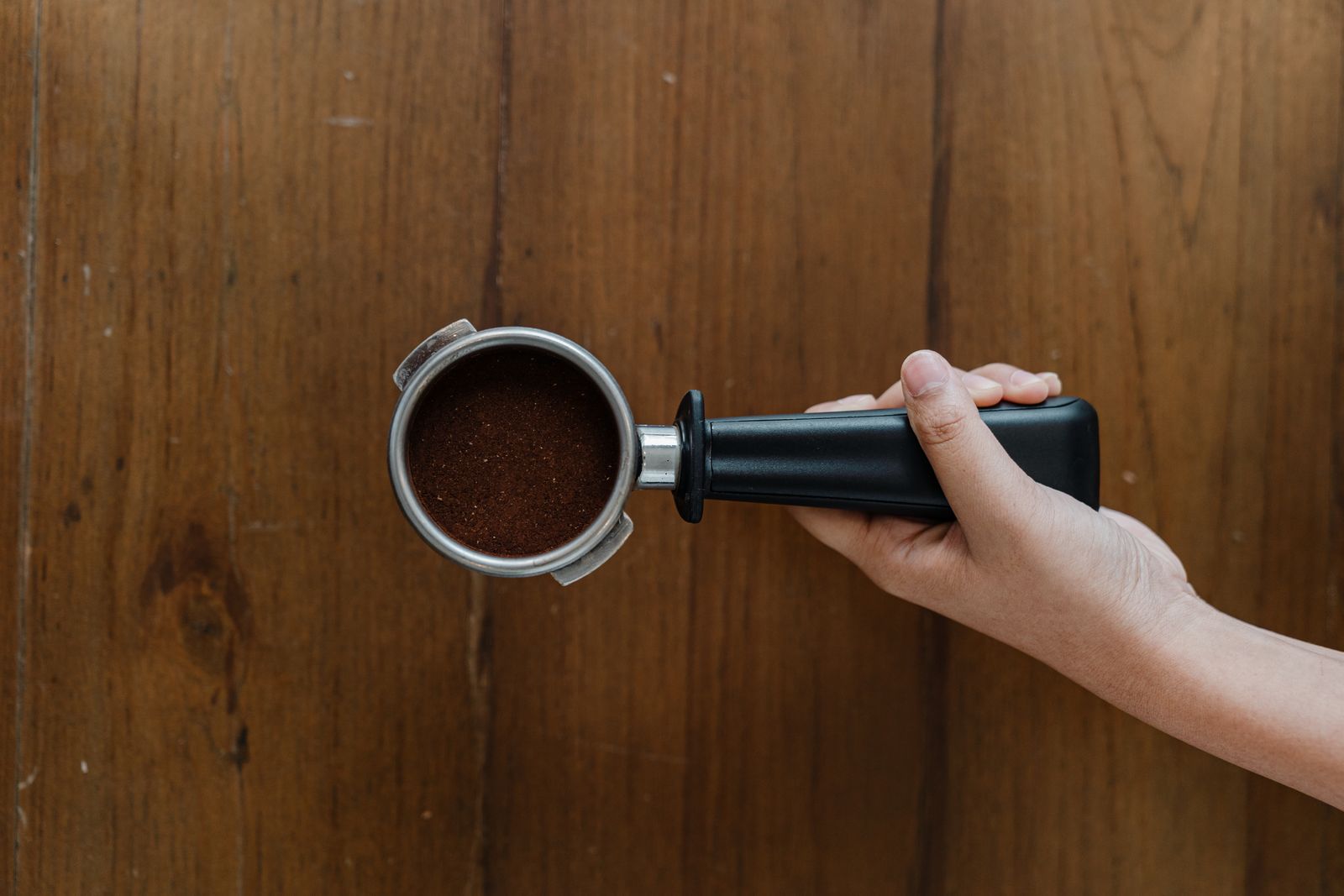
Many UAE offices now have a proper espresso machine with a grinder, a steam wand and a portafilter. Then, a few weeks after installation, people start to complain: the coffee is sour on Monday, bitter on Thursday, and the flat white tastes of burnt milk.
The machine is rarely the problem. Espresso has to be set up, or "dialled in", for the beans in the hopper, and it drifts as the beans age. In a café, a barista does this every morning. In an office, it is usually nobody's job. This guide is for the person who takes it on, often called the coffee champion, and covers what to check, what to change and how to keep it simple.
If you are still choosing equipment, start with the office espresso machines guide or the complete coffee machine guide. This article assumes the machine is already in place.
What "dialling in" means
Espresso is hot water pushed through a compact puck of finely ground coffee. Three numbers decide how it tastes:
- Dose: the weight of ground coffee in the basket.
- Yield: the weight of liquid espresso in the cup.
- Time: how long the shot takes, from pressing the button to stopping it.
The grinder setting controls how fast water can pass through the puck, so it controls the time. Dialling in means adjusting the grind until a fixed dose produces the target yield in roughly the target time, and then tasting the result.
A starting recipe
Most specialty coffee guidance starts from something close to this for a double shot:
| Setting | Starting point |
|---|---|
| Dose | 18 g of ground coffee (check your basket size; many hold 16 to 20 g) |
| Yield | About 36 g in the cup, a ratio of roughly 1:2 |
| Time | About 25 to 30 seconds |
| Water temperature | Usually set around 92 to 94 °C on machines that allow it |
Treat this as a starting point, not a rule. Darker roasts often taste better at a slightly shorter ratio, lighter roasts at a slightly longer one. The roaster's notes on the bag, if there are any, are worth following.
Weigh, do not guess. A small scale accurate to 0.1 g, placed under the cup, is the most useful tool the coffee champion can have. Measuring the yield by volume or by looking at the crema is unreliable, because crema varies a lot with the freshness of the beans.
Fixing the taste: the one-change rule
Change one thing at a time, usually the grind, and pull another shot.
| What you notice | Likely cause | What to change |
|---|---|---|
| Sour, thin, sharp, runs fast | Under-extracted | Grind finer |
| Bitter, harsh, dry, runs very slowly or drips | Over-extracted | Grind coarser |
| Tastes fine but too strong | Ratio too short | Increase the yield a little |
| Tastes fine but weak or watery | Ratio too long | Reduce the yield a little |
| Shots vary a lot from one to the next | Uneven dosing or tamping | Weigh every dose, tamp level |
A few practical points:
- Purge after a grind change. Grinders hold a little old coffee inside. After changing the setting, grind and throw away a small amount before pulling the next test shot.
- Make small changes. One or two steps on the grinder dial is usually enough. Big jumps make it hard to find the right setting.
- On bean-to-cup machines, the grind adjustment is often coarse and limited. Many manufacturers say to adjust it only while the grinder is running. Check the manual before turning anything.
- Write it down. A short log taped inside a cupboard door saves the next person from starting again: date, beans, grind setting, dose, yield, time, and one word on taste.
When to dial in again
Expect to re-check the recipe:
- When a new bag or new beans arrive. Different roasts and origins behave differently.
- As beans age. Over days and weeks, the same grind runs faster and tastes flatter. A small step finer usually brings it back. The coffee bean freshness guide explains roast dates and storage.
- After a long closure. After Eid or a long weekend, empty stale beans from the hopper, flush the group with water, and pull a test shot before the first meeting.
- After a service or burr change. A technician may have reset the grinder.
Steaming milk properly
Most office coffee is milk coffee, so milk technique matters as much as the shot.
- Start with cold milk in a clean, cold jug. Fill it to just below the spout, and steam only what is needed for the drinks being made.
- Purge the wand for a second before steaming, to clear water from the pipe.
- Stretch, then spin. Keep the tip just below the surface for the first few seconds to add a little air, then lower it slightly so the milk spins and the bubbles become fine.
- Stop at about 55 to 65 °C. The jug becomes too hot to hold comfortably at around this point. Going much hotter makes milk taste cooked and thins the foam.
- Wipe and purge straight away. Milk dries onto the wand within seconds. Wipe it with a dedicated damp cloth and purge again after every jug.
- Do not reheat leftover steamed milk. Throw it away. Reheated milk tastes flat and foams poorly, and milk left warm on the counter is a food safety risk.
The milk and dairy supply guide covers ordering and storing fresh milk.
Plant milks
Oat, almond and soy milks behave differently from cow's milk. Barista editions are made to foam and not to split in hot coffee, so they are worth the small price difference for an espresso machine.
- Oat milk usually steams most like dairy and is popular in offices.
- Soy foams well but can split in very acidic coffee. Pouring the milk in steadily helps.
- Almond and coconut make lighter foam.
- Use a separate jug for plant milks and label it, so colleagues with a milk allergy are not served traces of dairy. Wipe and purge the wand between dairy and plant milk.
The plant-based milk guide compares the options in more detail.
Standard drinks for an office menu
A short, consistent menu is easier to keep good than a long one. A simple version:
| Drink | Build |
|---|---|
| Espresso | Double shot, about 36 g |
| Americano | Double shot over hot water |
| Flat white | Double shot with a small amount of thin, silky milk |
| Cappuccino | Double shot with more milk and a thicker layer of foam |
| Latte | Double shot with the most milk and a thin layer of foam |
| Iced latte | Double shot over ice and cold milk, no steaming |
Print it and pin it near the machine. Office stationery from the stationery and office furniture range is enough: a laminated card and a marker for the log.
For iced drinks, the cold drinks and iced coffee guide explains how to keep them good in the summer, and the ice supply guide covers safe ice.
Daily, weekly and monthly cleaning
Old coffee oils taste rancid and bitter. A short routine keeps the machine clean.
Every day
- Flush each group head with water before the first shot and after the last.
- Wipe the shower screen and group gasket with a brush or cloth.
- Empty and rinse the drip tray and knock box.
- Wipe the steam wand and soak the tip if milk has dried on.
- Rinse the portafilter baskets.
Every week
- Backflush with an espresso machine detergent, if your machine has a three-way valve (check the manual; not all machines can be backflushed).
- Soak portafilters and baskets in detergent solution.
- Clean the hopper and wipe out old coffee oils.
Every month or as the supplier advises
- Check or replace the water filter and follow the manufacturer's descaling advice.
- Check the group gaskets. Hard, cracked gaskets cause leaks and messy shots.
Use cleaning products made for coffee machines. The cleaning supplies range and the equipment maintenance guide cover the rest of the pantry.
Making the coffee champion role work
- Pick two or three people, not one. One person goes on leave, and the coffee gets worse. A small rota shares the work.
- Give them 15 minutes of training. A short session from the machine supplier or a colleague who knows the basics is enough.
- Keep the tools at the machine: a scale, a knock box, a brush, a dedicated cloth, a milk thermometer for beginners, and the log card.
- Agree who reorders. Beans, milk and cleaning products should not run out on a Thursday afternoon. The office coffee programmes guide covers supply and service.
- Thank them. It is extra work, and good coffee is noticed across the office.
Where the machine sits
The position of the coffee station affects how well it is looked after. A machine needs a stable counter, a nearby sink, a safe power supply and, for plumbed machines, a water line and drain. Queues form at peak times, so leave space for two or three people to wait without blocking a corridor. The breakroom design guide covers layout, and the office fit-outs and services range can help when a pantry is being rearranged.
Coffee culture across Dubai
Coffee expectations vary by office. Teams in DIFC, Downtown Dubai and Business Bay often host clients and need espresso drinks that match a good café. Offices in JLT, Dubai Marina and the Dubai World Trade Centre area see heavy morning queues, so speed and a short menu matter. Creative and tech teams in Dubai Media City, Dubai Internet City, Dubai Design District and Dubai Silicon Oasis often have enthusiastic home baristas who make natural coffee champions.
Clinics and labs in Dubai Healthcare City and Dubai Science Park tend to prefer simple, reliable machines with strict cleaning logs. Campuses in Dubai Knowledge Park serve many people in short breaks. Warehouses and operations sites in JAFZA, Dubai South and Al Quoz often run shifts, so the machine may need to be dialled in by more than one team.
MHO delivers to offices across Dubai and the rest of the UAE.
What MHO can supply
MHO supplies beans, pods and machines through its coffee and coffee machines range, fresh and plant-based milks through the dairy and plant-based milk range, and something to go with the coffee from the office snacks range. The full list is on the product categories page.
The short version
- Start from about 18 g in, 36 g out, in 25 to 30 seconds, and taste.
- Weigh the dose and the yield. Do not judge by volume or crema.
- Sour and fast: grind finer. Bitter and slow: grind coarser. Change one thing at a time.
- Re-check the recipe for new beans, as beans age, and after closures.
- Steam cold milk to about 55 to 65 °C, wipe and purge the wand every time, and do not reheat milk.
- Use a separate, labelled jug for plant milks.
- Flush and wipe daily, backflush and clean weekly, and follow the descaling advice.
- Share the role among two or three trained people, with a log at the machine.
MHO supplies coffee, milk and equipment to offices across the UAE. Talk to the team about setting up your coffee station.
Frequently asked questions
What is a good starting recipe for office espresso? A common starting point for a double shot is about 18 g of ground coffee producing about 36 g of espresso in 25 to 30 seconds. Adjust from there by taste, and follow the roaster's advice if the bag includes it.
Why is our office espresso sour? Sour, thin espresso that runs quickly is usually under-extracted. Grind a little finer, purge the grinder, and pull another shot. Very fresh or very light roasts can also taste sharp.
Why is our office espresso bitter? Bitter, harsh espresso that runs slowly is usually over-extracted, so grind a little coarser. A dirty group head or old coffee oils in the machine can also make coffee bitter, so check the cleaning routine too.
How often should we adjust the grinder? Check whenever new beans arrive, after long closures, and every few days as beans age. Small adjustments are normal; a coffee champion who tastes one shot each morning will catch drift early.
What temperature should milk be steamed to? Around 55 to 65 °C for most drinks. Much hotter than that makes milk taste cooked and the foam thinner. Start with cold milk and steam only what you need.
Can we use oat milk in an office espresso machine? Yes. Barista editions of oat, soy and almond milk are designed to foam and not split in hot coffee. Use a separate, labelled jug for plant milks and clean the steam wand between dairy and plant milk.
How often should an office espresso machine be cleaned? Flush and wipe the group heads, steam wand, drip tray and baskets every day, backflush with detergent weekly if the machine allows it, and follow the manufacturer's advice on water filters and descaling.