Walk through a UAE office at 3.30 pm and the coffee machine is still busy. Some of those cups are doing useful work. A good number are habit, and a share of them are going into people who will be awake at 1 am wondering why. The office did not decide that; the pantry did, by offering one kind of coffee, one kind of black tea and nothing else that tastes like a proper hot drink after lunch.
A decaf and low-caffeine line is the cheapest correction available to a pantry programme. It is not a wellness gesture. It is a product range that serves four concrete groups — shift workers, people tapering before Ramadan, pregnant staff and anyone managing sleep or a heart condition — and it removes the most common reason people leave the floor at 4 pm to buy a herbal tea downstairs. This guide sets out what the line should contain, how to serve it properly on the machines most offices already have, and what it costs.
What "low caffeine" actually means in numbers
Caffeine content is the whole subject, so the numbers come first. Figures are typical ranges; individual products vary, and a ristretto from a dark roast is not the same as a lungo from a light one.
| Drink (typical serving) | Caffeine |
|---|---|
| Espresso, single 30 ml shot | 60–75 mg |
| Bean-to-cup "Americano", 240 ml | 80–120 mg |
| Filter coffee, 240 ml | 80–100 mg |
| Instant coffee, 240 ml | 60–80 mg |
| Black tea, 240 ml, brewed 3 min | 40–50 mg |
| Karak (strong boiled black tea), 150 ml | 40–60 mg |
| Green tea, 240 ml | 25–35 mg |
| Decaf coffee, 240 ml | 2–7 mg |
| Rooibos, chamomile, peppermint, hibiscus, barley tea | 0 mg |
Two things fall out of the table. First, "decaf" is not "no caffeine": it is roughly 97–99 per cent less, and a cup still carries a few milligrams. That matters to almost nobody, but it should be stated honestly on the station rather than described as caffeine-free. Second, the truly caffeine-free options are all non-coffee, non-tea plants — and most of them are already sitting in the herbal tea range the office may have half-ignored.
Caffeine's half-life in a healthy adult is around five hours, with a range of three to seven depending on genetics, smoking, pregnancy and some medications. A 100 mg Americano at 3 pm leaves about 50 mg in the bloodstream at 8 pm and 25 mg at 1 am. That is why the practical rule most sleep clinicians give is a cut-off six to eight hours before bed — and why the after-lunch cup is the one the decaf line exists to replace.
Who the line is for — and why it is more people than it looks
The reflex is to imagine one or two abstainers and decide it is not worth a hopper. It is worth doing the count properly, because four separate groups add up.
Shift and night workers. A 24-hour operation — a hospital, an airport, a logistics hub, a security operations centre — has staff whose "afternoon" is 3 am. Caffeine in the back half of a night shift is the single biggest reason day sleep fails, and the shift-work pantry guide makes the case for a caffeine cut-off point on the night rota. Decaf lets the night team keep the ritual of the hot drink without paying for it at 9 am.
Anyone tapering before Ramadan. The caffeine-withdrawal headache in the first three or four days of the fast is the most common complaint in any office, and it is entirely avoidable by stepping down over the two weeks before. The Ramadan fasting-at-work guide recommends exactly that; a decaf option on the machine is what makes it possible without anyone having to go without their cup. Put the decaf line in place well before the month starts, not during it.
Pregnant staff. The widely used guidance ceiling is 200 mg of caffeine a day, which is two modest coffees or one large one from a bean-to-cup machine. A decaf option at the station means someone can have the 10 am coffee with the team and stay under the limit without having to explain why she is drinking hot water.
People managing sleep, anxiety, reflux or a heart condition. This is the largest group and the least visible, because nobody announces it. The proportion of adults who have been told by a doctor to cut caffeine, or who have decided it themselves, is not small in any office of a hundred people.
A reasonable planning assumption for a UAE office is that decaf and caffeine-free drinks will run at 5–10 per cent of hot-drink volume overall, and considerably higher — a quarter or more — after 3 pm and during Ramadan. That is not a niche; it is the same order of magnitude as the plant-milk line most offices now carry as standard.
How decaf is made, and why the method belongs on the spec
Decaffeination happens to the green bean, before roasting, and there are four methods in commercial use. Buyers do not need the chemistry, but the method belongs on the product specification because it affects taste, price and what the office can truthfully say about the coffee.
Swiss Water and similar water processes. Green beans are soaked and the caffeine is removed through carbon filtration of the water, with no chemical solvent. Certified to 99.9 per cent caffeine-free. The cleanest story to tell and the most expensive; the taste is usually the closest to the original coffee. This is the default for a specialty-grade decaf.
Supercritical CO2. Caffeine is extracted with pressurised carbon dioxide, which is then removed completely. Also solvent-free, widely used for larger commercial volumes, good flavour retention. A sound choice for an office bean supply.
Ethyl acetate, often marketed as "sugar-cane" or "natural" decaf. The solvent occurs naturally in fruit and is derived from fermented sugar cane for this purpose; residues are negligible after roasting. Common on Colombian decafs. Perfectly acceptable; just do not describe it as solvent-free.
Methylene chloride (dichloromethane). The traditional and cheapest industrial method. Regulated residue limits are extremely low and the solvent is driven off in roasting, so the safety position is settled, but some buyers and a good number of employees prefer to avoid it. If the office has a wellness policy that will be asked about it, specify one of the other three.
Two practical consequences of processing. Decaf beans arrive darker and more porous, roast a shade darker and go stale faster than regular beans once the bag is opened. Order decaf in smaller bags — 250 g or 500 g rather than the kilo the main hopper uses — and rotate them on the same weekly cadence as the milk rather than leaving one bag open for a month. And decaf is almost never the roaster's best lot, which is why a cheap decaf tastes flat: the office is paying for the process, and the coffee underneath was ordinary to begin with. A mid-range decaf from a roaster who takes it seriously is a different drink.
Serving decaf on the machines the office already has
This is where most decaf programmes fail in practice: the office buys a bag and then discovers the machine has one hopper. There is a correct answer for each set-up.
Bean-to-cup with a single hopper. Almost every commercial bean-to-cup machine has a bypass chute — a small slot, usually behind a flap on the top, for a single dose of pre-ground coffee. That is what it is for. Keep a sealed tin of pre-ground decaf next to the machine, a measured scoop, and a laminated one-line instruction. The shot is fully automatic once the dose is in. The limitation is that it is a manual step, so it works for a floor of forty and starts to fail on a floor of four hundred. The office coffee machine guide covers which models have a workable chute and which have a token one.
Bean-to-cup with dual hoppers. The right answer above roughly 150 people or wherever decaf will be a real share of volume. Most mid-range commercial machines are available with a second hopper for a modest uplift, and if the office is on a rental or service contract, the upgrade is a conversation rather than a capital purchase. Label the hoppers on the machine face, not just on the bag.
Capsule machines. The simplest case: every major capsule system has a decaf, and the pods-versus-beans cost comparison applies with a 10–20 per cent premium on the decaf capsule. Keep the decaf in a separate, clearly different dispenser — a different colour tube or a marked tray — so that nobody has to read the capsule to know what they are picking up.
Filter and batch brew. A second, smaller brewer or an insulated flask labelled decaf, made once at 2 pm. Discard at the end of the day rather than reheating.
Instant. Decaf instant sticks are the right answer for a warehouse mess room, a site cabin or the night desk where nobody will run a machine. Individually wrapped, no cross-contamination risk, unlimited shelf life within reason, and the cheapest per cup of any option. Do not be embarrassed about it; a good decaf instant is a better drink than a stale decaf bean.
The cross-contamination rule
For most people, a regular shot mistaken for a decaf is an annoyance. For a pregnant colleague at her daily limit, someone on a cardiac drug that interacts with caffeine, or a night-shift nurse about to go home to sleep, it is a genuine problem. The rules are the same ones the allergen labelling guide applies to nuts and gluten:
- Decaf lives in its own labelled container, hopper, tube or tin. It is never decanted into the regular one "for now".
- The label is on the machine or the dispenser at the point of choice, not only on the packaging in the cupboard.
- The station never claims "caffeine-free" for decaf coffee. "Decaf — under 5 mg per cup" is accurate and takes the same space.
- The pantry attendant, where there is one, is told which staff have asked for it, so the wrong cup is not handed over with a smile.
Low-caffeine and caffeine-free teas: the half of the line that is easy
Decaf coffee needs equipment. The rest of the line needs a kettle and a shelf, and it is where a UAE office gets the most value for the least money.
Decaf black tea exists and is fine for the person who wants a builder's tea at 5 pm, but it is a minority choice; most people who want less caffeine at that hour move away from tea altogether.
Green tea and jasmine sit at roughly a third of the caffeine of coffee and are the natural mid-afternoon step-down for someone who still wants a lift. Roasted green teas are lower still.
Rooibos is the workhorse of the caffeine-free shelf: naturally caffeine-free, low in tannin so it does not go bitter if the bag is forgotten, takes milk, and tastes enough like tea that people who "do not like herbal tea" drink it. Vanilla and plain rooibos cover most tastes.
Hibiscus — karkadeh — is the regionally obvious one and is missing from most office pantries. Caffeine-free, tart, drunk hot or iced across the Gulf and Egypt, and a genuinely refreshing cold option in July if it is brewed in a jug and chilled. It stains, so use the glass jug, not the white one.
Chamomile, peppermint, ginger-lemon are the standard evening and after-meal trio and belong on any shelf. Peppermint after lunch also happens to be the only pantry item that reliably improves the 2 pm meeting.
Barley tea (roasted barley, mugicha) and roasted grain "coffee substitutes" are caffeine-free, savoury rather than sweet, and the closest caffeine-free thing to the taste of a dark roast. Worth one line for the people who want the ritual of coffee and not the effect.
The premium tea programmes guide covers the leaf-versus-bag and rotation decisions for the whole tea line; the point here is only that the caffeine-free shelf should be treated as a deliberate range of five or six items, not two dusty boxes of chamomile behind the sugar. And this is the one part of a hot-drink programme that costs almost nothing: a caffeine-free bag is typically AED 0.30–0.80, and a shelf of six varieties turns over slowly enough that the whole line is a rounding error on the beverage budget.
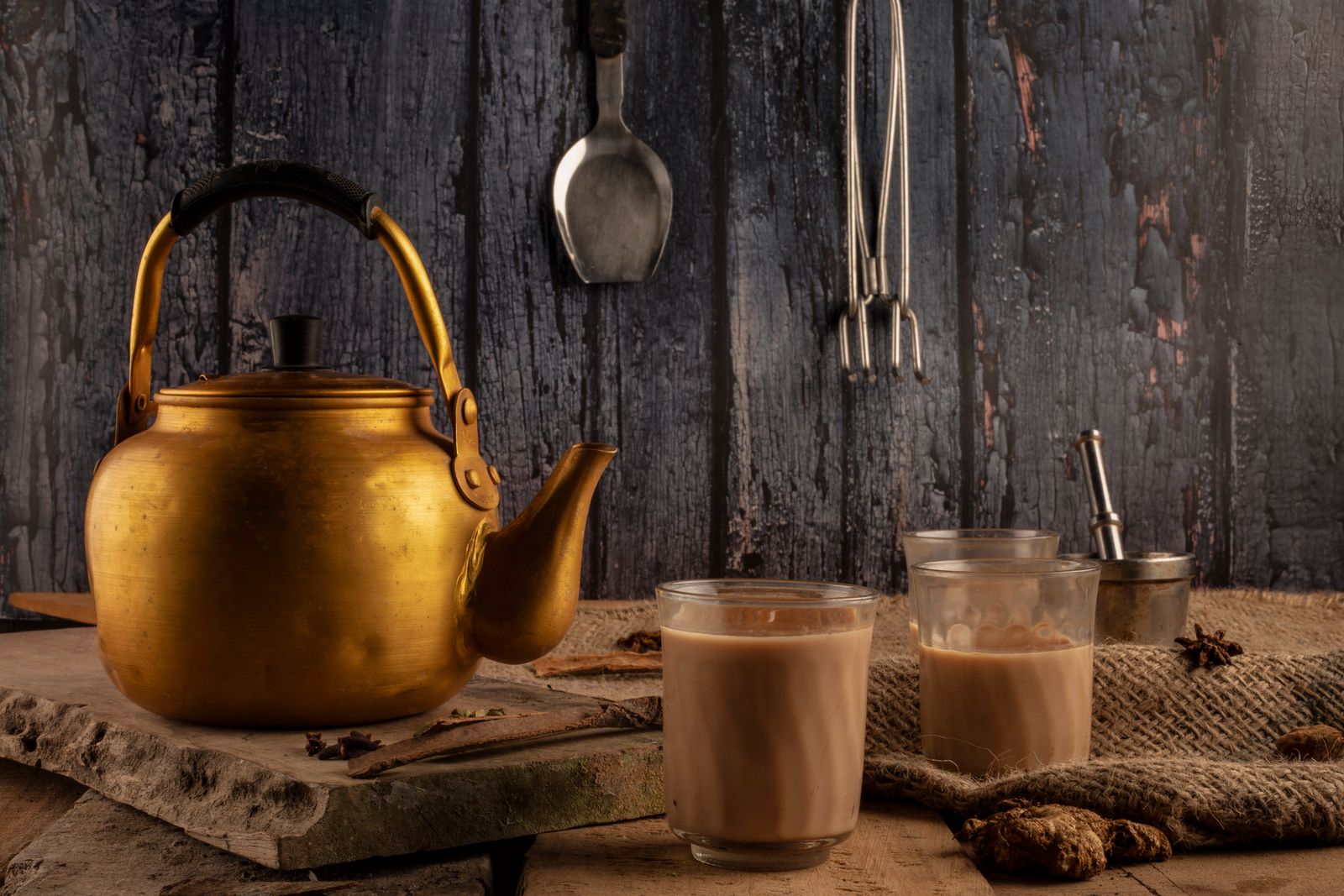
One clarification on karak, because it comes up: karak is boiled black tea and carries as much caffeine as a cup of tea or more, so it is not the low-caffeine option some assume. The karak chai guide covers the round itself; a caffeine-free evening version is possible with rooibos or a decaf black tea in the same pot, and for a night-shift site it is worth trying.
Cold, caffeine-free and the summer
From May to October the afternoon drink in a UAE office is cold, and the caffeine question moves to the fridge. The iced coffee and cold-drinks guide covers the caffeinated side; the caffeine-free side is mostly about what is not there.
- Cold brew and ready-to-drink iced coffees are usually the most caffeinated thing in the fridge per millilitre, and they are sweetened, which brings them under the tiered excise for sugary drinks. A decaf cold brew concentrate, made once a week in the fridge from decaf grounds, is cheap and popular.
- Energy drinks are the opposite of this line, and the energy drinks guide explains why they should be a considered decision rather than a default fridge item.
- Iced hibiscus, iced rooibos and iced peppermint brewed in a jug are caffeine-free, sugar-free unless someone adds it, cost pennies, and fit the summer hydration playbook better than anything in a can.
- Sparkling water with a citrus slice is the honest answer for a lot of the 4 pm cravings that used to be a coffee; the office sparkling water guide covers dispensers versus bottles.
The zero-sugar soft drinks guide is worth a read alongside this one for the same reason: a lot of "low caffeine" in practice is people switching to a cola, which has less caffeine than coffee but is not zero.
Costing the line
Decaf costs more than regular at the bean and capsule level and the premium is real but small per cup.
- Beans. A decent commercial decaf typically carries a premium of roughly AED 10–25 per kilo over the equivalent regular blend. At 8 g per shot that is 8–20 fils per cup — invisible against the AED 1.20–2.00 all-in cost per cup the coffee programme guide works from. The real cost is waste from stale open bags, which is why the smaller-bag rule matters more than the price per kilo.
- Capsules. Expect 10–20 per cent over the regular capsule. On a 5–10 per cent decaf share of a 3,000-capsule month, the uplift is under AED 100.
- Instant sticks. AED 0.40–0.90 each in bulk; the cheapest option per cup and the right one for low-volume sites.
- Caffeine-free teas. AED 0.30–0.80 per bag; loose-leaf rooibos and hibiscus are cheaper still per cup if the office has a teapot and someone who will wash it.
- Equipment. A second hopper on a rented bean-to-cup machine is usually a small monthly uplift; a separate small filter brewer or a capsule tube is a one-off under AED 300. Nothing here needs a new machine.
For an office of 100, a complete decaf and caffeine-free line — decaf beans or capsules at a 7 per cent share, a shelf of six caffeine-free teas, decaf instant for the night desk — adds roughly AED 150–300 a month to the beverage budget, or AED 1.50–3.00 per head. It belongs as a line in the pantry budget template rather than being bought ad hoc, so that it is on the same invoice and the same delivery as the rest of the coffee station. Caffeine, incidentally, is not an excise matter: coffee and tea are not excise goods in the UAE, and the tiered sweetened-drink excise applies only to the sweetened ready-to-drink items mentioned above.
Rolling it out so it is actually used
A decaf line that nobody knows about is a bag going stale. Four things make the difference between a range that is used and one that is not.
- Put it at the point of choice. The decaf capsules in a marked tube next to the regular ones; the decaf hopper labelled on the machine face; the caffeine-free teas on the shelf at eye level, not in the cupboard. If someone has to ask the pantry attendant, most people will not.
- Say what it is honestly. "Decaf, under 5 mg" and "caffeine-free" are different claims. Use the right one on each label. Anyone who has a medical reason to care will notice, and will trust the rest of the pantry more for it.
- Time the launch. Two weeks before Ramadan, at the start of a new shift roster, or at the beginning of the summer cold-drinks switch are the three moments when a decaf line lands with the most people. Launching it in a random week in October means explaining it twice.
- Review the share after a quarter. If decaf is running under 3 per cent of volume, either it is badly placed or the office genuinely does not want it; if it is over 15 per cent, the single-hopper workaround is going to break and it is time for the second hopper. Either way, the number decides.
Where this matters most
Any office benefits, but the case is strongest in a few settings.
- Healthcare. Clinics and hospitals combine shift work, a high proportion of staff who are clinically aware of their own caffeine intake, and a duty of care that extends to the staff room. The healthcare pantry guide and the healthcare vertical page both put a caffeine-free line in the baseline, and sites in Dubai Healthcare City tend to ask for it first.
- Airports, logistics and 24-hour operations. The aviation and logistics verticals run round the clock and benefit most from decaf instant on the night desk; the sites in Dubai South and JAFZA are typical.
- Professional services with long hours. A law firm or a bank in DIFC or ADGM where people are still at desks at 9 pm needs a hot drink at 8 pm that does not cost them the night. Decaf is the difference between the late team drinking coffee or going home wired.
- Tech and media floors. The tech companies and media agencies verticals — Dubai Internet City, Media City, JLT — skew younger and consume the most coffee per head; they are also where the "I've switched to decaf after 2" conversation is now normal, and where a well-stocked caffeine-free shelf gets photographed.
The short version
Offer one decaf coffee, served in its own labelled hopper, tube or tin, made by a solvent-free process if the office will be asked; buy it in small bags and rotate weekly. Put a deliberate shelf of five or six caffeine-free teas — rooibos, hibiscus, peppermint, chamomile, ginger-lemon, barley — where people can see it. Keep decaf instant for the night desk and the site cabin. Label decaf as "under 5 mg", never as caffeine-free, and treat cross-contamination like an allergen. In summer, brew iced hibiscus and decaf cold brew in the fridge instead of buying canned iced coffee. Launch two weeks before Ramadan or at a roster change, budget AED 1.50–3.00 per head per month, and review the share after a quarter.
MHO supplies UAE offices with decaf beans, capsules and instant alongside the full coffee and coffee machine range, a herbal and caffeine-free tea selection, the milks and plant-based milks the station runs on, and the waters and juices for the summer fridge — all on one delivery and one invoice. Browse the full range by category, see every area we deliver to, or talk to us about adding a decaf and caffeine-free line to an existing coffee programme.
Frequently asked questions
Is decaf coffee completely caffeine-free? No. Decaffeination removes roughly 97–99 per cent of the caffeine, leaving about 2–7 mg in a typical cup against 80–120 mg in a regular one. For almost everyone that is negligible, but the station should say "decaf" rather than "caffeine-free", because the people who care about the difference — pregnant staff, some cardiac patients — are exactly the people reading the label. Rooibos, hibiscus, chamomile, peppermint and barley tea are the genuinely caffeine-free options.
How do we serve decaf on a coffee machine that has only one bean hopper? Use the bypass chute — the small slot for pre-ground coffee that almost every commercial bean-to-cup machine has, usually behind a flap on the top. Keep a sealed tin of pre-ground decaf and a measured scoop beside the machine with a one-line instruction. It works well up to a floor of roughly 150 people or a decaf share under about 10 per cent; beyond that, specify a second hopper, which on a rental contract is usually a small monthly uplift rather than a new machine.
Which decaffeination method should we ask for? Any of the four in commercial use is safe, but they differ in taste and in what the office can say. Swiss Water and CO2 are solvent-free and keep the most flavour; sugar-cane (ethyl acetate) is common and good but not solvent-free; methylene chloride is the cheapest and the one some employees prefer to avoid. If the office has a wellness policy or a workforce that will ask, specify Swiss Water or CO2 and put the method on the label.
Why does our decaf taste stale when the regular beans are fine? Decaf beans are more porous after processing and lose freshness faster once the bag is open, and they are usually a smaller share of volume so the bag stays open longer. Buy decaf in 250 g or 500 g bags rather than kilos, seal the bag between uses, and rotate it weekly on the same cadence as the milk. If it still tastes flat, the underlying coffee was probably poor before it was decaffeinated — a mid-range decaf from a roaster who takes it seriously is a noticeably different drink.
When is the best time to introduce a decaf line in a UAE office? Two weeks before Ramadan, so that people can taper their caffeine and avoid the withdrawal headaches of the first days of the fast; at a shift-roster change for a 24-hour site; or at the start of the summer switch to cold drinks. All three are moments when a large share of the office is already changing how they drink, so the new line lands without a campaign. Launching mid-year with no hook usually means it is ignored until someone asks.
Are decaf coffee or herbal teas subject to UAE excise tax? No. Coffee, tea and herbal infusions are not excise goods. The tiered sweetened-drink excise that took effect on 1 January 2026 applies to sweetened ready-to-drink products by sugar content — so a sweetened bottled iced coffee or a sweetened iced tea in the fridge is in scope, while beans, capsules, instant sticks, tea bags and an unsweetened jug of iced hibiscus are not. VAT at 5 per cent applies to everything.