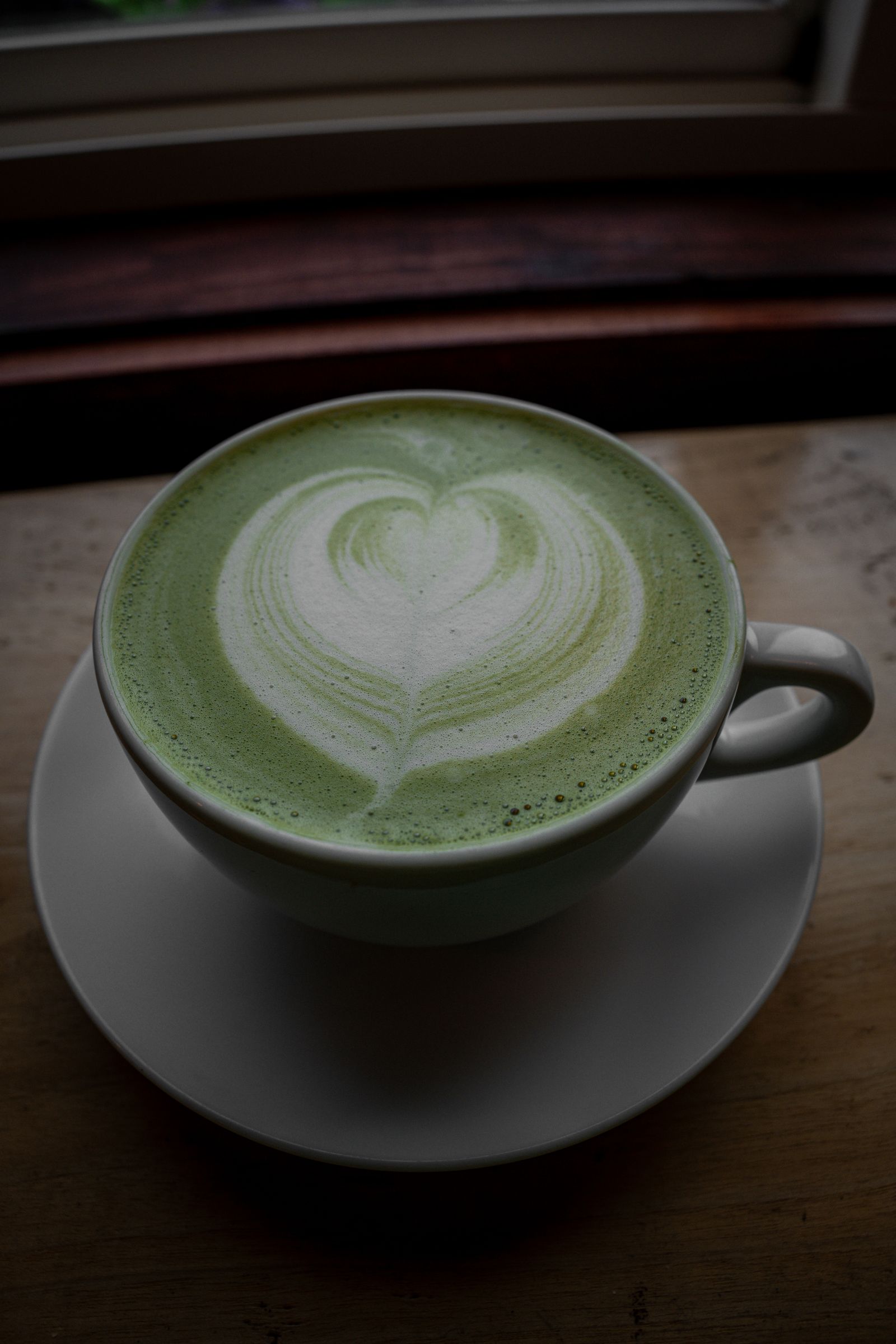
Ask a team what is missing from the pantry and, in many UAE offices, the answer is now matcha. Café matcha lattes in Dubai often cost AED 25 or more, staff who have cut down on coffee want something with a little caffeine, and a green drink photographs well at a team breakfast.
Matcha is also easy to do badly. Boiling water makes it bitter, the powder goes stale in weeks once opened, sweetened premixes can be mostly sugar, and the traditional bamboo whisk is hard to keep clean in a shared kitchen. This guide covers what to buy, how to serve it, and how much to order.
Matcha is not the same as green tea
Both come from the tea plant, Camellia sinensis, and both are green tea. The difference is how they are made and drunk.
- Green tea (sencha, jasmine, gunpowder, Chinese green teas) is brewed: hot water passes over the leaves, and the leaves are thrown away.
- Matcha is made from shade-grown leaves that are de-stemmed and stone-ground into a fine powder. The powder is whisked into water or milk, so you drink the whole leaf.
That one difference explains most of what follows: matcha has more caffeine per cup, more flavour, a higher cost, and a stronger reason to buy from a supplier who tests what is in it.
Caffeine: between green tea and coffee
| Drink | Typical caffeine |
|---|---|
| Cup of brewed green tea | About 30 to 50 mg |
| Matcha, 1 to 2 g of powder | About 40 to 80 mg |
| Single espresso | About 60 to 80 mg |
| Mug of filter coffee | About 80 to 140 mg |
Figures vary widely with the product and the serving size, but matcha sits between a cup of green tea and a cup of coffee. Matcha also contains L-theanine, an amino acid often linked to a "calm alert" feeling. That may be why people like it, but it is a health claim, and it does not belong on the pantry sign.
Matcha is not a caffeine-free drink. Staff who are cutting caffeine, or who are pregnant and keeping under the commonly advised 200 mg a day, should count it. The decaf and low-caffeine drinks guide covers caffeine in other drinks, and the herbal teas guide covers infusions that have none.
Grades: read the colour, not the label
Matcha is sold as "ceremonial", "premium", "barista" or "culinary". These are marketing terms, not regulated standards, and the same word can mean very different products from different brands.
What actually tells you the quality:
- Colour. Good matcha is a bright, vivid green. Dull olive, khaki or yellowish powder is lower grade or old.
- Smell and taste. Fresh and grassy, with some sweetness. Strongly bitter or hay-like means low grade, old, or too-hot water.
- Texture. Very fine, like talc. Gritty powder does not mix well.
- Origin and harvest date. Japanese matcha from regions such as Uji (Kyoto) and Nishio is the benchmark. A harvest or packing date is a good sign.
For an office, the sensible split is a good latte-grade matcha for everyday use, since milk covers small differences in flavour, and a small tin of a higher grade only if people drink it straight with water. Paying ceremonial prices for a powder that goes into 200 ml of oat milk is money spent on the label.
Making it: not boiling water
Boiling water scorches matcha and makes it bitter. Use water at about 70 to 80 °C. Many office hot-water taps have a lower setting; otherwise let the kettle stand for a few minutes, or add a splash of cold water first.
Matcha with water (usucha):
- Sift 1 to 2 g of powder (about half to one level teaspoon) into a bowl or wide cup. Sifting stops lumps.
- Add 60 to 80 ml of water at 70 to 80 °C.
- Whisk quickly in a zig-zag until there is a light foam, about 15 to 20 seconds.
Matcha latte:
- Mix 2 g of powder with 30 ml of hot (not boiling) water into a smooth paste.
- Add 150 to 200 ml of steamed or frothed milk, or cold milk and ice for an iced latte.
Iced matcha is the most requested version from May to October. A sealed shaker bottle with cold milk or water and ice mixes it in seconds, with no hot water at all.
Oat milk is the usual pairing for matcha lattes. The plant-based milk guide and the office milk and dairy guide cover what to stock and how much.
Equipment that stays clean in a shared pantry
The traditional bamboo whisk (chasen) makes the best foam, but it is wood with dozens of fine tines, it dries slowly, and it cannot go in a dishwasher. In a shared office kitchen, used by many people and rarely dried properly, it is a hygiene problem.
| Option | Pros | Cons | Best for |
|---|---|---|---|
| Handheld electric frother | Fast, cheap, easy to rinse | Batteries; small amounts only | Most offices |
| Shaker bottles, washed after each use | Perfect for iced matcha | Need dishwashing | Hot-climate offices, iced drinks |
| Milk frother jug that heats and froths | Makes the whole latte | One drink at a time | Offices where matcha is popular |
| Coffee machine with a powder canister | Push-button | Matcha clumps in humid canisters; cleaning | Only if the supplier approves matcha for that machine |
| Bamboo whisk | Best traditional foam | Hard to keep hygienic when shared | Personal use, or a staffed pantry |
Do not pour matcha into a coffee machine's chocolate canister without checking with the machine supplier. Fine tea powder absorbs moisture, clumps, and can block the dosing mechanism. The coffee station accessories guide covers frothers, jugs and counter layout, and the equipment maintenance guide covers cleaning schedules.
Storage in UAE heat and humidity
Matcha loses colour and flavour quickly once exposed to air, light, heat and moisture. A tin opened in June can taste flat by August.
- Buy small tins, 30 to 100 g, rather than one large bag. Most offices should finish an opened tin within about a month.
- Keep it sealed, dark and cool: in its tin, in a closed cupboard away from the kettle and the coffee machine's warm air.
- If you refrigerate unopened stock, let the tin come to room temperature before opening it. Opening a cold tin in a humid pantry draws condensation onto the powder, and damp matcha clumps and spoils.
- Use a dry spoon. A wet spoon in the tin is the most common way matcha is ruined.
Green tea bags keep better, but they also lose aroma in humidity. Individually enveloped bags are the right default for an open pantry.
Sweetened premixes and ready-to-drink matcha
Many "matcha latte" powders are mostly sugar and milk powder with a little matcha. Read the ingredient list: if sugar is the first ingredient, it is a sweet drink with green colouring. Offer unsweetened matcha as the default and let people add their own. The sugar, honey and sweeteners guide covers sachets and pourers.
Bottled and canned matcha and green tea drinks with added sugar can fall under the UAE excise on sweetened drinks, which has used sugar-content tiers since January 2026. Plain matcha powder and tea bags do not. The excise guide explains the tiers; confirm the treatment of a specific ready-to-drink product with your supplier. The cold drinks and iced coffee guide covers the rest of the chilled range.
Buy from a supplier who tests
Because matcha is the whole leaf, anything in the leaf ends up in the cup. Tea plants can take up minerals, including some heavy metals, from the soil, and pesticide residues are a question for any tea.
The practical safeguard is the same as for any food product: buy from a registered supplier who can provide a certificate of analysis showing the product has been tested for heavy metals and pesticide residues against the applicable limits. Very cheap unbranded matcha with no origin or testing information is the product to avoid. The food safety rules guide covers what to ask suppliers more generally.
How much to order and what it costs
Matcha use varies far more than coffee use. In some offices it is a handful of people; in tech and creative teams it can be a large share of morning drinks.
| Office | Starting monthly order |
|---|---|
| 20 people | One 100 g tin of latte-grade matcha, plus green tea bags |
| 50 people | 200 to 300 g of matcha, plus 150 to 250 green tea bags |
| 150 people, several floors | 500 g to 1 kg of matcha split into small tins by floor, plus 500 green tea bags |
At about 2 g per latte, 100 g makes around 50 drinks. Track the tins for a month and adjust. The inventory management guide covers par levels.
Cost per cup. Good latte-grade matcha typically works out at a few dirhams of powder per drink, and the milk often costs as much again. Higher grades cost several times more. Even so, an office matcha latte costs a fraction of the café version, which is why it is popular as a pantry upgrade. The premium tea programmes guide covers higher-end ranges for client areas, and the office coffee programmes guide covers how hot drinks fit into the overall budget.
Where matcha is most requested
- Tech, fintech and startups. Tech companies and startups and fintech firms in Dubai Internet City, Dubai Silicon Oasis and Dubai Science Park are where requests usually start, often for iced matcha with oat milk.
- Creative and media teams. Studios in Dubai Media City and Dubai Design District, and media and creative agencies generally, expect it alongside specialty coffee.
- Coworking spaces. Coworking operators use a matcha option as a visible amenity for members, in towers from JLT to Dubai Marina.
- Professional services. Law firms and consultancies in Business Bay and Downtown Dubai add matcha for staff who have moved off a third coffee.
- Universities and training centres. Campuses and education companies in Dubai Knowledge Park see strong demand from younger staff.
MHO delivers office pantries across Dubai and the UAE; the industries we serve page shows how pantries differ by sector.
Keeping the station tidy
Matcha powder is fine and green, and it gets everywhere. Keep a dedicated dry spoon and sieve in a closed container, wipe the counter daily, and rinse frothers and shaker bottles straight after use. The office hygiene range, the cleaning supplies range and the facility hygiene range cover wipes, sprays and dishwashing supplies. Caddies and drawer organisers for tins are in the stationery and office furniture range, and if the pantry itself needs a better hot-drinks counter, see office fit-outs and services. Green tea bags and infusions sit in the tea range.
The short version
- Matcha is powdered whole green tea leaf; brewed green tea is not the same drink.
- Matcha has about 40 to 80 mg of caffeine per serving: less than coffee, more than green tea, and not caffeine-free.
- "Ceremonial" and "culinary" are marketing terms; judge by colour, smell and origin. Latte-grade is right for most offices.
- Use water at 70 to 80 °C, sift the powder, and use frothers or shaker bottles rather than a shared bamboo whisk.
- Buy small tins, keep them sealed and dry, and let cold tins warm up before opening.
- Default to unsweetened matcha; check sweetened premixes and ready-to-drink products for sugar and excise.
- Buy from a supplier who can show heavy-metal and pesticide testing.
MHO supplies matcha, green teas and the milks that go with them alongside the rest of the office pantry. Talk to the team about adding a matcha station.
Frequently asked questions
Is matcha the same as green tea? Both come from the same plant, but matcha is shade-grown leaf ground into powder and whisked in, so you drink the whole leaf. Ordinary green tea is brewed and the leaves are thrown away. Matcha has more flavour and more caffeine per cup.
How much caffeine is in a matcha latte? Roughly 40 to 80 mg for a latte made with 1 to 2 g of matcha, depending on the product. That is more than a cup of green tea and usually less than a mug of filter coffee.
What water temperature should be used for matcha? About 70 to 80 °C. Boiling water makes matcha bitter. Use a lower setting on the hot-water tap or let the kettle stand for a few minutes.
What grade of matcha should an office buy? A good latte-grade matcha for everyday use, judged by bright green colour, fresh smell and a clear origin. Grade names such as ceremonial and culinary are not regulated, and higher grades are wasted in milk.
How should matcha be stored in a UAE office? In small sealed tins, in a cool, dark cupboard away from the kettle, and used within about a month of opening. If stock is kept in the fridge, let the tin reach room temperature before opening so condensation does not dampen the powder.
Is a bamboo matcha whisk hygienic for a shared pantry? It is hard to keep clean when many people use it, because it is wooden and dries slowly. Handheld electric frothers or shaker bottles that are washed after each use are more practical for a shared kitchen.
Are matcha drinks subject to UAE excise tax? Plain matcha powder and tea bags are not. Ready-to-drink matcha or green tea with added sugar can fall under the sugar-based excise tiers in force since 2026, so confirm specific products with your supplier.