The sweetener tray is the smallest line in the pantry budget and one of the most used. Every coffee, every karak, every tea passes it. It is also where offices drift furthest from any deliberate choice: an open sugar bowl with a shared spoon, one kind of artificial sweetener because it was on the last order, a honey jar with a crust around the lid.
Getting it right is cheap and quick. This guide covers the formats, which sweeteners to stock and what their labels mean, honey, hygiene in a UAE pantry, quantities and cost.
Formats: sachets, dispensers, cubes and bowls
There are four ways to put sugar on a coffee station, and each suits a different office.
- Sachets and sticks. Individually portioned, usually 4–5 g of sugar each. Hygienic, easy to count and easy to stock in several types side by side. The downsides are packaging waste and a slightly higher cost per gram. This is the default for most offices and the right one for anywhere with visitors.
- Pourers and dispensers. A closed glass or plastic pourer, or a wall- or counter-mounted dispenser. Cheaper per gram and less waste, but someone has to refill and wipe them, and humidity can make sugar clump in the nozzle.
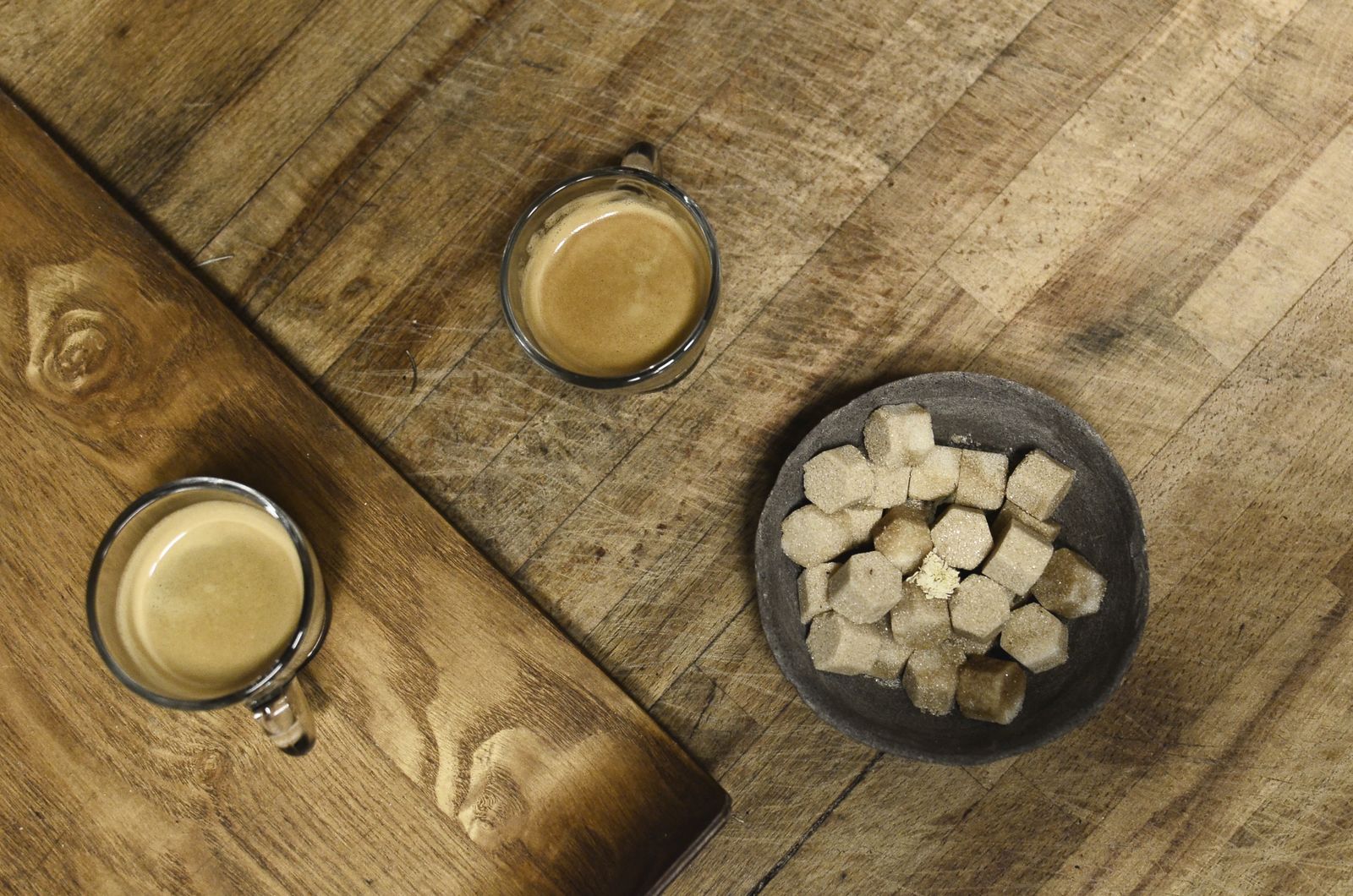
- Sugar cubes. Tidy on a meeting-room tray and easy to portion, with tongs. Slower to dissolve in iced drinks.
- Open bowls. The cheapest and the worst: a shared spoon, spills, clumping in humid air and the first thing ants find. Avoid them outside a supervised catering setup.
A practical mix for a 30–100 person office: white and brown sugar in sachets or sticks, at least one zero-calorie sweetener in sachets, honey in single portions or a squeeze bottle, and a closed pourer only if someone owns refilling it. The coffee station accessories guide covers the trays and organisers that keep it tidy, and the pantry layout guide covers where the station sits relative to the machine and the bin.
Which sweeteners to offer, and what the labels mean
Most offices need three options beyond sugar at most. Colleagues who avoid sugar tend to have a strong preference for one type, so variety matters more than volume.
Sucralose is made from sugar but not absorbed as sugar, around 600 times sweeter, and stable in hot drinks. It is the most common yellow-sachet sweetener and a safe default.
Aspartame is widely used in soft drinks and sachets. Products containing it carry a warning that they contain a source of phenylalanine, because people with the inherited condition phenylketonuria (PKU) must avoid it. Keep the original sachet packaging with that wording on the station rather than decanting it. In 2023 the WHO's cancer research agency (IARC) classified aspartame as "possibly carcinogenic to humans" while the joint FAO/WHO expert committee kept its acceptable daily intake unchanged at 40 mg per kg of body weight — so some colleagues will ask for an alternative, and it is sensible to offer one.
Stevia (steviol glycosides) is plant-derived and often the first choice of people who want a "natural" option. Many stevia products are blended with erythritol or another bulking agent, and some people notice an aftertaste.
Monk fruit, erythritol and other sugar alcohols appear in newer blends. Sugar alcohols can cause digestive discomfort in large amounts; in one or two sachets a day that is rarely an issue.
Saccharin is the oldest sweetener still sold. Few offices need it, but some long-time users will ask.
A note on messaging: in 2023 the WHO also issued a guideline advising against using non-sugar sweeteners as a way to control body weight. The pantry should offer sweeteners as a choice for people who want less sugar, not promote them as a health product. The low-sugar and diabetic-friendly pantry guide covers how to present the low-sugar options without a wellness lecture, and the allergen and dietary labelling guide covers shelf labels.
Honey and date syrup
Honey is the sweetener people care most about, and the one where quality varies most.
- Buy from an established, registered supplier. Cheap honey is the product most often cut with sugar syrups internationally. Honey sold in the UAE must meet the national honey standard, and a known supplier with proper labelling — origin, producer, batch — is the practical defence.
- Crystallised honey has not gone off. Honey naturally crystallises over time, faster in a cool, air-conditioned pantry. Stand the jar in warm water to reliquefy it. Do not throw it out. The condiments and spreads guide covers this alongside the other jars.
- Single portions or a squeeze bottle beat an open jar. A shared jar with a spoon collects crumbs, tea drips and ants. Squeeze bottles stay clean and are easy to wipe.
- Premium honeys are a hospitality item, not a daily line. Sidr and other premium honeys are popular as gifts and on boardroom trays; they are too expensive to leave on an open station. The corporate gifting guide covers gift hampers.
Date syrup (dibs) is the traditional local sweetener and pairs naturally with Arabic coffee, porridge and yoghurt. It is a welcome addition during Ramadan, and some colleagues prefer it all year. The Arabic coffee and dates guide and the dried fruits and dates guide cover that part of the hospitality tray.
Honey is not vegan. Plant-based colleagues usually prefer date syrup, agave or maple syrup, and it is worth having one on the station if the office already stocks a plant-based and meat-alternatives range for lunches; the plant-based pantry guide covers the rest of that shelf.
Hygiene and ants: the UAE-specific part
Sugar and honey are the two products that attract pests to a pantry, and humidity makes both harder to keep tidy.
- Keep everything closed. Sachets in a lidded caddy, pourers with a flap, honey in squeeze bottles. An open bowl is an invitation.
- Wipe the station every day. Spilled sugar and honey drips are what ants follow. A daily wipe with a food-safe surface cleaner — from the office cleaning supplies range — prevents most problems.
- Store backstock sealed and off the floor. Humid air turns bulk sugar into a brick; keep sacks and cartons in sealed containers in the coolest dry cupboard, not under the sink.
- If ants appear, fix the source before calling pest control. It is almost always an open container or a sticky surface. Remove it, clean the path, and keep it closed; pest control is the second step, not the first. The office hygiene range and the facility hygiene range cover the sprays, wipes and bins that keep the station clean.
These are part of the same routine as the rest of the pantry: the food safety rules guide covers storage, and the pantry etiquette guide covers the "wipe up after yourself" sign that actually works.
Stirrers, spoons and labels
- Stirrers. Wooden or other compliant stirrers have replaced plastic ones on most stations since the UAE's single-use plastic restrictions took effect; the cups, cutlery and plastic ban guide covers what is and is not allowed.
- Teaspoons. Reusable teaspoons in a caddy with a "used" pot beside it are cheaper over a year than disposables, if the office has a dishwasher.
- Labels. Label each compartment of the caddy by sweetener type, and keep the original packaging for anything with a warning statement. Label holders and caddies come from the stationery and office furniture range.
How much to order
Sweetener use tracks hot-drink volume, so estimate from cups, not headcount.
- Assume roughly half of hot drinks are sweetened in a typical UAE office, at one to two sachets each. Offices where karak is the main drink sweeten more, because karak is usually sweetened in the pot rather than at the station — the karak chai guide covers that.
- Split roughly 70% sugar (white and brown) and 30% zero-calorie sweeteners to start, then adjust from what actually runs out.
- Honey portions go faster in winter, alongside the tea and hot chocolate season.
- Put sweeteners on the same par-level system as coffee and milk so they are reordered automatically. The inventory management guide explains par levels.
What it costs
- Sugar sachets and sticks: roughly AED 0.05–0.10 each.
- Zero-calorie sweetener sachets: roughly AED 0.10–0.25 each, stevia and monk fruit at the top of that range.
- Honey portions: roughly AED 0.50–1.50 each; squeeze bottles are cheaper per serving.
- Date syrup: a few dirhams per bottle, lasting weeks on a station.
For planning, the sweetener tray typically costs AED 2–6 per head per month — a rounding error next to coffee and milk, which is exactly why it is worth doing properly rather than cheaply. Sugar and sweeteners are not excise goods in the UAE (excise applies to sweetened drinks, not to sugar itself); standard 5% VAT applies, as covered in the VAT on pantry supplies guide. The cost-per-employee guide shows where it sits in the overall budget.
Who pays attention to the sweetener tray
- Government and semi-government offices in Abu Dhabi and across the public sector host a steady flow of visitors, where sachets, labelled options and date syrup beside Arabic coffee are part of the hospitality standard.
- Family offices keep a small, high-quality station — premium honey, cubes and tongs on the meeting-room tray. The family offices vertical covers that level of service.
- Pharmaceutical and life-sciences employers in Dubai Science Park are the audience most likely to read the sweetener labels closely; clear labelling and the phenylalanine warning kept on the pack matter here. See the pharmaceutical and life sciences vertical.
- Offices on the islands and in the newer districts — Saadiyat Island, Yas Island, Al Reem Island and Masdar City — often run sustainability commitments that favour dispensers and bulk formats over sachets. The plastic waste guide covers that trade-off.
The short version
Stock white and brown sugar in sachets or sticks, at least one zero-calorie sweetener (sucralose is a safe default; add stevia for people who want a plant-derived option), honey in single portions or a squeeze bottle, and date syrup if your office serves Arabic coffee. Keep aspartame in its original packaging with the phenylalanine warning. Offer sweeteners as a choice, not a health claim. Keep everything closed and wipe the station daily, because sugar and honey are what bring ants into a UAE pantry. Order by hot-drink volume, start at about 70:30 sugar to sweeteners, and budget roughly AED 2–6 per head per month.
MHO supplies sugar, sweeteners and honey alongside the coffee and coffee machines range and the herbal teas range, with the low-sugar treats range for the snack shelf. Browse the full range by category, check every area we deliver to, see the sectors we supply, or talk to us about setting up your coffee station.
Frequently asked questions
What sweeteners should an office coffee station have? Most offices need white and brown sugar in sachets or sticks, at least one zero-calorie sweetener such as sucralose, a plant-derived option such as stevia, and honey in single portions or a squeeze bottle. Offices that serve Arabic coffee often add date syrup. Colleagues who avoid sugar usually have a strong preference for one type, so a small variety matters more than large quantities.
Are sugar sachets better than a sugar bowl? For most offices, yes. Sachets and sticks are portioned, hygienic and easy to count, and they do not clump in humid air or attract ants the way an open bowl with a shared spoon does. A closed pourer or dispenser is a good lower-waste alternative if someone is responsible for refilling and wiping it.
Why does aspartame carry a warning? Products containing aspartame must state that they contain a source of phenylalanine, because people with the inherited condition phenylketonuria (PKU) have to avoid it. Keep aspartame sachets in their original packaging so the warning stays visible, and offer at least one other sweetener as an alternative.
Has the honey gone bad if it crystallises? No. Honey naturally crystallises over time, and faster in a cool, air-conditioned room. It is still safe to use; standing the container in warm water will reliquefy it. Buy honey from an established, registered supplier with clear labelling, because low-cost honey is the product most often adulterated with syrups.
How do you stop ants at the office coffee station? Keep sugar, sweeteners and honey in closed containers, wipe the station every day with a food-safe cleaner, and store backstock sealed and off the floor. Ants almost always follow an open container or a sticky spill, so removing the source and cleaning the path usually solves the problem before pest control is needed.
How much does a coffee station sweetener supply cost per employee? Sugar sachets cost roughly AED 0.05 to 0.10 each, zero-calorie sweetener sachets roughly AED 0.10 to 0.25, and honey portions roughly AED 0.50 to 1.50. For most offices the sweetener tray costs about AED 2 to 6 per head per month. Sugar and sweeteners are not excise goods in the UAE, and standard 5% VAT applies.