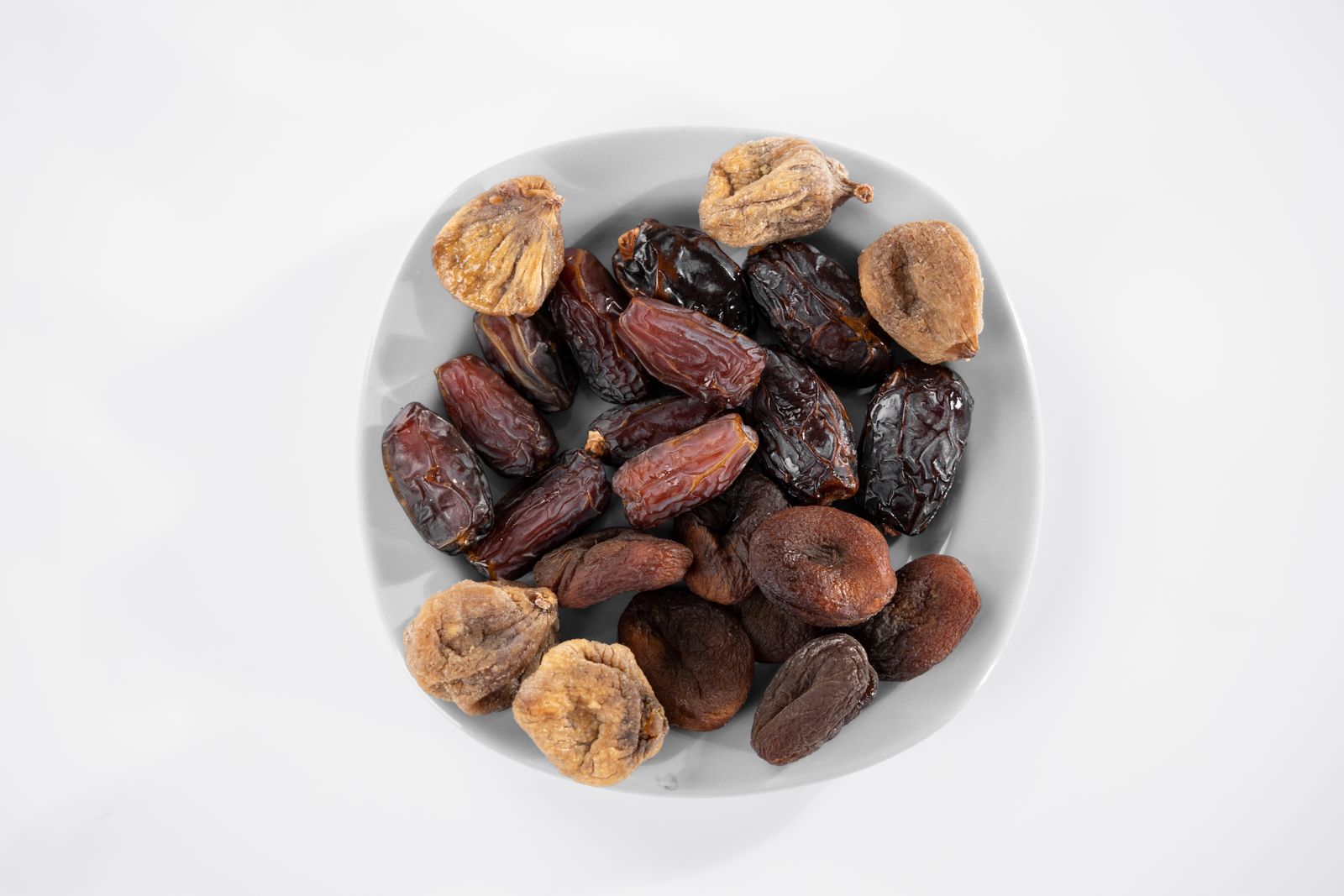
Most pantry categories do one job. Dried fruit does three, which is why it is both unusually useful and unusually easy to get wrong.
It is a staff snack, sitting on the counter next to the nuts and seeds. It is guest hospitality, served with gahwa when a client arrives. And in the run-up to Ramadan, Eid and the end of the year it becomes a gifting line, bought in different packaging entirely. Three audiences, three quality expectations, three price points — and most offices buy one product and use it for all three.
It is also the most operationally forgiving thing in the pantry. No cold chain. No two-day shelf life. It survives a four-day weekend with the air conditioning turned down, which almost nothing else in a UAE office does. That resilience is exactly why it deserves a deliberate specification rather than whatever the supplier put in the box.
Dates are a category, not a product
The single most common mistake is treating "dates" as one line item.
In the UAE, dates carry a social weight that a bag of raisins does not. Serving a visiting client the same everyday date that sits in the staff bowl is a small, visible miss — and one that a large share of your guests will notice, because they grew up with the distinctions. Getting this right costs very little; getting it wrong costs nothing measurable and yet is entirely avoidable.
The varieties you will actually be offered in the UAE:
Khalas. The default premium Emirati date — amber to light brown, caramel and slightly nutty, firm enough to hold its shape on a plate. If you buy one date for guest service, this is usually it.
Fard. Darker, softer, sweeter, widely grown in Oman and the UAE. Excellent everyday eating and generally more affordable than Khalas, which makes it a sensible staff-bowl choice.
Sukkary. Saudi, golden, notably sweet with a soft crumbly texture. Popular and distinctive; a good "second date" on a guest platter for contrast.
Medjool. Large, dark, soft and visually impressive — the one that photographs well on a boardroom platter. Usually the most expensive per kilo, and worth reserving for guest and gifting rather than the staff counter.
Ajwa. Medina-grown, dark, with particular religious significance for many. It is a gifting and hospitality date, not a snack line, and it is priced accordingly.
Lulu, Khenaizi, Barhi and others appear seasonally and regionally, and a good supplier will tell you what is genuinely current rather than what has been in a warehouse since last season.
Grade matters as much as variety. Within any variety you will find a range from small, dry, slightly split fruit up to large, glossy, uniform fruit — and the price gap between them is wide. The practical rule for an office is: buy on grade for guests, buy on variety for staff. A mid-grade Fard in the staff bowl and a high-grade Khalas or Medjool in the boardroom is a better allocation of the same budget than one middling product everywhere. The Arabic coffee and dates hospitality guide covers the serving side of this in more detail — how gahwa service is actually run, and what the plate should look like when a guest sits down.
Pitted or unpitted is a genuine decision rather than a detail. Unpitted eats better and looks more natural; pitted is far easier for a guest holding a coffee cup, and removes the awkward question of where the stone goes. For meeting-room and reception service, pitted usually wins on practicality. For a stuffed date — almond, pistachio, orange peel — pitted is the only option, and stuffed dates are a strong, low-effort upgrade for client visits and for festive and celebration platters.
What else belongs on the list
Beyond dates, the useful office lines are narrower than the catalogue suggests. The ones that reliably get eaten:
Dried apricots. Almost universally liked, visually strong on a platter, and the line where the sulphite question bites hardest — see below.
Dried figs. Good keeping quality, high fibre, and they pair well with the cheese and nut side of a meeting platter.
Raisins and sultanas. Cheap, stable, and mainly useful as a component in a trail mix rather than served alone.
Dried cranberries. Popular, and almost always sweetened — frequently with more added sugar than people assume. Worth checking against your low-sugar pantry commitments rather than assuming "dried fruit" equals "healthy".
Prunes. Divisive by reputation, genuinely useful, and best offered quietly rather than as a headline.
Dried mango, pineapple and other tropical fruit. Attractive and popular, but usually the highest added-sugar lines in the category. Treat them as a treat, not a staple.
Freeze-dried fruit. A newer, more expensive format with a crisp texture, no added sugar and excellent shelf stability. Worth a small trial line if your team skews health-conscious.
A workable office list is five to seven lines, not twenty. Dates in two grades, apricots, figs, one dark berry, one tropical, and a trail mix built from the nuts and seeds range. Beyond that you are creating slow-moving stock that hardens before it is eaten.
The sugar and sulphite questions
Two things about this category are routinely misunderstood, and both matter if your pantry has a stated health or dietary policy.
Dried fruit is sugar-dense by definition. Removing water concentrates everything, sugar included. That does not make it a bad choice — the fibre, potassium and micronutrients come along with it, and it is a materially better option than a confectionery bar — but a bowl of dates is not a low-sugar item, and any office running a genuine low-sugar or diabetic-friendly pantry policy should be honest about that in its own communications. The distinction that actually matters is added sugar: whole dates and plain apricots have none, while sweetened cranberries, mango and many "fruit snack" formats have a great deal.
Sulphur dioxide is an allergen you must declare. Most bright-orange dried apricots are treated with sulphur dioxide to preserve colour; untreated apricots are brown, which surprises people who assume the brown ones are older. Sulphites above the regulatory threshold are a declarable allergen in the UAE as they are elsewhere, and a meaningful minority of people — particularly some asthmatics — react to them. If your pantry is running the labelling discipline described in the allergen and dietary labelling guide, sulphites belong on the same card as nuts and gluten. Buying unsulphured apricots removes the issue entirely at the cost of a less photogenic colour, and for a staff bowl that is usually the right trade.
The third check is halal status and origin documentation. Plain dried fruit is rarely an issue, but coated, glazed, yoghurt-covered or gelatine-containing formats can be, and anything imported needs the paperwork to be in order at the point it enters the country rather than at the point somebody asks. The halal compliance guide sets out what a supplier should be able to produce on request.
Storage is the whole difference between good and stale
This is where UAE offices lose most of the value in the category, and it is entirely fixable.
Dried fruit fails in three specific ways here:
It hardens. Dates and apricots lose moisture to dry, conditioned air. An opened bulk pack left in an office cupboard is noticeably tougher within two weeks and unpleasant within four. The fix is airtight containers rather than the original bag with a clip on it.
It sugars. Dates develop a white crystalline bloom on the surface when sugars migrate outward — usually after temperature swings. It is entirely harmless and it looks exactly like mould to anyone who has not seen it before, which means a bowl gets thrown away for no reason. Worth telling the office manager once.
It attracts pests. Dried fruit and nuts are the classic host for stored-product insects, and a warm store cupboard is an ideal environment. Sealed containers, first-in-first-out rotation and not keeping opened stock for months are the entire defence. The habits in the food safety rules for UAE office pantries apply here directly.
The UAE-specific aggravator is the building itself. Air conditioning is set back over weekends and public holidays in most offices, and a store cupboard on an internal wall can sit warm and still for three or four days. That cycle — warm, cool, warm — is what drives both sugaring and moisture loss. Practical measures: keep dried fruit off the top shelf, keep it in sealed food-grade containers rather than opened cartons, and size the delivery so that what arrives is eaten within a few weeks rather than stored for a quarter.
Chilling premium dates is legitimate and worth doing. A refrigerated Khalas or Medjool keeps its texture for months rather than weeks, and comes back to room temperature in twenty minutes before a meeting. That is a reasonable arrangement for the guest-grade stock while the staff line lives at ambient.
Bulk versus pre-portioned
The default assumption is that bulk is cheaper. On unit price it is, and by a large margin. On delivered value it frequently is not.
Bulk works when the pantry has a real replenishment habit — sealed containers, someone refilling the bowl daily, stock rotated properly. That is a well-run pantry, and in one, bulk dried fruit is significantly cheaper per serve than anything pre-packed.
Pre-portioned works when it does not. Single-serve packs solve hardening, hygiene at a shared bowl, portion control and — importantly — the desk-drawer problem, where people take a handful for later. They also carry per-serve packaging costs that a sustainability-conscious office will notice, and which cut against the direction of the plastic reduction work most UAE offices are now doing.
The sensible split for most offices: bulk at the main pantry counter, pre-portioned for meeting rooms, hot-desking floors and multi-site drops where nobody owns the replenishment. If you run several sites from one order, the smaller sites are almost always better on pre-portioned even where the head office is better on bulk.
Sizing and cost per serve
Two numbers make this category manageable.
Consumption. A useful planning figure for a general office is that dried fruit and nuts together are a secondary snack rather than a primary one — most people take a small handful a few times a week, not daily. Start conservatively, weigh what actually goes, and adjust after a month. Offices that start high nearly always end up with hardened stock; offices that start low get a complaint within a fortnight, which is a much cheaper signal. The cost-per-employee framework is the right place to put the resulting number.
Cost per serve. Dried fruit sits mid-range: meaningfully more expensive per serve than biscuits, comparable to good nuts, considerably cheaper than fresh cut fruit once you account for waste. The comparison that matters is against fresh fruit delivery, and the honest answer is that they are complements rather than substitutes — fresh fruit is the better daily line and generates real waste, dried fruit generates almost none and covers the days when the fresh delivery has been eaten by Wednesday.
That near-zero waste is the underrated commercial argument for the category. In an office running a food waste reduction programme, dried fruit is one of the few lines where over-ordering costs money but does not create bin weight — a genuinely different risk profile from anything chilled.
The seasonal shape
Demand in this category is not flat, and the peaks are predictable a year out.
Ramadan is the largest by a distance: dates move for iftar, for gifting, and for the guest hospitality that increases through the month. Premium and gift-boxed formats sell out and lead times stretch, so this is an order to place early rather than in week one. The Ramadan gifting guide covers the corporate side.
Eid al Fitr and Eid al Adha carry the gifting peak forward, with Eid pantry planning needing the guest-grade stock in place before offices close rather than after.
UAE National Day in early December brings Emirati hospitality lines to the front — dates, gahwa, camel milk chocolate — for internal celebrations and client visits alike.
Diwali, in early November in 2026, matters in a large share of UAE offices and brings its own dried fruit and nut gifting convention, which is not the same as the Ramadan one.
Year-end client visits in November and December raise guest-grade consumption regardless of any specific festival, and are the most common cause of an office discovering it has only staff-grade dates in the cupboard on the morning of a board meeting.
Planning these into the Q4 calendar rather than reacting to them is a twenty-minute exercise that removes four separate emergencies.
What good looks like
An office with this category under control has:
- Two date lines rather than one — a staff grade and a guest grade — with the guest stock stored separately and, if premium, refrigerated.
- Five to seven dried fruit lines in total, chosen because they get eaten rather than because they were in the catalogue.
- Unsulphured apricots, or sulphites declared on the allergen card alongside nuts and gluten.
- Added-sugar lines identified and positioned as treats, not staples.
- Airtight food-grade containers, first-in-first-out rotation, and nothing opened sitting for a quarter.
- Bulk at the main counter, pre-portioned for meeting rooms and satellite sites.
- The four seasonal peaks — Ramadan, the Eids, National Day, Diwali — in the annual calendar with lead times attached.
The gifting shape of this category shows up first in the autumn rather than at Ramadan: the Diwali office celebration and gifting guide covers where dried fruit and nut boxes sit in a Diwali gifting tier and when to order them.
Chocolate-covered dates sit at the junction of this category and the sweet line, and the office chocolate and sweets guide covers where they fit in a portioned confectionery rota and how to keep them intact in the heat.
Dates are the centrepiece of most UAE corporate gifts, and the year-end corporate gift hampers guide covers building hampers around them for clients and staff.
Fresh dates have a short summer season, and the seasonal fruit calendar covers when they and other fruit are at their best for offices.
Dates are also a good natural sweetener in blended drinks, and the office smoothie guide has recipes that use them instead of honey or syrup.
Dates and dried fruit attract stored-product insects in warm rooms, and the office pantry pest prevention guide explains how to store them so they stay clean.
The short version
Dried fruit is the one pantry category that serves staff snacking, guest hospitality and corporate gifting at once, needs no cold chain, and survives a long weekend with the air conditioning set back — which is why it earns a real specification rather than whatever arrives in the box. Treat dates as a category rather than a product: Khalas and Medjool for guests, Fard or Sukkary for the staff bowl, pitted for meeting-room service, and buy on grade for guests and on variety for staff. Keep the wider list to five to seven lines that actually get eaten. Know that dried fruit is sugar-dense by definition and that the distinction that matters is added sugar — plain dates and apricots have none, sweetened cranberries and mango have a lot. Declare sulphites on your allergen card or buy unsulphured apricots and accept the browner colour. Storage is where most of the value is lost: airtight containers, off the top shelf, rotated properly, sized so stock is eaten in weeks rather than held for a quarter, with premium dates refrigerated and brought back to room temperature before a meeting. Run bulk at the main counter and pre-portioned in meeting rooms and satellite sites. And put Ramadan, the Eids, National Day and Diwali in the calendar a year ahead, because the premium and gift-boxed formats are exactly what runs short.
My Healthy Office supplies dried fruits and dates alongside nuts and seeds, office snacks, low-sugar treats and fresh cut fruit on one scheduled delivery, with guest-grade and staff-grade specified separately so the boardroom and the counter are not competing for the same box. To have your dried fruit list built, graded and sized properly for your headcount and your visitor pattern, get in touch with our team.
Frequently asked questions
Which dates should a UAE office buy for guests? Buy on grade first and variety second. A high-grade Khalas is the safe premium default — amber, caramel, firm enough to hold its shape on a plate — with Medjool as the more visually impressive and more expensive alternative for boardroom platters, and Sukkary as a good contrasting second date. Ajwa is a gifting and hospitality date rather than a snack line and is priced accordingly. For meeting-room and reception service, pitted is usually the practical choice, because a guest holding a coffee cup has nowhere to put a stone. Keep this stock separate from the staff bowl, and if it is premium, refrigerate it and bring it back to room temperature twenty minutes before the meeting.
Is dried fruit a healthy office snack? It is a good option, but it is not a low-sugar one, and it is worth being straight about that internally. Removing the water concentrates everything including the sugar, so a bowl of dates is sugar-dense by definition — while also carrying the fibre, potassium and micronutrients, which makes it a materially better choice than confectionery. The distinction that actually matters is added sugar: whole dates, plain apricots, figs and raisins have none, whereas most dried cranberries, mango and pineapple are sweetened, often more heavily than people assume. If your pantry has a stated low-sugar policy, position the sweetened tropical lines as treats rather than staples.
Why are some dried apricots orange and others brown? Colour is a preservation question, not a freshness one. Bright-orange apricots have been treated with sulphur dioxide, which preserves the colour; untreated apricots oxidise to brown, which surprises people who assume the darker fruit is older. Sulphites above the regulatory threshold are a declarable allergen and a meaningful minority of people, particularly some asthmatics, react to them — so if you buy the orange ones, sulphites belong on your allergen card next to nuts and gluten. Buying unsulphured apricots removes the issue at the cost of a less photogenic bowl, which for a staff counter is usually the right trade.
What is the white coating on dates and is it mould? It is sugar bloom, and it is harmless. When dates go through temperature swings — which happens routinely in a UAE office where the air conditioning is set back over a long weekend — natural sugars migrate to the surface and crystallise into a fine white film. It looks very like mould to anyone who has not seen it before, which is why perfectly good stock gets binned. Tell the office manager once, store the dates in airtight containers away from the warmest shelf, and it largely stops happening.
Should we buy dried fruit in bulk or in single-serve packs? Bulk is much cheaper per serve and it is the right answer wherever the pantry has a genuine replenishment habit — sealed containers, somebody refilling the bowl, stock rotated first-in-first-out. Where that habit does not exist, bulk hardens, and the saving evaporates. Pre-portioned packs solve hardening, shared-bowl hygiene, portion control and the desk-drawer problem, at the cost of per-serve packaging that cuts against most offices' plastic-reduction commitments. The usual split that works is bulk at the main pantry counter and pre-portioned in meeting rooms, on hot-desking floors and at satellite sites where nobody owns the refill.
How far ahead should we order dates for Ramadan? Earlier than feels necessary. Ramadan is the largest peak in this category by a wide margin — dates move for iftar, for corporate gifting and for the increased guest hospitality that runs through the month — and it is specifically the premium grades and gift-boxed formats that run short and whose lead times stretch. Placing the order well before the month starts, rather than in its first week, is the difference between getting the grade you specified and taking whatever is left. The same logic applies to the other three predictable peaks: the two Eids, UAE National Day in early December, and Diwali, which falls in early November in 2026.