Snack bars are the one pantry product that everybody agrees on. They are individually wrapped, they last for months, they do not need a fridge, and they go into a bag on the way to a meeting. For an office manager they are also the easiest line to order: one box, one price, no preparation.
That ease hides a lot of variation. Two bars that look alike on the shelf can differ by three times the sugar, one may be certified halal and the other not, and a chocolate coating that survives a London office will not survive a July delivery in Dubai. This guide sets out a simple buying spec for office snack bars, how to read the label, storage in UAE heat, quantities and cost.
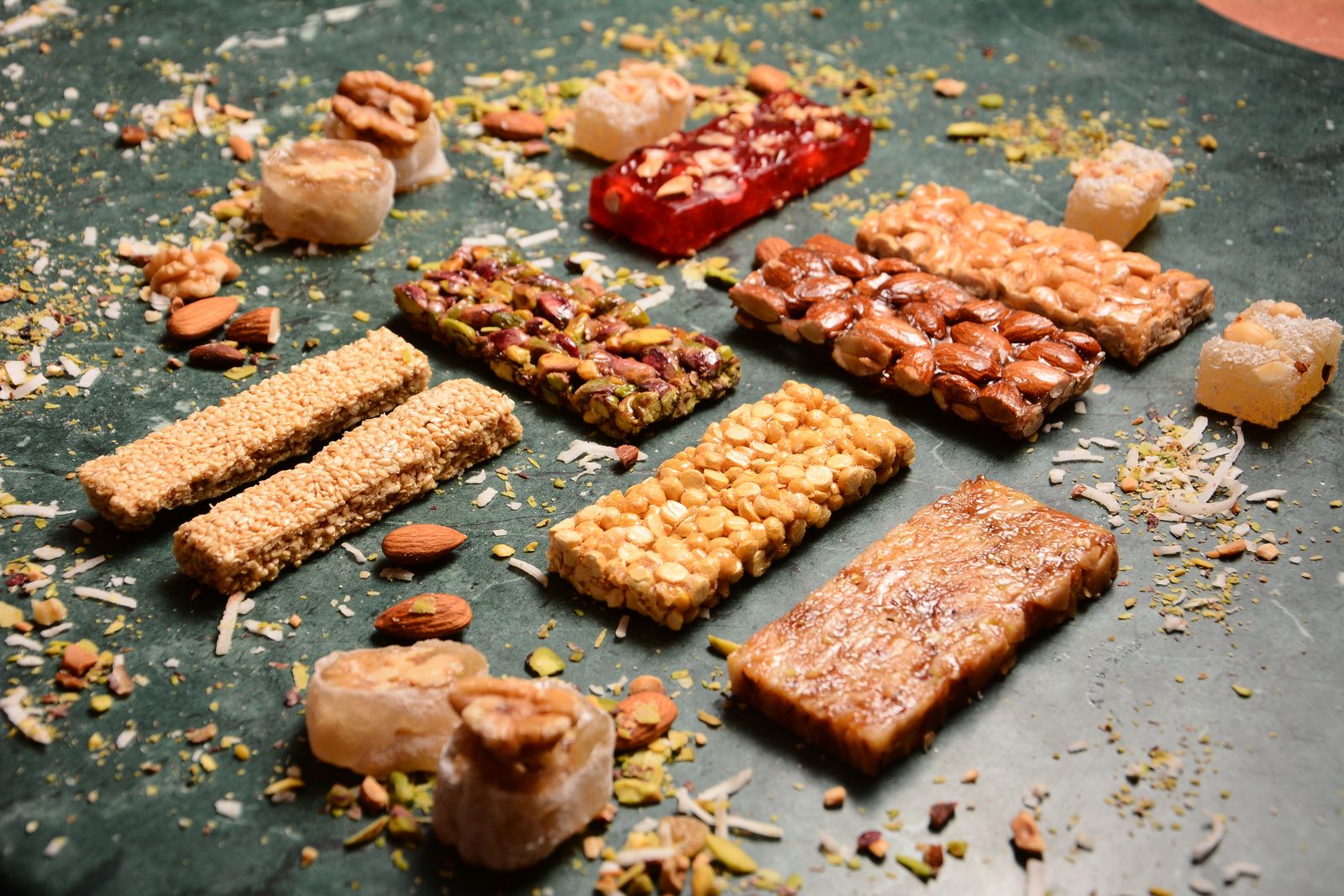
The main types of bar
| Type | What it is | Watch for |
|---|---|---|
| Granola and oat bars | Oats bound with syrup, often with fruit or chocolate | Sugar and syrup content; gluten from oats |
| Nut bars | Mostly whole nuts with a light binder | Nut allergens; calories per bar are high but filling |
| Date and fruit bars | Dates or dried fruit blended with nuts or oats | Sugar is high but comes from fruit; check for added syrup |
| Protein bars | Milk or plant protein, usually 15 to 20 g per bar | Sugar alcohols, heavy coatings, protein source |
| Puffed rice and crisp bars | Light, low-calorie, often for children | Low fibre and protein; many are mostly sugar |
| Coated bars | Any of the above with chocolate or yoghurt coating | Melting in heat; more sugar and saturated fat |
Most offices need three or four of these, not all six. A good default is a nut bar, a date or fruit bar, a lower-sugar granola bar and one protein bar, with a gluten-free option among them.
A simple buying spec
A bar does not need to be perfect, but it helps to have a line below which a product does not go on the order. Per bar, as sold:
- Size: about 30 to 45 g. Larger bars are a meal replacement, not a snack, and are often eaten whole anyway.
- Total sugar: aim for about 10 g or less per bar, and look for bars where sugar is not the first or second ingredient. Date and fruit bars will be higher because of the fruit; that is acceptable if there is no added syrup.
- Fibre: 3 g or more. Fibre, protein and fat make a bar filling; sugar alone does not.
- Protein: 4 g or more for a general bar, 15 g or more if it is sold as a protein bar.
- Saturated fat: check coated bars. Chocolate and yoghurt coatings add most of it.
- Short ingredient list, with nuts, oats, seeds or fruit first.
As a label reference, the UK front-of-pack traffic-light scheme treats more than 22.5 g of total sugar per 100 g as high, and many bars sit well above it. It is a useful quick check on per-100 g figures even though UAE labels do not use the colours. The low-sugar and diabetic-friendly pantry guide covers the approach in more detail, and the nutritionist-approved snack list puts bars in the context of the rest of the snack range.
Reading the label
The front of the pack is marketing. The back is the product.
- "Natural", "wholesome" and "energy" are not defined terms. An "energy bar" can simply mean a high-sugar bar.
- Several sugars in one list, such as glucose syrup, honey, brown rice syrup, invert sugar and dextrose, are a way to keep any single sugar lower in the ingredient order. Add them up mentally.
- "No added sugar" means no sugar was added, not that the bar is low in sugar. Date bars are the common example.
- Sugar alcohols, such as maltitol, sorbitol and erythritol, lower the sugar figure in many protein and "low sugar" bars. In larger amounts they can cause bloating and digestive discomfort for some people. One bar is usually fine; three in an afternoon may not be.
- Serving size. Some large bars list nutrition for half a bar. Compare per 100 g when in doubt.
- Arabic labelling. Pre-packaged food sold in the UAE is expected to carry Arabic labelling under the Gulf labelling standard. A bar with no Arabic label at all is a sign it did not come through a regular import channel, and a reason to ask the supplier where it came from.
Allergens
Snack bars carry more allergens per product than almost anything else in the pantry.
- Tree nuts and peanuts are in most bars, and "may contain" warnings are on almost all of the rest because they are made on shared lines. If someone in the office has a severe nut allergy, bars need a separate, clearly labelled nut-free shelf, and the allergen and dietary labelling guide explains how to manage a shared pantry around it.
- Milk is in protein bars based on whey or milk protein, and in most chocolate and yoghurt coatings.
- Soy appears as soy protein and as soy lecithin in coatings.
- Sesame is common in seed bars and in regional date and tahini bars.
- Gluten is in most granola bars. Oats are often contaminated with wheat unless they are sold as gluten-free, so a coeliac-safe option needs to be labelled gluten-free, not just "made with oats". The gluten-free pantry guide covers this.
Keep bars in their individual wrappers with the label visible. Do not unwrap them into a bowl.
Halal and dietary checks
Most bars are plant-based or dairy-based and raise no halal question, but a few ingredients do:
- Gelatine, used in some chewy bars, marshmallow pieces and some protein bars. Its source is often not stated.
- Collagen, increasingly used as a protein source in bars, which can be bovine, porcine or marine.
- Flavourings and glycerine, whose carriers and sources can be animal-derived.
The simplest rule is to order bars that carry a recognised halal certification or come from a supplier who can confirm it product by product. The halal compliance guide covers what to ask. For vegan staff, the same ingredients plus milk and honey are the ones to check; the meat alternatives range and the plant-based pantry guide cover the rest of a plant-based line.
Storage in UAE heat
This is where many offices lose stock.
- Chocolate and yoghurt coatings soften and melt in the low 30s °C. A coated bar left in a delivery van, a car or a sunny meeting room in summer will arrive or end up smeared and bloomed. The chocolate and confectionery guide explains bloom and why it happens.
- Store bars in a cool, dry cupboard, ideally below about 25 °C, away from windows, the coffee machine and the top of the fridge, where warm air collects.
- Do not refrigerate them as routine. Moving bars in and out of a fridge causes condensation on the wrapper and bloom on coated bars. If the pantry is hot, buy uncoated bars for summer instead.
- From May to October, favour uncoated bars and ask the supplier whether coated products travel chilled.
- Nut bars go rancid as they approach their date, because the oils oxidise. First in, first out, and check dates on delivery.
Most bars have a long shelf life, often several months, which makes them good buffer stock for hybrid offices where attendance swings through the week.
Bars in the rest of the snack range
Bars work best as one part of a range rather than the whole of it.
- Whole nuts and seeds give the same fullness with fewer ingredients; see the nuts and seeds range and the bulk nuts and seeds guide.
- Dates and dried fruit are the regional alternative to a date bar; see the dried fruits range and the dates and dried fruits guide.
- Lower-sugar sweet options sit in the low-sugar treats range, and the full bar and snack range is in office snacks.
- Protein-focused snacks beyond bars, such as roasted chickpeas, jerky and yoghurt, are covered in the protein snacks guide.
- Granola and oats for breakfast rather than a bar are in the breakfast cereals and oats guide.
How many to order
- Starting point: in an office where bars are available all day, roughly one bar per person every two or three working days, higher in offices with long hours or early starts.
- A 50-person office: 80 to 120 bars a week across three or four types, split so no single flavour is more than about a third.
- Track which flavours go first for two weeks and cut the slowest one. Most offices find that one type sits untouched.
- Keep a buffer of a week's supply because of the long shelf life, but not more than a month, so stock rotates.
If bars disappear in the first hour of Monday, the issue is usually placement, not quantity. A box by the door empties faster than a shelf inside a cupboard. The pantry inventory management guide covers par levels, and the vending machines versus managed pantry guide covers offices that want to control consumption.
What it costs
- Per bar: from about AED 3 for a simple granola or date bar to AED 8 to 12 for premium nut and protein bars, depending on brand and volume.
- Boxes of 12 to 24 are cheaper per bar than single units, and ordering them on the same delivery as the rest of the pantry avoids a separate supplier.
- Snack bars are standard-rated for VAT at 5% and are not excise goods, unlike sweetened drinks and energy drinks.
The cost per employee guide shows how the snack line fits the total budget. For a single invoice, bars can go on the same order as stationery and office supplies.
Which offices use the most
- Long-hours desk teams, in banks and financial services, fintech and consultancies, where a bar is the snack eaten between back-to-back meetings. Many sit around Dubai World Trade Centre and in Abu Dhabi offices on Al Reem Island.
- Tech and creative teams, in tech companies and startups and media and creative agencies, where the pantry runs through the evening and a protein bar replaces a skipped dinner.
- Labs and research sites, in pharmaceutical and life sciences at Dubai Science Park and in Masdar City, where people cannot eat at the bench and grab something on the way out.
- Client-facing small offices, such as family offices and real estate and property companies, where a premium nut bar in the meeting room is part of hospitality.
- Campuses and leisure districts, including Dubai Knowledge Park, Saadiyat Island and Yas Island, and industrial sites in Mussafah, where uncoated bars travel well to site offices.
The short version
- Stock three or four types: a nut bar, a date or fruit bar, a lower-sugar granola bar and a protein bar, with one gluten-free option.
- Per bar, aim for about 10 g of sugar or less, 3 g of fibre or more, and 30 to 45 g in size.
- Read the back of the pack, add up all the sugars, and treat sugar alcohols with moderation.
- Keep bars in labelled individual wrappers; nuts, milk, soy, sesame and gluten are the common allergens.
- Order halal-certified bars or confirm gelatine and collagen sources with the supplier.
- Store in a cool cupboard, and switch to uncoated bars from May to October.
Frequently asked questions
What makes a snack bar healthy enough for an office pantry? A practical spec is a bar of about 30 to 45 g with around 10 g of sugar or less, at least 3 g of fibre, at least 4 g of protein, and nuts, oats, seeds or fruit as the first ingredients. Date and fruit bars will be higher in sugar because of the fruit, which is acceptable if there is no added syrup.
Are protein bars a good option for the office? They can be, for people who want a more filling snack, but check the sugar alcohols, coating and protein source. Maltitol and similar sweeteners can cause bloating for some people in larger amounts, and milk-based bars contain dairy. One protein bar alongside general snack bars is usually enough.
How should snack bars be stored in a UAE office? In a cool, dry cupboard, ideally below about 25 °C, away from windows, the coffee machine and the top of the fridge. Chocolate and yoghurt coatings soften in the low 30s °C, so from May to October favour uncoated bars. Do not refrigerate them routinely, because condensation damages the wrapper and the coating.
Which allergens are common in snack bars? Tree nuts and peanuts, milk, soy, sesame and gluten from oats or wheat. Most bars also carry "may contain" warnings because they are made on shared lines. Keep bars in their individual wrappers with the label visible, and keep a separate, labelled nut-free shelf if anyone has a severe nut allergy.
Are snack bars halal? Most are, but gelatine, collagen and some flavourings or glycerine can be animal-derived. Order bars with a recognised halal certification, or ask the supplier to confirm each product.
How many snack bars does an office need? A starting point is roughly one bar per person every two or three working days. For a 50-person office that is about 80 to 120 bars a week across three or four types. Track which flavours run out first for two weeks and adjust.