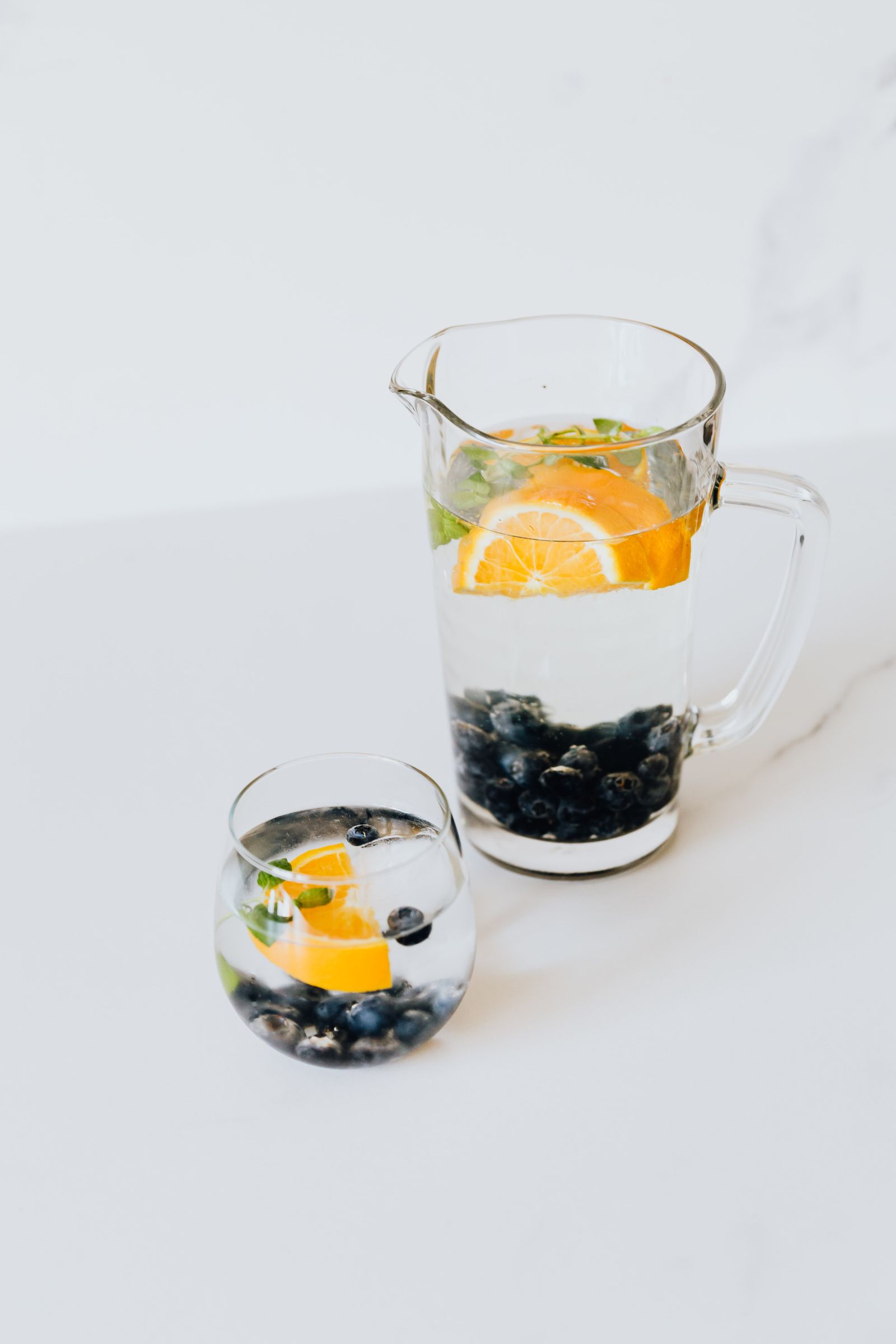
Most people in an office do not drink enough water, and in the UAE that matters more than almost anywhere. The simplest thing that changes it is not a better bottle or a reminder app. It is a glass dispenser on the pantry counter with lemon, cucumber and mint in it. People walk past, it looks cold and fresh, and they fill a glass.
It is also cheap. A batch costs a few dirhams of produce, it replaces some of the sweetened drinks in the fridge, and it has no packaging. But it is fresh cut fruit standing in water, often at room temperature, served through a tap that nobody takes apart. Done carelessly it is one of the less hygienic things in the pantry.
This guide covers what to put in it, how to prepare and wash the produce, how long it can stand, how to clean the dispenser, allergens and medicine interactions, quantities and cost.
Why infused water works in an office
Plain water is the drink people know they should have and skip. Flavour, colour and visible cold make the difference. An infused water station typically does three things:
- It increases how much people drink, especially people who find plain water dull and would otherwise reach for a soft drink or a third coffee.
- It shifts some demand away from sweetened drinks. Water with fruit in it has no added sugar and next to no calories. The zero-sugar soft drinks guide and the low-sugar and diabetic-friendly pantry guide cover the rest of that shift.
- It looks like hospitality. A dispenser at reception or in the meeting-room pantry reads as care for guests at very low cost, alongside the premium water options for the boardroom.
It does not replace plain drinking water. The legal duty to provide drinking water is met by a chilled water dispenser or bottled water, and plain water should always be available next to the infused one for people who do not want flavour. The labour law and drinking water guide covers the obligation, and the summer hydration playbook covers the months when demand peaks.
What to put in it
Keep the combinations simple. Two or three ingredients work better than five, and a fixed weekly rotation is easier for whoever prepares it.
| Combination | Notes |
|---|---|
| Lemon, cucumber and mint | The default. Refreshing, cheap, popular with almost everyone. |
| Orange and mint | Sweeter taste with no added sugar. |
| Strawberry and basil | Looks good; strawberries soften quickly, so change it sooner. |
| Watermelon and mint | Summer favourite; watermelon breaks down fast. |
| Lime and ginger | Sharper; slice the ginger thinly. |
| Apple and cinnamon stick | A cooler-month option from November to March. |
| Pomegranate seeds and orange | Regional flavour, good for events and National Day. |
A few practical points:
- Firm produce lasts longer in water. Citrus, cucumber, apple and ginger hold up for hours. Berries, watermelon and kiwi go soft and cloudy much faster.
- Slice thinly so flavour comes out in an hour or two. Thick wedges take longer and are more likely to be topped up rather than replaced.
- Herbs need a light bruise, a gentle press with a spoon, not chopping. Remove wilted leaves before they go in.
- No sugar, honey or syrup. The point is water with flavour. Once sweetener goes in, it becomes a soft drink without a label.
- Use drinking water, from the dispenser or bottled, never from a pantry tap unless the building supply is confirmed as potable.
For quantity, a rough starting point per litre of water is two or three thin slices of citrus, five or six slices of cucumber, and a small sprig of mint. Adjust to taste over the first week.
Washing the produce
This is the step most often skipped, and the one that matters most. The fruit is not cooked, the peel sits in the water for hours, and citrus peel in particular is handled a lot between the farm and the pantry.
- Wash hands first, then rinse every piece of fruit and every herb under cold running drinking water, including fruit that will be peeled. Rub firm produce with clean hands or a produce brush.
- Do not use soap or detergent on produce. Running water and friction are the recommended method.
- Use a clean board and knife kept for fruit, not the one used for raw meat or for cutting cake at the last birthday.
- Throw away anything bruised, soft or mouldy, and wash herbs leaf by leaf if they are gritty.
The same rules apply to the cut fruit on the rest of the pantry counter; the food safety rules for office pantries cover them in more detail, and the hand-wash, sanitiser and surface wipes for the prep area come from the office hygiene range.
How long it can stand
Cut fruit in water is a perishable food. The main rule is simple: keep it cold, and do not let it stand for a whole day.
- Chilled, in the fridge or with the dispenser kept cold: make it in the morning and throw it away at the end of the working day.
- At room temperature on the counter: a widely used food-safety rule of thumb for perishable food held out of refrigeration is no more than about four hours. In a UAE pantry, where the room is warm and the fruit sits near the coffee machine, treat four hours as the maximum, not the target.
- Ice helps, but only if it is clean ice, from a machine with a proper scoop routine or from a licensed supplier. The office ice machines guide covers both. Ice in the dispenser keeps the water cool longer, and it also dilutes it, so add a little more fruit.
- Never top up. Adding fresh water to fruit that has been in since 8 am does not reset the clock. Empty it, wash the dispenser, and start again.
- Label it. A small card on the dispenser saying when it was made and when it should be emptied, for example "Made 08:30, empty by 12:30", makes the rule easy to follow and easy to check.
For a busy office, two smaller batches a day, one in the morning and one after lunch, are better than one large batch that stands from 8 am to 6 pm.
Choosing and cleaning the dispenser
Most offices use a glass or clear food-grade plastic drinks dispenser with a tap, between 5 and 10 litres, or covered glass jugs in smaller pantries.
When choosing one:
- Pick a dispenser where the tap unscrews and the whole thing comes apart. The tap is where residue and biofilm build up, and a tap that cannot be removed cannot be cleaned properly.
- A wide opening makes it easy to get a hand and a brush inside.
- Glass or stainless steel for the body. Acidic citrus water should not stand in unlined metal containers.
- An infuser core, the removable cylinder that holds the fruit, keeps pips and pulp out of the tap and makes changing the batch quicker.
- A lid, always. An open bowl on a counter collects dust and insects and invites people to dip their own cup in.
Cleaning routine:
- Every batch: empty, rinse, wash the body and lid in hot soapy water, rinse well.
- Every day: take the tap off, wash and brush it, and let everything air-dry before reassembling.
- Every week: sanitise all parts, or run them through a dishwasher if the manufacturer allows it.
- Replace the tap washer when it shows staining or cracks, and replace the dispenser if the plastic becomes scratched or cloudy, because scratches hold bacteria.
Cleaning products, brushes and cloths come from the cleaning supplies range; for larger sites where cleaning is contracted, add the dispenser to the pantry cleaning schedule in the same way as the coffee machine, alongside the facility hygiene range.
Allergens, grapefruit and people who should skip it
Infused water is low-risk for most people, but not for everyone.
- Fruit allergies are real. Kiwi, strawberry, citrus and some stone fruit trigger reactions in some people. Label what is in the dispenser, every batch, the same way as the rest of the pantry. The allergen and dietary labelling guide covers the approach.
- Grapefruit interacts with some common medicines, including some cholesterol and blood-pressure drugs, and the effect can last well beyond the glass. If grapefruit is on the rotation, name it clearly on the label so people who have been told to avoid it can.
- Frequent sipping of citrus water is acidic on teeth. It is not a reason to avoid it, but plain water should always be available alongside.
- People who are immunocompromised or pregnant may prefer to avoid raw produce that has stood at room temperature. Another reason to keep it chilled and change it often.
Sparkling, bottled and other options
- Sparkling infused water: add fruit to the glass, not to a sparkling dispenser. Fruit in a carbonation system is hard to clean. The sparkling water guide covers taps and machines.
- Iced tea and cold-brew tea are the natural next step for people who want more flavour without sugar; see the iced tea and cold-brew tea guide.
- Bottled flavoured water: convenient for meetings and events, but check the label. Some "flavoured waters" are sweetened soft drinks, and sweetened ones fall under the UAE's sugar-based excise tiers; unsweetened flavoured water sits in the zero band. The excise tax guide explains the tiers.
- Coconut water and electrolyte drinks have a different job, for heat and sweat rather than taste; see the coconut water and electrolytes guide.
Plain water itself, bottled or from a dispenser, and the other cold drinks in the fridge come from the juices and waters range. Whole fruit for the dispenser can be added to the regular fruit and cut vegetables delivery, which is usually easier than buying lemons at a supermarket every other day.
How much to prepare
Start from how many people actually use the pantry, not headcount.
- Rough planning figure: in an office where the dispenser is popular, about 0.2 to 0.3 litres per person per batch in cooler months, more in summer.
- A 50-person office: one 8 to 10 litre dispenser, made in the morning and again after lunch, is a sensible start.
- Per batch of about 8 litres: roughly 3 lemons or limes, 1 to 2 cucumbers and a bunch of mint for the default combination.
- Track what is thrown away for two weeks. If half the dispenser is emptied at 12:30, make smaller batches; if it runs dry by 11, add a second dispenser rather than a bigger one.
Meetings and events are different: plan a separate dispenser, placed away from the food, so people are not reaching over the buffet to reach the tap. The breakfast meeting catering guide covers the rest of the setup.
What it costs
Infused water is one of the lowest-cost items in the pantry.
- Produce: for the default lemon, cucumber and mint, typically a few dirhams to around AED 10 per batch, depending on the fruit and the supplier.
- Dispenser: a one-off purchase. Budget for a spare tap and washer, and a second dispenser so one can be washed while the other is in use.
- Labour: 10 to 15 minutes per batch for washing, cutting, filling and cleaning. This is the real cost, and the reason it is often included in a managed pantry service rather than left to whoever is free.
Against that, it replaces some bottled and canned drinks, reduces packaging waste, and puts something visible and cared-for on the counter. The cost per employee guide shows where it sits in a typical pantry budget.
Where it makes the biggest difference
- Sites where people work in the heat, such as construction and engineering, oil, gas and energy, manufacturing and industrial and aviation and airport services, where the site office and crew rest areas need more fluid than a desk office. Offices in JAFZA and Dubai South often combine both.
- Clinics and hospitals, in healthcare, where infused water in the staff room is a small, visible wellbeing measure, and the hygiene routine above is already familiar. Dubai Healthcare City has many of these sites.
- Shared spaces and reception areas, in coworking spaces and government and public-sector offices where visitors wait, and where a dispenser is cheaper hospitality than bottled water for every guest.
- Busy tower offices across Dubai: Business Bay, JLT, Downtown Dubai and Dubai Marina, and the creative and tech teams in Dubai Media City, Dubai Internet City, Dubai Design District and Dubai Silicon Oasis, where a pantry that looks good is part of the office.
If the pantry is being redesigned, plan the dispenser a place away from the coffee machine and out of direct sun, near a sink; the office fit-out services range and the pantry layout guide cover the space.
The short version
- Put a dispenser of lemon, cucumber and mint next to the plain water, not instead of it.
- Wash every piece of produce under running water, use a clean fruit-only board, and throw away anything soft or bruised.
- Keep it cold. Chilled, empty it at the end of the day; at room temperature, no longer than about four hours.
- Never top up. Empty, wash, refill, and label the time.
- Take the tap apart every day.
- Label the fruit, and name grapefruit clearly.
Frequently asked questions
How long can infused water stay out in the office? Kept chilled, make it in the morning and empty it at the end of the working day. At room temperature, a common food-safety rule of thumb is no more than about four hours, and in a warm UAE pantry that should be treated as the maximum. Never top up old fruit with fresh water; empty, wash and start again.
What is the best fruit for an office infused water dispenser? Lemon, cucumber and mint is the most popular and cheapest combination. Firm produce such as citrus, cucumber, apple and ginger lasts longest in water. Berries, watermelon and kiwi taste good but soften and cloud the water quickly, so change them sooner.
Do we need to wash lemons if the peel is not eaten? Yes. The peel sits in the water for hours, so everything that goes into the dispenser should be rinsed under cold running drinking water and rubbed by hand or with a produce brush. Do not use soap on produce.
How do you clean an infused water dispenser? Wash the body and lid in hot soapy water after every batch, take the tap off and brush it every day, and sanitise all parts weekly. Choose a dispenser with a removable tap and a wide opening, and replace scratched or cloudy plastic.
Can infused water replace drinking water in the office? No. Plain drinking water should always be available, from a chilled dispenser or bottled water, for everyone who does not want flavour and to meet the employer's obligation. Infused water is an addition that encourages people to drink more.
Is grapefruit safe in infused water? For most people yes, but grapefruit interacts with some common medicines, including some cholesterol and blood-pressure drugs. If grapefruit is in the dispenser, name it clearly on the label so people who have been told to avoid it can do so.