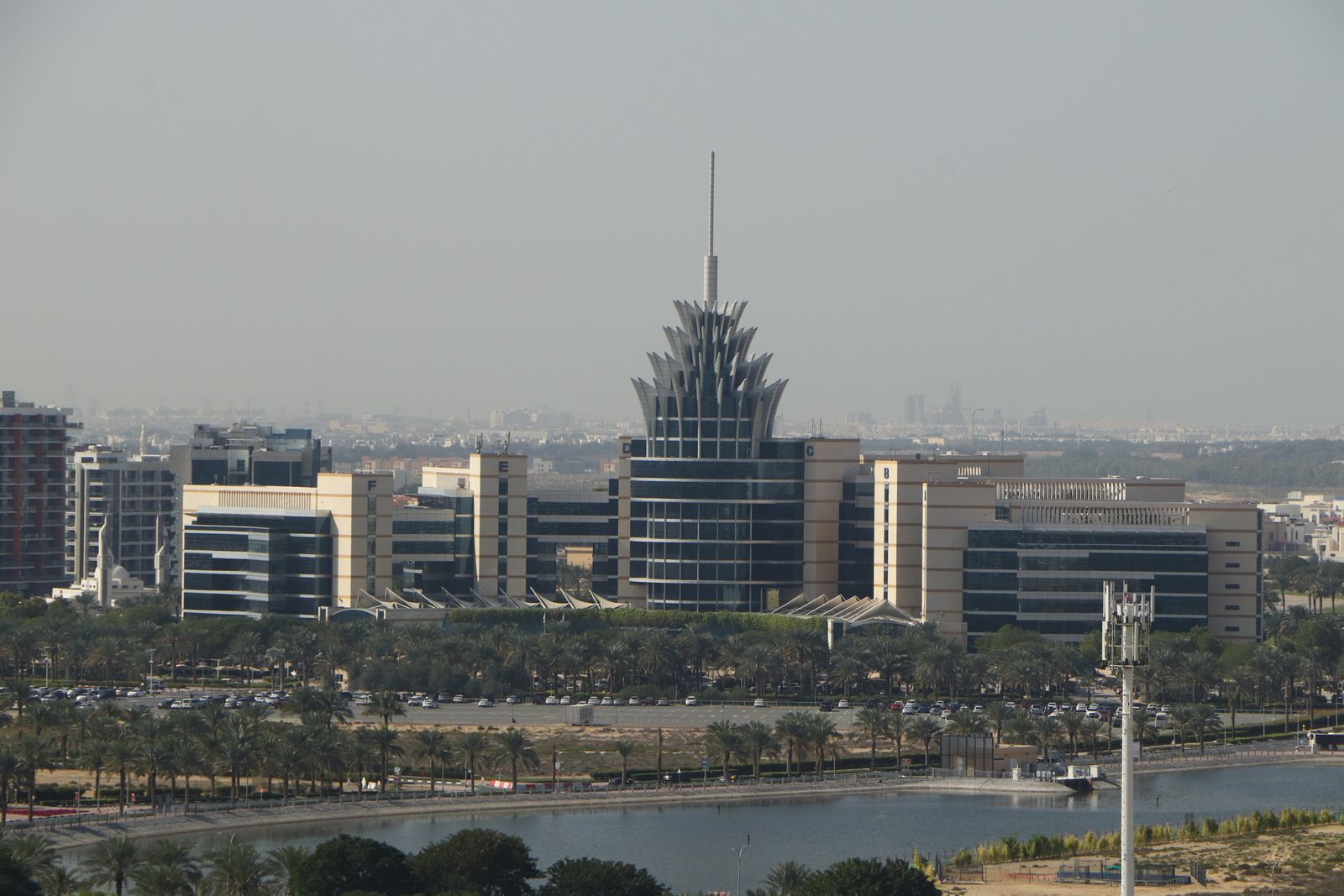
Dubai Silicon Oasis sits on the eastern edge of the city, between the Academic City campuses and the road out towards Al Ain, and it is unlike the office districts most pantry guides are written for. There is no cluster of forty-storey towers with a shared loading bay. Instead there is a technology free zone that contains a startup campus, a set of mid-rise office towers, a light-industrial area where companies build and ship physical products, a university and a cluster of schools, and a residential community wrapped around all of it. A company's pantry needs depend entirely on which of those it sits in.
This guide is for office managers, founders and operations leads in DSO. It covers the four office types, what each needs, how deliveries work in a district where everyone drives, and how to set up a recurring order that grows with the company. For the neighbouring districts, the Dubai Science Park, Healthcare City and Silicon Oasis guide covers the science and health side, and the Dubai Silicon Oasis location page covers the service area; for the city as a whole, see the Dubai office pantry services guide.
Four office markets in one free zone
The startup campus in the headquarters building. The free zone's technology entrepreneur campus is one of the largest coworking spaces in the region, and a great many UAE tech companies had their first desk there. A desk or a small private office on the campus comes with the operator's shared kitchen: usually coffee and water, sometimes tea and milk, rarely anything more. A startup of eight people on the campus is in the same position as any coworking member, and the coworking day pass and fair-use guide and the coworking space pantry guide explain what the operator provides and where the line is. What a campus startup orders for itself is the layer on top: better coffee for the team, snacks and fruit in its own office, and the hospitality for investor and client meetings that the shared kitchen does not cover. See the coworking spaces industry page for the operator side.
The towers in Dubai Digital Park and along the main spine. Mid-rise glass office buildings with a lobby, a reception and a building management team, housing software companies, fintechs, regional offices of hardware and electronics brands, and the back offices of larger groups. These run like any Dubai office tower, just shorter: the pantry is the company's own, the delivery goes through the lobby or a service entrance, and the high-rise tower delivery guide covers the access routine. The tech companies and startups industry page and the fintech industry page describe the typical tenant.
The light-industrial units. The part of DSO most office guides forget. Rows of warehouse and light-industrial units, each with a shop floor or assembly area at the back and a small office at the front, housing electronics assembly, 3D printing, drone and robotics companies, e-commerce fulfilment and distributors. The pantry here has two halves: a site-office pantry for ten people and a break area for a shop floor that may run two shifts. The manufacturing and industrial pantry guide, the factory shop floor hydration guide and the warehouse break room guide cover that model, and the manufacturing and industrial industry page covers the sector. Water is the first line of the order, and in summer it is most of the order.
The campus and school cluster. A university campus inside the free zone, a hospital, and several large schools in and around it. These have term-time rhythms, staff rooms rather than pantries, and headcounts that swing from 300 to 30 between terms. The schools and universities industry page, the school staff room pantry guide and the faculty lounge and exam season guide cover them, and the healthcare industry page covers the hospital.
Deliveries in a district where everyone drives
DSO is a car district. There is no metro station on the doorstep, the free zone is spread over a large area, and most buildings have surface parking and a loading area rather than a basement dock with a freight-lift booking system. That makes deliveries simpler in some ways and different in others:
- Towers: the delivery goes through the lobby or a service entrance; building management usually wants a named contact and a mobile number rather than a pre-booked slot. Give the supplier the building name, the floor and the reception's number.
- The startup campus: deliveries go to the campus reception, and the operator's team holds them for collection or brings them up. Label the order with the company name and the office or desk number, because the reception handles dozens of parcels a day.
- Light-industrial units: the delivery comes to the unit's front door or roller shutter. Say which; a driver at the roller shutter while the office manager waits at the front door costs twenty minutes. Give a plot and unit number, not a building name, and a what3words or map pin if the unit is new.
- Campuses and schools: deliveries go through a security gate with a visitor process. Tell the supplier the gate, the contact and whether a vehicle pass is needed, and avoid drop-off and pick-up times, which close the roads around every school in the district.
Because the district is on the eastern side of the city, consolidate: one weekly delivery sized for the week, rather than three small ones, is cheaper for everyone and easier to receive. The multi-site pantry management guide covers companies with a tower office in DSO and a unit in the industrial area on one account.
A recurring order that grows with the company
The DSO story is usually a company that starts on the campus, takes a small office in a tower, and eventually adds a unit or a floor. The pantry should follow the same path without being rebuilt each time.
- On the campus: a small weekly order of coffee, snacks and fruit for the team, plus meeting hospitality. Use the small office pantry guide for a team of 5 to 25.
- In the first own office: the pantry becomes the company's, with a machine, water, milk, breakfast items and a proper snack shelf. The scaling from 10 to 100 people guide covers the growth and the cost per employee benchmarks size it.
- With a unit or a second site: the shop-floor hydration and break-room supply joins the order, and the consumption benchmarks help predict how much water a shift really uses.
Across all three stages the categories are the same: coffee from the coffee and coffee machines range, water from the juices and waters range, fruit from the fruit and cut veggies range, snacks from the office snacks and nuts and seeds ranges, and the hygiene consumables from the facility hygiene range. Stationery can go on the same order, which matters more in a unit than a tower; the stationery and pantry in one order guide explains why.
DSO-specific details worth knowing
- Heat and distance. A location on the edge of the desert means a hotter summer and a longer drive for staff. Water and cold drinks matter more than in a Marina tower, and the coconut water and electrolyte drinks guide is relevant for anyone working in a unit.
- A young, international workforce. The campus and the tech tenants skew young and come from everywhere; plant milks, vegetarian options and labelled allergens are expected rather than requested. The plant milk guide and the vegetarian colleagues guide cover it.
- Hackathons and demo days. The campus hosts them constantly, and a company taking part needs a one-off order on top of the weekly one; the hackathon and sprint week guide covers the format.
- Fundraising. Investors visit DSO startups on the campus and in the towers; the due diligence week guide covers hosting them.
- Residential neighbours. Much of the district is apartments and villas, so a company's office may well be a converted ground-floor unit with a residential building above. Deliveries that respect the building's quiet hours keep the neighbours friendly.
Where we deliver
My Healthy Office delivers across Dubai Silicon Oasis, including the startup campus in the headquarters building, Dubai Digital Park, the light-industrial units and the campus and school cluster, and to the neighbouring districts covered on the Dubai locations page, including Dubai Science Park, Dubai Healthcare City and Dubai South. One account covers a campus desk, a tower office and a unit, with one weekly delivery and itemised invoices.
The short version
- DSO is four office markets: a coworking campus, mid-rise towers, light-industrial units and a campus and school cluster, each with a different pantry model.
- The campus provides a shared kitchen; everything above coffee and water is the startup's own order.
- Towers deliver through the lobby with a named contact; units need a plot and unit number and a door; campuses need a gate process.
- Consolidate to one weekly delivery on the eastern side of the city.
- One recurring order that grows from a campus desk to an own office to a unit, in the same categories throughout.
Frequently Asked Questions
What does a coworking desk on the Dubai Silicon Oasis startup campus include for the pantry? Usually the operator's shared kitchen with coffee and water, sometimes tea and milk. Better coffee, snacks and fruit for the team and hospitality for investor and client meetings are the startup's own order.
How do pantry deliveries work in Dubai Silicon Oasis? Towers take deliveries through the lobby or a service entrance with a named contact; the startup campus holds them at reception; light-industrial units need a plot and unit number and whether to use the front door or the roller shutter; campuses and schools need a gate process and times away from school runs.
What should a light-industrial unit in DSO stock for its staff? Two pantries: a site-office pantry for the front office with coffee, water and snacks, and a break area for the shop floor with cold water in quantity, electrolyte drinks in summer, fruit and a hygiene supply, sized for the number of shifts.
Is Dubai Silicon Oasis harder to deliver to than DIFC or Business Bay? Different rather than harder. There are no freight-lift bookings or basement docks, but the district is spread out and on the eastern edge of the city, so one consolidated weekly delivery with clear addresses works better than several small ones.
How should a startup's pantry change as it grows from a campus desk to its own office? Start with a small weekly order of coffee, snacks and fruit, add a machine, water, milk and breakfast items in the first own office, and add shop-floor hydration and break-room supply if a unit or second site follows, keeping the same account and categories throughout.
Does My Healthy Office deliver to Dubai Silicon Oasis? Yes, across the free zone including the startup campus, Dubai Digital Park, the light-industrial units and the campus and school cluster, with one weekly delivery per account and itemised invoices, and to neighbouring Dubai Science Park, Dubai Healthcare City and Dubai South.