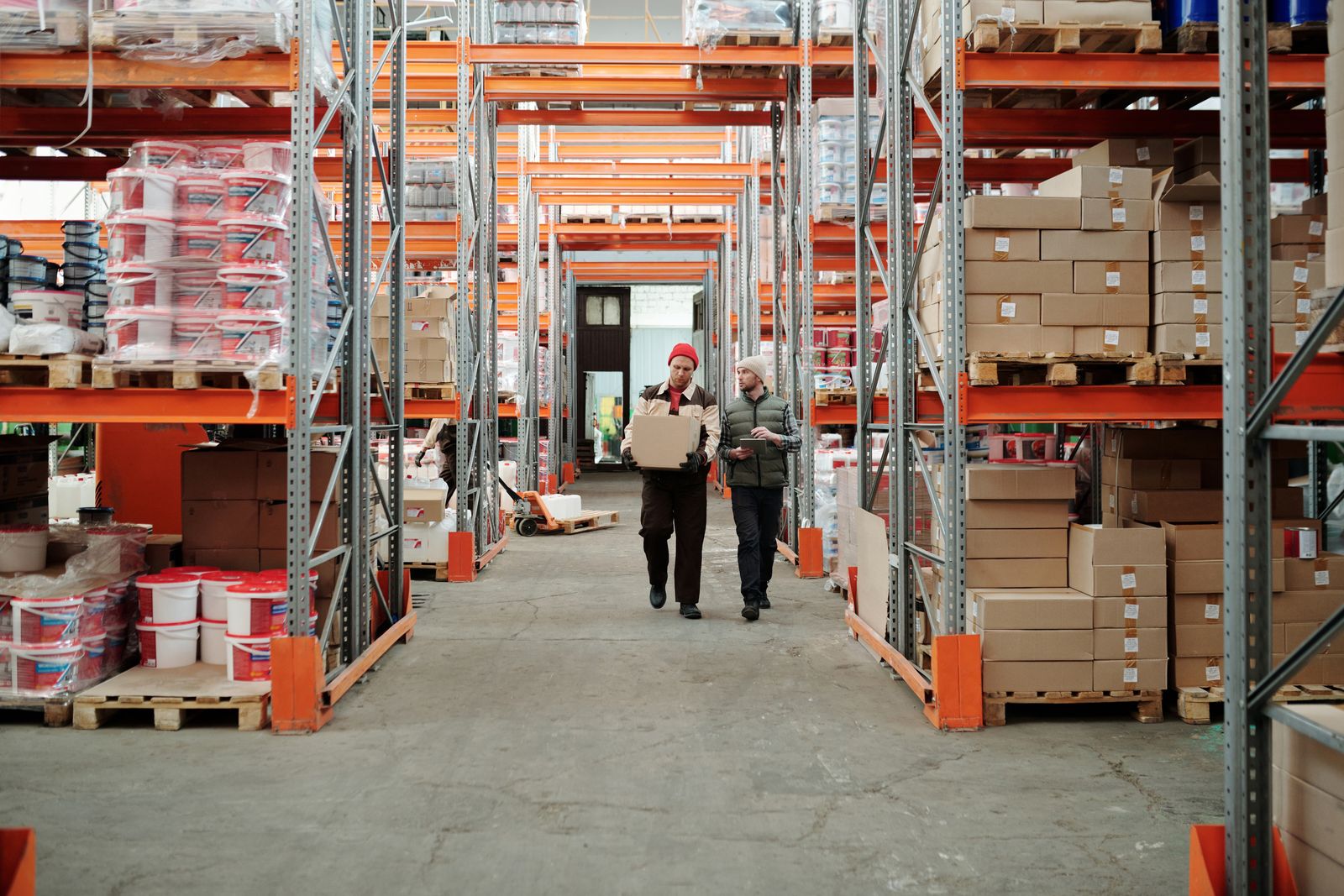
A warehouse is not an office with racking. The people who work in it stand, lift, walk ten kilometres a shift and spend part of the day in a yard where the summer temperature reaches 45°C. Their break is short and fixed. The break room is often a portacabin or a mezzanine room with one fridge, one kettle and a water cooler that ran out on Tuesday. And the building has a gate, a security log and a loading schedule that a pantry delivery has to fit into.
This guide is for warehouse managers, logistics operations leads and HSE officers who run distribution centres, 3PL warehouses, cold stores and pharmaceutical depots across the UAE's industrial zones. It covers what the break room should hold, how to run it across shifts, the hygiene side that inspectors look at, and how to get deliveries in without a phone call every week.
Who the break room serves
A distribution centre's workforce splits into groups the pantry has to serve at once:
- Pickers, packers and loaders work the floor on rota shifts, with a break of 15 to 30 minutes. They need cold water within reach of the work, not only in the break room, and food they can eat fast.
- Forklift and reach-truck drivers are seated but in the same heat, with the same short break. Caffeine and sugar peaks matter here, because the afternoon dip on a forklift is a safety issue.
- Delivery drivers and van crews are in and out, often eating in the vehicle. A grab-and-go shelf by the dispatch office serves them better than a seated room.
- The office team (inventory, customer service, planning) works office hours in an air-conditioned mezzanine and expects an office pantry.
The shift-work pantry guide covers the rota side in detail; the manufacturing and industrial guide covers the factory floor. A warehouse sits between the two.
Hydration first, and not only in the break room
UAE law requires an employer to provide drinking water at the workplace, and the midday outdoor work ban from mid-June to mid-September raises the bar for anyone working in a yard or an unconditioned dock. The UAE law and drinking water guide sets out the rules. In practice a warehouse needs:
- A water point per zone, not one cooler in the break room. Dock, picking aisles, yard and office each need their own. Plumbed point-of-use dispensers remove the bottle-swap problem where there is a water line; 5-gallon coolers do the job elsewhere, as long as someone owns the swap.
- Small bottles for the yard and the vans. 330 ml and 500 ml bottles in a chilled dispatch fridge, from the juices and waters range, so a driver takes two on the way out.
- Electrolyte sachets or drinks in summer. From May to October, a worker on the dock loses more than water. The coconut water and electrolyte guide covers what helps and what is sugar.
- Ice. A warehouse break room without an ice supply in July is a warehouse with warm water by 11 am.
Food that survives a warehouse
The break room fridge is opened sixty times a shift and the door is left ajar. Dry storage is next to a dock that pests walk through. Stock accordingly:
- Individually wrapped, shelf-stable snacks: nuts and seeds, dried fruit and dates, oat bars, crackers. Nothing in an open tub.
- Fruit that travels: bananas, apples, oranges and dates. Cut fruit and berries do not last in a break room fridge that is opened constantly.
- Instant and sachet drinks: 3-in-1 coffee, tea bags, sachets of hot chocolate and laban cartons are what floor staff reach for. A bean-to-cup machine belongs in the office pantry upstairs, not on the floor.
- A hot-water urn or boiling tap, because a kettle for 60 people on a 20-minute break does not work.
- Sealed dry storage. The pest prevention and dry storage guide matters more in a building with a loading dock than in any office.
Consumption runs higher than in an office. The consumption benchmarks give office figures; add 30 to 50 percent for water and 20 percent for snacks on a floor headcount, and review after the first month.
Running it across shifts
The usual failure is a break room that is full on the day shift and empty on nights and weekends. Three habits fix it:
- Stock by shift, not by day. A sealed box per shift, opened by the shift lead, so the night crew does not inherit the day crew's leftovers.
- One owner per shift. The shift lead or HSE officer signs for the delivery, checks the water points, and reports short items. The site office welfare guide describes the same role on a construction site.
- A weekly delivery that lands before the busiest shift, not during it. A pantry van arriving at the dock during an outbound peak will wait an hour.
Hygiene consumables are part of the order
A warehouse break room is inspected: by the client's auditors, by the free zone, by the municipality, and in a pharmaceutical or food depot by the regulator. The consumables the inspection looks at are the ones that run out: hand soap, paper towels, sanitiser, washing-up liquid, bin liners and surface spray. Putting them on the same weekly order as the water and snacks, from the facility hygiene range, means the break room never has an empty soap dispenser on inspection day. Pharmaceutical and medical device distributors in Dubai Science Park and across the pharmaceutical and life sciences sector usually also need a break-room rule that nothing from the warehouse floor comes into the eating area, and the lab break room guide covers how to write that rule.
Getting deliveries through the gate
Industrial zones have gates, and the gate is where pantry deliveries fail. Before the first order:
- Register the supplier's vehicle and driver with site security, with a standing gate pass where the zone allows it.
- Name a delivery window that avoids the inbound and outbound peaks, and a drop point (the break room or a cage by the dock, not the dock itself).
- Agree what happens when nobody is there: a signed drop at the security cabin, with photos, beats a van turned away.
The Dubai South and JAFZA guide explains the free-zone gate process in JAFZA; the Yas, Saadiyat, Masdar and Mussafah guide covers the industrial estates of Mussafah. Warehouses in Al Quoz, Dubai Investments Park, Sharjah's industrial areas and KIZAD follow the same pattern. My Healthy Office delivers to logistics and freight companies and manufacturing and industrial facilities on recurring schedules, with the water, snacks and hygiene consumables on one invoice, and the office pantry upstairs on the same account; the logistics and freight guide covers the head-office side.
The short version
- A warehouse break room serves pickers, drivers, van crews and an office team at once, on shifts and in heat.
- Hydration comes first: a water point per zone, small bottles for the yard and vans, electrolytes and ice in summer.
- Stock wrapped, shelf-stable snacks, fruit that travels, sachet drinks and a hot-water urn, in sealed storage.
- Stock by shift with one owner per shift, and deliver before the busiest shift, not during it.
- Hygiene consumables go on the same weekly order, because that is what inspections look at.
- Register the supplier at the gate, name a window and a drop point, and agree the no-one-there rule.
Frequently Asked Questions
What should a warehouse break room pantry stock? Cold water at every zone, small bottles for the yard and vans, electrolyte drinks and ice in summer, individually wrapped shelf-stable snacks, fruit that travels such as bananas, apples and dates, sachet coffee and tea with a hot-water urn, and hygiene consumables on the same order.
How much water does a warehouse team drink compared with an office? Plan 30 to 50 percent more per head than an office benchmark for floor staff, and more again in summer for anyone working the dock or the yard. Review actual consumption after the first month and adjust the recurring order.
How do we keep the night shift and weekends stocked? Stock by shift with a sealed box per shift opened by the shift lead, make one person per shift the owner of the break room, and time the weekly delivery to land before the busiest shift rather than during it.
Do pantry suppliers deliver inside JAFZA, Mussafah and Dubai South? Yes. Register the supplier's vehicle and driver with site security, name a delivery window outside the inbound and outbound peaks, agree a drop point away from the dock, and agree a signed drop at the security cabin for days when nobody is available.
Can hygiene consumables come on the same order as the pantry? Yes. Hand soap, paper towels, sanitiser, washing-up liquid, bin liners and surface spray can sit on the same weekly recurring order as water and snacks, so the break room is never short of them on an inspection day.