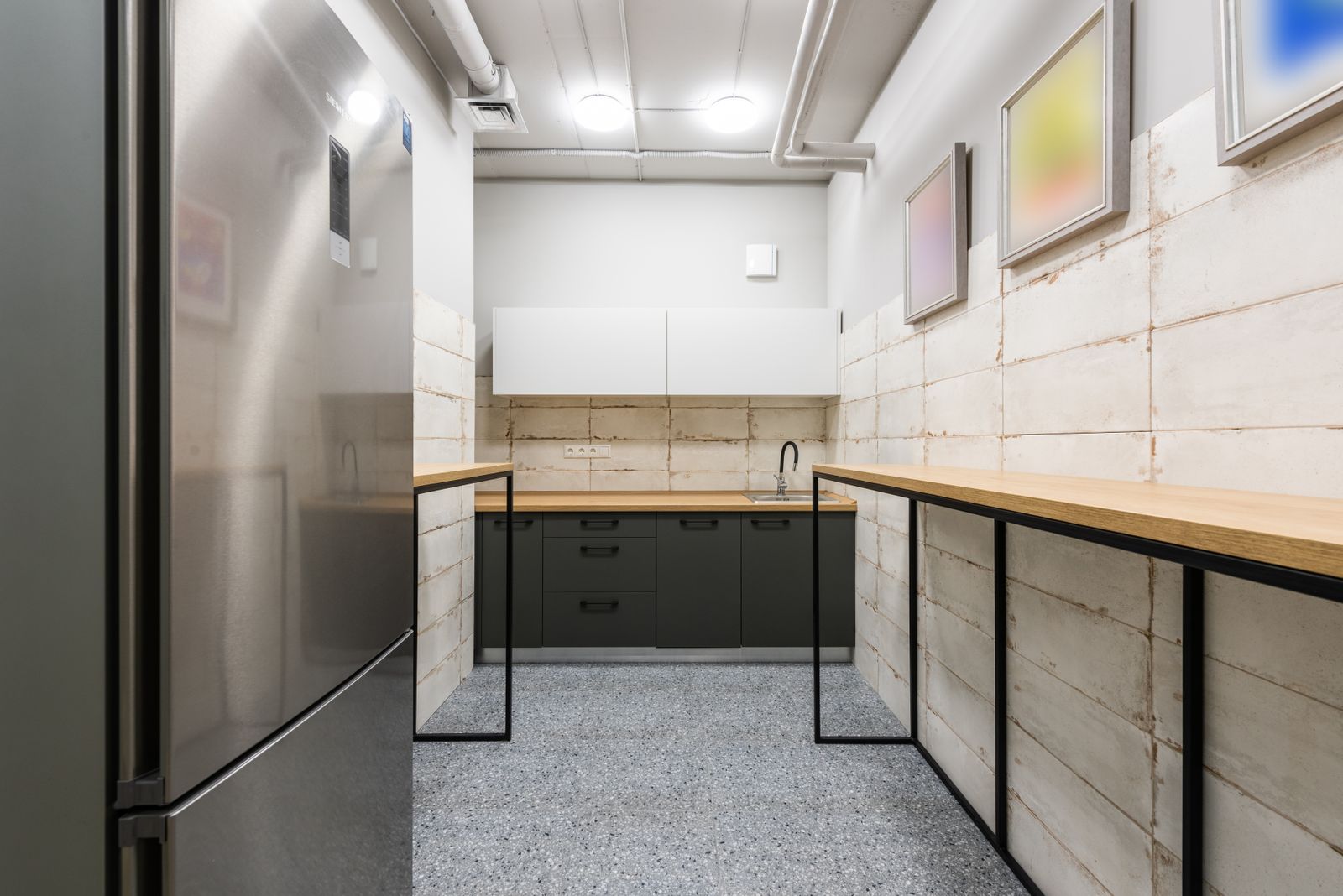
Most pantry advice is written for offices with hundreds of people, a facilities team and a dedicated kitchen. A five-person startup in a business centre, or a 20-person consultancy on one floor of a tower, has different problems. There is no facilities manager. The pantry is a counter, a small fridge and one cupboard. Orders are placed by whoever notices the coffee has run out.
That can still work well. A small pantry is cheap to run, easy to keep fresh and quick to change. It just needs a few decisions made once, instead of every week. This guide covers those decisions.
What a small office pantry actually needs
Start with the basics and add to them once you know what people use. For most teams of 5 to 25 people, a good starting list is short:
- Coffee and tea. One coffee set-up, black tea, green tea and two or three herbal teas.
- Milk. Fresh milk plus one plant-based option, usually oat.
- Water. Drinking water for everyone, all day, every day. In the UAE this is not optional.
- Fruit. A small bowl of fresh fruit, delivered weekly or twice a week.
- Snacks. A mix of office snacks, nuts and seeds and a few low-sugar treats.
- Basics. Sugar and sweeteners, cups, stirrers, napkins, dish soap, cloths and bin liners.
The top 10 pantry essentials for a Dubai startup goes into each item. The point here is to resist buying everything at once. A small office with 40 product lines will throw half of them away.
How much to order
Small offices tend to over-order snacks and under-order the things people use every day, such as milk and water. A few rules of thumb help for the first month:
| Item | Starting point per person per working day |
|---|---|
| Coffee and tea | 2 to 3 cups |
| Drinking water | 1.5 to 2 litres, more in summer |
| Milk | 50 to 100 ml, depending on how many people take milk |
| Fruit | 1 piece |
| Snacks | 1 to 2 portions |
Multiply by headcount and by the days people are actually in. If half the team works from home on Mondays and Fridays, plan for three full days, not five. The hybrid work pantry planning guide explains how to plan around attendance.
After four weeks, look at what is left on the shelf and what ran out. Adjust the order. The pantry inventory management guide shows how to set simple par levels so the order almost writes itself.
Choosing the coffee set-up
Coffee is usually the biggest single cost in a small pantry, and the biggest single source of complaints. There are three common options:
- Capsule machine. Easy, clean and consistent. Good for teams under 10. The cost per cup is higher.
- Bean-to-cup machine. Higher upfront cost or a rental, but a much lower cost per cup. Usually the better choice once a team passes 10 to 15 people.
- Filter or batch brew. Cheap and good for meetings, less popular for single cups.
The beans vs pods cost per cup guide works through the numbers, and the rent or buy guide covers the machine itself. Our coffee and coffee machines range includes options sized for small teams.
Water: dispenser or bottles
For a small team, a single bottled-water dispenser with hot and cold taps is usually the simplest option. It needs space for spare bottles and someone to change them. A plumbed point-of-use filter removes the bottle handling but needs landlord approval and a water line, which many serviced offices do not allow.
The water cooler vs bottled water comparison sets out the pros and cons. Our juices and waters range covers dispenser bottles, still and sparkling water and juices.
Space: making a small pantry work
In a small office the pantry is often a corner, not a room. A few things make it work:
- One fridge, organised. Milk and fruit on one shelf, staff lunches on another. A weekly clear-out on Thursday afternoon.
- One cupboard for dry goods. Opened packs go into sealed containers. The pest prevention and dry storage guide explains why this matters in UAE buildings.
- No stock on the floor. If there is no room, the order is too big.
- A bin with a lid, emptied every evening.
If you share a kitchen in a business centre or coworking space, check what the operator already provides. Many include water and basic coffee. The coworking spaces pantry guide covers how to top up a shared kitchen without duplicating it.
Budget: what a small pantry costs
Costs vary with what you stock, but small offices usually fall into three bands:
- Basic: coffee, tea, milk, water and a few snacks.
- Standard: the basics plus weekly fruit and a wider snack range.
- Generous: the standard range plus premium coffee, healthy fridge items and team breakfasts.
The cost per employee guide gives ranges for each band. Remember VAT: most pantry products are standard-rated at 5%, and the VAT on staff refreshments guide explains when it can be recovered.
Who looks after it
The most common failure in a small office is not the budget. It is that no one owns the pantry, so it is either overflowing or empty. Pick one person, give them 15 minutes a week and a clear job:
- Check stock on the same day each week.
- Place one order, or adjust a standing order.
- Clear the fridge on Thursday.
- Pass on requests from the team.
A standing weekly order removes most of this work. Instead of building a basket every week, the owner only changes quantities when something runs out or piles up. The managed vs in-house pantry guide explains the trade-offs as the team grows.
Ordering and paying
Small offices often buy pantry supplies on a company card from supermarkets. That works at first, but it costs time, makes VAT receipts harder to keep, and means someone carries heavy water bottles up in a lift. A B2B supplier delivers to the office, issues proper tax invoices and can offer payment terms once the account is set up. The payment terms and credit guide explains how this works.
When a small office grows
A team of 8 and a team of 25 need different set-ups. Signs it is time to change:
- The coffee machine has a queue at 9:30.
- The fridge is full by Monday lunchtime.
- Someone is spending more than an hour a week on the pantry.
- People ask for breakfast or more fruit.
At that point, move to a bean-to-cup machine, add a second fridge or a larger order cycle, and consider a managed service.
Small offices across the UAE
Small teams are everywhere: startups in Dubai Silicon Oasis and Dubai Internet City, consultancies and trading firms in Business Bay and JLT, and growing teams in Abu Dhabi at ADGM. Many tech companies and startups and coworking members start with exactly this kind of pantry. Keep cleaning supplies and fruit on the same delivery to save on separate orders.
The short version
- Start with a short list: coffee, tea, milk, water, fruit, a few snacks and basics.
- Order per person per day, adjusted for the days people are actually in.
- Review after four weeks and cut what is not used.
- Capsules suit very small teams; bean-to-cup usually wins above 10 to 15 people.
- Give one person 15 minutes a week to own the pantry.
- Use a standing weekly order and proper tax invoices.
Frequently Asked Questions
How much should a small office spend on its pantry? It depends on what you stock. A basic coffee, tea, water and snacks pantry costs much less than one with daily fruit and breakfasts. Start with a basic range, track spend for a month, and then decide what to add.
What is the best coffee machine for an office of 10 people? For under 10 people a capsule machine is simple and clean. Between 10 and 25 people a bean-to-cup machine usually costs less per cup and gives better coffee, especially if it is rented with servicing included.
How much water does a small office need? Plan for about 1.5 to 2 litres per person per working day, and more in summer. A team of 10 in the office five days a week will usually get through several large dispenser bottles a week.
Who should manage the pantry in a small office? One named person. It does not need to be the office manager, but it should be someone who is in the office most days and has 15 minutes a week to check stock and place or adjust an order.
Should a small office use a supermarket or a B2B supplier? A supermarket is fine for the first few weeks. Once orders are regular, a B2B supplier saves time, delivers heavy items such as water, gives proper VAT invoices and can set up a standing weekly order.
Do we need a pantry if our business centre provides coffee? Usually yes, but a smaller one. Check what the operator includes, then add what is missing, such as fruit, healthy snacks, plant-based milk or a better coffee option for your team.