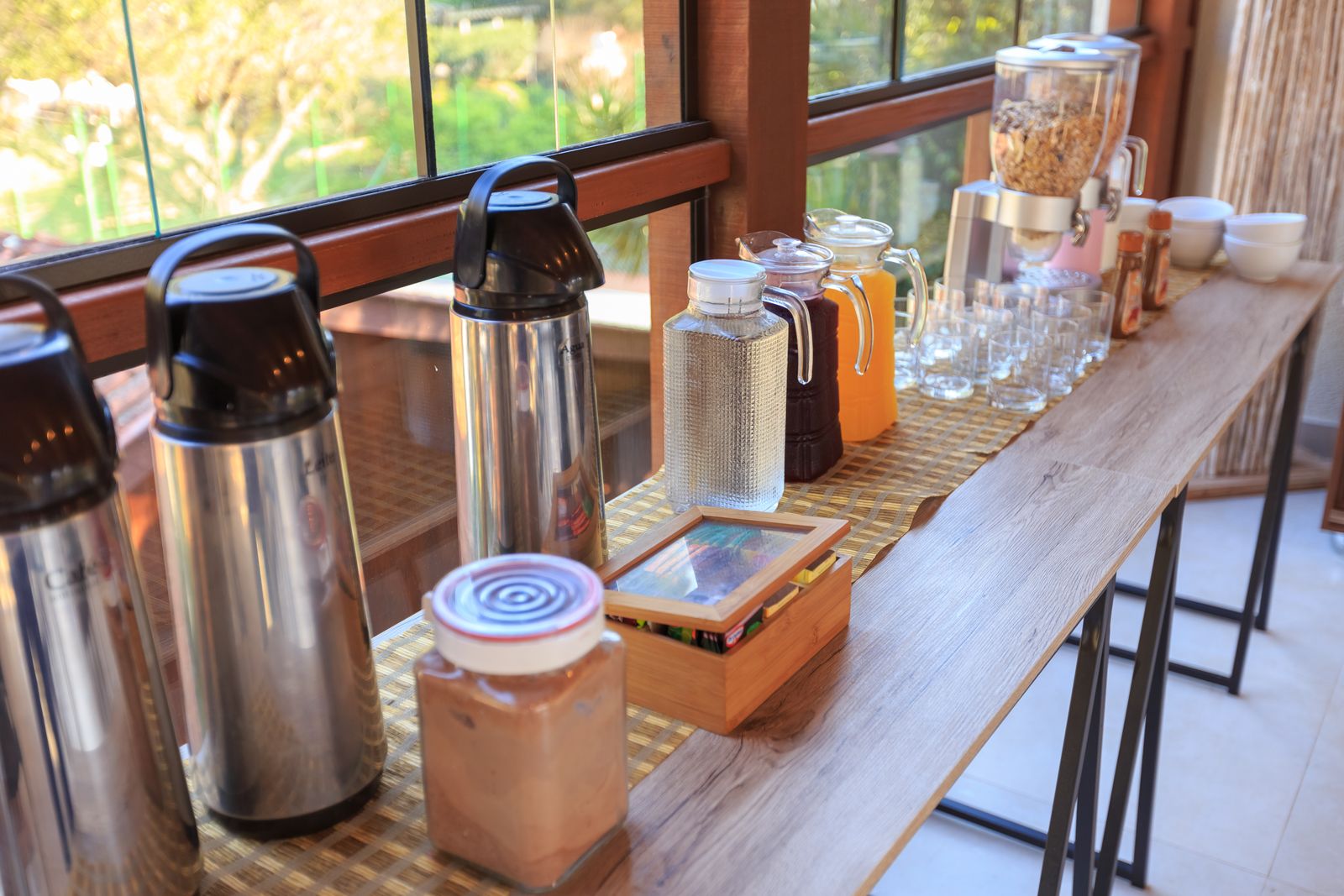
Most office pantries are planned from last year's order list. Someone looks at what was bought, adds a little for headcount growth, and the same products arrive for another twelve months. The result is familiar: coffee pods nobody likes, snacks that expire on the shelf, and the one thing people keep asking for still missing.
A short employee survey fixes that. It takes a few days to run, costs nothing, and gives you facts to bring into budget and supplier conversations. October and November are the best time to do it in the UAE, because most companies set next year's budgets before the end of the year and many pantry contracts renew in January.
This guide explains when to run a pantry survey, which questions to ask, how to handle dietary and health information properly, and how to turn the answers into changes people notice.
Why survey staff at all
You already have one source of truth: consumption data. Your orders and invoices show what was used. A survey adds the second half, which is what people think and what they would use if it were there.
The two together answer the questions that matter for planning:
- Which products are popular and should be kept or increased?
- Which products are wasted and should be cut?
- What is missing that people actually want?
- Are there dietary needs the pantry does not serve?
- Does the pantry help people stay in the office, or do they go out for coffee anyway?
The office pantry KPIs guide explains which consumption numbers to track. The survey tells you why those numbers look the way they do.
When to run it
- Before budget season. Run it in October or early November so the results are ready before 2027 budgets are finalised. The 2027 pantry budget planning guide shows how to build the budget itself.
- Before a supplier review. If your contract is up for renewal, survey first so you know what you need from the next supplier. The guide to switching pantry suppliers covers the rest of that process.
- After a big change. A move, a merger, a new hybrid policy or a big headcount change are all good moments to check whether the pantry still fits.
- Not during Ramadan. Food and drink questions are not a good fit for a month when many colleagues are fasting during the working day. Ramadan 2027 is expected to start around 8 February, so finish any early-2027 survey well before then.
Once a year is enough for a full survey. A short pulse of three or four questions each quarter keeps the picture current.
How to run it
Keep it short. Aim for five to seven minutes and no more than 15 to 20 questions. Long surveys get fewer responses and lower-quality answers.
Make it anonymous. People are more honest about what they dislike when their name is not attached. Use a standard form tool your company already approves, and turn off name and email collection.
Make it mobile-friendly. Many people will answer on their phone between meetings. Use simple multiple-choice and rating questions, with one or two open text boxes.
Segment by location and shift. Ask which office, floor or shift people work in. Needs often differ a lot between a head office and a site office, or between day and night teams.
Explain why. Tell people what the survey is for, that it is anonymous and when they will see the results. A short message from a manager or HR lead improves response rates.
Keep it open for one week. Send one reminder halfway through. For a voluntary staff survey, a response rate above roughly a third is a reasonable result.
The question bank
Pick the questions that matter for your office. You do not need all of them.
Usage
- How often do you use the office pantry? (Daily / A few times a week / Weekly / Rarely / Never)
- Which days are you usually in the office? (Tick all that apply)
- When do you use the pantry most? (Before 9 am / Morning / Lunch / Afternoon / Evening)
- Do you usually bring your own lunch, buy lunch outside, order delivery or eat from the pantry?
Coffee and tea
- How satisfied are you with the coffee? (1 to 5)
- Which hot drinks do you drink at work? (Espresso-based, filter coffee, instant, Arabic coffee, karak, black tea, green tea, herbal tea, hot chocolate, none)
- Which milk do you use? (Full-fat, low-fat, lactose-free, oat, almond, soy, none)
- How often do you buy coffee outside the office because of the office coffee? (Never / Sometimes / Often / Daily)
Snacks and food
- How satisfied are you with the snacks? (1 to 5)
- Which types of snack would you like more of? (Fresh fruit, cut vegetables, nuts and seeds, dried fruit, yoghurt and chilled snacks, protein bars, crackers and savoury snacks, low-sugar treats, breakfast items)
- Which products do you think are wasted or rarely eaten? (Open text)
- Would you use a breakfast option such as oats, granola or yoghurt if it were available? (Yes / Maybe / No)
Drinks and water
- Is it easy to get chilled water when you need it? (Yes / Mostly / No)
- Which cold drinks would you like to see? (Still water, sparkling water, juices, zero-sugar soft drinks, coconut water, iced tea, none)
Dietary needs
- Does the pantry offer enough options that suit your dietary needs? (Yes / Partly / No / Prefer not to say)
- Which kinds of options would help you? (Vegetarian, vegan, gluten-free, lactose-free, low-sugar, nut-free, halal certification visible on pack, other) Optional
Overall
- Overall, how satisfied are you with the office pantry? (1 to 5)
- How much does the pantry affect your experience of working from the office? (Not at all / A little / A lot)
- If you could change one thing about the pantry, what would it be? (Open text)
- Anything else we should know? (Open text)
Ask balanced questions. "Would you like free premium snacks?" will always get a yes and tells you nothing. "Which of these would you choose over what we have now?" is far more useful.
Dietary and health questions: handle with care
Dietary needs are important, but some answers are health information. Allergies, diabetes, coeliac disease and pregnancy are all health data, and they deserve care.
- Keep pantry surveys anonymous and ask about option types, not personal conditions. "Would gluten-free options help you?" is fine. "Do you have coeliac disease?" is not a question for a pantry survey.
- Make dietary questions optional, with a "prefer not to say" option.
- Do not collect individual allergy details through the pantry survey. If someone needs a specific arrangement, such as for a severe allergy, that should go through HR or occupational health with the employee's consent.
- Follow your company's data protection policy. In the UAE, the Personal Data Protection Law (Federal Decree-Law No. 45 of 2021) applies onshore, while companies in DIFC and ADGM follow their own free-zone data protection laws. Your legal or HR team will know which applies to you.
For more on allergens in the pantry, see the allergen and dietary labelling guide.
Reading the results
Compare answers with consumption data. If people say they want more fruit but fruit is already wasted, the problem may be timing, quality or where it is placed, not quantity.
Look at the open text. The most useful ideas often come from question 19. Group the answers into themes and count them.
Segment. Compare results by office, floor and shift. A small team with very different needs can disappear in the overall average.
Separate quick wins from bigger changes. Adding oat milk or a second tea option can happen next week. Changing the coffee machine or adding a breakfast programme is a budget decision.
Watch for small but important groups. If only a few people need gluten-free or lactose-free options, that is still worth acting on. Dietary inclusion is about the people who are otherwise left out.
Turning results into changes
The fastest way to lose trust in a survey is to run it and change nothing.
- Share a short summary within two weeks. Three or four headline findings is enough.
- Use "you said, we did". List the changes you are making and the ones you are not, with a short reason.
- Make the quick wins straight away. Visible changes in the first month show the survey mattered.
- Put the bigger changes in the 2027 plan and say when they will happen.
- Re-check in three to six months with a short pulse survey.
Results also help retention and office attendance. The office pantry and employee retention guide explains why, and the hybrid work pantry planning guide covers how to match stock to attendance days.
What different sectors tend to find
Survey results differ by industry, and knowing the usual pattern helps you read your own:
- Professional services. Teams at law firms, consultancies, family offices and banks and financial services usually rate coffee quality and client-meeting drinks highest, and ask for better breakfast on early or late days.
- Technology and fintech. At fintech companies and tech companies and startups, people often ask for more variety, plant-based milk, protein snacks and cold drinks, and they notice when the pantry is empty on busy days.
- Shared and client-facing spaces. Coworking spaces, real estate and property firms and media and creative agencies often need to survey members or clients as well as staff, because the pantry is part of what they offer.
- Public sector and education. Government and public sector entities and schools and universities often find big differences between departments or staffrooms, and a need for clear, simple products that suit large groups.
- Health and science. Healthcare clinics and hospitals and pharmaceutical and life sciences teams often work shifts, so night and weekend access matters as much as the product list.
- Operations and site teams. In logistics and freight, construction and engineering, manufacturing and industrial, oil, gas and energy and aviation and airport services, hydration, filling food and easy access at shift change usually come before premium coffee.
Surveying several offices
If your company has more than one office, run one survey with a location question rather than a separate survey for each site. That makes comparison easy.
Dubai companies often have teams in very different settings. A head office in DIFC, Downtown Dubai or Business Bay may want a premium client offer, while a team in JLT or Dubai Marina may care most about breakfast and coffee for early starts. Tech and media teams in Dubai Internet City, Dubai Media City, Dubai Design District and Dubai Silicon Oasis often ask for variety and late-day snacks. Offices in Dubai Healthcare City, Dubai Science Park and Dubai Knowledge Park may have shift or term patterns that change demand. Event-heavy teams near Dubai World Trade Centre see big swings during exhibition weeks, and warehouse-linked offices in JAFZA, Dubai South and Al Quoz usually need stronger hydration and filling food.
The multi-site office pantry management guide explains how to run one standard across several sites while leaving room for local needs. You can see all the areas we deliver to on our locations page and our Dubai delivery page.
Put it in the pantry policy
Once you have a survey, make it part of how the pantry is run. Add a line to your pantry policy that says the pantry is reviewed once a year with a staff survey, and that requests can be sent at any time through a simple form or a named contact. The office pantry policy template has a section you can adapt.
How MHO helps
We can share your consumption data by product, office and month, so you can compare survey answers with what was actually used. After a survey, we help you adjust the product list, add dietary options, change delivery days or test new products in one office before rolling them out. Changes to a standing order can be made quickly, so the quick wins from your survey can show up in the next delivery.
The short version
- Plan the pantry from facts, not from last year's order list.
- Run a short, anonymous survey in October or November, before 2027 budgets and contract renewals.
- Keep it to five to seven minutes and 15 to 20 questions, and make it mobile-friendly.
- Ask about usage, coffee and tea, snacks, water, dietary needs and overall satisfaction.
- Ask about option types, not personal health conditions, and make dietary questions optional.
- Compare answers with consumption data and segment by office, floor and shift.
- Share results within two weeks, make quick wins straight away and re-check in three to six months.
Frequently asked questions
When is the best time to run an office pantry survey? In the UAE, October or early November works well because most companies set budgets before year-end and many pantry contracts renew in January. Avoid running food and drink surveys during Ramadan.
How many questions should a pantry survey have? Around 15 to 20, taking five to seven minutes. Shorter surveys get more responses and more honest answers. A three- or four-question pulse each quarter keeps the picture current between full surveys.
Should the survey be anonymous? Yes. People are more honest about what they dislike when their name is not attached. Ask for office, floor or shift instead, so you can still compare groups.
Can we ask employees about allergies in a pantry survey? Ask about option types, such as gluten-free or nut-free, and make the question optional. Do not collect individual allergy or medical details through a pantry survey. Specific needs should go through HR or occupational health with the employee's consent and in line with UAE data protection law.
What response rate should we expect? It depends on the company, but for a voluntary staff survey a response rate above roughly a third is a reasonable result. A clear message about why the survey matters and one reminder usually help.
What should we do with the results? Share a short summary within two weeks, make quick wins straight away, put larger changes into next year's plan and say when they will happen. Then check again with a short pulse survey in three to six months.