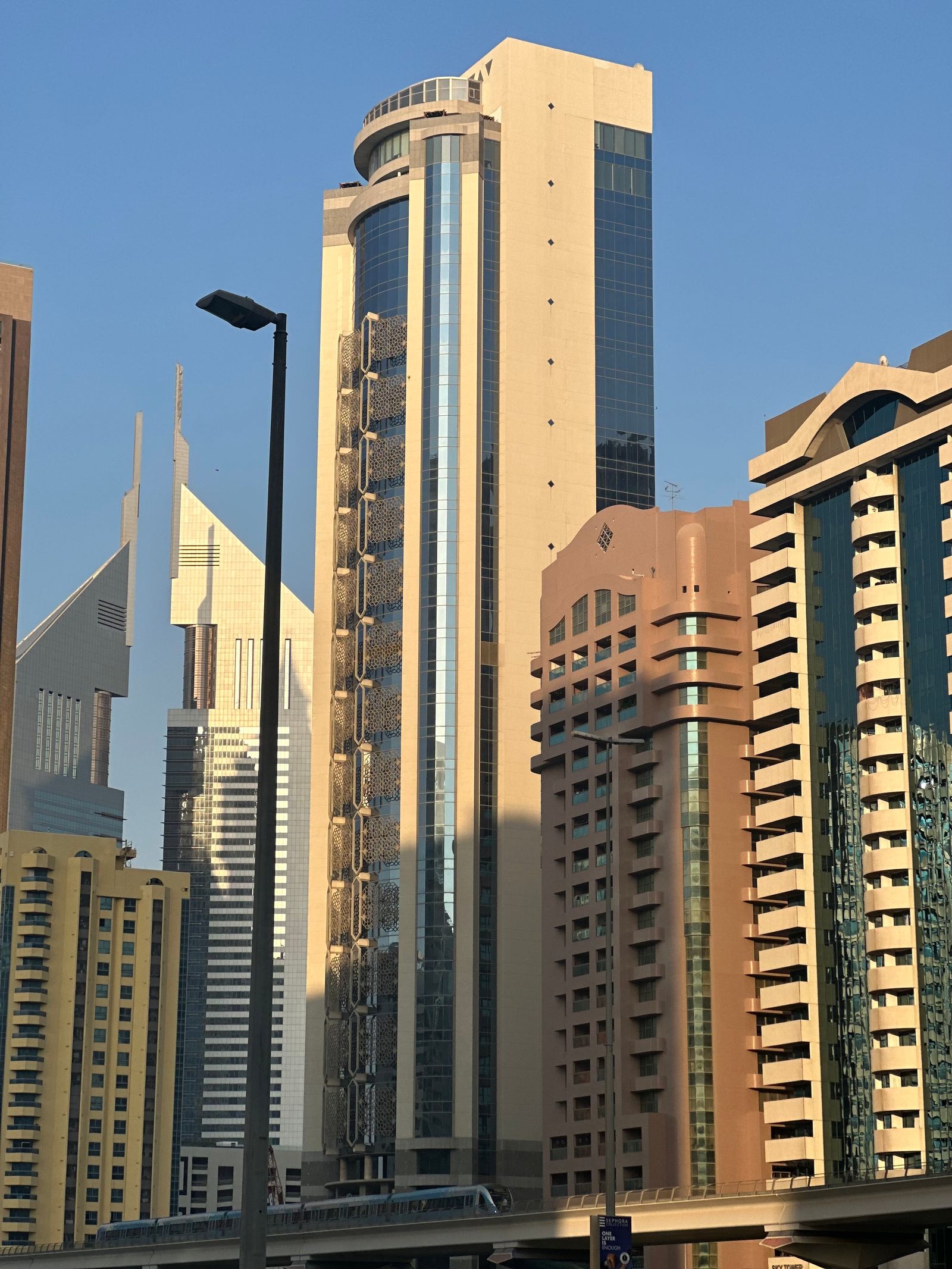
A software company in Dubai Internet City rarely has its own building. It has a floor, or half of one, in a tower shared with ten other tenants, a reception that belongs to the landlord, a loading bay with a booking sheet and a security desk that will not let a delivery driver past the lobby without a name on a list. The pantry has to work inside all of that, and it has to work for a team whose Tuesday headcount is sixty and whose Friday headcount is nineteen.
This guide is for office managers, people and culture leads, executive assistants and the first operations hire at tech companies in DIC and the buildings around it in Dubai Knowledge Park and Dubai Media City. It covers the building side of the problem, which most pantry advice ignores, and the team side, which the tech companies and startups guide covers for the sector as a whole.
What makes a DIC office different
Three things shape the pantry here:
- Multi-tenant buildings. Almost every office in the cluster sits in a building run by a landlord or a free zone estate team, with shared lobbies, shared loading bays and shared service lifts. The tenant controls the pantry; the building controls how anything reaches it.
- Headcount that moves. Hybrid schedules, offshore teams on short visits, a sales team that lives in the field and an engineering team that arrives at ten. The hybrid work pantry guide covers the ordering maths; this guide covers how to apply it on a shared floor.
- The pantry is part of the offer. Tech companies compete for engineers with other tech companies two towers away. Good coffee, a stocked fridge and real snacks are table stakes; the scaling from 10 to 100 guide explains how that offer changes as the team grows.
Getting deliveries into the building
The first pantry delivery to a new DIC office usually fails at the security desk. Fix the building side once and the rest is routine.
| Step | What to do | Who owns it |
|---|---|---|
| Delivery access list | Register the supplier's company name and the usual driver names with building security; renew when drivers change | Office manager |
| Loading bay slot | Ask the building for its delivery hours and whether a slot must be booked; most towers reserve the morning for tenants' deliveries | Office manager, then supplier |
| Service lift | Confirm which lift takes trolleys and whether a pass or an escort is needed | Building management |
| Drop point | Name one place inside the office where the delivery goes, with a person to sign | Office manager |
| After-hours | Agree what happens when nobody is in: a locked store, a reception hold or a redelivery | Both |
Write it down and give it to the supplier once. A pantry supplier who delivers to several tenants in the same tower already knows the loading bay and the security team; ask for that when choosing one. The Dubai free zones delivery guide covers the pass and gate rules that apply across TECOM estates.
Shared floors and shared kitchens
Half-floor and quarter-floor tenancies often share a kitchen with the neighbouring tenant, or sit in a business centre where the operator provides the kitchen. Decide which of three situations you are in:
- Your own kitchen, your own door. Standard pantry rules apply. Stock it as the consumption benchmarks suggest and adjust after a month.
- A kitchen shared with another tenant. Label your shelves and your fridge zone, keep your coffee machine on your side of the counter, and agree a cleaning rota with the other tenant in writing. Most friction comes from milk and mugs; a labelled milk shelf and your own branded mugs solve most of it.
- A business centre kitchen. The operator usually provides water, basic coffee and cleaning. Add only what your team wants and the operator does not supply: better coffee, a snack shelf, fruit. The coworking operator's guide explains the economics from the operator's side, which helps when negotiating what is included.
In every case, keep one locked cupboard for the stock you have paid for. A shared floor with an open snack shelf feeds the whole building.
Stocking for a tech team
The range that works in DIC is close to what works for any tech team, with two local twists: the coffee standard is high because the competition for talent is next door, and the fridge matters because engineers eat at their desks.
- Coffee. A bean-to-cup machine from 25 people, a second group or a second machine at 60; see the espresso machines guide and the rent or buy comparison. Oat milk alongside dairy from day one. The coffee and coffee machines range covers beans, machines and servicing.
- Water. A plumbed point-of-use dispenser beats bottles on a floor with no storage; the water filtration guide explains what to ask the building about plumbing.
- Snacks. Nuts and seeds, protein and granola bars, fruit, and a low-sugar treats shelf. The office snack bars guide covers the bar formats people actually finish.
- Fridge. Yogurt, hummus, cheese portions and cut fruit, ordered for the days people are in, not the headcount on paper. The chilled snacks guide covers the fridge routine.
- Energy drinks. Keep them, within reason, for the release-night crowd; the energy drinks guide explains the sugar-tax effect on price.
Hackathons, releases and visiting teams
A DIC office has weeks that look nothing like its normal weeks: a product release, a hackathon, a visiting engineering team from the Bangalore or Berlin office, a customer event in the lobby. Plan them as separate orders charged to the project or the visit, not as a bigger standing order. The hackathon and sprint week catering guide covers the food plan for a 48-hour build, and the frequent business travellers guide covers the visiting-colleague week.
Book the extra delivery with the building as well as the supplier. A loading bay that takes one trolley at 08:00 on a normal Tuesday does not automatically take three on a Wednesday.
Budget per head when the head count moves
Tech companies budget the pantry per head and then watch the headcount move 30% in a quarter. Two rules keep it sane:
- Budget on attendance, not on payroll. Count badge-ins for a month and use the average daily attendance as the headcount. The cost per employee benchmarks give the per-head range for a well-stocked tech office; most DIC teams sit in the middle to upper part of it because of the coffee standard.
- Review the standing order monthly. A managed pantry supplier adjusts the order to consumption; if you run it yourself, the inventory management guide covers par levels. Growing from 40 to 80 people should change the order within a week, not after the coffee has run out for a month.
The fintech pantry guide covers the compliance and due-diligence layer that regulated tech companies add on top.
The cluster around DIC
The pantry logistics are similar across the TECOM estates: Dubai Knowledge Park for training providers and universities, Dubai Media City for agencies and broadcasters, and the DMCC towers of JLT across the road. One supplier and one delivery round for a company with teams in two of them saves a loading-bay booking a week. The Dubai Marina, JLT and Media City guide covers the district, and the Al Quoz, d3 and Knowledge Park guide covers the education cluster.
My Healthy Office supplies tech companies and startups across Dubai Internet City, Knowledge Park and Media City, with the building access handled once, the standing order adjusted to attendance, and one invoice for coffee, water, snacks and office hygiene supplies.
The short version
- Register the supplier with building security and agree the loading bay, the lift and the drop point before the first order.
- Know which of the three kitchen situations you are in and lock up the stock you paid for.
- Set the coffee standard early; it is the thing engineers compare between towers.
- Treat release weeks, hackathons and visiting teams as separate orders, and book the building for them too.
- Budget on average attendance and review the standing order every month.
Frequently Asked Questions
How do pantry deliveries get into a multi-tenant tower in Dubai Internet City? The supplier's company and driver names go on the building's delivery access list, deliveries use the loading bay in the building's tenant delivery hours and the service lift, and one named person inside the office signs for them. Set this up once with building security and the supplier, and renew it when drivers change.
What should a tech company in DIC stock in its pantry? A bean-to-cup coffee machine with dairy and oat milk, a plumbed water dispenser, nuts, bars, fruit and a low-sugar shelf, a fridge with yogurt, hummus and cheese ordered for attendance, and a modest supply of energy drinks for release nights.
We share a kitchen with another tenant. How do we keep our stock separate? Label your shelves and your fridge zone, keep your own machine and mugs, agree a cleaning rota in writing, and keep the stock you paid for in a locked cupboard with the shelf restocked from it.
How should we budget when the headcount changes every quarter? Budget per head on average daily attendance from badge data rather than on payroll headcount, and review the standing order with the supplier every month so it moves with the team.
Does My Healthy Office deliver to Dubai Internet City and Knowledge Park? Yes. We deliver across Dubai Internet City, Dubai Knowledge Park, Dubai Media City and JLT, handle the building access and loading bay arrangements with your facilities contact, and adjust the order to your attendance.