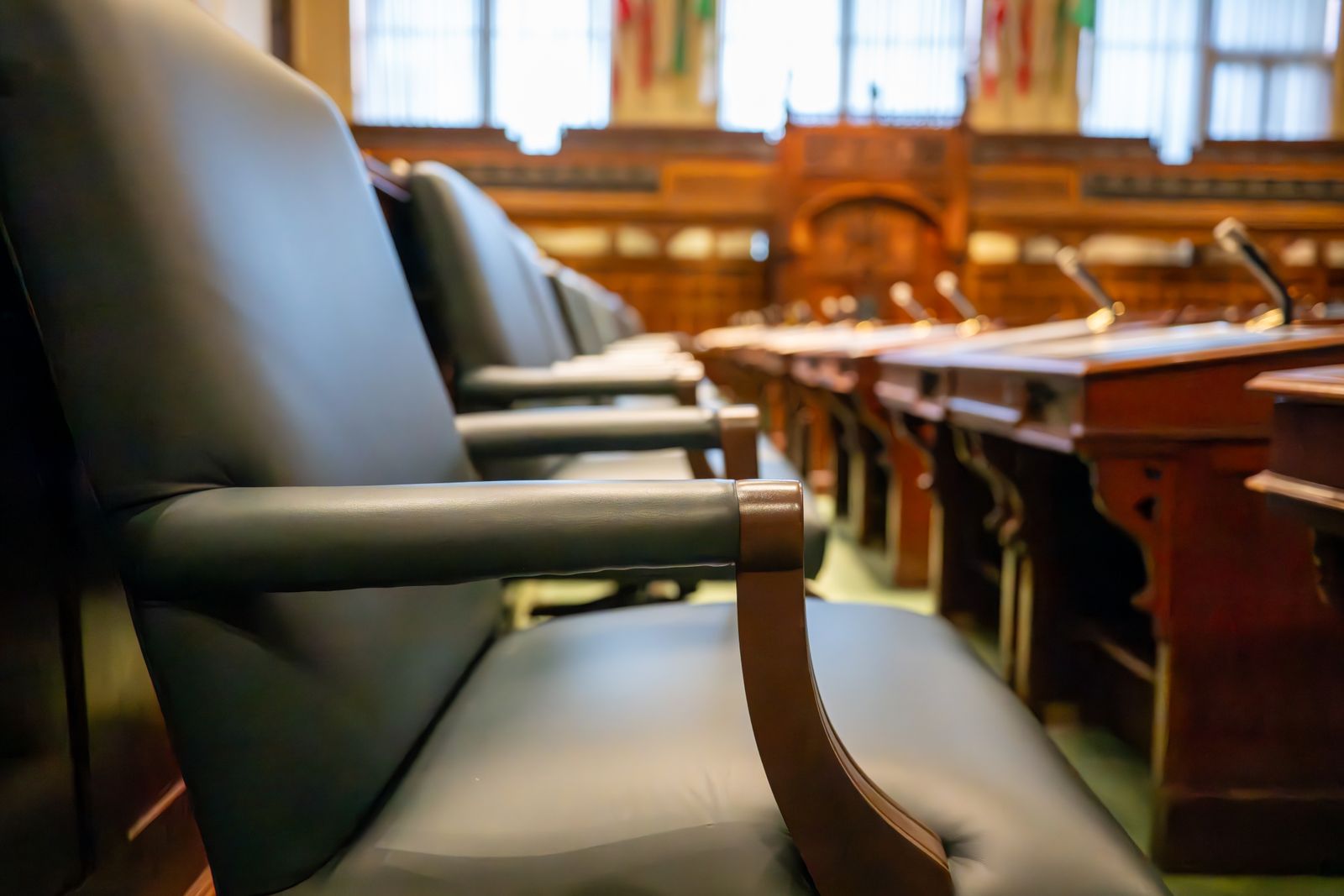
A deal closing lasts one night. An arbitration hearing lasts a week, sometimes two, and it brings into the building the one audience a law firm cannot afford to look after badly: the tribunal that will decide the client's case, opposing counsel who will notice everything, and witnesses whose nerves are already frayed before the water runs out. The hearing itself is the partners' job. The rooms, the breaks and the trays are the office manager's, and they are judged every ninety minutes for five days.
This guide is for office managers, practice managers, hearing coordinators and paralegals at law firms and in-house legal teams across the UAE. It applies whether the hearing sits in the firm's own offices, in a hearing centre in DIFC or at ADGM, or in a hotel suite around Downtown Dubai and the Dubai World Trade Centre. The late-night side of litigation is covered in the closing nights and trial prep guide; the firm's everyday standard is in the law firms and professional services pantry guide. This guide covers the hearing week itself.
Who is in the building
A hearing is a small conference that nobody enjoys. Count the people before you count the croissants.
- The tribunal. One or three arbitrators, often with a tribunal secretary. They are the guests of honour and they are neutral, so what they are served has to be identical whichever party is hosting.
- Two counsel teams. Partners, associates, paralegals, and usually the clients' in-house lawyers and business representatives. Ten to twenty a side on a large commercial case.
- Witnesses and experts. Fact witnesses appear for a few hours and wait, sometimes for a day, before they are called. Expert witnesses attend for their own evidence and often for the whole hearing.
- The support bench. Transcribers or court reporters, interpreters, e-bundle and IT support, and the hearing centre's own staff.
Twenty people is a small hearing. Fifty is a large one. Ask the hearing coordinator for the attendance list by room, by day, and plan from that, not from the number of chairs.
One hearing, four kinds of room
The hospitality is not one spread in a corridor. Each room has a different job and a different standard.
The hearing room. Water and little else on the tables: still and sparkling in sealed bottles or carafes, glasses, mints and tissues. Food in the hearing room ends up in the transcript as noise and on the bundle as crumbs. Coffee and tea stay on a side table or outside the door, refreshed at every break, never during evidence.
The tribunal retiring room. A private room where the arbitrators take breaks and confer. It needs the best coffee in the building, good tea, fruit, biscuits and water, laid out before they arrive and refreshed while they are sitting, never while they are in it. The executive floor pantry guide describes the standard.
The breakout rooms. One per party, locked, private. This is where counsel eat, work through the lunch break, and prepare the next witness. Breakfast pastries and fruit in the morning, a real lunch that can be eaten over papers, snacks for the afternoon slump, and coffee all day. Each party's room is serviced separately and nothing moves from one to the other.
The witness room. A quiet room where witnesses wait. Water, tea and coffee, fruit, something small and plain. Nothing elaborate: a nervous witness is not going to eat a buffet, and the room should not feel like a party is going on next door.
The rhythm of a sitting day
Hearing days follow a procedural timetable that the tribunal sets and keeps to the minute. The service follows it.
- 08:00 to 08:45. Counsel teams arrive. Breakfast is in the breakout rooms, not in the corridor, and coffee is already brewed. The corporate breakfast catering guide covers portioning for a room that eats standing up.
- 09:00 or 09:30. The tribunal sits. From now on nothing is delivered to any room while the hearing is in session.
- Mid-morning, about 15 minutes. Coffee, tea and water refreshed in every room at once. This is the hardest moment of the day because every room empties into the corridor together; two people are needed, not one.
- Lunch, about 60 minutes. Counsel eat in their rooms, usually while working. The tribunal eats in theirs. Witnesses who have not yet given evidence eat in the witness room and must not meet the other side's counsel in the queue. Deliver lunch to each room in the last ten minutes before the break starts, so it is on the table when the door opens.
- Mid-afternoon, about 15 minutes. The same refresh, plus something sweet and something savoury: the afternoon is when concentration goes.
- 17:00 to 17:30. The tribunal rises. Counsel stay. Witness preparation and the next day's cross-examination run into the evening, which is the territory of the closing nights guide: dinner ordered before the panic, caffeine that does not wreck the next morning.
Clear every room at the end of the day and reset it for the morning, so nobody is laying out pastries at 07:45 while the partner is rehearsing an opening.
Neutrality and confidentiality
Two rules sit above everything else in this week.
The tribunal is served equally. If the firm is hosting, the arbitrators' room is not an extension of the host's breakout room. Same coffee, same water, same fruit as the other side would provide, and no branded gift bags on the tribunal's table.
The parties do not mix. Hospitality staff knock, wait, and enter only when invited. They do not read, move or clear papers. The same trolley does not serve both breakout rooms in one trip, and leftover food does not travel from one party's room to the other's. A tray carried through the wrong door with the wrong papers under it is the kind of incident that ends up in correspondence.
If the hearing is at a hearing centre rather than in the firm's own offices, the centre usually serves the hearing room and the tribunal, and each party arranges its own breakout room. Confirm the split in writing before the week starts.
What to serve
Hearing food has three constraints: it is eaten over documents, it is eaten quickly, and it must not be heard.
- Water in quantity: a litre per person per sitting day in the hearing room alone, more in summer. The boardroom water guide covers still, sparkling and the glassware.
- Coffee by the litre, not by the cup. A hearing of 40 people drinks 12 to 15 litres across a day. The batch brew guide covers urns and flasks; a bean-to-cup machine in each breakout room covers the espresso drinkers. See the coffee range.
- Quiet food. Sandwiches and wraps, salads in lidded bowls, soft fruit, dates, labneh and dips. No crisps, no crusty baguettes, no nuts in the hearing room. Dried fruit and low-sugar treats hold up through an afternoon; cut fruit from the fruit range needs to arrive on the day.
- Labelled. Both parties send dietary requirements through the hearing coordinator in the logistics email before the week starts. Label at the dish, in every room, following the allergen labelling guide. Everything is halal by default.
- Something for the 16:00 slump. A small sweet tray and herbal teas for the people who have had enough coffee by mid-afternoon; the decaf guide has the options.
Costs and the matter
A hearing week's hospitality is a disbursement, and the finance team will ask for it by day and by room. Keep three lines: the tribunal and hearing room, the firm's own breakout room, and the witness room. Each day's delivery note should name the hearing reference so it can be matched to the matter. Whether and how it is recovered from the client is a billing decision the partner makes, but it is only possible if the cost is recorded cleanly in the first place; the payment terms and credit guide covers monthly invoicing against a cost code.
Where hearings sit
Most UAE commercial arbitration sits in two places: DIFC, home of the Dubai International Arbitration Centre and the DIFC Courts, and ADGM on Al Maryah Island, home of the ADGM Arbitration Centre. Both are controlled buildings where deliveries are escorted and the loading bay has its own rules; the DIFC versus ADGM procurement guide covers the differences, and the high-rise delivery guide covers getting a week's hospitality up a freight lift. Hearings that need more room move to hotel suites around Downtown Dubai, Business Bay and the Dubai World Trade Centre, where the hotel serves the hearing room and the firm still runs its own breakout room. Firms hosting hearings at their own offices in the Dubai Marina and JLT towers or in Abu Dhabi face the same week with their own pantry; the consultancies acting as experts and the banks and financial firms appearing as parties have the same breakout room problem from the other side of the corridor. Across the industries we serve, a hearing week is the one occasion the pantry is run to a court timetable.
The short version
- Plan from the attendance list by room and by day, not from the number of chairs.
- Four kinds of room, four standards: hearing room (water only), tribunal room (the best in the building), breakout rooms (private, separate, a real lunch), witness room (quiet and plain).
- Service follows the sitting timetable: nothing enters a room while the tribunal sits; everything is refreshed at the breaks, with two people on the mid-morning rush.
- The tribunal is served equally; the parties never share a trolley, a tray or a leftover.
- Quiet, labelled, halal food; coffee by the litre; a litre of water per person per day.
- Record the cost by room and by day against the hearing reference.
- Place one order for the week, delivered daily, confirmed with the hearing centre's loading bay before day one.
Frequently Asked Questions
What should be served in an arbitration hearing room? Water, still and sparkling, with glasses, mints and tissues. Coffee and tea stay on a side table or outside the door and are refreshed only at breaks. Food in the hearing room is noise on the transcript and crumbs on the bundle, so it stays in the breakout rooms.
How much coffee and water does a hearing week need? Plan a litre of water per person per sitting day in the hearing room alone, and 12 to 15 litres of brewed coffee a day for a hearing of about 40 people, plus espresso machines in the breakout rooms. Summer hearings and long cross-examination days run higher.
Who provides hospitality when the hearing is at a hearing centre? Usually the centre serves the hearing room and the tribunal, and each party arranges its own breakout room. Confirm the split in writing before the week starts, and arrange delivery through the centre's loading bay rather than the front desk.
How do we keep the two parties' hospitality separate? Service each breakout room separately, knock and wait before entering, never touch papers, never carry food from one party's room to the other, and keep the tribunal's room identical to what either party would provide. One trolley per side, one person per side at the busy breaks.
Can hearing hospitality be charged to the client matter? That is the partner's billing decision, but it is only possible if the cost is recorded by room and by day against the hearing reference. Ask the supplier for daily delivery notes carrying that reference and a monthly invoice against the matter's cost code.