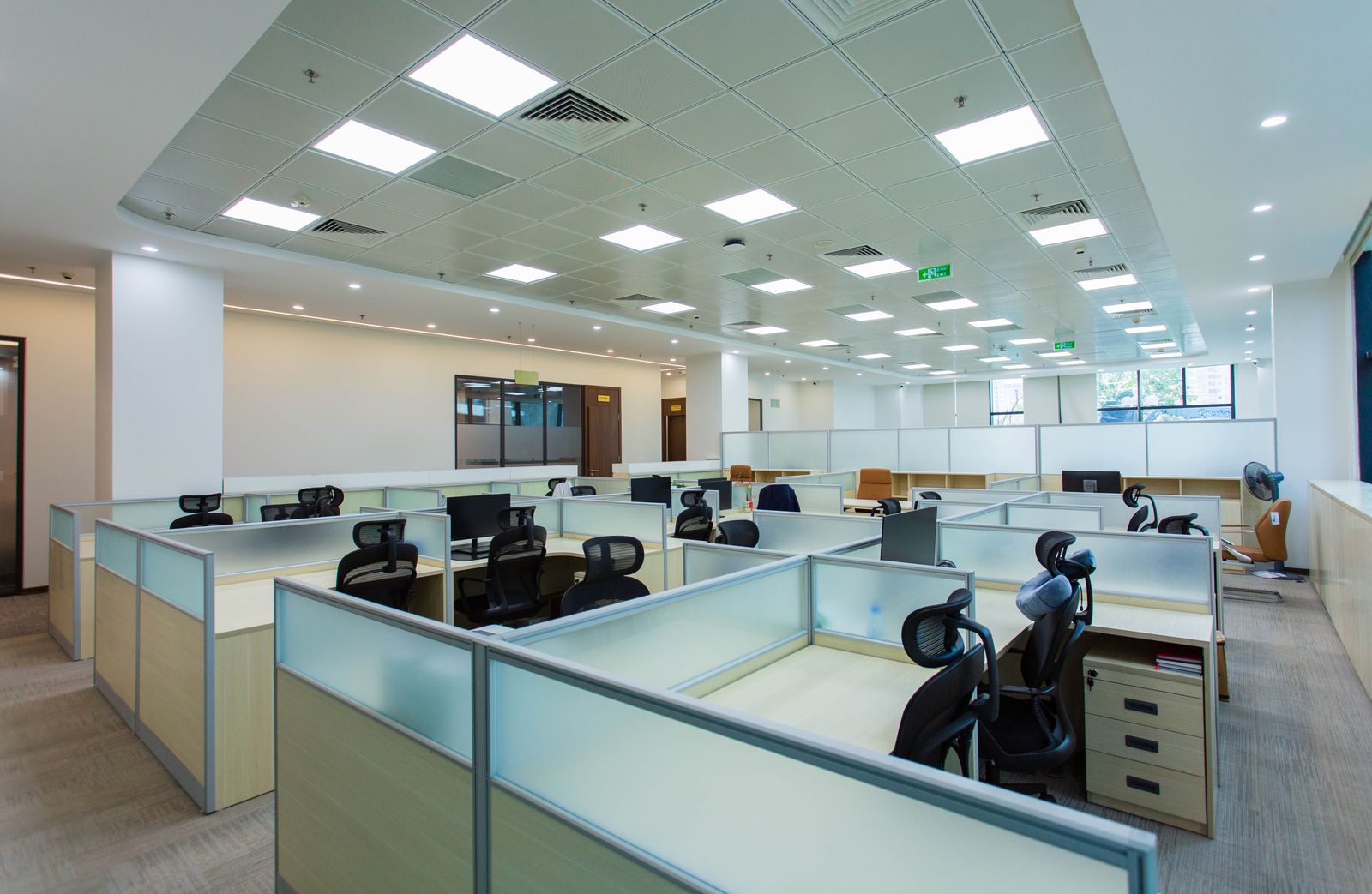
Most office pantry advice is written for one room and one team. A regional headquarters in the UAE is a different problem: 200 to 1,000 people, four to twelve floors, a pantry on each of them, a loading bay three lifts away and a facilities team that cannot be everywhere at once. The coffee on the fourth floor runs out while the ninth floor throws away milk, and nobody can say what the building actually consumes.
This guide is for facilities managers, office managers and procurement teams running the pantry in a large office or multi-floor headquarters in the UAE. It follows on from the small office pantry guide and the startup guide to scaling from 10 to 100 people, and it is the step before managing pantries across several sites.
What changes above 200 people
Three things break when an office grows past a couple of hundred people in one building:
- Distance. A single central pantry is too far from most desks. People stop using it, or they lose ten minutes a trip. Above roughly 80 to 100 people per floor, each floor needs its own point for water, hot drinks and a basic snack.
- Visibility. The person who orders can no longer see the shelves. Stock-outs and waste happen out of sight and are reported late, if at all.
- Ownership. With several pantries, "someone will restock it" means nobody does. Each pantry needs a named owner, a par list and a restock rhythm.
The answer is not one giant pantry and not twelve independent ones. It is a hub-and-floor model.
Floor pantries and a central hub
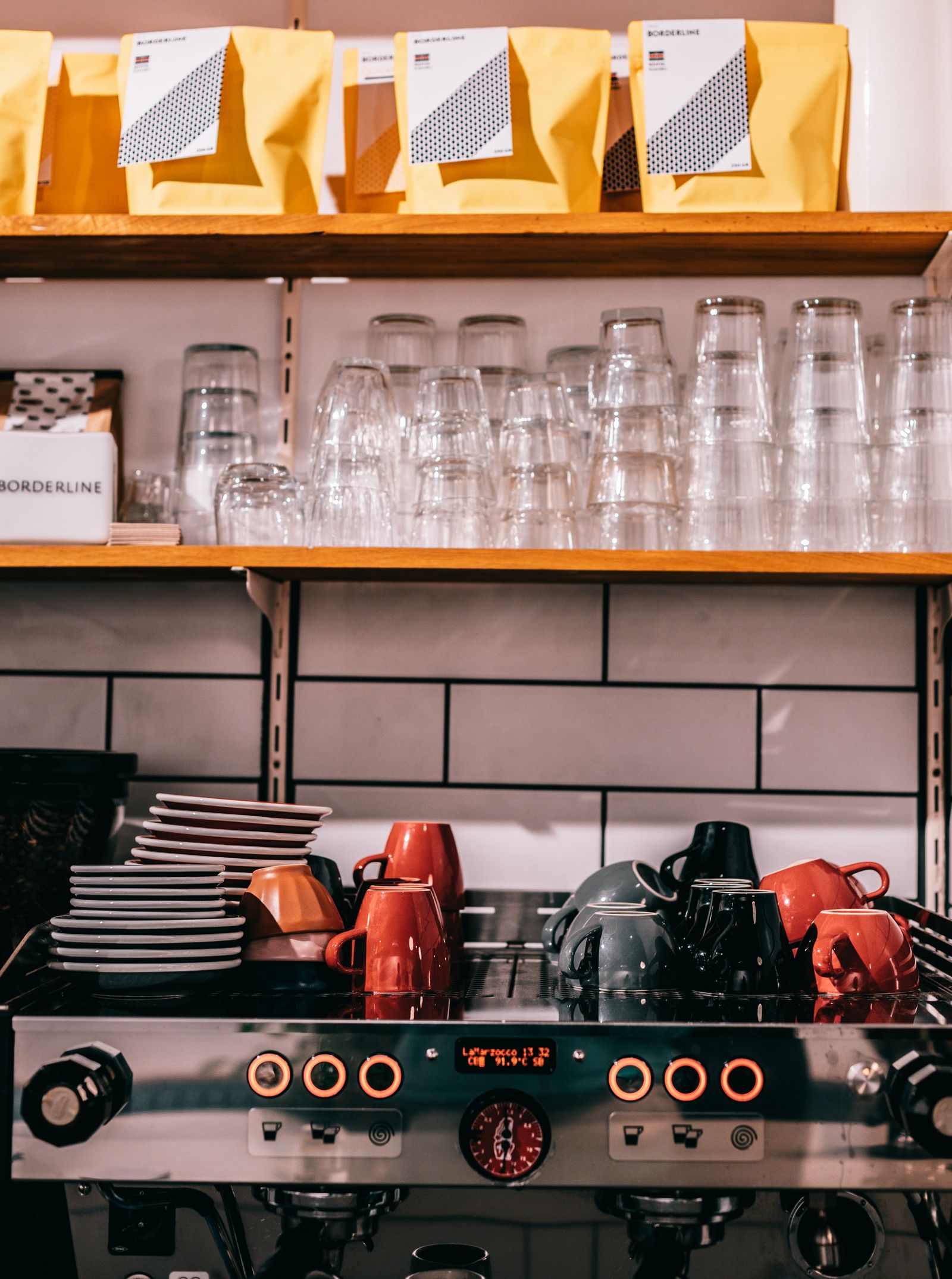
Floor pantries are small, identical and fast: a water point, a coffee machine or capsule machine, tea, milk, sugar, cups, one snack basket and a fruit bowl. They hold a day or two of stock at most.
The central hub is a store room near the loading bay or the main kitchen. It holds the bulk: cases of water, coffee beans or capsules, tea, long-life milk, snacks, cleaning supplies and spare consumables. Deliveries come to the hub, not to every floor.
Restock rounds connect the two. A pantry attendant or a facilities assistant walks the floors on a fixed schedule, tops each floor pantry up to its par level from a trolley, wipes surfaces and reports anything broken. In a 500-person building that is usually one round every morning and a lighter one after lunch.
Keep the floor pantries identical. The same machine, the same tea, the same snack basket. Variation between floors creates complaints, politics and twelve different order lists.
Par levels per floor
A par level is the quantity a pantry should hold after a restock. Set one per item per floor, based on headcount and a few days of observation. For a floor of 80 people on a normal attendance pattern, typical starting points are:
| Item | Par level per floor | Restock |
|---|---|---|
| Water (dispenser bottles or 500 ml) | 1.5 to 2 litres per person per day on hand | Daily |
| Coffee (beans or capsules) | 2 to 3 cups per person per day, two days of cover | Daily |
| Fresh milk | One day of cover, chilled | Daily |
| Tea bags, sugar, sweeteners | One week of cover | Weekly |
| Fruit | One piece per person per day, one day of cover | Daily or three times a week |
| Snack basket | 1 to 2 units per person per day, one day of cover | Daily |
| Cups, stirrers, napkins | One week of cover | Weekly |
Adjust after two weeks. Floors with a sales team or a trading desk use more coffee; floors with a lot of hybrid staff need lower fruit and milk pars on Mondays and Fridays. The inventory management guide explains how to set reorder points, and the hybrid work planning guide covers attendance swings.
Who owns what
Write it down once:
- Facilities or office manager: owns the catalogue, the budget, the supplier relationship and the par lists.
- Pantry attendant or facilities assistant: owns the restock rounds, the hub count and the daily hygiene checklist.
- Floor champion (optional): one person per floor who reports problems quickly. Not a restocker.
- Supplier: delivers to the hub on a fixed day, keeps the catalogue consistent and provides consumption reports.
Without a named restocker, the floor pantries drift. Without consumption reports, the budget is a guess.
Deliveries, lifts and the loading bay
Large UAE towers have rules: a goods lift, a delivery window, a security pass for drivers and a loading bay that closes at a set time. Agree these with building management before the first order, and share them with the supplier. A pallet of water that arrives when the goods lift is booked for a fit-out will sit in the car park.
For towers in DIFC, Downtown Dubai, Business Bay, Dubai Media City and Al Reem Island, a weekly bulk delivery to the hub plus a mid-week top-up for fresh items is the usual pattern.
Hygiene at scale
Twelve pantries are twelve places for a fridge to be forgotten. Use the pantry cleaning schedule and checklist on every floor, and keep cleaning supplies and office hygiene consumables in the hub rather than scattered across floors. Milk and cut fruit are the usual failures: date them on arrival and clear them at the end of each day.
Budget and reporting
Large offices get better unit prices, but only if orders are consolidated. One supplier, one catalogue and one monthly invoice is cheaper and simpler than floors ordering separately. Use the cost per employee benchmarks to set a target, and ask the supplier for a monthly report by floor, which is the only way to see which floor is over-consuming or wasting.
If the building also hosts an executive floor or client suites, run those as a separate standard: see the executive floor pantry guide.
Industries with large UAE headquarters
Large multi-floor offices are typical of banks and financial services, oil, gas and energy companies, government and public sector entities, real estate and property developers, tech companies and logistics and freight groups. See all the industries we serve and our delivery locations.
The short version
- Above about 100 people per floor, give each floor its own identical pantry and feed them from one central hub.
- Set a par level per item per floor and restock to it on a fixed daily round.
- Name one owner for the programme and one person for the rounds.
- Deliver in bulk to the hub, on the building's terms, and top up fresh items mid-week.
- Consolidate to one supplier and ask for consumption reports by floor.
Frequently Asked Questions
How many pantries does a large office need? As a rule, one per floor once a floor passes about 80 to 100 people, or one for every 100 to 150 people on a very large open floor. Each should be within a two-minute walk of every desk.
Should every floor have a coffee machine? Yes, if coffee is part of the standard. A bean-to-cup machine for 80 to 150 people per floor, or a capsule machine for smaller floors. One central machine for a whole building creates queues and complaints.
How do we stop one floor from over-consuming? Identical par levels, a daily restock to par rather than on request, and a monthly consumption report by floor. Over-consumption usually shows up as one floor needing extra restocks, which is a conversation to have with that floor's manager rather than a reason to cut everyone.
Who should restock the floor pantries? A pantry attendant, facilities assistant or office boy on a fixed morning round, with a trolley stocked from the central hub. Relying on staff or floor champions to restock does not last.
Can My Healthy Office deliver to a large tower with a loading bay? Yes. We deliver to office towers across Dubai and Abu Dhabi, work within building delivery windows and goods-lift bookings, and can split an order into a weekly bulk delivery and a mid-week fresh top-up.