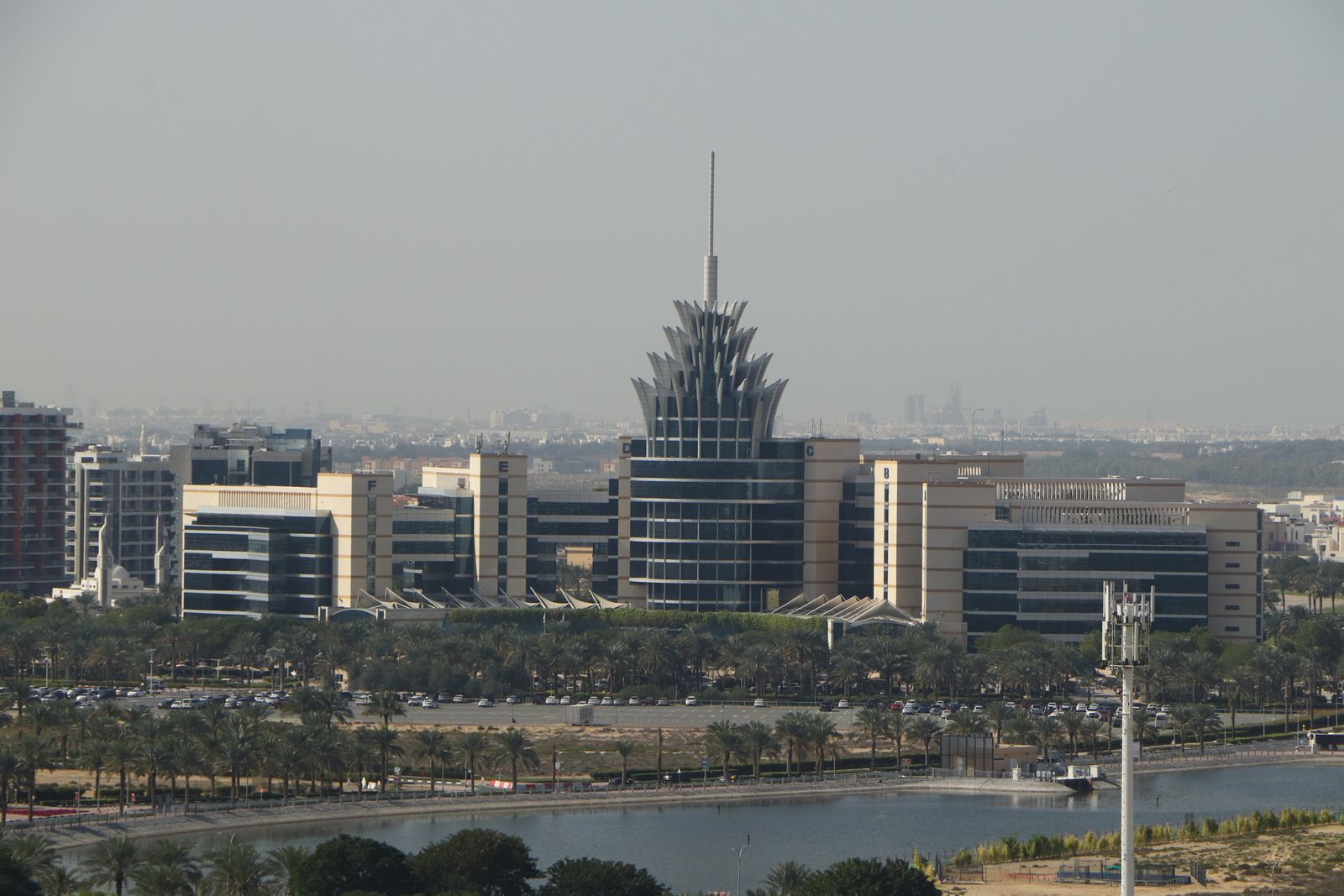
A property or facilities management company is not one office. It is a head office in Business Bay or Abu Dhabi, a small site office in the lobby or basement of every tower and community it manages, a helpdesk that takes calls through the night, and a technician team that starts before the building wakes up. Each of the four has a different pantry problem, and the company usually solves none of them on purpose: the head office has a kitchen, the sites have whatever the community manager bought on the way in, and the helpdesk runs on the night supervisor's own coffee.
This guide is for operations managers, administration and procurement leads at property management, facilities management and community management companies across the UAE. Developers and brokerages have their own guides: see the property sector overview, the brokerage floor guide and the developer sales centre guide. This one covers the firms that run the buildings after they are sold. The sector page for real estate and property companies lists what MHO supplies to them.
Four rooms, four pantries
- The head office. Finance, leasing and service-charge teams, account managers, HR. A conventional weekday office, with a quarterly rush when service charges and budgets are due.
- The site office. One to four people in a tower or community: a community manager, an assistant, a receptionist or concierge desk. They see residents, tenants and contractors all day and have no kitchen budget of their own.
- The helpdesk or control room. Calls, tickets and alarms handled around the clock by rotating shifts. The same brief as any 24/7 workplace.
- The technician base. MEP technicians, cleaners and security supervisors who start early, work in plant rooms and car parks, and need water first and everything else second.
Treating them as one "office" is why site teams end up buying water from their own pocket.
The community manager's site office
A site office has three jobs for a pantry: look professional when an owner or a tenant walks in, keep two to four people going through a long day, and never run out on a Friday evening when the supplier is closed.
- A small, fixed kit. Water, a coffee machine or capsule unit, tea, milk, sugar, a few biscuits and a bowl of office snacks. Nothing that needs a kitchen.
- A visitor shelf. Owners and committee members who come to raise a complaint are calmer with a cup of coffee in front of them. Keep a separate small stock for visitors so the team cannot empty it.
- No cash purchases. The most common leak at site level is petty cash spent at a supermarket at retail prices, then claimed back. A delivered standing order costs less and removes the claims.
For towers with strict loading rules, plan deliveries around the building's own access windows; the high-rise delivery guide covers freight lifts and booking.
The helpdesk and the technician handover
The helpdesk is the part of the company residents remember. A tenant calling at 02:00 about a water leak gets a person who has been awake for six hours, and that person needs water, coffee and something to eat that is not a vending-machine pastry. Stock the night shift as well as the day shift; the principles are in the shift-work guide.
Technicians are different. They start at 06:00 or earlier, spend the day moving between plant rooms, roofs and car parks, and carry heat risk with them for most of the year. Their pantry is a refrigerated stock of water and juices and waters at the technician base, electrolyte options for the summer months, fruit and a snack shelf they can take on the way out. The summer hydration playbook sets out what to stock and how much; for technicians in hot spaces, double the quantity you would plan for an office.
The owners' meeting and the AGM
Once a year, owners' associations hold an annual general meeting, often in a hotel ballroom, sometimes in the management company's own boardroom or a community hall. Quarterly committee meetings are smaller and more frequent. Both are hosted by the community manager, and the way the room is hosted shapes how a contentious service-charge vote goes.
- Water and coffee for every seat, set up before the first owner arrives.
- Arabic coffee and dates for committee members who expect them; the Arabic coffee and dates guide covers serving them properly.
- Nothing alcoholic and nothing elaborate. The meeting is about money; lavish catering at a service-charge vote is read badly.
Where the firm's clients sit
Many property and FM companies also staff buildings that belong to other sectors: airport terminals and their aviation operations, plant and offices in oil, gas and energy sites, laboratories and offices in pharmaceutical and life sciences campuses, and construction and engineering project offices. The on-site team in each is employed by the FM company and uses the client's kitchen on the client's rules, or has no kitchen. Agree in the contract who provides the pantry, so the site team is not left with nothing at a gate-controlled site where outside deliveries take a day to clear.
One standing order across every site
The head office can be run like any office. The harder question is the thirty small sites. The method that works is the one in the multi-site pantry playbook:
- One catalogue, set once. A short list of approved items per site type (head office, site office, helpdesk, technician base), so a community manager picks quantities, not products.
- One account, one invoice per site. Cost goes to the building or community it serves, which matters when pantry cost is part of the management fee or recharged to an owners' association. Check how VAT applies to staff refreshments before you recharge.
- A standing delivery day per site, timed to the building's access rules, with a named person at the site to receive it.
- A monthly review by site. Compare per-head cost across sites, as the cost per employee guide describes, and look at the outliers: a site spending three times the average is either hosting a lot or leaking.
The short version
- Count four pantries, not one: head office, site offices, helpdesk, technician base.
- Give every site office a small fixed kit and a separate visitor shelf; stop petty-cash purchases.
- Stock the night helpdesk and the early technician start, with plenty of water in summer.
- Host owners' meetings simply: water, coffee, Arabic coffee and dates.
- Run all sites from one catalogue and one account, with cost charged to the building.
MHO delivers to head offices and site offices across Dubai and Abu Dhabi on a standing order, with one invoice per site. To set up a pantry plan for your portfolio, request a quote from the MHO team.
Frequently Asked Questions
How should a property management company stock a small site office? Give it a fixed kit: bottled water, a coffee or capsule machine, tea, milk, sugar, biscuits and a small snack bowl, plus a separate visitor shelf. Deliver it on a standing order so the community manager never buys supplies at retail from petty cash.
Who pays for the pantry at a managed building, the management company or the owners? It depends on the management contract. Some firms absorb it as an overhead, others recharge it to the owners' association as a service-charge line. Settle it in writing, and invoice per building so the recharge is clean.
What does a 24/7 helpdesk need in its pantry? The night team needs the same quality as the day team: water within reach of every desk, proper coffee, and food that is not only vending-machine snacks. Stock for the shift handovers, not for noon.
How much water should technicians get in summer? Plan roughly double the office figure for technicians who work in plant rooms, roofs and car parks, keep it chilled at the technician base, and add electrolyte drinks during the hottest months.
How do we keep thirty site offices on one pantry budget? Use one approved catalogue per site type, one account with an invoice per site, a standing delivery day agreed with the building's access rules, and a monthly per-head comparison that flags the outlier sites.