In most UAE workplaces, deciding where people eat and drink is an interior design question. In a pharmaceutical or life sciences facility it is a compliance one. Food and beverages are prohibited in laboratories, in production and packaging areas, in warehousing zones that hold finished product, and in any space where contamination could reach a batch. That single constraint reshapes the entire pantry brief — because everything that would normally be spread across a floor has to happen inside two or three designated rooms, and those rooms have to serve office staff, lab scientists and rotating shift teams whose breaks never line up.
The UAE now has a substantial life sciences footprint to plan for: manufacturers and packaging operations, contract research organisations, diagnostics and testing laboratories, medical device and pharmaceutical distributors running temperature-controlled warehousing, and the regional head offices that multinational pharma companies have concentrated in Dubai and Abu Dhabi. What they have in common is that the pantry sits inside a quality system, not outside it. This guide is for the facilities managers, QA leads, EHS officers and office managers who have to make that work in 2026.
Why a life sciences site is a different pantry brief
Five characteristics separate this sector from a standard corporate office.
There is a hard physical boundary. Most workplaces have a pantry and an open plan floor, and people move freely between them. A GxP site has a controlled side and an uncontrolled side, with gowning, changing and hand-washing in between. Consumption happens only on one side of that line, which makes the location of the pantry a design decision with operational consequences for every break, every day.
Break time is compressed and synchronised. When crossing the boundary costs five to ten minutes of gowning and de-gowning in each direction, a nominal thirty-minute break is closer to fifteen minutes of actual rest. Everyone arrives at once, wants something immediately, and leaves at once. Equipment throughput matters far more here than in an office where people wander to the machine at random.
The site runs on shifts, the office does not. QC laboratories, stability testing, production lines and temperature-monitored warehousing frequently operate beyond office hours, including nights and weekends. A pantry stocked and serviced against a Monday-to-Friday, nine-to-six rhythm leaves the shift teams with whatever survived Thursday.
Documentation is expected. Auditors, whether internal, from the Ministry of Health and Prevention, from a municipality food-control inspection or from a client company's own quality team, may ask what is in the building, where it came from and how it is stored. "We buy snacks from a few places" is a weak answer. A single supplier with traceable invoices, product documentation and a consistent delivery record is a much stronger one.
Hygiene standards are set by the building, not the pantry. Cleaning materials, waste handling, pest control and surface treatment in the breakroom are held to the standard of the facility around it. Consumables bought casually for a normal office kitchen will not meet the specification a life sciences site is already operating to.
The clean/dirty boundary and where the pantry actually goes
The most consequential decision is where you put the refreshment points relative to the gowning line, and most sites need more than one.
A practical layout for a manufacturing or lab site usually has three tiers:
- A main breakroom on the uncontrolled side, sized for the largest single shift change rather than for average headcount. This is where hot food, seated breaks and the primary coffee offer live. Because it absorbs the whole floor at once, the equipment specification here should be judged on throughput and recovery time, not on features.
- A drinks point close to the gowning area, offering water and a fast hot drink. This is the highest-value square metre in the building: it is what makes a fifteen-minute effective break usable at all, and it substantially reduces the number of full boundary crossings people make in a day.
- Nothing whatsoever inside the controlled area, enforced visibly. This is not a pantry decision, but the pantry supports it — if the compliant option is genuinely convenient, the rule holds; if it is a three-minute walk plus a gowning cycle away, people find workarounds and your QA team ends up managing a behavioural problem you created with a floor plan.
Sites with a separate temperature-controlled warehouse should treat it as its own case. Staff working in cold storage need warm drinks and scheduled warming breaks, and a drinks point that is a long walk from the loading area will not be used. The same reasoning that applies to manufacturing and industrial sites applies here, with a stricter contamination rule layered on top. Distribution operations based in Jebel Ali will recognise the pattern from our JAFZA office pantry guide.
Supplier traceability and the audit question
This is where a life sciences site differs most sharply from every other vertical, and it is the part most often left until an auditor raises it.
Three things are worth putting in place before you need them:
A single supplier of record with a documented product list. The value is not commercial, it is evidentiary. One supplier means one set of invoices, one delivery record, one contact who can produce product specifications when asked. A pantry supplied by a rotating cast of grocery runs and online orders cannot produce any of that. Our guide to supplier consolidation covers the operational case; in this sector the compliance case is stronger still.
Product documentation on file, not on request. For anything consumed on site you want to be able to produce, without notice: the halal status of relevant items, allergen information, country of origin and shelf-life handling. Our guides to halal compliance in the office pantry and to allergen and dietary labelling for UAE corporate pantries set out what good looks like, and the UAE food safety rules for office pantries guide covers the storage and handling side.
A written scope that names the boundary. Your supplier's delivery team should know, in writing, exactly where they are permitted to go, what the access procedure is, and who signs. On a GxP site an unescorted delivery walking into the wrong corridor is a deviation, not an inconvenience. Put it in the service agreement — our office pantry SLA template is a reasonable starting frame, and the access clause is the one to write yourself.
An annual pantry audit is worth doing in this sector even if you skip it everywhere else, because the questions an auditor asks about the breakroom are the same ones you should already be asking.
Shift cover: the QC lab runs when the office is closed
Stability chambers, environmental monitoring, batch release testing and production lines do not observe office hours. Neither should the pantry.
Three adjustments make shift cover work:
Stock to the shift calendar, not the working week. Get the shift roster from operations and build the replenishment cadence against it. If a night shift starts at 22:00, the relevant question is what is on the shelf at 22:00 on a Thursday, not what was delivered on Monday morning. Our guide to pantry planning for 24/7 and shift-work sites goes into the scheduling detail.
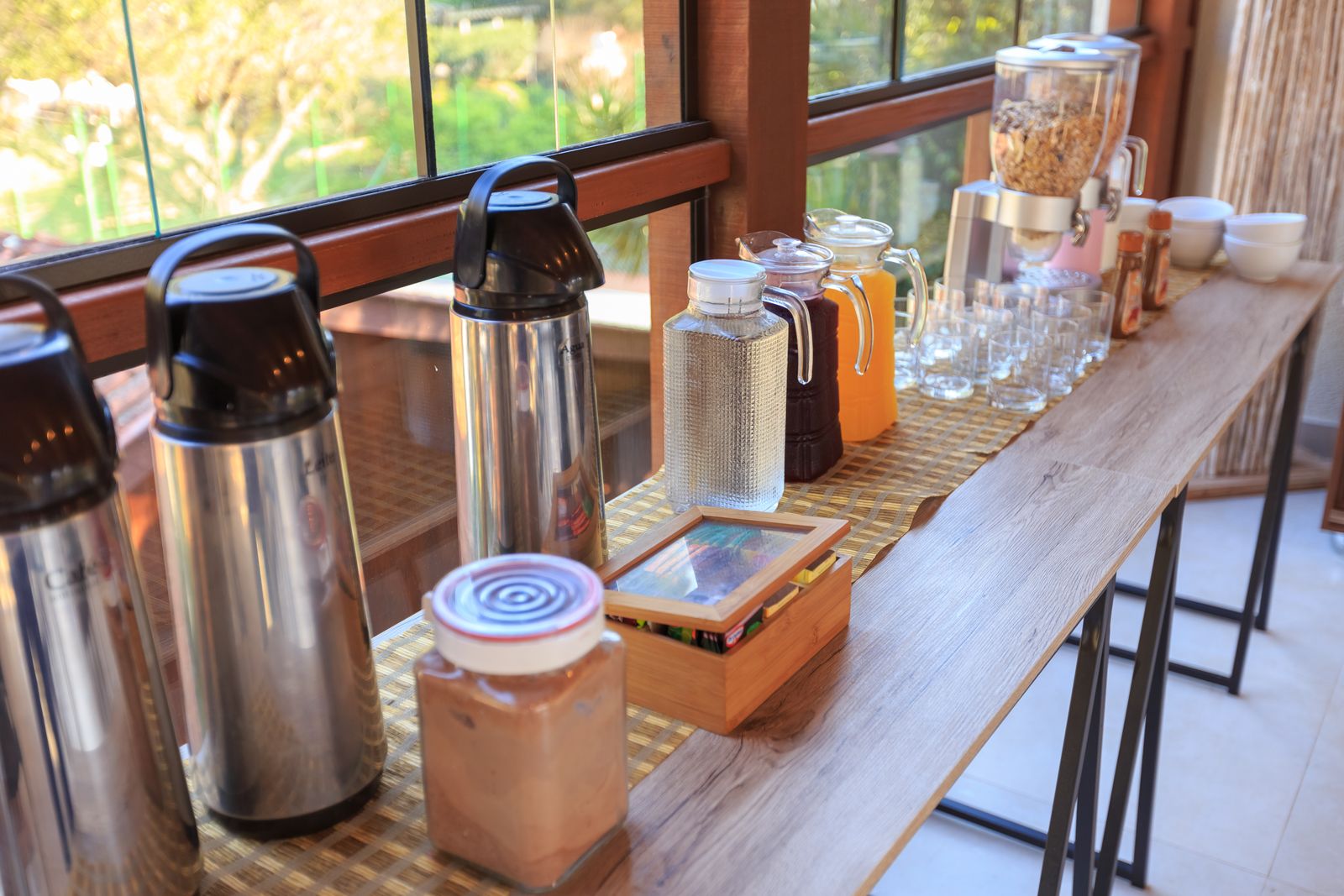
Choose equipment that survives unattended operation. Overnight there is no facilities team to reset a machine. Bean-to-cup equipment with automated cleaning cycles, a water system that does not need a bottle change at 03:00, and a clear escalation contact matter more than the range of drinks on offer.
Separate the shift stock physically. The most common complaint from night teams anywhere is that the day shift finished everything. A dedicated, clearly labelled shift allocation removes an argument that otherwise recurs every month, and costs nothing to implement.
What to stock for a science-heavy workforce
Life sciences teams skew towards long periods of concentrated, seated analytical work punctuated by short breaks — and towards a workforce that is, on average, unusually well informed about nutrition. That combination rewards a considered range and punishes a generic one.
- Protein and slow-release options over fast sugar. People coming off a four-hour analytical run want something that will not produce a crash thirty minutes later. Nuts, seeds and protein-forward snacks do this better than confectionery — see our nuts and seeds range and our guide to protein snacks for busy UAE professionals.
- A credible low-sugar tier. Offering only sweetened options in a building full of people who read labels for a living is a poor look. A proper low-sugar range is table stakes here, and our nutritionist-approved office snack list is a useful reference when writing the specification. Portion-controlled bars such as those covered in our note on mindful office indulgence work well in a compressed break because they need no preparation.
- Caffeine alternatives that actually get chosen. A site running night shifts needs more than coffee. A real herbal tea selection matters disproportionately for staff finishing a night rotation who would like something warm without the caffeine — our premium tea programme guide covers building a range people use rather than one that sits in a cupboard.
- Water as an occupational requirement, not a perk. Gowned work in a warm building is dehydrating, and the UAE summer compounds it. Provision of drinking water is also a UAE labour law obligation, and our summer hydration playbook covers sizing it properly.
Storage, cold chain and the summer problem
A pharma site already understands temperature control better than any other kind of office — which is exactly why an uncontrolled pantry fridge looks so out of place in one.
Two points are worth being deliberate about. First, the breakroom fridge is not a validated unit and must never be confused with one. Label it, site it away from any sample or product storage, and keep it firmly outside the equipment list your quality system covers. The risk is not the food; it is the ambiguity.
Second, the delivery leg is the weak link in a UAE summer. Chilled and fresh items that spend twenty minutes on a loading bay in July have already been through an excursion nobody recorded. Ask your supplier how chilled goods travel and what happens if a delivery arrives outside the agreed window, and prefer shelf-stable formats where the perishable version adds nothing. This is also the cheapest way to cut waste — see reducing food waste in the UAE office pantry and our guide to pantry inventory management.
Hygiene and consumables at facility standard
In an ordinary office, breakroom cleaning supplies are bought on price. In a regulated facility they are part of the same hygiene regime as everything else, and buying them casually creates an inconsistency an auditor will notice before you do.
Two practical consequences. Consumables for the pantry and the surrounding common areas should be specified alongside the rest of the site's hygiene programme rather than separately — our facility hygiene and office hygiene ranges exist for exactly this, and consolidating them with the pantry order removes a supplier and a set of invoices from your file. And waste handling in the breakroom should follow the building's segregation scheme, not a domestic one; where a site is pursuing a formal environmental standard, our ISO 14001 pantry sustainability guide covers how the pantry fits into it.
Pest control deserves a specific mention. A breakroom is the most likely entry point for a pest issue in an otherwise sealed building, and a pest finding in a life sciences facility is a serious event. Sealed storage, a disciplined waste cycle and short delivery-to-shelf times are the controls that matter.
Costing it and writing it down
Two closing practicalities.
Expect a higher per-head cost than a comparable office, and budget for it honestly. You are paying for shift cover, for a second drinks point, for documentation and for equipment specified on uptime rather than price. Our cost per employee benchmarks give the baseline; a regulated site typically sits above it, and the comparison that matters is against the cost of a deviation, not against a standard office.
Put the sector-specific requirements into the tender, not into a conversation. Access and escort procedure, documentation obligations, shift-aligned delivery windows, chilled handling and escalation for equipment failure outside office hours all belong in the written scope. Our office pantry RFP and tender template covers the general structure; add those five clauses and you will have filtered the field before the first site visit. If you are weighing whether to run it in-house at all, our comparison of managed versus in-house pantry operations applies with extra force in a regulated building, where the administrative burden of self-management is what usually decides it.
Companies in adjacent regulated environments face a version of the same brief: our guides for healthcare, clinics and hospitals and for laboratories' upstream suppliers in logistics and freight cover the overlapping parts, and the full set of sector guides sits on our industries overview.
Office pantry guides by industry: Banks & financial services · Construction & engineering · Consulting & advisory firms · Government & public sector · Healthcare, clinics & hospitals · Law firms & professional services · Logistics & freight · Manufacturing & industrial · Media & creative agencies · Oil, gas & energy · Real estate & property · Schools & universities · Tech companies & startups · Coworking spaces · Aviation & airport services · Retail & e-commerce
The service built to these documentation and segregation standards is described on the office pantry page for pharmaceutical and life sciences, and Dubai Science Park covers the cluster where most UAE life-sciences offices are based.
Frequently asked questions
Can we have any food or drink inside a laboratory or production area? No. Consumption in laboratories, production, packaging and finished-product storage areas is prohibited, and that rule is what the whole pantry layout has to work around. The practical answer is not to argue with the boundary but to make the compliant option genuinely convenient — a drinks point close to the gowning area removes most of the pressure that causes people to bend the rule.
What documentation should we be able to produce about the pantry in an audit? At minimum: who supplies the site, an itemised record of what is delivered, product documentation covering halal status, allergens, origin and shelf life for what is consumed on site, and a written scope defining where the delivery team is permitted to go. A single supplier of record makes all of that a filing exercise rather than a reconstruction.
How do we stop the night shift from finding empty shelves? Build the replenishment cadence against the shift roster rather than the office week, and hold a physically separate, labelled allocation for out-of-hours teams. Also specify equipment that runs unattended — automated cleaning cycles and a plumbed water system — because there is no facilities cover at 03:00 to reset anything.
Should breakroom cleaning consumables be bought with the pantry order? Yes, on a regulated site. Specifying them alongside the building's hygiene programme keeps the standard consistent, and consolidating them into the pantry order removes a separate supplier and a separate set of invoices from the file an auditor will eventually ask to see.
Life sciences sites need a pantry partner who understands that the delivery note matters as much as the delivery. MHO supplies pharmaceutical manufacturers, laboratories, distributors and regional head offices across the UAE with a consolidated pantry, hydration, coffee and hygiene programme built around documentation, shift cover and access discipline — see what an MHO managed pantry programme covers, or talk to our team about a site walkthrough.