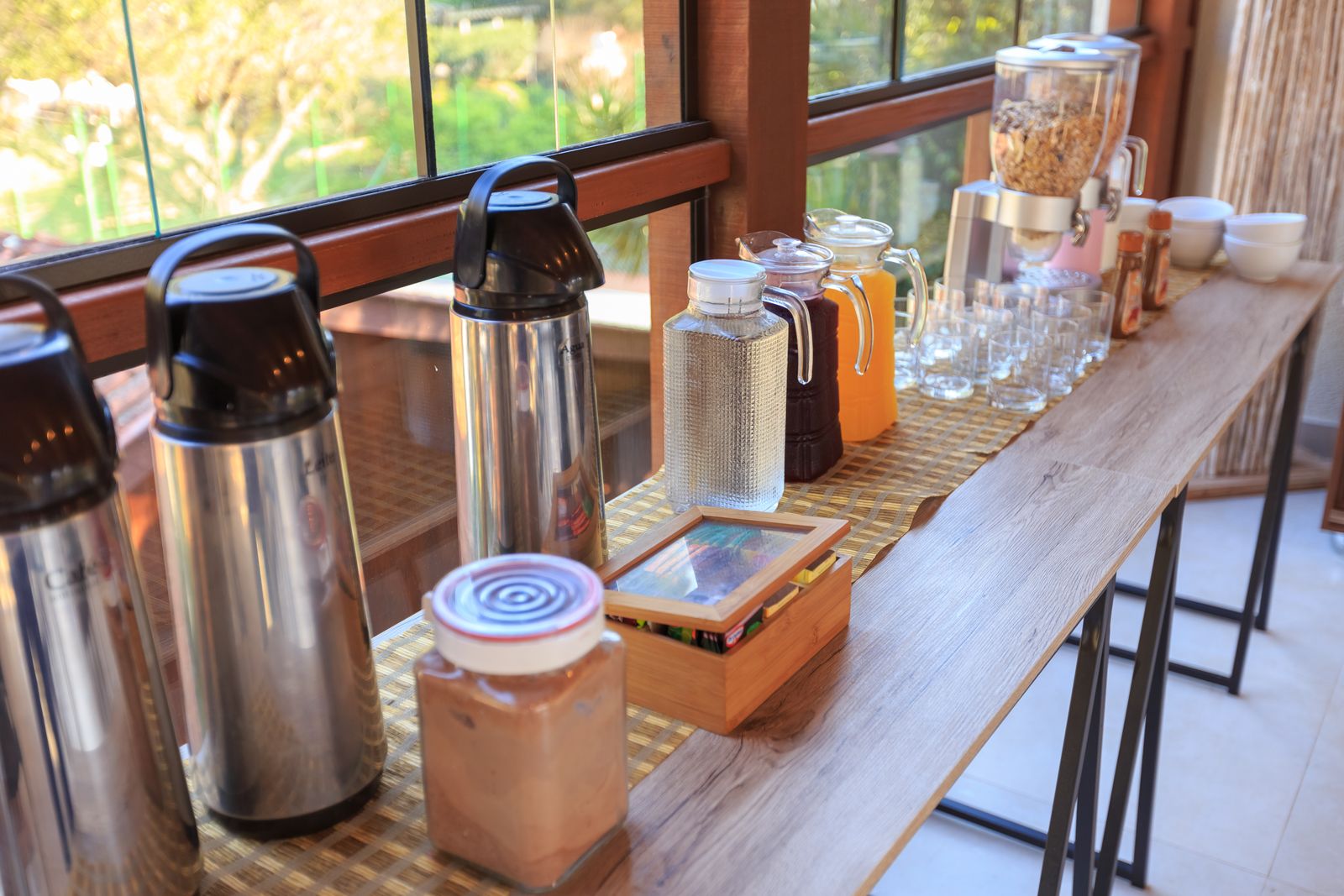
Most UAE office pantry advice is written for Dubai, and what specialist material exists is written for Abu Dhabi or, more recently, Sharjah. Ras Al Khaimah almost never gets its own guide — and offices in the emirate that borrow a Dubai playbook find it fits poorly. RAK is further from the supply hubs, more industrial in its make-up, tighter on budget, and changing faster than any other emirate as new corporate and hospitality investment lands. It is a real and growing market, and it deserves a plan of its own.
This guide is for the facilities, office, and procurement managers actually running a pantry in Ras Al Khaimah in 2026: what is different about the emirate, what to plan for, and how a managed pantry service should be set up to work across it rather than just inside one building.
Why Ras Al Khaimah is a different pantry market
RAK's economy does not look like Dubai's. Its backbone is industry and manufacturing — ceramics, cement, pharmaceuticals, glass, and building materials — alongside a huge base of small and mid-sized businesses registered through the free zone. On top of that, the emirate is in the middle of a fast corporate and tourism build-out: Al Marjan Island, the coming integrated resort, and the hospitality growth around it are pulling in new head offices, contractors, and service firms that did not have a RAK presence a few years ago.
That combination has three practical consequences for anyone supplying or running a pantry in the emirate:
- Budgets are tight and value is scrutinised. RAK's cost of doing business is lower than Dubai's by design, and that discipline carries straight into procurement. Buyers want a clear cost-per-employee figure, a realistic budget, and a supplier who helps them reduce pantry costs rather than quietly inflate them. Transparent pricing models matter far more here than premium branding.
- The workforce is often mixed. Many RAK organisations run a corporate office alongside a factory floor, warehouse, or logistics operation. That means two very different refreshment profiles under one roof — a boardroom-and-desk offering for the office, and high-volume tea, coffee, water, and shelf-stable snacks for shift and industrial staff. A pantry plan that only thinks about the office will under-serve the larger group.
- The market is spread out. Business activity is not concentrated in a single district. It runs from the corporate and free-zone clusters inland, out to the industrial parks, along the coast toward Al Hamra and Al Marjan, and up into the growing business districts. Supplying all of it reliably is a multi-site logistics problem, not a single delivery run.
RAKEZ: the centre of gravity
The Ras Al Khaimah Economic Zone (RAKEZ) is one of the largest free zones in the region and the single biggest source of business demand in the emirate. It houses tens of thousands of companies across a very wide spread — from one-person consultancies and trading firms to large manufacturers occupying full industrial plots. That diversity is the defining feature: two RAKEZ tenants next door to each other can have completely different pantry needs.
Broadly, RAKEZ demand falls into three profiles:
- Business-park and office tenants — SMEs, professional services, and back-office operations. These want reliable, good-value coffee, water, and a sensible snack mix, with none of the fuss. Dependability and honest pricing win here, not a glossy premium catalogue.
- Industrial and manufacturing tenants — the ceramics, materials, and production companies RAK is known for. The refreshment need skews heavily toward high-volume hydration and shelf-stable staples for a large shift-based workforce, where summer hydration planning is a safety issue, not a nicety.
- New corporate and hospitality arrivals — the head offices and service firms following the Al Marjan and tourism investment. Their expectations are closer to a Dubai floor: proper coffee, a modern snack range, and flexibility. This is the part of RAK where a premium managed offering finds its most natural buyer.
A supplier who treats RAKEZ as one homogeneous account will get it wrong. The zone rewards a partner who can flex the offering — and the delivery frequency — to match each tenant's actual profile.
The distance problem: delivery is the real constraint
The single biggest logistics factor in Ras Al Khaimah is simple: it is far from the supply hubs most pantry vendors run from. The majority of established food-service and pantry suppliers are based in Dubai, roughly an hour to an hour and a half's drive south depending on traffic and the exact destination. That distance changes the economics of delivery completely.
For a Dubai-based vendor, RAK is not a quick add-on to an existing route — it is a dedicated run, and one that is easy to under-serve. The failure modes are predictable: infrequent deliveries to "batch" the trip, long lead times on restocks, and an order that runs short mid-week with no realistic way to top it up before the next scheduled run. A pantry operation built for RAK has to plan around this directly: sensible delivery frequencies that account for the distance, enough buffer stock on site to bridge between runs, and a supplier who treats the emirate as its own delivery territory rather than the last stop on a northbound route. This is a solvable problem — but only if the supplier acknowledges the distance instead of pretending RAK is just another Dubai postcode.
Summer logistics and cold chain
RAK summers are as severe as anywhere in the UAE, and the longer haul from the supply hubs makes the heat load on deliveries even more punishing. From May to September, any delivery that includes chilled items, fresh fruit, dairy, or chocolate needs genuine cold-chain handling — and over a 90-minute-plus run, a gap in that chain is far more likely to spoil an order than it is on a short intra-Dubai drop. Hydration demand also climbs sharply, and in a workforce that includes shift and industrial staff, water and electrolyte volumes rise faster than in a purely desk-based office. A flat, year-round stock plan will either run short in summer or waste money in winter; the hot-season swing is large enough — and the delivery distance unforgiving enough — to plan for explicitly.
VAT, excise, and the compliance basics
The tax rules are federal, so they apply in Ras Al Khaimah exactly as they do across the UAE — but the emirate's cost-conscious buyers watch the numbers closely.
- VAT at 5% applies to most pantry supplies, and whether the input VAT is recoverable depends on how the refreshments are used. The detail matters for finance teams and is worth getting right from the start — see the breakdown in VAT on office pantry and staff refreshments.
- Excise tax hits carbonated drinks, energy drinks, and sweetened beverages at high rates, which materially changes the cost of stocking them — a real consideration for a price-sensitive RAK buyer. The implications for a pantry catalogue are covered in UAE excise tax on office pantry beverages.
- Proper tax invoices are a baseline requirement for any office that recovers VAT or runs a formal purchase-order process. A supplier who issues compliant, itemised tax invoices — not informal receipts — is a non-negotiable, not a nice-to-have.
What a managed pantry should look like in Ras Al Khaimah
Pulling the threads together, an office pantry service built for RAK in 2026 should be able to do the following without the office team having to manage it:
- Deliver honest value — transparent pricing, a clear cost per head, and a supplier who actively helps keep spend down rather than pad it.
- Serve a mixed workforce — a corporate-office offering and a high-volume industrial one, from the same accountable partner.
- Beat the distance — sensible delivery frequencies and on-site buffer stock that assume the haul from Dubai, across the free zone, industrial parks, and coastal districts alike.
- Handle the heat — reliable cold-chain delivery for perishables over a long run, and a stock plan that adapts to the summer demand curve.
- Consolidate suppliers — one partner for snacks, beverages, coffee, and consumables rather than a patchwork of vendors, which is the core argument for supplier consolidation and matters even more when every vendor's delivery van has to make the same long trip north.
- Make ordering simple — online ordering and pantry management that a lean office or facilities team can run without extra headcount.
The shift that matters is from buying products to buying a managed service. A RAK office — whether an SME, a manufacturer, or a new corporate arrival — does not want to place orders, chase deliveries an hour down the road, and reconcile receipts. It wants a partner who keeps the pantry stocked, delivers across every site on schedule, issues clean invoices, and keeps the cost honest.
Pantry guides for the other emirates: Dubai · Abu Dhabi · Sharjah · Ajman · Fujairah · Umm Al Quwain
Frequently asked questions
What kinds of pantry demand exist inside RAKEZ? Three distinct profiles. Business-park and office tenants — SMEs, professional services and back-office teams — want reliable, good-value coffee, water and a sensible snack mix. Industrial and manufacturing tenants in ceramics, materials and production need high-volume hydration and shelf-stable staples for a shift-based workforce. And the new corporate and hospitality arrivals following the Al Marjan investment expect something closer to a Dubai floor.
How far is Ras Al Khaimah from the main pantry supply hubs? Roughly an hour to an hour and a half's drive north of Dubai, where most established food-service and pantry suppliers are based. That distance makes RAK a dedicated run rather than a quick add-on, and the failure modes are predictable: infrequent deliveries batched to justify the trip, long restock lead times, and orders that run short mid-week with no way to top up.
How do you keep a RAK pantry stocked between deliveries? Set delivery frequencies that account for the distance rather than assuming a Dubai cadence, and hold enough on-site buffer stock to bridge between runs. The supplier should treat RAK as its own delivery territory rather than the last stop on a northbound route.
Does the summer heat change how a RAK pantry should be stocked? Yes. Over a 90-minute-plus run, a gap in the cold chain is far more likely to spoil chilled items, fresh fruit, dairy or chocolate than on a short intra-Dubai drop. Hydration demand also climbs sharply from May to September, and faster still where the workforce includes shift and industrial staff — so a flat year-round stock plan will either run short in summer or waste money in winter.
Getting started
If you are setting up or reviewing a pantry for a Ras Al Khaimah office, the practical first steps are the same ones we recommend across the UAE, with the emirate's specifics layered on top: define what "good" looks like for your sites, work out a realistic per-head budget, and choose a supplier who can genuinely deliver across RAK rather than treat it as an afterthought. The new office pantry setup checklist and the budget template are good starting points, and the guide to choosing a pantry vendor walks through the selection criteria that matter most to procurement teams.
My Healthy Office supplies and manages office pantries across the UAE, including Ras Al Khaimah, as a single accountable partner — from snacks and beverages to coffee and consumables, with consolidated invoicing and spend reporting built for cost-conscious offices. If you are planning a pantry for a RAK office, get in touch and we will help you scope it for your sites.